The Potential of Adventure Tourism in Japan
When you hear the term “adventure tourism,” what images come to mind? I imagine many people think of outdoor activities like canoeing in Hokkaido, rafting or bungee jumping in the Kanto region, or camping—all sports and experiences enjoyed in nature.In fact, overseas today, there are numerous programs—unlike the typical optional tours in Japan that cost a few thousand yen for a few hours—that allow travelers to fully immerse themselves in activities like canoeing, trekking, and glamping over the course of a full day or several days. These programs are popular among affluent Westerners, and a market has been established for this type of adventure tourism, which, while expensive, offers high added value.We believe that this style of adventure tourism, which is not yet widely known in Japan, can make a significant contribution to “improving quality” in the context of Japan’s tourism policies and regional revitalization efforts. Consequently, we have decided to establish the Japan Adventure Tourism Council in collaboration with relevant stakeholders. In this article, as one of the members involved in the preparatory work for its establishment, I would like to explore the potential of adventure tourism in Japan.
1. Adventure Tourism: A Global Trend
According to the definition by the Adventure Travel Trade Association (ATTA), adventure tourism (hereinafter AT) refers to “travel that incorporates two or more of the three elements: activities, nature, and cross-cultural experiences.”Originally a form of tourism that developed rapidly in New Zealand in the 1980s, it was a general term for various outdoor activities that make use of the sea, mountains, and rivers, such as sea kayaking, rafting, trekking, and mountaineering. While nature-themed tourism also includes “ecotourism,” the key differences from AT as defined by ATTA lie in the presence or absence of activities and cross-cultural experiences.
While AT shares common ground with “ecotourism” and “green tourism” in terms of nature and cross-cultural experiences, the core element of “enjoyment” as a form of leisure gives it the appeal to encourage tourists to spend more money, leading to its market expanding more significantly than others (Figure 1).
Tourism Glossary: “Adventure Tourism”
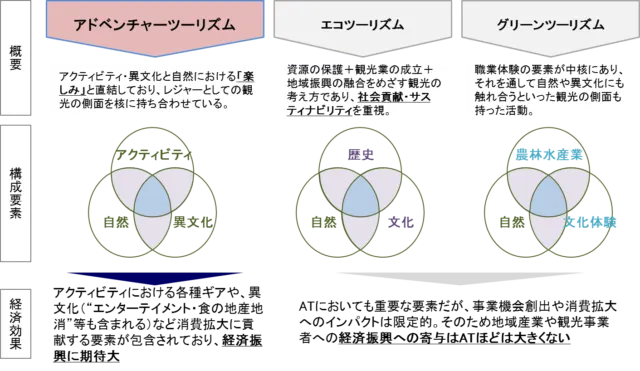
between Adventure Tourism, Ecotourism, and Green Tourism Source: Prepared by JTB Tourism Research & Consulting based on ATTA website and data, UNWTO “Global Report on Adventure Tourism,” and Ministry
of Land, Infrastructure, Transport and Tourism “Market Overview of Inbound Tourism”
2. Market Size of Adventure Tourism
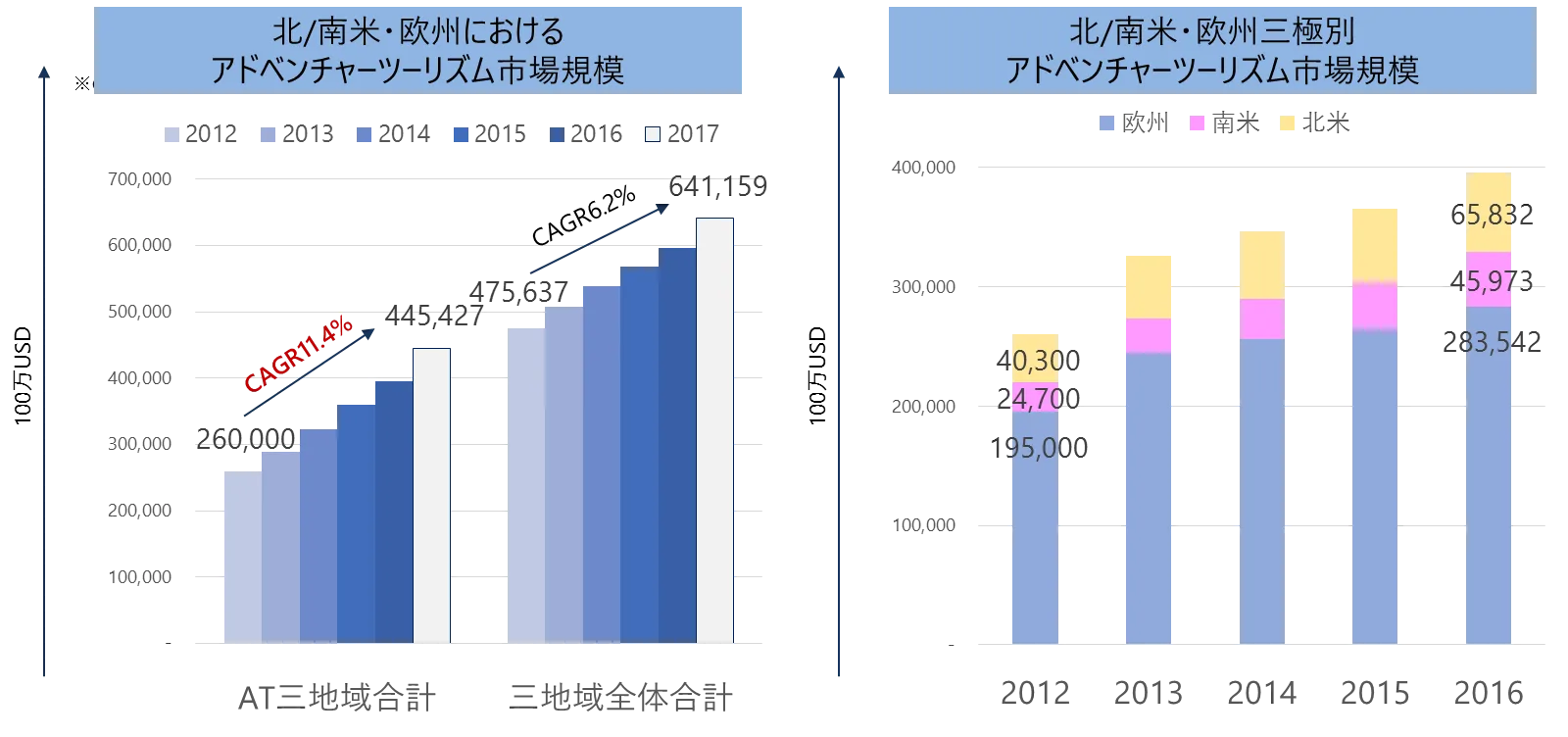
When examining the size of the AT market by region based on local spending, the largest markets are North America, South America, and Europe. While the total market size for these three regions in 2017 was approximately $640 billion*1, the AT market was estimated at $450 billion*1.From 2012 to 2017, the compound annual growth rate (CAGR) for the total market was 6.2%, while the AT market showed higher growth at 11.4%*1. In terms of market size by region in 2016, Europe was the largest at approximately $280 billion*1, followed by North America and South America (Figure 2).
In addition, per capita local spending was highest in North America at $3,290 (2017)*1, followed by South America at $2,198*1.In Europe, the figure was $1,722*1, which is smaller compared to North and South America; however, this is thought to be relatively low because the concept of AT is already widely established and has a broad base. Nevertheless, in all three regions, the average customer spend in the AT market is approximately 1.7 to 2.5 times higher than in the general travel market, indicating that it is a high-end (luxury) market.
While it is difficult to gauge the size of the AT market within Japan, based on the 10 activity categories adopted by the U.S. Outdoor Industry Association (OIA) (1. Camping, 2. Fishing, 3. Wildlife Observation, 4. Hunting, 5. Trail Sports, 6.Cycling 7. Snow Sports 8. Water Sports 9. Motorcycling 10. Off-roading), we conducted an analysis focusing on the eight categories—excluding 9 and 10, which are either difficult to quantify in Japan or are assumed not to fall under adventure tourism—and estimated the market size to be 2.3 trillion yen*1.The breakdown shows that gear (spending on equipment and supplies) accounts for 1.1 trillion yen, while trips (travel-related spending) account for 1.2 trillion yen. Although trip-related spending is relatively small compared to spending on gear in Western countries, the domestic AT market in Japan is considered to have significant room for future growth.
(*1: Data source: Adventure Travel Trade Association materials; *2: Estimates by JTB Tourism Research & Consulting)
The defining characteristics of AT lie in high-value-added travel products and the style of long-stay travel. While domestic experience tours in Japan generally cost a few thousand yen, experience tours in overseas regions where AT is well-established tend to be more expensive overall.(Figure 2) In Japan, tours are designed to fill gaps in itineraries that are based on pre-set schedules, such as those found in Japanese-style group tours or package tours. In contrast, overseas destinations design high-value-added experiential tours to attract long-term stays, where participation in these experiences becomes the primary purpose of the trip.For Japan to develop into a leading tourism nation, it must firmly incorporate the infrastructure development that leads to the “high-value-added product development” and “long-stay travel” that AT aims for. However, “high value-added” does not mean “luxury”; it does not require lavish arrangements such as a sense of exclusivity, special staging, or storytelling by guides that can only be experienced in that particular location.
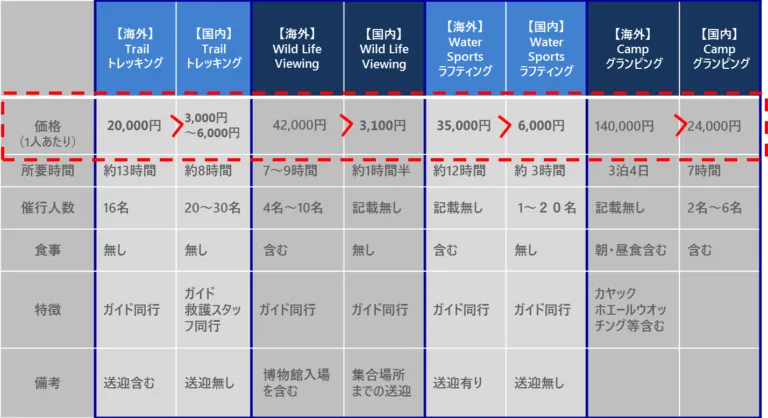
Tourism Source: Compiled by JTB Tourism Research & Consulting based on ATTA materials, EuroMonitor, and various data
According to an ATTA survey, the average age of travelers seeking adventure tourism is 35—younger than the average age of 42 for general travelers. The results indicate that these travelers are visiting a region for the first time, have a strong desire to meet people and immerse themselves in the local culture, and are predominantly highly educated and high-income earners.From the perspective of tourism promotion, AT enables the pursuit of “qualitative tourism promotion”—focusing on sustainable tourism through regional economic benefits and environmental conservation—rather than “quantitative tourism promotion” that prioritizes tourist numbers. While overtourism is a growing global concern, we believe this approach deserves attention as a tourism strategy that Japan, aiming to become a “leading tourism nation,” should consider moving forward.
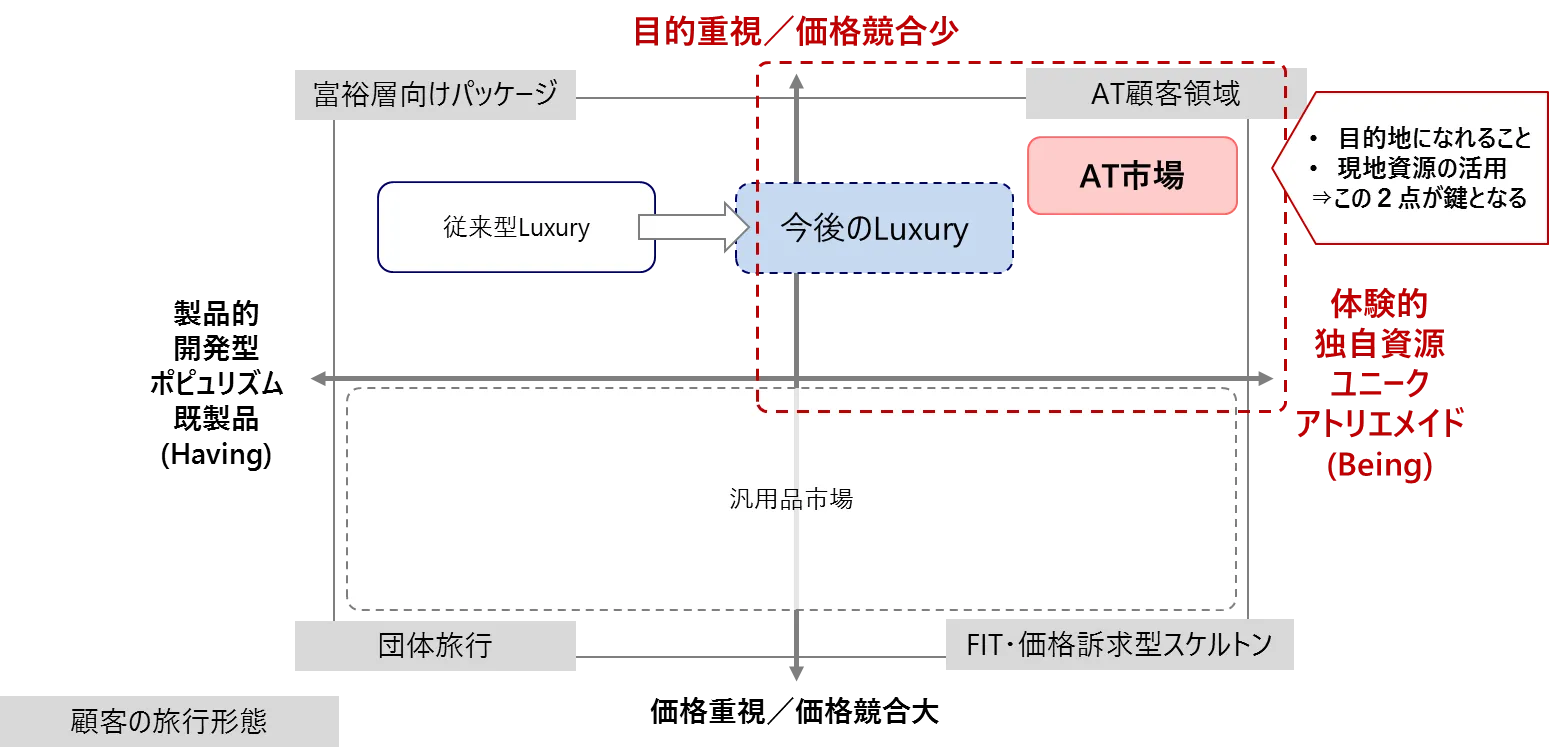
Incidentally, a notable trend in the luxury market in recent years is the shift toward “experiential luxury.” According to a survey by the international consulting firm Boston Consulting Group (BCG), “experiential luxury” is projected to account for two-thirds of the total luxury market by 2022 (compared to approximately one-third in 2015) (Figure 4).
The growth of the AT market is believed to be driven by the shift from consumption of goods to consumption of experiences, as well as the trend toward a return to nature. While this trend is currently leading in Western countries, particularly North America, it is expected to expand in Asia as well, primarily among highly educated and high-income groups. Furthermore, given its high compatibility with regional revitalization through tourism, the AT market is considered one of the most attractive markets for Japan to enter when formulating its tourism strategy (Figure 5).
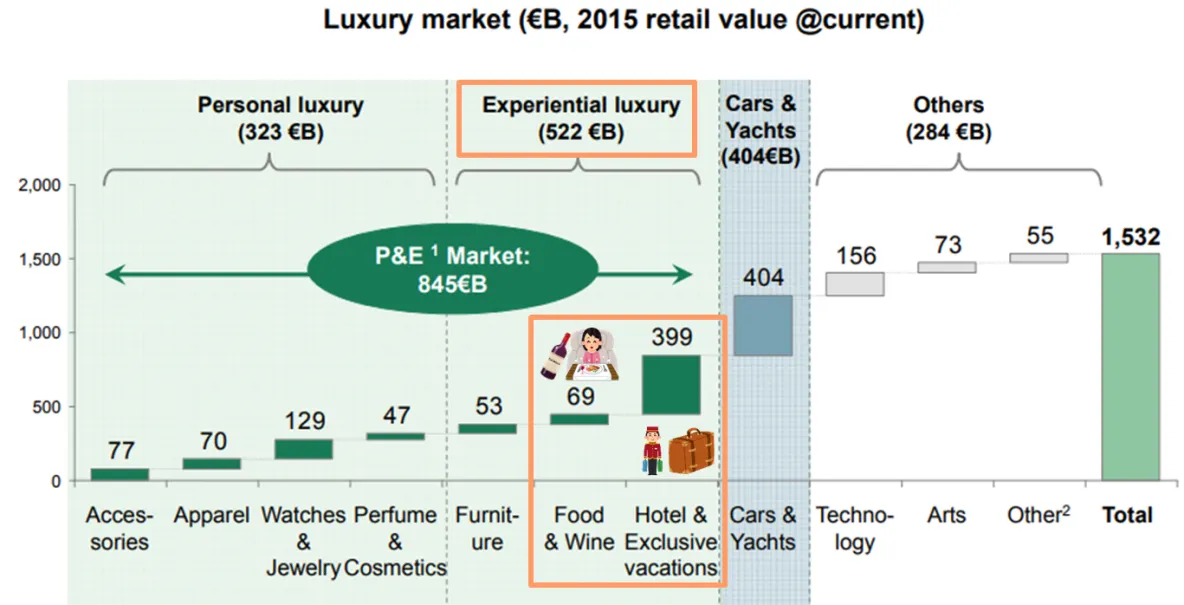
Experiential Luxury Source: BCG “Metroluxe: Countering Complexity in the Business of Luxury,”
3. ATTA (Adventure Travel Trade Association), the International Organization for Adventure Tourism
The Adventure Travel Trade Association (ATTA) is an organization established in 1990 with the goal of promoting the sustainable development of adventure travel by providing various networks and solutions. It is the world’s largest adventure tourism organization. Composed of media outlets, government tourism bureaus, tourism associations, DMOs, tour operators, and outdoor equipment manufacturers from various countries and regions, it boasts 1,400 members from approximately 100 countries.It conducts various activities to promote the industry’s development—including research and analysis, building connections among members, and developing databases—and is recognized as the world’s most authoritative adventure tourism organization, having published the Global Report on Adventure Tourism in collaboration with the UNWTO (United Nations World Tourism Organization).Another notable feature of ATTA is the ability to conduct public relations activities on its members-only website (HUB), as well as its large number of media professionals, including top-tier writers, photographers, and videographers associated with National Geographic and Forbes, as well as representatives from broadcasters such as the BBC.
ATTA offers a variety of solutions to countries and regions promoting adventure tourism (AT), supporting the development of AT destinations through conferences, trade shows, and familiarization trips that invite media and tour operators. Once a year, ATTA hosts the Adventure Travel World Summit, where AT members from around the world gather for conferences, seminars, and information exchange and networking among countries and regions, contributing significantly to the promotion of AT in the host country or region.(Figure 6)
Through its partnership with ATTA, JTB Tourism Research & Consulting is advancing the development of AT destinations within Japan and promoting initiatives to increase the number of international visitors from Europe and the United States and encourage travel to regional areas.

tourism organized by ATTA (shown here is the event held in Salta, Argentina, in October 2017)
4. Adventure Tourism Initiatives in Japan
Starting in FY 2017, with the aim of establishing a leading AT destination within Japan and with the cooperation of ATTA, AT initiatives began in the eastern Hokkaido region, centered around Lake Akan. While most of the subarctic zone in the vast Asian continent has a harsh, arid subarctic climate, the Hokkaido region, including Akan, has a relatively mild subarctic humid climate—though it does experience heavy snowfall—making it an environment well-suited to meeting AT needs.Furthermore, Hokkaido maintains comfortable temperatures and humidity levels even in summer, enabling year-round AT activities. This means that Eastern Hokkaido, which is part of Hokkaido, holds a significant advantage—both climatically and geographically—in attracting customers from Asian countries, a market expected to expand in the future.
On the other hand, since the definition of “cross-cultural” in AT is flexible and broad, traditional culture is not strictly required; however, Ainu culture is a unique indigenous culture rare even within Japan, and exposure to it can be considered one of the advantages of the Eastern Hokkaido region in the context of adventure tourism (Photo 1).
Last September, “Adventure Connect,” an official ATTA event, was held in Sapporo with the aim of expanding AT initiatives from the Eastern Hokkaido region to the entire prefecture.Adventure Connect is an event organized by ATTA to facilitate regional revitalization centered on adventure tourism, with the aim of promoting information exchange and networking among AT-related businesses; it has been held 43 times, primarily in Europe and the United States. This was the first time the event was held in Asia, excluding the Middle East.The Sapporo edition of Adventure Connect served as an opportunity to promote Hokkaido to the world, as it was announced not only to ATTA’s 1,400 members worldwide but also on ATTA’s website, which boasts 16,000 monthly page views. The second Adventure Connect was held in Sapporo on September 18, 2018, with over 100 stakeholders from Hokkaido in attendance, further fostering momentum to strengthen AT initiatives (Photo 2).
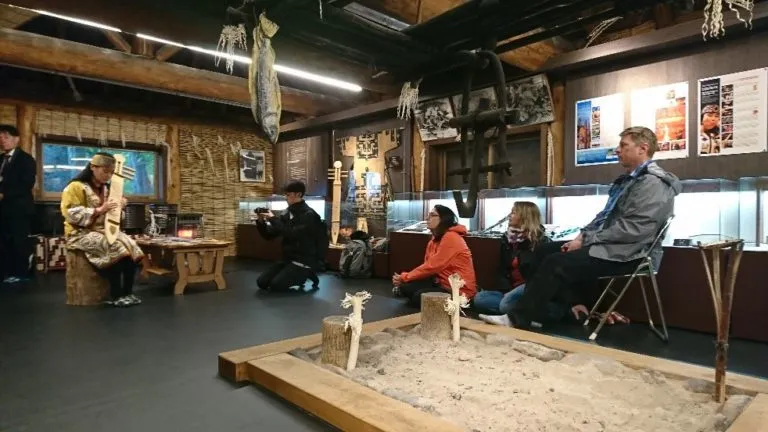
traditional instruments inside a chise (hut) at Ainu Kotan (personal photo)
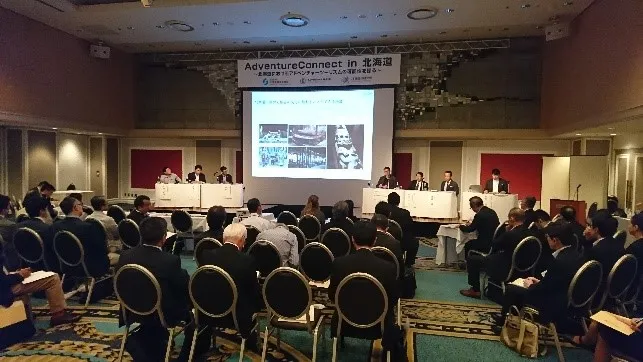
Sapporo in September 2017 (Personal photo)
5. Establishment of the Japan Adventure Tourism Promotion Council
While AT initiatives cherish nature, culture, and local communities, they also recognize the importance of economic viability. These efforts can be described as initiatives that link local resources to economic value through tourism promotion. The three elements of AT—"nature," "different cultures," and "activities"—are particularly well-suited to rural areas, which are rich in nature, locally grown crops and ingredients, and traditional culture, meaning all three essential elements for AT are readily available.
Furthermore, AT initiatives aim to create a virtuous cycle that balances “conservation” and “utilization” to ensure the sustainability of nature and culture, while also placing a strong emphasis on boosting the local economy through tourism.With a strong focus on ensuring the economic sustainability of local small and medium-sized businesses, AT initiatives are garnering attention as a means of regional revitalization in Japan, a country striving to become a leading tourism nation. However, to promote AT in Japan, it is necessary to collaborate with the ATTA to establish reception systems for AT travel products.
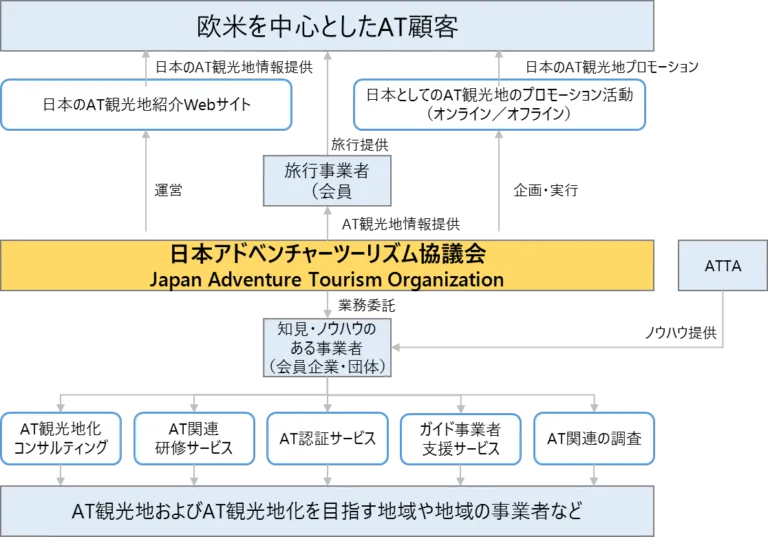
In addition to initiatives in the Eastern Hokkaido region, AT initiatives began in Nagano Prefecture this year. The focus is on developing highly distinctive travel products centered on the Nakasendo Trail, where visitors can enjoy the atmosphere of historic post towns, to enhance the tourism brand power of Shinshu. As interest in AT is growing in other regions as well, we aim to establish the “Japan Adventure Tourism Council” in April 2019 as a regional network organization to promote AT.The primary role of this council is to serve as a hub for Japan’s AT destinations and AT-related businesses, promoting Japan’s AT destinations to AT customers—primarily in Europe and the United States—while providing support to advance the development of AT destinations in Japan.With ATTA CEO Shannon Stowell and Asia Regional Director Jake Finifrock serving as external advisors, the council intends to leverage their expertise and international networks to advance activities that will establish Japan as a leading AT destination in Asia.
Press Release: "Establishment of the Japan Adventure Tourism Association"