Leveraging Local Character and Community for Tourism: Rebun Island, Hokkaido
My first visit to Rebun Island on a family trip sparked a profound connection with the island’s people and way of life. This experience led me to take on a long-term part-time job there during my undergraduate years and to conduct field research on the island while in graduate school. During my time there, I learned about the ingenuity required to live on the island, the mindset needed to sustain that way of life, and the depth of that culture. This inspired me to explore how tourism could be used to revitalize the region. In this column, I will examine what steps can be taken through tourism to leverage the region’s unique appeal for its revitalization and the preservation of its distinct character.
Overview of Rebun Island
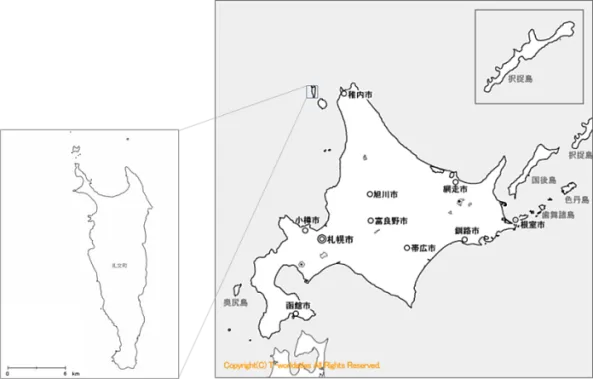
Rebun Island is located approximately 50 km west of Wakkanai, at the northern tip of Hokkaido, and is Japan’s northernmost inhabited island, with a population of 2,668 (as of April 2016). Because it is a cold region with low elevations, alpine plants that typically bloom in the high mountains of Honshu can be observed throughout the island. Situated at the confluence of the warm Tsushima Current and the cold Leman Current, the island boasts rich fishing grounds, making tourism and fishing its primary industries.
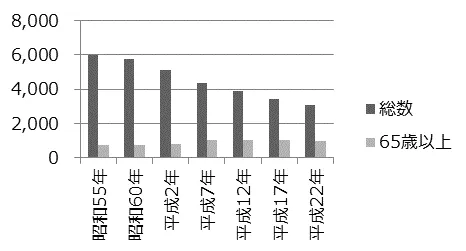
The population peaked around 1956 and has been in steady decline ever since. From 1980 to 2010, while the national population increased by approximately 9.4%, Rebun Island’s population decreased by approximately 46.8%.The population is also aging; as of 2010, the proportion of elderly people in the total population was 30.7%, exceeding the national average of 22.8% by 7.9 percentage points. Against the backdrop of depopulation, local communities are in decline, and the bonds between residents fostered by daily life and traditional events are being lost.
Regarding the tourism industry, challenges have arisen because tourism resources are specialized in alpine plants. The tourist season is concentrated in the summer, during the alpine flower blooming period, leaving more than half the year as the off-season. Furthermore, the tourism model follows the trends established in the 1970s when tourism first flourished on Rebun Island; even today, group tours organized by travel agencies and centered on flower viewing remain the mainstream. Opportunities for tourists to interact with island residents or experience the unique lifestyle and culture of Rebun Island are scarce, making it difficult to foster repeat visitors to the island.
(Figure 1) Location of Rebun Island
Trends in Rebun Island’s Total Population and Population Aged 65 and Over (1980–2010)
The Significance of Regional Character
It is often said that a region’s unique character is a major attraction for outsiders and can serve as a tourism resource. Furthermore, understanding what constitutes a valuable resource for the residents who live there is crucial for maintaining the island’s way of life and its regional character. A survey conducted in the past among Rebun Island residents (*1) (questionnaire survey n=70, interview survey n=20) revealed that many of the resources the residents value most are the “connection with nature” and “bonds between people” within island life. These have been cultivated through a way of life adapted to nature.
Things and experiences on Rebun Island that are important to residents (based on resident questionnaires and interviews)
“Connection with Nature”
- Pride in the natural environment: The people of Rebun Island live amidst the mountain flowers that bloom in succession from spring to fall, constantly changing their appearance, and against the backdrop of the sea surrounding the island. Each individual takes pride in these elements, depending on the location and season.
- Interaction with the Sea and Mountains in Daily Life: Residents often say, “The island’s mountains are rich in everything.” Due to the harsh climate, it was difficult to make a living from agriculture as an industry on Rebun Island, but residents have sustained themselves through home gardens and wild mountain vegetables. Children used to play by the sea and in the mountains, gathering whelks, abalone, and nuts as snacks; however, in recent years, due to seawall construction, restrictions on the use of the coast and mountains, and the nationwide homogenization of lifestyles and play, their daily connection with nature has become increasingly tenuous. While these changes are necessary, among the islanders, one can sense a sense of nostalgia for the island’s unique, traditional relationship with nature, as well as a sense of crisis.
“Bonds Between People”
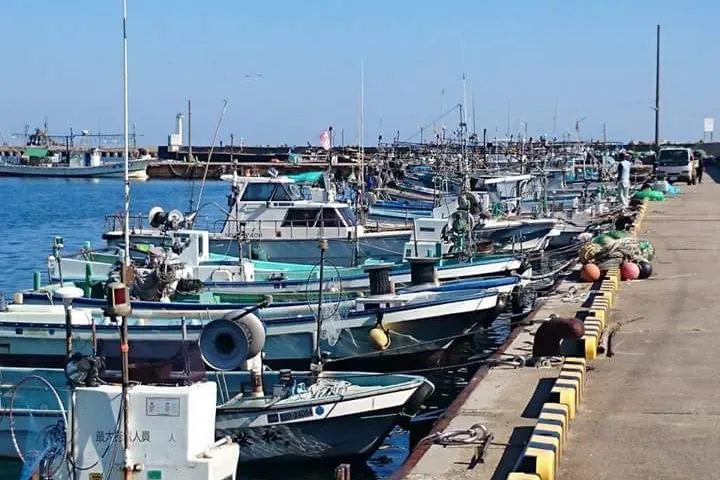
- Interactions through Fishing and Livelihoods: Land-based tasks associated with fishing provided opportunities for villagers to see one another almost daily. These interactions served as a form of mutual care among neighbors, allowing them to check on each other’s well-being.
- Interactions Through Festivals: Traditional events, such as the Itsukushima Shrine Annual Festival, have served not only to build the islanders’ identity but also to foster relationships among them. Despite the busy fishing season, about a month is devoted to festival practice and preparation, and during this process—from the initial preparations through to the day of the festival—relationships are formed that cannot be built in everyday life. “Carrying the mikoshi gives me a fresh outlook and a special feeling. It makes me feel a little more important.” “What would we do if the festival disappeared? It’s our greatest joy. It’s practically the reason we live on the island.” As these comments suggest, there is something special about the festival atmosphere, and a sense of solidarity and shared community identity emerges through participation .Although the Itsukushima Shrine Annual Festival continues to be passed down to this day, it is undeniable that it is on a downward trend, with a shortage of bearers and a shortened schedule. It is a fact that this festival holds a very important place for the residents, and how to preserve it for the future remains a challenge.
- The Role of Local Elementary Schools: The presence of elementary schools in each village played a major role in connecting the community, and school events were not just for the students but for the entire village. Due to depopulation and an aging population, five elementary schools on the island have closed, and in those villages, many people say, “Since the elementary school closed, the village has lost its sense of unity.”
The Power of Tourism—Using Tourism to Preserve Regional Identity
The things and traditions built up over the history of the relationship between nature and people in a region are elements that shape the region’s character, and they are also the things and traditions that residents cherish. While we have used Rebun Island as an example here, this applies to any region. On the other hand, due to factors such as population decline, depopulation and an aging population, and changes in lifestyles, these important things and traditions that resonate deeply with residents are gradually being lost. In this context, I believe that utilizing the aforementioned resources—the local things and traditions that shape the region’s character and are cherished by residents—through tourism can help preserve the pride in the region and sustain the community that these elements once upheld. For example, Rebun Island has been struggling in recent years with a shortage of workers for the kombu drying process. However, by utilizing this work itself as a tourist experience, it not only helps replenish the workforce but also helps maintain a space for people to interact. Furthermore, by refining everyday landscapes and cuisine as tourism resources and receiving recognition from people outside the region, it leads to a sense of confidence and pride in one’s own community.
Phenology Calendars: Understanding the Region Through Time and Space
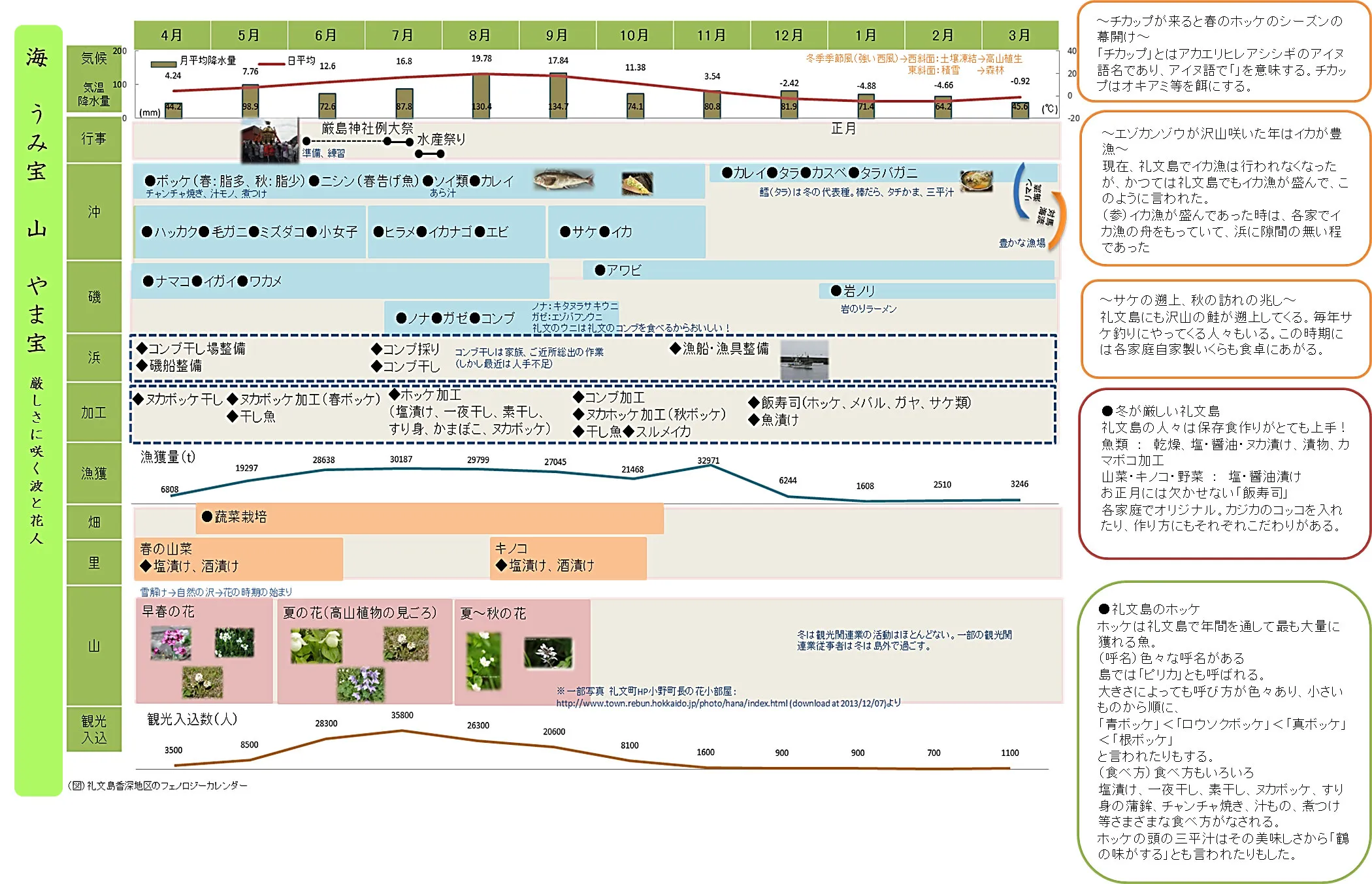
As a method for expressing a region’s unique character, we introduce the phenology (*2) calendar. A phenology calendar depicts the relationship between nature and people in a region as it unfolds over the course of a year. By combining a phenology calendar with a resource distribution map, we can understand the relationship between the people of Rebun Island and their natural environment from both temporal and spatial perspectives, thereby obtaining the essential information of “when” and “where” that is crucial for tourism.
The vertical axis of the phenology calendar plots changes in weather conditions and the natural environment alongside people’s daily lives, festivals, and events, allowing for an understanding of the interaction between the natural environment and the people in that region. Furthermore, combining this data with annual tourist arrival figures can be useful for formulating tourism strategies. For example, on Rebun Island, the summer season—when tourist arrivals peak—coincides not only with the blooming of alpine plants but also with activities such as kelp drying and various festivals. This creates a strong possibility for incorporating experiences like kelp drying into travel itineraries as experiential programs. Conversely, even during the winter season when visitor numbers decline, the island offers winter sports and seasonal seafood, presenting opportunities for developing new tourism attractions.
By utilizing a phenology calendar, basic information about regional tourism becomes visible, deepening our understanding of how each resource is connected to the local area and allowing us to explore the potential for utilizing latent resources as tourism assets. Creating opportunities to re-examine our own region—to consider what resources are important to residents and how to preserve and utilize them in the future—is surely essential for future tourism promotion.