The Future of Industry in Small, Super-Aged Communities: Insights from the Future Creation Project on Awa Island, a Remote Island in Niigata Prefecture
Awashimaura Village in Niigata Prefecture is an “isolated island” with no neighboring islands; it is the fourth-least populous municipality in Japan and is considered one of the islands with the highest proportion of elderly residents in the country. Through the village’s efforts to establish a system for providing tourism services tailored to an aging society and to revitalize the local economy by fostering collaboration between education and industry, we will explore the future of industry in small, aging communities.
Japan is an archipelago consisting of 6,852 islands. Of these, five main islands—Honshu, Hokkaido, Kyushu, Shikoku, and Okinawa Island—along with 418 outlying islands are inhabited. While Japan’s total population has increased by approximately 40% from 1955 to the present, the population of outlying island regions has declined by more than 50% over the same period. The aging rate in remote island regions stands at 37.0%, which is higher than the national average of 25.1% (2014 White Paper on Aging Society) and the average of 33.0% for depopulated areas. Indeed, remote island regions can be described as “pioneers in addressing challenges,” as they were already experiencing depopulation and aging long before the era when the country’s population was growing and the economy was on an upward trajectory.
This report focuses on Awashimaura Village in Niigata Prefecture—an “isolated remote island” with no neighboring islands, the municipality with the fourth-smallest population in Japan, and considered one of the most challenging remote islands in Japan due to its extremely high aging rate. Through the establishment of mechanisms for providing tourism services tailored to an aging society and the revitalization of the local economy through collaboration between education and industry, we will examine the future of industry in small-scale, aging regions.
1. Awashima: A Pioneering Region Among Japan’s Remote Islands
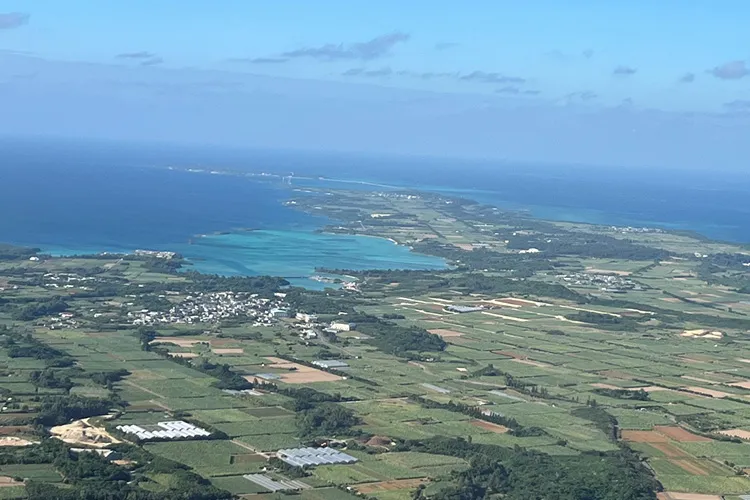
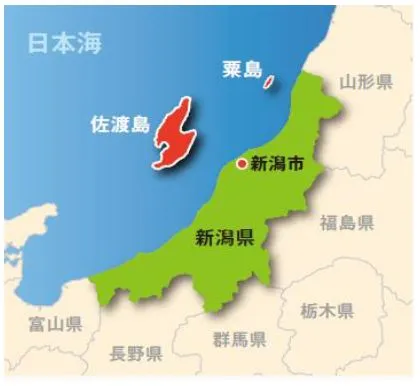
Niigata Prefecture has two remote islands: Sado Island and Awashima. Awashima is located in the northeastern part of Niigata Prefecture, a 55-minute high-speed boat ride or a 90-minute ferry ride from Iwafune Port in Murakami City, which once flourished as the castle town of the Murakami Domain.With a population of 364 and an aging rate of 42.9% (as of December 2015), this small island’s workforce is distributed as follows: 98 in primary industries, 64 in secondary industries, and 127 in tertiary industries, making the service sector its main industry. The administrative unit is Awashimaura Village, the fourth-smallest municipality in Japan and the smallest in Niigata Prefecture.
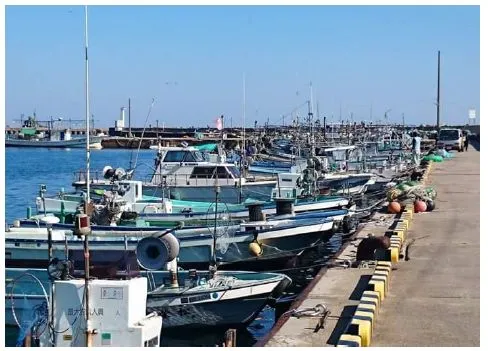
The island’s main industries are tourism and fishing. More than 20,000 tourists visit annually, and the island boasts many tourist attractions, including the “Island Opening” event during Golden Week, Awashima Ranch, breeding grounds for the Sooty Shearwater and the Great Cormorant (both designated as Natural Monuments), and the traditional fisherman’s dish “Wappa-ni.”Fishing is thriving, with set-net and bottom-trawl fishing being common practices. Fish such as sea bream, squid, and cod are shipped to various parts of the prefecture via Iwafune Fishing Port.
My first encounter with Awashima came in September 2014 through a survey commissioned by the Ministry of Land, Infrastructure, Transport and Tourism. At that time, I discussed tourism-related challenges with the Industrial Promotion Division of the town office.
Upon examining the local situation, we identified various issues extending beyond the tourism association to include the tourism industry, agriculture and fisheries, and education. Consequently, we decided to utilize the New Regional Revitalization Manager Project implemented by the General Incorporated Foundation for Regional Comprehensive Development (Furusato Foundation) to provide comprehensive consulting aimed at maintaining and revitalizing industries in this small-scale, aging community. From this project, we will introduce two initiatives: a work-sharing program to support the main tourism industry, and efforts to develop local specialty products in collaboration with the education sector.
2. Challenges Facing Awashima’s Tourism, Agriculture, and Fisheries Industries, and Initiatives to Address Them
In small economic regions such as remote islands, the only source of revenue comes from outside the island—that is, external demand. Therefore, we believed that strategies to attract funds from outside the island by leveraging services and goods from the main industries—tourism, agriculture, and fisheries—would be effective. The number of tourists visiting Awashima peaked at 57,000 in 1992 and has been declining annually, currently hovering around 20,000.While there are currently 33 guesthouses, this number has fallen to less than half of the 70 that existed at the peak, weakening the island’s capacity to accommodate visitors. Furthermore, the aging of existing operators and the lack of successors are serious issues, making the prevention of business closures an urgent priority. Consequently, we decided to attempt to reduce the risk of closures by identifying the tasks that burden guesthouse operators and establishing a system where local residents can provide support.
Regarding agriculture and fisheries, the average age of fishermen exceeds 70, and the survival of the fishing industry in ten years’ time is in doubt.In agriculture, the majority of produce is consumed on the island through personal consumption or barter, resulting in a very small-scale industry. The challenge lies in how to add value to these sectors. Meanwhile, Awashima has no high school. Young people are forced to leave the island upon graduating from junior high school, so developing an educational system that allows them to leave with pride in Awashima and return in the future as future leaders has also been a challenge.Therefore, we decided to commercialize agricultural products that had not previously been shipped off the island, utilizing the ideas of junior high school students, and market them as local specialties. This initiative aims not only to add value to the products but also to simultaneously provide career education for the students and foster a sense of pride in their community.
1) Reducing the burden on elderly workers through work-sharing in the tourism industry
To investigate the factors behind the decline in tourists on Awashima, we conducted interviews with all guesthouse operators. We identified the reasons for past closures, the current workload burdens, and the primary factors driving current considerations of closing down.The results revealed that no guesthouses on Awashima had closed due to financial hardship; instead, closures were almost exclusively attributed to an aging population and a lack of successors. We inferred that the decline in Awashima’s tourist numbers was primarily due to a reduction in accommodation capacity resulting from these closures. Consequently, we determined that our priority should be reducing the risk of guesthouse closures and facilitating business succession, rather than focusing on tourism promotion.
Through these interviews, we also identified the specific tasks involved in running a guesthouse. We found that, due to aging, tasks such as food procurement, room cleaning, and making and folding futons have become burdensome, leading owners to consider closing their businesses as their physical strength declines. Therefore, we decided to create a system where other island residents can provide support during their free time, thereby sharing the burden of guesthouse operations across the entire island. We believe this will help reduce the risk of guesthouses closing down.Although this is a pilot initiative, we have decided that the Tourism Association will manage this work-sharing program.
The Awashima Tourism Association is a voluntary organization independent of the village, consisting of three staff members: one full-time executive director and two part-time employees.Its main source of income comes from contracts with the village, and since it lacks independent revenue from profit-generating activities, the association has struggled to operate independently. Consequently, there was a need to strengthen its revenue-generating operations and transform it into a self-sustaining organization. In the future, we plan to have the Tourism Association register as a staffing agency to implement this work-sharing system and establish it as one of the association’s revenue-generating activities.
Two island residents who do not work directly at guesthouses tried out cleaning rooms and making and folding futons on a trial basis. However, it became clear that expanding the scale of this initiative would be difficult because the times when guesthouses require room cleaning and futon preparation are generally consistent, creating localized spikes in demand, and because there are few young people available to work during those specific hours. Moving forward, we aim to create a system to support the island’s guesthouses through public-private collaboration, including the participation of town hall staff in this initiative.
Beyond supporting guesthouses, we would like to explore whether the work-sharing system can be applied to create work styles suited to an aging society. This could involve recognizing the diversification of islanders’ occupations—such as islanders assisting with fish unloading during the busy fishing season, serving as guides during the busy tourism season, and mowing overgrown roadsides—thereby evening out the overall workload across the island.
Currently, to promote the succession of guesthouse businesses by welcoming successors such as newcomers, we are also considering a system where the tourism association leases guesthouses that have closed or are likely to close, renovates them, and then subleases them.For property owners, the prospect of a newcomer renting a guesthouse raises significant concerns about whether the property will be properly maintained. Conversely, newcomers often find it difficult to rent properties directly due to a lack of local trust. Therefore, we aim to promote the utilization of these guesthouse properties by having the locally trusted Tourism Association act as an intermediary to alleviate the concerns of both parties.
2) Development of Local Specialties Through the Integration of "Agriculture and Fisheries" and "Education"
Until now, Awashima’s local specialties have lacked appeal, and in tourist surveys, satisfaction ratings for these products ranked near the bottom compared to the natural environment, townscapes, cuisine, and interactions with island residents. This was because products were developed based solely on the producers’ ideas, without listening to consumer feedback. Therefore, we have partnered with retailers—who are closest to consumers—to form a product development team.This collaboration offers mutual benefits: retailers gain the advantage of increased brand recognition and a better image, while the island benefits from establishing sales channels for its specialty products. We partnered with the Niigata Prefectural General Consumers’ Co-operative, which has distribution channels within Niigata Prefecture, to brainstorm product development ideas. As a result, we decided to collaborate with junior high school career education programs to create high-value-added products utilizing the students’ ideas.We decided to create ice cream that would appeal to middle school students, using the native edamame variety “Hitorimusume”—a local specialty that had not previously been distributed—as the main ingredient.
Subsequently, through the Niigata Prefectural General Consumers’ Cooperative, we partnered with an ice cream manufacturer in Niigata Prefecture, and through that manufacturer, with a producer that processes the edamame into paste, to proceed with product development. The island’s farmers’ market purchases the edamame produced by island residents, ships it to the paste manufacturer, and the ice cream manufacturer then produces the final product.The ice cream manufacturer handles inventory management, while the island’s direct sales shop manages production adjustments and shipping instructions. The finished product is sold at direct sales shops and restaurants on the island, served as an after-dinner dessert at guesthouses, and sold through the co-op’s online gift shop, among other channels, continuing to the present day. By building connections in this way—working backward from the sales channels—we were able to establish a smooth team structure.
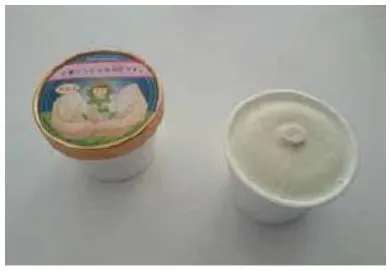
This initiative, which collaborated with career education for junior high school students to create a new local specialty, was also driven by educational goals. We hope that children who leave the island upon graduating from junior high school will learn the following three things:
- Through the commercialization of the island’s resources, we want them to take pride in the island
- We want them to understand the challenges of earning a living and to be able to appreciate the financial support their parents provide after they enter high school
- We want them to become people who think, “I’m returning to the island to create jobs,” rather than “I can’t return to the island because there are no jobs.”
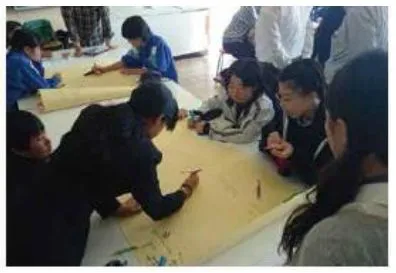
Specifically, we utilized the comprehensive learning period in junior high school to hold four workshops between July and October. These sessions covered exploring the island’s appeal, product planning, negotiations with manufacturers, taste testing, pricing, naming, and package design. This process led to the creation of the ice cream “My Precious Daughter,” which is filled with the junior high students’ thoughts and ideas.On Thursday, November 12, 2015, the students visited the Niigata Prefectural Government Office to present the product to Governor Izumida of Niigata Prefecture. Following this, they also conducted sales training at supermarkets and co-op stores.
This educational initiative for the junior high school students resonated with the island’s residents. Fifteen people volunteered to help cultivate the “One and Only Daughter” variety, and local guesthouses, restaurants, and shops offered to carry the product. A major achievement was realizing that the children had the power to unite the adults in the community.
The product development by the junior high school students generated significant buzz, and the products are currently in short supply. This served as a good example of how effective promotion is possible simply by sparking people’s interest through novelty and uniqueness, without incurring significant costs.
3. Summary
Through this project, we witnessed firsthand how the difficulties in business succession faced by tourism operators—such as guesthouse owners—due to an aging population are accelerating the decline of the local tourism industry.While seniors are receiving attention as key drivers of consumption, the aging of those providing tourism services has not yet received much attention. In that sense, Awashima can be considered a leading region among those facing these challenges. To reduce the risk of business closures due to aging, the establishment of a work-sharing system—where the entire community shares tasks for which there is a shortage of workers—is considered an initiative worth exploring that could be applied to other regions and industries, and is expected to become an important keyword for the future.
Looking ahead, the tourism association is considering acting as an intermediary to facilitate the transfer of guesthouse businesses to newcomers. In small communities like Awashima, both landlords and tenants face significant uncertainty when newcomers seek to rent property. This is precisely why it is crucial to have a trusted intermediary organization that can alleviate these concerns for both parties.
In the production of ice cream using the island’s native edamame variety, “Hitorimusume,” we adopted the philosophy of “creating products that sell” rather than “creating products we want to make.” By having distributors introduce us to manufacturers, we were able to establish a smooth operational framework.Our collaboration with schools not only fostered educational benefits—such as deepening children’s understanding of and attachment to the local community—but also enhanced the added value of our products and generated buzz at no cost. Furthermore, by placing children at the center of product development, we garnered support from many island residents and observed a unifying effect on the community.
Even as Japan’s fourth-smallest village, we have demonstrated that a wide range of initiatives can be implemented through ideas and networks. While I believe isolated remote islands are geostrategically important, depopulation and aging are progressing at a pace far exceeding our expectations. It is urgent that we create an environment where residents can tackle these challenges with vitality, drawing on external support as soon as possible.