Toward a Harmonious Coexistence of Fertile Farmland and Tourism: Efforts in Biei Town to Address Overtourism and Promote Tourism Etiquette Through Digital Transformation (DX)
In 2023, as the impact of the COVID-19 pandemic began to fade, tourist numbers rebounded sharply. In various regions, “overtourism”—where tourist numbers exceed local capacity—has led to a range of problems, prompting the national government to take action. Biei Town, one of Hokkaido’s leading tourist destinations, has also been grappling with overtourism and tourists’ poor behavior since before the pandemic.To preserve its beautiful landscapes for future generations, we introduce Biei Town’s initiatives aimed at fostering coexistence between tourism and the local community.
1. Landscapes Shaped by Human Hands
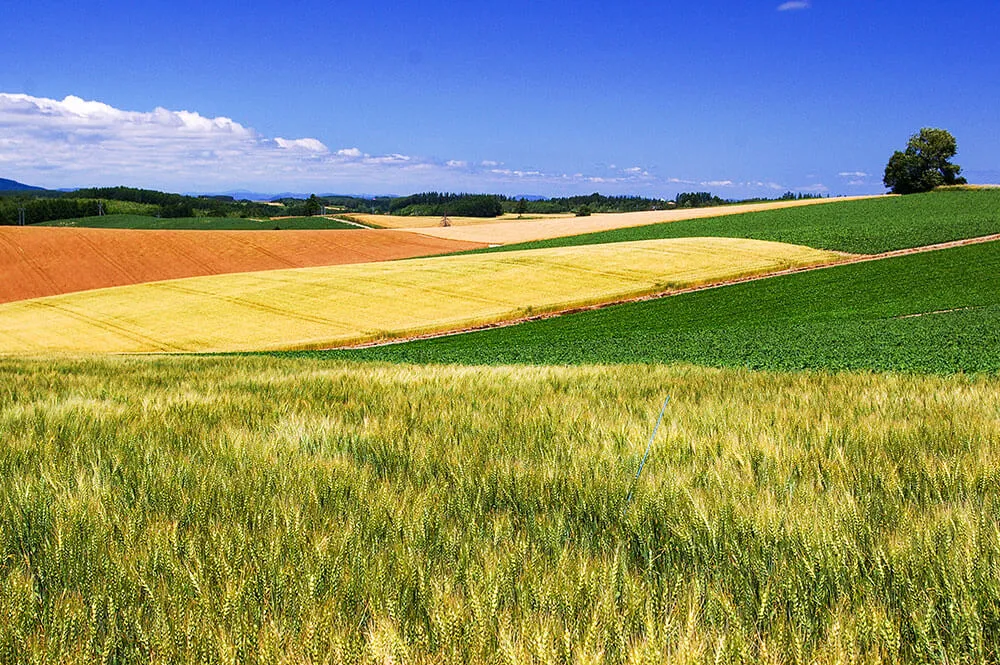
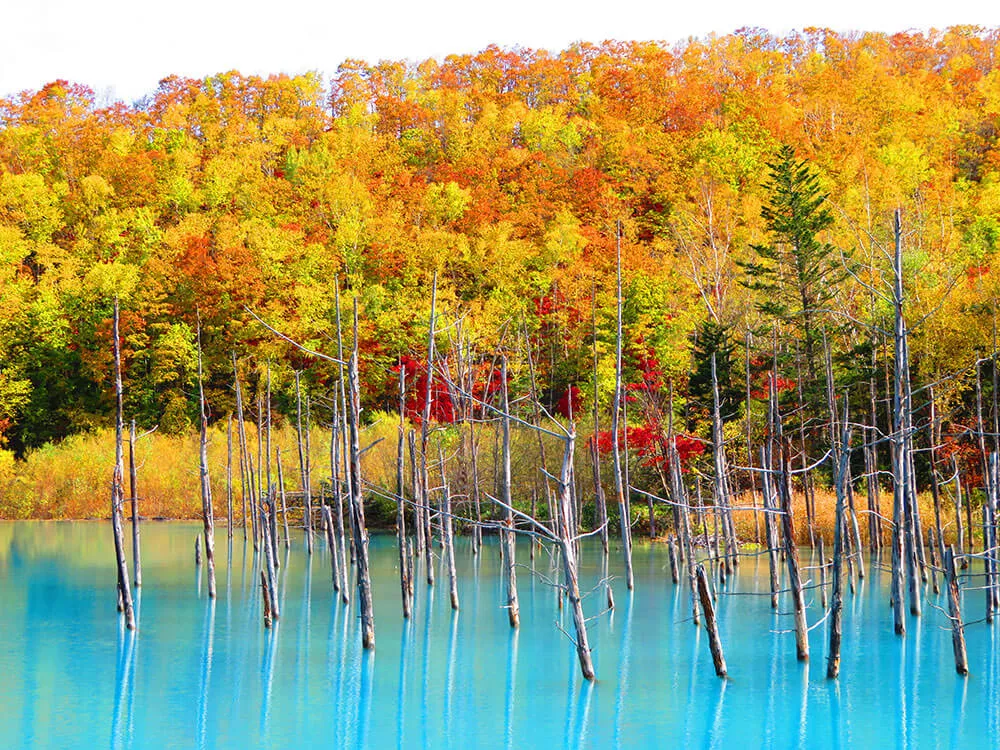
Located almost in the center of Hokkaido, Biei Town is one of Hokkaido’s most popular tourist destinations, attracting many visitors from both Japan and abroad who come seeking beautiful views and a sense of peace. The town is characterized by a vast, majestic hilly landscape reminiscent of European countryside.In addition to tourist attractions such as Mt. Tokachi, where visitors can enjoy hiking and autumn foliage; Shirogane Onsen, nestled in the Daisetsuzan mountain range; and the mysterious “Blue Pond” with its shimmering blue waters, Biei’s “scenery found in everyday life”—such as the “Patchwork Hills,” where the colors of the rolling hills change with the seasons and crops, and the “Christmas Tree Tree,” a popular “Instagrammable spot”—is attracting a growing number of tourists.
Although Biei Town attracted over 2 million tourists annually before the COVID-19 pandemic, its primary industry is agriculture. Farmland covers 12,600 hectares—approximately 20% of the town’s total area—and produces agricultural products worth about 13 billion yen annually.*1 The “Patchwork Hills” mentioned earlier are a collection of “fields” where local farmers grow various crops such as wheat, adzuki beans, and sugar beets. They were named because the fields, which take on various colors depending on the type of crop and stage of growth, appear to be pieced together like a “patchwork.”Popular photo and video spots known as the “Seven Stars Tree” and the “Christmas Tree” also rose to fame when trees left behind during the town’s development as windbreaks and shade were used as filming locations for commercials and TV dramas. In other words, much of Biei Town’s beautiful scenery was created as a byproduct of the “human hand” that cleared the land and cultivated farmland.
2. Overtourism in Biei Town
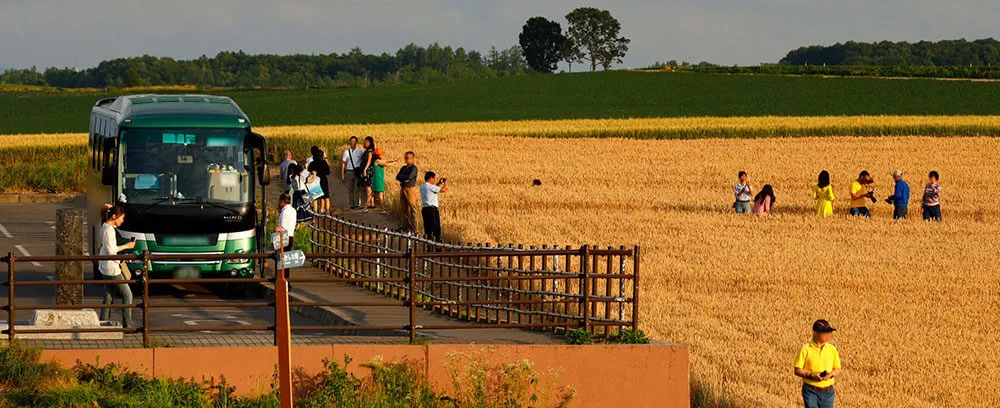
Biei Town is located along National Route 237, which connects Asahikawa—Hokkaido’s second-largest city—with Furano, a major tourist area. However, once you step inside the town, there are no major roads running through it. Outside the town center, countless narrow farm roads—so narrow that large vehicles cannot pass each other—run through the area, serving as the daily thoroughfares for local residents.In Biei Town, the most visible impact of overtourism is “traffic congestion.” Around the “Blue Pond”—the town’s top tourist attraction—queues of cars waiting to enter the parking lot can stretch over 2 km at peak times, completely blocking the lanes. Additionally, large tour buses parking on narrow farm roads sometimes obstruct the passage of local residents.We spoke with Mr. Izumi, Deputy Secretary-General of the Biei Town Tourism Association, about the situation regarding overtourism both before the COVID-19 pandemic and in the present.
“Even before the COVID-19 pandemic, traffic congestion frequently occurred, particularly during the summer peak season. Because there were frequent traffic jams caused by cars waiting to enter the parking lot at the ‘Blue Pond,’ we expanded and renovated the parking lot in 2018 and introduced paid parking in 2020—which had previously been free. However, as the number of tourists, which had declined during the pandemic, has recovered, traffic congestion has begun to occur again.
While traffic jams at the ‘Blue Pond’ are limited to the summer peak season, spots like the ‘Seven Stars Tree’ and the ‘Christmas Tree’ experience congestion year-round. These locations have been popular with tourists even before the pandemic, partly because they were featured in Korean movies and promotional videos and because ‘Instagrammable’ photos taken there went viral on social media. However, since the start of this year, there has been a sharp increase in ‘Korean tourists arriving by large tour buses.’Since the itineraries for these bus tours are generally the same, large buses tend to congregate during a short window from just after 10 a.m. to around 2 p.m. This past summer, more than 10 large buses gathered simultaneously around the “Seven Stars Tree,” prompting staff from the tourism association to rush out to direct traffic.

3. More Serious “Breaches of Etiquette”
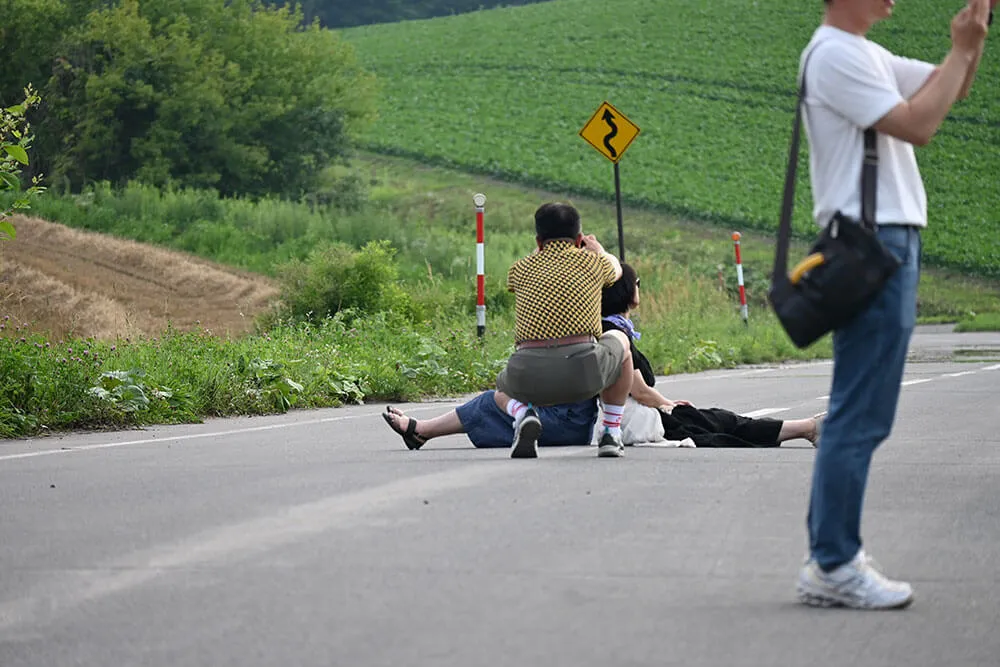
While Biei Town is already seeing the impact of “overtourism”—the concentration of tourists—on the lives of local residents, an even more troubling issue is “misconduct by tourists.” As mentioned earlier, Biei Town’s primary industry is “agriculture,” and the scenery of the “Patchwork Hills” is shaped by “farm fields.”Naturally, these fields are “places where crops are grown” and are “private property” meticulously managed by farmers, yet there is no end to tourists entering these fields to take photos and videos. Furthermore, “etiquette violations” such as trampling crops or climbing onto “hay bales” are also occurring.
We spoke with Deputy Director Izumi about the actual situation regarding these breaches of etiquette.
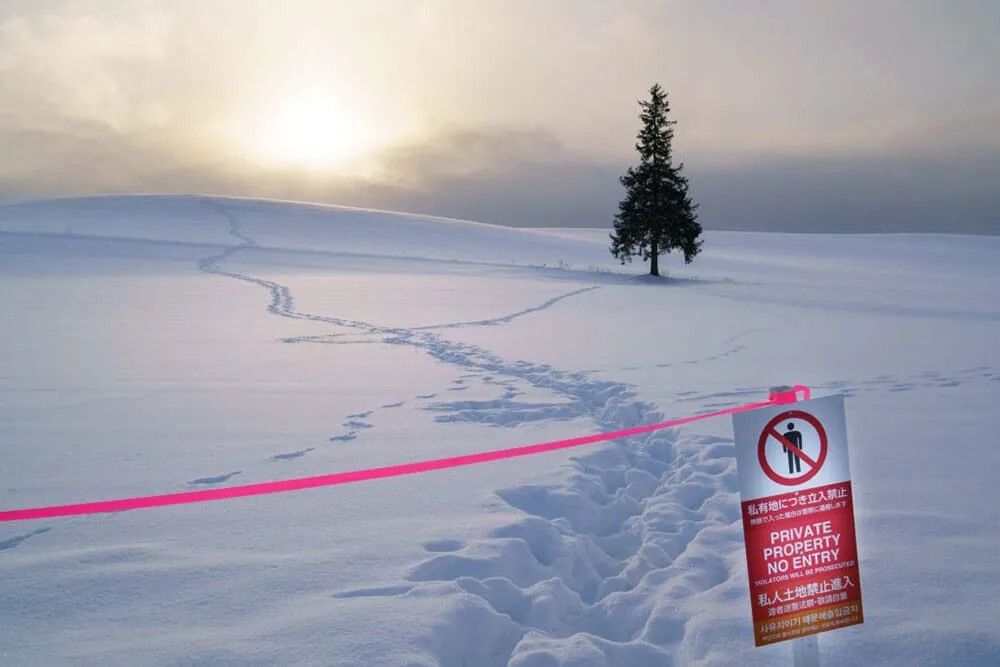
"Incidents of tourists trespassing into fields occur almost daily, primarily around the 'Christmas Tree' and 'Seven Stars Tree.' While there aren’t many severe cases of trampling crops, it is common for people to step ‘just a little bit’ into the edge of a field while taking photos or videos.Even in areas where no crops are planted, allowing tourists to enter poses a significant risk—such as introducing pathogens attached to the soles of their shoes—so Biei Town has imposed a complete ban. Additionally, there are frequent instances of dangerous behavior, such as tourists becoming so engrossed in taking photos that they step into the road or start taking photos in the middle of the road.”
In response to this situation, Biei Town has considered and implemented various measures, but due to concerns regarding effectiveness and cost, we are currently seeking more effective solutions.
"We have received various opinions and ideas regarding measures to address these violations of etiquette. While we have received many suggestions to 'fence off all the fields,' implementing this is difficult due to the enormous cost of fencing such a vast area and the fact that the fences would be damaged by snow accumulation during the winter.The Tourism Association is also implementing various measures, such as raising awareness of prohibited behaviors through posters, leaflets, and videos; conducting “tourism patrols” (inspections of tourist spots) by association staff; installing multilingual “No Trespassing” signs; and placing ropes at the entrances to fields. These initiatives prioritize “promoting proper etiquette” rather than “enforcing prohibitions” on tourists."Rather than focusing on the negative image associated with 'prohibitions,' we want visitors to understand the nature of Biei’s landscape and the problems caused by breaches of etiquette. By providing concrete examples of appropriate behavior, we hope they will enjoy tourism while observing proper etiquette with a positive mindset."
4. Initiatives to Raise Awareness of Etiquette Violations Using Tourism DX
This FY, Biei Town applied for and was selected for two projects by the Japan Tourism Agency: the “Project to Improve Reception Environments for Promoting Sustainable Tourism” and the “Model Project for Promoting Sustainable Tourism.” As a result, the town is now advancing new initiatives aimed at “realizing a sustainable tourist destination through Tourism DX.”
To address the first challenge—traffic congestion caused by overtourism—we have introduced a system to measure and broadcast congestion levels at tourist spots. By allowing visitors to check parking lot congestion information “before they go,” we expect this will help disperse traffic, encouraging people to think, “It’s crowded right now, so let’s visit another spot first.” Additionally, we plan to develop a new parking lot near JR Biei Station and launch a “Park and Ride” service.This initiative aims to reduce traffic volume by encouraging visitors to park their private or rental cars in the town center, where wide roads have been constructed, and then transfer to a sightseeing bus. With the cooperation of local farmers, tours are also being offered that allow visitors to experience vegetable harvesting on farmland that is normally off-limits to the public. A key feature of these tours is that they provide valuable experiences that cannot be enjoyed without a guide’s assistance.
Regarding "violations of tourist etiquette," another key challenge, the town has introduced a camera system powered by AI to detect and notify of trespassing at two locations where unauthorized entry is particularly common. By combining this with measures such as automated voice warnings and the expanded broadcast of educational videos on proper conduct, the town is testing more effective methods to promote tourist etiquette.
5. Toward a Sustainable Tourist Destination
To continue the initiatives mentioned above—aimed at ensuring the coexistence of beautiful landscapes and tourism—a stable source of funding is essential. As a funding source for realizing sustainable tourism destinations, “accommodation taxes” are being considered and introduced in various regions.This initiative secures targeted revenue by adding a fixed-rate tax to accommodation fees. Biei Town also considered introducing an “accommodation tax” to secure funding, but the main challenge was the low proportion of overnight guests among all tourists—that is, the “low accommodation rate.”
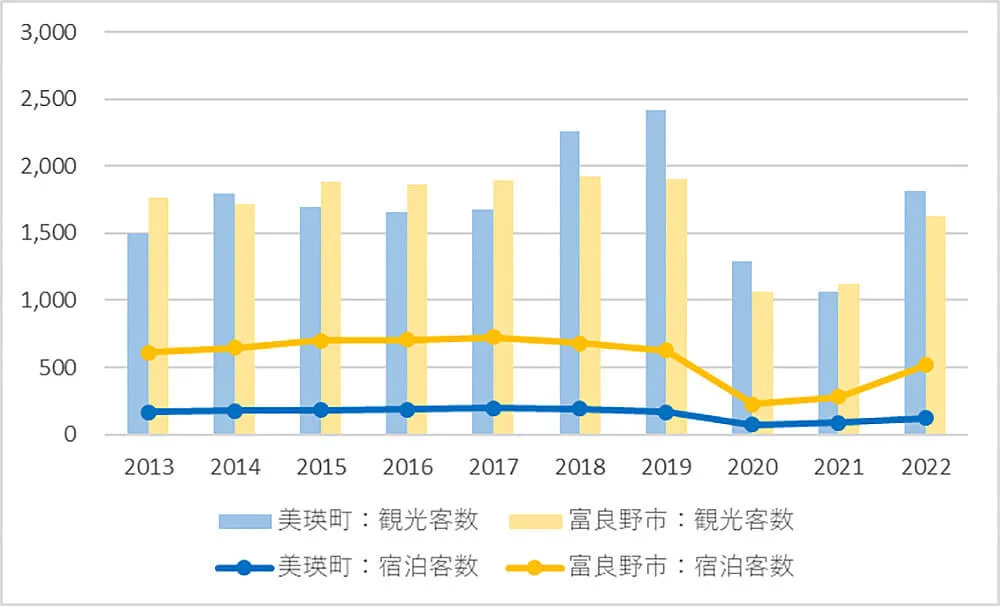
The table below summarizes the annual trends in the number of tourists and overnight visitors (actual figures) for Biei Town and the neighboring tourist destination, Furano City. While the number of tourists in Biei Town exceeds that of Furano City in some years, the number of overnight visitors in Biei Town has been significantly lower than that of Furano City in every year.In 2019, just before the COVID-19 pandemic, Furano City had 397,000 overnight visitors (an overnight stay rate of 24.3%), while Biei Town had 121,000 (an overnight stay rate of 6.8%), remaining at less than one-third of Furano City’s figure.Under these circumstances, introducing a “lodging tax” would create an unfair situation where the burden falls solely on the less than 10% of tourists who actually stay overnight.
Furthermore, since many of Biei Town’s tourist attractions consist of “fields” and “trees” and do not generate admission fees, it is difficult to impose a tax burden on these sites. How can we ensure that all tourists who enjoy Biei Town’s scenery contribute fairly to the funding for environmental conservation? Discussions are currently ongoing, led by the regional DMO, “Oka no Machi Biei DMO.”
Trends in Tourist and Overnight Visitor Numbers in Biei Town and Furano City (Unit: Thousands)
6. Conclusion
As mentioned at the beginning, “overtourism” and “violations of tourist etiquette” are currently being viewed as problems in various regions of Japan. On the other hand, the areas featured in media reports tend to be urban centers such as Kyoto and Kamakura, so the challenges faced by Biei Town may be a rather unique case.
To reiterate, Biei Town’s greatest tourist attractions—the “Patchwork Hills” and its trees—were created by human hands. It is only because the farmers of Biei Town have cultivated the land and continued farming that visitors from outside can enjoy these landscapes.I am keenly aware that we, as tourists, are called upon to behave as “responsible tourists” so that the “lives of the people”—the very essence of Biei’s charm—can be preserved and enjoyed for generations to come. Biei Town’s challenge continues as it strives to realize a “sustainable tourist destination” where “tourism” and “local industries”—which often tend to clash—coexist while creating synergies.
*1 Biei Town, “Agriculture in Biei 2023”