Promoting Collaborative Tourism
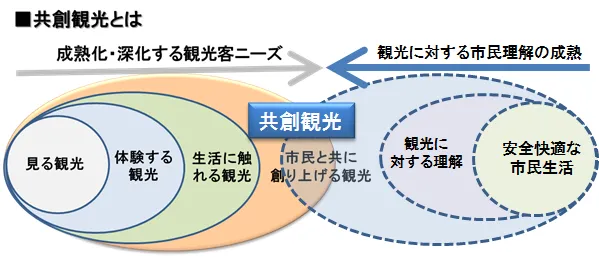
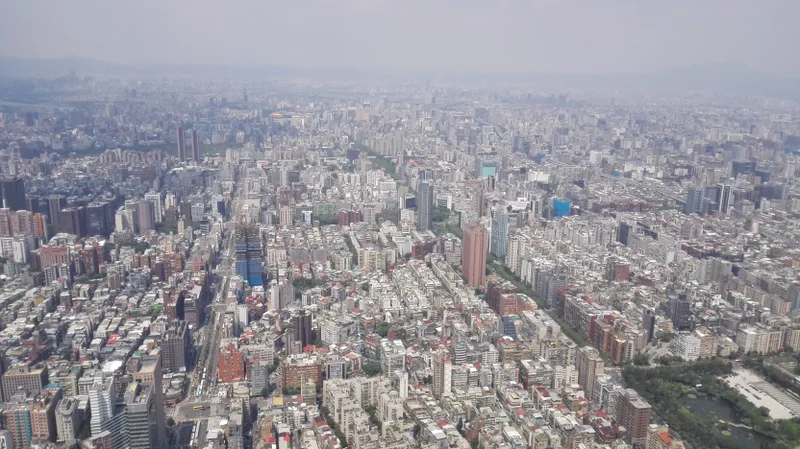
Alongside the recent surge in international visitors to Japan, issues such as “overtourism” and even “tourism pollution” are beginning to attract attention. While there remains high expectations for regional revitalization through attracting tourists, concerns are growing about the negative impact of localized tourist congestion and poor behavior on local living environments, natural resources, and cultural assets. However, at present, these issues are primarily addressed as challenges and countermeasures by the regions and tourist destinations themselves. In this article, I would like to propose a new style of travel—"co-creative tourism"—in which tourists enjoy taking care of tourist destinations from their own perspective.
1. “Sustainability”: A Global Keyword
In September 2015, the “United Nations Sustainable Development Summit” was held at United Nations Headquarters, where the “2030 Agenda for Sustainable Development: Transforming Our World” was adopted. As part of this, 17 goals—the SDGs (Sustainable Development Goals)—were established with a target date of 2030.In response, Japan’s Cabinet decided in May 2016 to establish the “SDGs Promotion Headquarters.” Furthermore, to promote local governments’ SDG initiatives aimed at regional revitalization, “SDGs Future Cities (29 districts)” and “Local Government SDG Model Projects (10 districts)” were selected in June 2018.
Of course, the SDGs are not limited to tourism, but among the selected cities are those that have matured as tourist destinations and, as a result, face overtourism as a social issue.
2. Kamakura, an SDGs Future City, and Overtourism
Kamakura City in Kanagawa Prefecture is a tourist destination supported by historical and cultural resources that represent Japan, and it was selected last year as both an SDGs Future City and a Local Government SDGs Model Project.Kamakura City has a population of approximately 170,000 and is located within commuting distance of Tokyo. While retaining its topography from the Kamakura period, the city is home to over 100 temples and shrines. In the “Kamakura City SDGs Future City Plan” formulated by the city, Kamakura is conscious of its unique character and has set forth the goal of “town development that coexists with historical heritage,” aiming to become a “Co-creation Town. ”Kamakura City, with its limited area of 40 km², receives over 20 million tourists annually (though this figure is a combined total of visitors to multiple facilities and not an exact count), and traffic congestion has long been a concern. In addition to traffic congestion, the Enoden Line—which connects Kamakura Station with Enoshima and Fujisawa—is so crowded during peak travel seasons that waiting for two or three trains is the norm, causing significant disruption to the daily lives of residents along the line. In response to these issues, Kamakura City has recently begun exploring measures such as ICT-based road pricing and pilot programs giving priority to residents on public transportation.
Furthermore, the issue extends beyond the sheer number and concentration of tourists; concerns have also been raised regarding tourist etiquette. Problems with tourist conduct include blocking roadways to take photos at locations featured in popular anime, trespassing onto train tracks, and staining clothing while eating on the go along crowded approach paths. While these issues of tourist etiquette are by no means limited to foreign tourists, the City of Kamakura passed the “Ordinance on Improving Etiquette in Public Places in Kamakura City” during the March 2019 city council session, and it went into effect on April 1. The ordinance does not include penalty provisions; rather, it is limited to a declaration and request directed at tourists and business operators. However, it is noteworthy that the local government has issued a declaration urging people to “stop” specific behaviors (such as disruptive photography and eating while walking).
These efforts to address overtourism are spreading worldwide. Copenhagen, the capital of Denmark, is a city that is extremely popular as a tourist destination, yet in 2017, the city announced a tourism strategy with the shocking title “THE END OF TOURISM.” Essentially, it moves away from traditional tourism styles, listing “temporary local living” as one of its goals, and states in the final point of its five tourism strategies that it aims for “tourism that ensures the continued happiness of residents. ”The intent is to pursue tourism from the same perspective as residents and local residents, which is precisely the goal of sustainable tourism and regional development.
When it comes to issues of behavioral etiquette in such tourist destinations, is the host community’s ability to address them limited to making “requests,” leaving them no choice but to rely on tourists’ awareness?

3. Travel that values local resources and lifestyle culture
Following the 2011 Great East Japan Earthquake, nearly 1 million volunteers visited the region that year (according to data released by the National Council of Social Welfare). While we deeply respect the countless volunteers who rush to the scene from across the country in the wake of other earthquakes and natural disasters, volunteer travel to disaster-stricken areas is positioned as a journey on a different level from ordinary tourism. However, is it not possible to incorporate actions that cherish and protect tourist destinations not only in disaster-stricken areas but also within general tourism?
While few in number, tour packages centered on social contribution are being offered by travel agencies both in Japan and abroad. U.S.-based “REI Adventures” organizes “Volunteer Vacations,” tours where participants hike trails in world-renowned national parks under the guidance of leaders, repairing boardwalks and cleaning up the area. As travelers, they enjoy immersing themselves in nature, and the joy of working up a sweat to restore it—driven by a desire to protect that very nature—likely contributes to their overall satisfaction with the trip.
4. The Origin and Goal of Tourism: “Self-Realization”
Domestic travel in Japan grew rapidly as a symbol of post-war reconstruction. Back then, simply being able to travel even once a year was a joy in itself, and it was an era when people were satisfied with group tours organized by major travel agencies, regardless of the destination or travel style. As people gradually gained more financial leeway and accumulated travel experiences, it was only natural that their travel preferences diversified. It was an era characterized by individualization, diversification, and the saying “ten people, ten colors. ”However, in recent years, individual travelers have begun to take an interest not only in conventional tourist resources and destinations but also in areas not typically considered tourist spots, giving rise to a phenomenon that has become a topic of discussion. This does not mean that travelers have grown tired of traditional tourist resources or destinations. Rather, they have come to take an interest in the environment, culture, and way of life of regions different from their own. Might we be beginning to return to the origins of “tourism”—the concept of “observing the light of the land” from the I Ching, which is said to be the etymological source of the word?
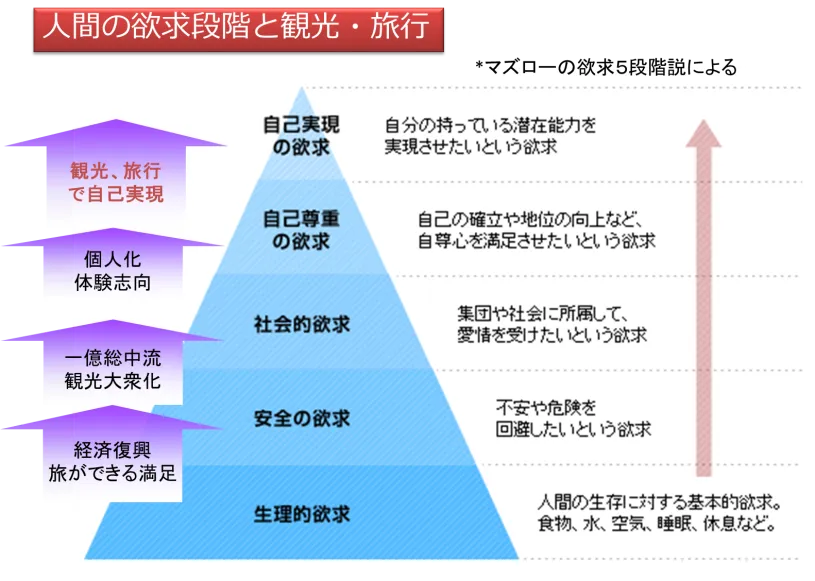
American psychologist A. Maslow is known for his “Theory of Self-Actualization” (the Hierarchy of Needs). Although this theory was proposed in a paper over 70 years ago and has faced some criticism, it remains a well-known framework in the field of marketing. It is truly fascinating to compare this theory with the changes in Japan’s tourism since the end of World War II. If we view the evolution of Japanese tourism—from postwar reconstruction to mass tourism and then to individual-oriented travel—through the lens of these five stages of needs, it seems we have reached the stage just before the “need for self-actualization.”The hypothesis is that self-actualization through tourism lies not merely in being an outsider or a visitor, but in learning the perspectives and sense of daily life shared by local residents, and in joining with them to cherish and protect the lifestyles, environment, culture, and tourism resources—truly the “light of the nation”—that they hold dear.
Applying this to Kamakura City, as mentioned earlier, this involves learning about the temples, shrines, and cultural resources that pass down the Kamakura period to the present, while polishing, cleaning, and maintaining them together with local residents. On the other hand, regarding the natural resources of the seashore, this involves enjoying “beachcombing” (the activity of observing and collecting objects washed ashore) while picking up trash and glass. You might wonder, “Why should visitors who took time off work and paid to come here have to pick up trash?” However, rather than simply being a volunteer trip, wouldn’t this be a journey to discover the satisfaction of self-realization through tourism?
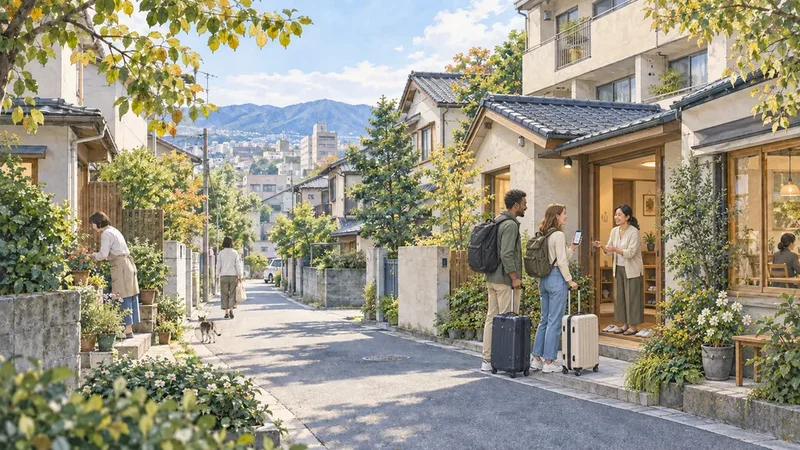
If we can promote this type of tourism—where visitors stand on the same level as residents who love, take pride in, and cherish their community, participating and experiencing things together—as “co-creative tourism,” is it too idealistic to hope that the aforementioned issues of tourist etiquette will shift from “do as I say, not as I do” to “good money drives out bad”?
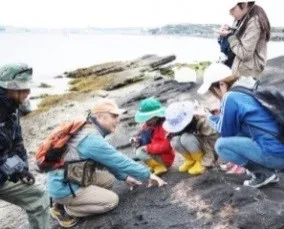
while picking up trash on the beach: Courtesy of NPO Tateyama Seaside Appraisal Group