Make a good choice

Currently, in Japan, tourism is viewed as a key factor in regional revitalization. While it is fair to say that many regions in Japan are tackling tourism promotion for the first time, their situation is reminiscent of the early days of tourism development in newly independent Croatia. Drawing on my experience—having been involved in establishing the Croatian National Tourist Board in East Asia starting in 2007 and serving as its representative until 2015—I would like to offer some insights into Japan’s ‘topics:1118’.
Introduction
Croatia is one of Europe’s most beautiful countries, boasting a rich culture, traditions, and natural beauty dating back to Roman times; however, it is also a new nation that gained independence in 1991 following the breakup of Yugoslavia. In 1995, when the Yugoslav Wars ended, the economy was in severe stagnation, and the number of visitors had plummeted. While tourism promotion, which leverages the country’s existing resources, has played a vital role in the nation’s recovery, it can be said that this was not so much a continuation of the past as it was a completely fresh start.
The author was involved in establishing the Croatian National Tourist Board in East Asia starting in 2007 and served as its representative until 2015. During that time, Croatia gained recognition as a new destination, and the number of Japanese travelers doubled from 64,000 in 2006 to 160,000 in 2015.
Currently, in Japan, tourism is viewed as a key factor in regional revitalization. While it is fair to say that many Japanese regions are tackling tourism promotion for the first time, their situation is reminiscent of the tourism promotion efforts in the newly reborn Croatia at that time. Drawing on my experience, I would like to reflect on Japan’s “Make a good choice.”
Tourism Related
The decision for the UK to leave the EU (Brexit), following the referendum at the end of June, sent shockwaves around the world, and we remain in a situation where we cannot take our eyes off political and economic trends both within the region and globally.
Meanwhile, amidst the daily stream of serious news, two major sporting events taking place in Europe are attracting significant attention: the Wimbledon tennis tournament and the UEFA European Championship (UEFA EURO 2016™) being held in France. Croatia has traditionally been a strong nation in ball sports. At Wimbledon, Cilic advanced to the quarterfinals, and although the Croatian team was narrowly eliminated in the round of 16 at the UEFA European Championship, the success of athletes in international competitions plays a significant role in raising a country’s profile.
The United Kingdom and France, the host nations of Wimbledon and the 2016 UEFA European Championship, respectively, are already established leaders in tourism with a long history. In promoting tourism in post-independence Croatia, the country looked to Mediterranean nations like Italy and Greece for inspiration, rather than the major tourism powers of the UK and France. However, Croatia had long taken note of the British Tourist Authority (Visit Britain)’s years of analysis and its skill in meticulous, strategic marketing. I would like to touch briefly on the UK’s tourism strategy.
British Style
The UK and Japan share several commonalities in recent tourism trends. Both are socio-economically mature nations, and both have hosted the Olympic and Paralympic Games since the year 2000. Furthermore, both have set a target of 40 million international visitors by 2020.Japan, which currently welcomes 20 million international visitors, has set the 2020 Olympics as its target year, while the UK aims to reach 40 million visitors within eight years of hosting the 2012 Olympics. However, the UK was already attracting 30 million tourists by the time it set its 2011 target.
Among the cities that have hosted the Olympics since 2000, London is the only one where the number of international visitors increased consecutively in both the year of the Games and the following year. After London was officially selected as the host city in 2005, Visit Britain collaborated with other relevant organizations to formulate a strategy based on detailed data analysis. In 2011—the year before the Games—they launched the “GREAT Campaign: Welcome to Britain,” a five-year global campaign that ran through 2015.The year 2015 also marked the Rugby World Cup in the UK, and it is still fresh in our memory how the Japanese national team’s strong performance made headlines in Japan. The London Olympics concluded successfully, and as a result, the UK’s tourism industry accounted for 9% of GDP in 2013 (compared to 5.2% in Japan), while employment in the sector reached 9.6% (compared to 6.5% in Japan), creating approximately 170,000 new jobs. In the World Economic Forum’s Global Competitiveness Report, the UK’s ranking in tourism competitiveness rose from 11th in 2009 to 5th in 2015, a position it maintains today.
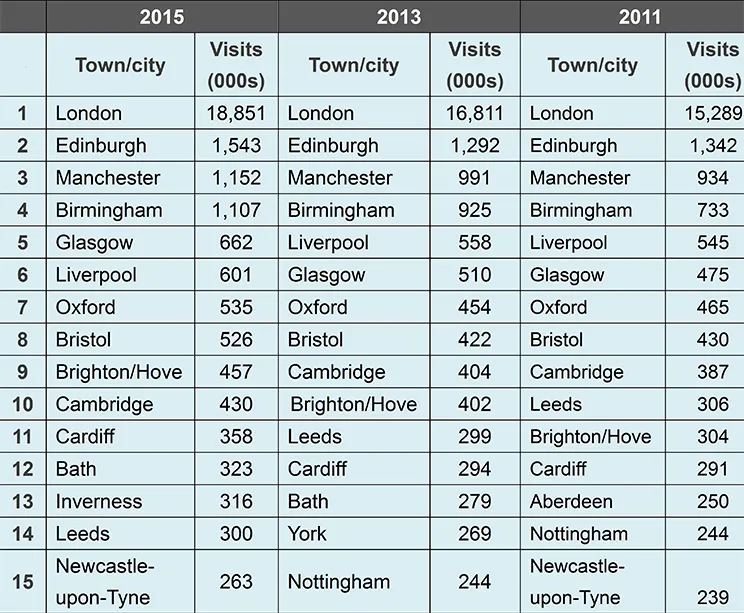
While the number of travelers to the UK has increased, along with a rise in visitors to regional areas (Table), the reality is that London still attracts by far the largest number of visitors. As in Japan, attracting tourists to regional areas remains a key challenge.
(Table) Number of Visitors by City in the UK
Croatian Style
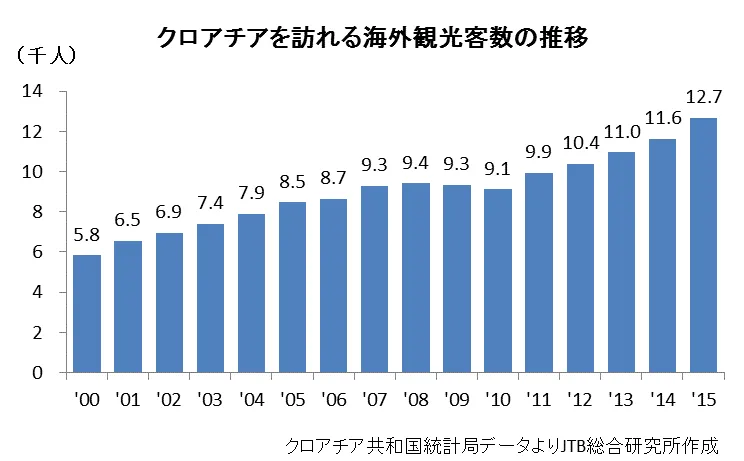
Croatia currently has a population of 4.26 million and an area roughly 1.5 times that of Kyushu. While it had a steady stream of tourists, primarily from Europe, since the Yugoslav era, these numbers plummeted during the Yugoslav Wars. The full-scale revival of tourism began in 1995, following the end of the conflict. Today, the country welcomes three times its population in foreign visitors, and the tourism industry has become a major sector accounting for 20% of GDP, with Croatia now recognized internationally as an attractive travel destination (Figure). In this chapter, we will introduce key points regarding Croatia’s tourism promotion.
(Figure) Trends in the Number of Overseas Tourists Visiting Croatia
1. From the European Market to the Global Market
A major turning point in Croatia’s tourism promotion was the expansion of its market from Europe to the global stage.
In Japan, the Embassy of the Republic of Croatia was established in 1993 and also handled tourism-related operations. I took over as the person in charge in 2002.The opening of the Croatia Pavilion at the Aichi Expo, held over a six-month period in 2005, served as a major PR opportunity, and the number of Japanese tourists visiting Croatia in 2006 doubled compared to the previous year. In 2007, JTB and Japan Airlines planned a charter flight package, and within 15 minutes of sales opening, a full Boeing 747’s worth of seats was sold out.
The Tokyo office of the Croatian National Tourist Board was established in 2008. As Director, I was responsible for Japan, South Korea, Taiwan, and Hong Kong until 2015.
Our initial approach to the Japanese market began by targeting three distinct groups: 1. the travel industry, 2. the media, and 3. the general public. The first action taken immediately after opening the office was to reach out to travel agencies. Shortly after opening, we requested that the Japan Association of Travel Agents (JATA) hold its annual general meeting in Croatia, which was realized in November, bringing JATA executives to visit the country. The following year, a working group was established within JATA to explore various travel programs to Croatia. Since the lack of direct flights made it difficult for individual travelers to visit, and little was known about what this new destination had to offer, the development of travel products based on plans from travel agencies—who were well-versed in Japanese preferences and characteristics—proved highly effective. Furthermore, because customer dissatisfaction leads to dissatisfaction with the travel agency, the government tourism bureau placed great trust in these agencies, as they were highly conscious of “quality” when dealing with a first-time destination. Regarding the media and the general public, I would like to discuss this in the section titled “Heartful Croatia.”
2. Understanding the Culture, Traditions, and People of Target Countries
When considering strategies and promotions for Asia as a whole, it was crucial to understand the culture and traditions of the target countries, as well as the habits and interests of travelers. For Japanese travelers, we focused on World Heritage sites, gourmet cuisine, wine, and culture, while also dispelling the misconception that Croatia is an “unsafe country. ”Since Taiwanese people tend to prefer national parks and the Adriatic Sea, we focused on nature and scenery, while for South Korea, we emphasized the use of celebrities and TV programs. A program featuring a famous South Korean celebrity filmed in Croatia sparked interest among Koreans, and in the blink of an eye, Croatia became one of Europe’s top destinations for Korean visitors. Currently, 300,000 Koreans visit Croatia annually—twice the number of Japanese visitors.
3. Initially, Focus on Promoting a Single City or Theme
When introducing a region that is not yet well-known, it is effective to first focus on promoting the capital or iconic tourist destinations. From there, travelers’ interest will naturally spread to other cities and regions. In the case of Croatia, the ancient city of Dubrovnik—known as the “Pearl of the Adriatic” and visited by millions of people every year—is the most well-known tourist destination. While governments and local authorities may feel they must promote everything equally, trying to convey too many things at once actually dilutes the impact. Croatia, once symbolized by the World Heritage site of Dubrovnik, has gradually seen growing interest in other regions, and popular tourist destinations such as those described below have emerged.
4. The Ultimate Tagline: “Heartful Croatia,” Using Japanese-Style English
For the Japanese public, Croatia was not only geographically unfamiliar, but even a decade after the Yugoslav Wars, it was still associated with impressions such as “dangerous,” “at war,” “cruel,” and “communist.” While the initial goal was primarily to deepen people’s understanding of Croatia, the priority gradually shifted to changing the first impression of the country through a slogan that used easily understandable language. Furthermore, selecting the right slogan is crucial when formulating concepts and strategies. For our promotional campaign in Japan, we used the Japanese-coined English term “heartful” to create the slogan “Heartful Croatia.” This term is inherently familiar to Japanese people; it conveys warmth and is associated with something endearing. We made a conscious effort to ensure that “Croatia = Heartful” became the association in many of our promotions. We organized familiarization trips to Croatia for media representatives from numerous TV programs, magazines, and newspapers. By allowing them to see and experience Croatia’s charm firsthand, they began to describe it as a “heartful” destination. As a result, the image of Croatia shifted from that of an “unsafe country” to a “heartful” one.
5. Creating a framework to engage not only the tourism industry but all people within Croatia
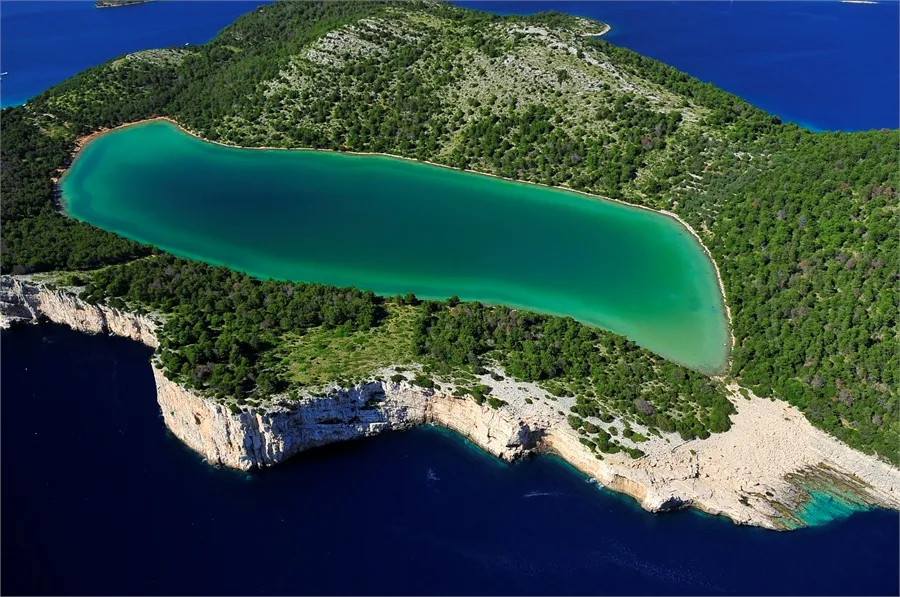
Recently, “European Best Destinations,” an organization dedicated to promoting European culture and tourism both domestically and internationally, announced its “Ranking of European Cities to Visit in 2016.” The city of Zadar was selected for first place, surpassing famous tourist destinations like Athens and Paris, as well as Croatia’s World Heritage site, Dubrovnik. This remarkable achievement is due not only to the development of world-class tourism infrastructure and the organization of events, but also to the immense contribution made by the people themselves.
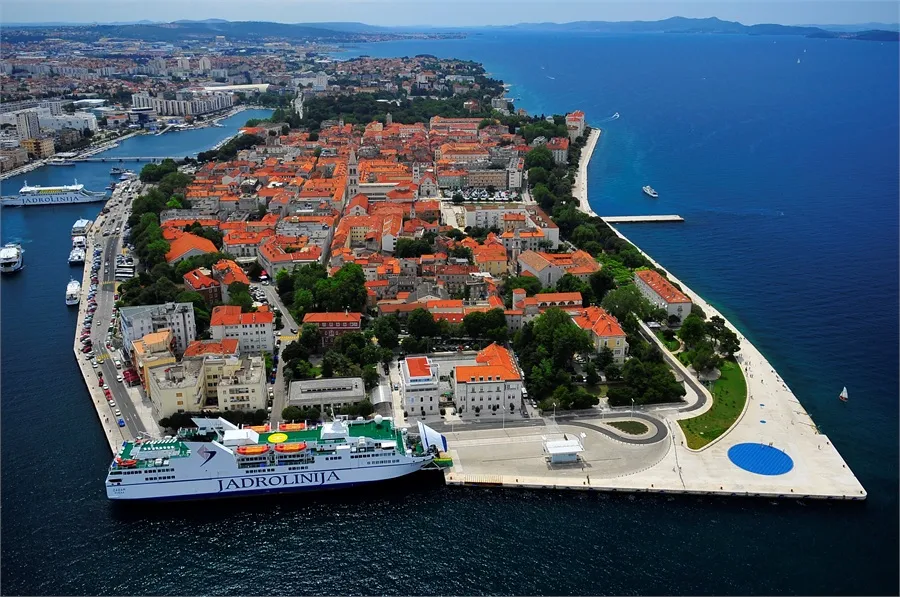
The City of Zadar Source: Croatian National Tourist Board / Photo by Ivo Pervan Since 2003, Croatia has presented the “People, the Key to Success” awards, honoring a diverse range of individuals directly or indirectly involved in the tourism industry across 25 categories (including Best Travel Agency, Police Officer, Chef, Waiter, Hotel Receptionist, and Beach Lifeguard).This award is highly prestigious in the tourism industry and has become a model of success.
I would also like to introduce the “Flower” Award. This is a program that recognizes beautifully decorated gardens in various locations throughout the city—including private homes, hospitals, and art museums—and all cities are eligible for the award. I believe this system could serve as a model for Japan as well, as it allows the entire community to contribute to the city’s landscape and beautification while also teaching children to cherish their local area.
The impressions people make and their behavior are crucial to enhancing the image of a region. When considering tourism promotion, it will become increasingly important in both Croatia and Japan to involve not only the tourism industry but also the general public.
著者