What Japanese DMOs Should Focus On in Tourism Marketing
In Japan, it is common for tourism associations and tourism-related organizations to lack transparency regarding their marketing budgets. As these organizations work to increase transparency—such as by disclosing the effectiveness of their marketing activities and their efforts to meet KPIs—what areas should Japan’s emerging DMOs focus on? Drawing on publicly available information from U.S. DMOs and Brand USA, we will examine their approaches to digital marketing.
Introduction
In Japan, the disclosure of marketing budgets by tourism associations and tourism-related organizations is not very advanced, so even when trying to compare them with others, it is often unclear what kind of promotions were carried out and at what cost.
In the United States, where return on investment (ROI) and accountability are highly valued, the effectiveness of marketing activities and efforts to achieve KPIs are made public, giving the impression that “visibility” is advancing. In today’s digital age, where a single smartphone allows users to gather information about travel destinations, make reservations, and complete payments, initiatives different from traditional marketing are required. But what should the Japanese version of DMOs (1), which are currently being registered, focus on?
In this article, we will discuss digital marketing initiatives based on publicly available information from U.S. DMOs and Brand USA (2).
Brand USA’s Shift from Offline to Online in Promotional Activities
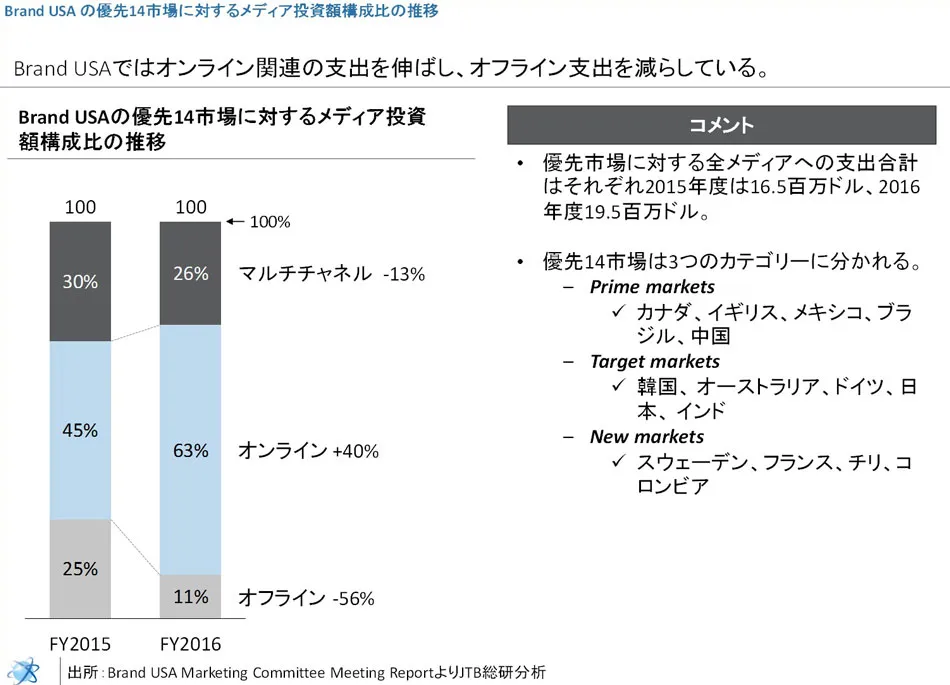
Looking at Brand USA (official name: The Corporation for Travel Promotion), an organization similar to the Japan National Tourism Organization (JNTO), we can see a shift from offline to online. From FY 2014 to FY 2015, Brand USA increased its online-related spending on promotions for its 14 priority markets from 45% to 63% (Figure 1).
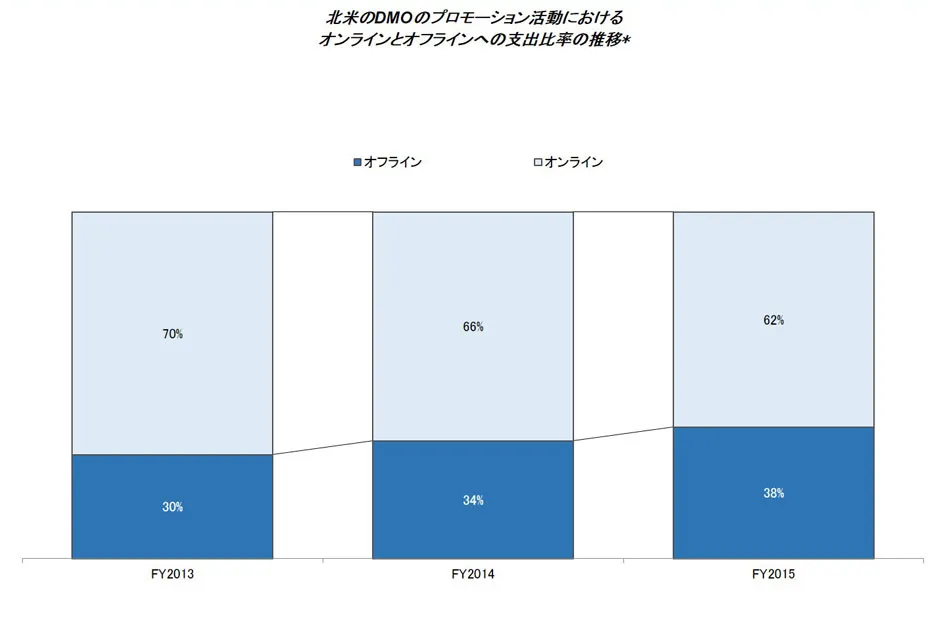
According to the results of a survey conducted by the Destination Marketing Association International (DMAI; based in Washington, D.C.), the world’s largest DMO organization, among more than 200 DMOs of various sizes in North America (including state and city-level organizations), there is a marked trend toward an increase in the proportion of online spending (such as websites and web advertising) within promotion budgets (Figure 2).
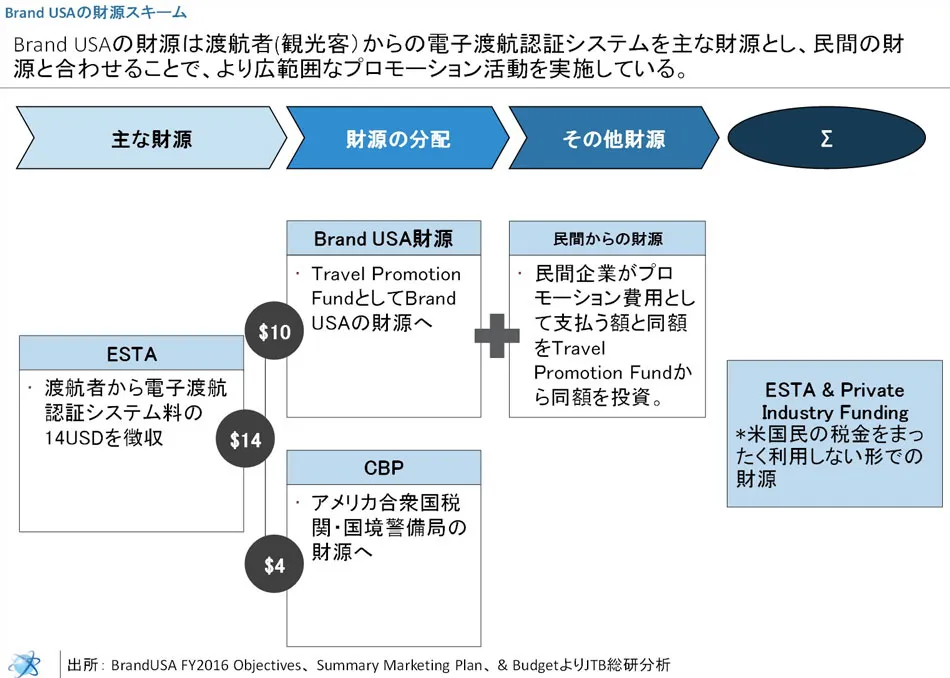
It is worth noting that Brand USA’s promotional funding is covered by e-Visa fees from international travelers and private-sector contributions. This has become a topic of discussion among domestic DMOs and may serve as a useful reference for their own funding strategies (Figure 3).
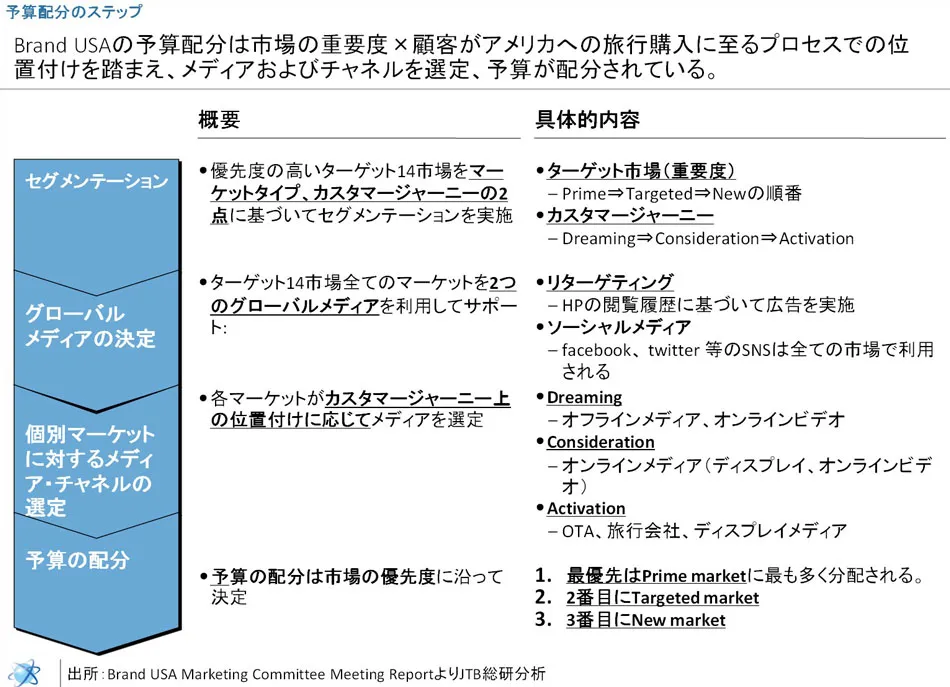
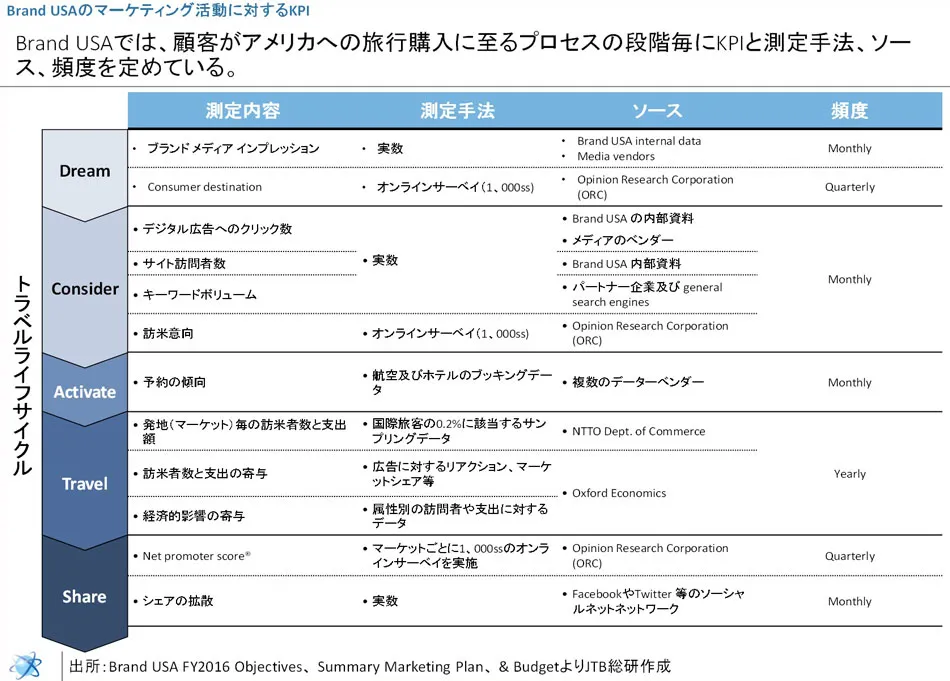
Furthermore, Brand USA’s marketing budget decision-making process is intriguing. Marketing budgets are allocated based on the selection of promotional channels determined by market importance and the positioning of those channels within the customer journey—the process by which customers decide to purchase a trip to the U.S. Based on extensively collected data, KPIs are established after defining what to measure, how to measure it, and how frequently to measure it. The metrics used to assess KPI achievement specify the measurement content, methodology, data sources, and frequency, enabling regular verification of results (Figures 4 and 5).
Digital Talent Required for Japanese DMOs
What insights can Japanese DMOs gain from the growing online initiatives in tourism promotion by Brand USA and other U.S. DMOs?
The impact of the evolving digital environment extends beyond mere cost savings, such as reduced advertising expenses. By measuring and analyzing responses to initiatives in real time, marketing activities can undergo significant transformation. While traditional mass media promotions—such as print and television—required months to gauge audience response, online platforms enable much faster action.
Now that the term “inbound tourism” has gained widespread acceptance and competition among regions is intensifying, I believe DMOs need to adopt a mindset that goes beyond simply implementing initiatives for travelers already in the region or in Japan—they must also focus on how to attract travelers from their target markets.
Furthermore, while it is certainly necessary for DMOs to have staff skilled in B2B marketing with the travel industry—which handles sales—I believe that strengthening efforts to address the rapidly evolving digital landscape (through talent development and enhanced mobile capabilities) will enable efficient marketing activities even from within the region, thereby securing a competitive advantage over rivals.