Economic Ripple Effects on the Region and Strategies for Attracting Tourists in Connection with the Osaka-Kansai World Expo

The 2025 Osaka-Kansai World Expo is expected to attract many international visitors to Japan, and the region anticipates significant economic benefits. In this article, we will explore what the region should do to maximize these economic benefits, using specific examples.
1. Introduction: The Goals of the Osaka-Kansai World Expo
World Expos are national projects involving people from all over the world. Past Expos held from the 19th to the 20th century gave rise to various innovations and have been regarded as venues for promoting national prestige and fostering business through the showcase of technology and culture.At the 1970 Japan World Exposition (Osaka Expo), innovations such as electric vehicles, moving walkways, cordless telephones, and family restaurants were introduced as a result of the Expo and have since become commonplace.In contrast, World Expos in the 21st century have focused on addressing global challenges and the sustainable development of human society. The 2025 Osaka-Kansai World Expo also aims to contribute to the achievement of the Sustainable Development Goals (SDGs) and the realization of Japan’s national strategy, “Society 5.0.” The Japan International Exposition 2025 Association has identified the following five objectives to be realized at the 2025 Osaka-Kansai World Expo:1. Bringing together the world’s wisdom, including cutting-edge technologies, to create and disseminate new ideas; 2. Generating and disseminating creativity from both domestic and international sources; 3. Fostering innovation through enhanced exchange; 4. Revitalizing the regional economy and small and medium-sized enterprises; and 5. Providing an opportunity to showcase Japan’s rich culture.In this paper, we will focus on points 4, “Revitalization of the regional economy and small and medium-sized enterprises,” and 5, “An opportunity to showcase Japan’s rich culture,” and examine the economic ripple effects on the region.
2. Economic Ripple Effects on the Region Triggered by the Osaka-Kansai Expo: Results of Measuring Economic Ripple Effects from Tourism Activities by Foreign Visitors to Japan Outside the Expo
The Osaka-Kansai Expo is expected to expand the number of visitors to the region, as people come for a variety of purposes, including tourism, education, culture, sports, business, and academia. According to a report released in July 2023 by the Asia-Pacific Institute for Research (APIR), the Osaka-Kansai Expo is projected to generate an economic ripple effect of 2.3759 trillion yen.Furthermore, it has been announced that, as a result of the Expo, the number of incentives—such as attractive content and events for tourists—that encourage longer stays will increase across the broader Kansai region. Consequently, in addition to the aforementioned economic ripple effect, an upward revision of approximately 400 to 500 billion yen is anticipated. These economic ripple effects are expected to extend beyond Kansai to regions across the country. Promoting the appeal of one’s own region through the Osaka-Kansai Expo could serve as an excellent opportunity to demonstrate that region’s presence.So, what kind of economic ripple effects are actually expected in each region?
With the cooperation of Professor Oi from the Faculty of Data Science at Rissho University, we estimated the economic ripple effects generated by foreign visitors to the Osaka-Kansai Expo through tourism activities outside the Expo itself, broken down by prefecture (excluding Osaka Prefecture, the host prefecture). The results showed that the total induced production across all prefectures was approximately 359.89 billion yen, and the economic multiplier effect relative to tourism spending was approximately 1.30.Furthermore, the prefectures with the highest induced production were Kyoto (approximately 170.42 billion yen), Nara (approximately 53.14 billion yen), and Tokyo (approximately 45.33 billion yen), accounting for over 70% of the total induced production.While most of these top-ranking regions are gateways such as the Tokyo and Kansai metropolitan areas, or regions along the “Golden Route” benefiting from wide-area sightseeing, it is believed—similar to the previous APIR announcement—that economic ripple effects can be expanded by implementing Expo-driven initiatives in each region to attract international tourists. In fact, various regions are already undertaking initiatives to promote their local attractions, anticipating an influx of international tourists visiting for the Osaka-Kansai Expo.The following chapter introduces these initiatives.
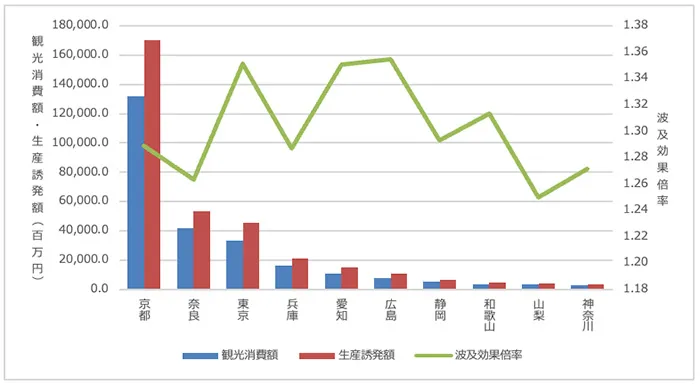
(Source) Joint survey by JTB Tourism Research & Consulting Co., Ltd. (Fujita) and Rissho University (Oi)
3. Regional Initiatives to Attract Tourists Triggered by the Osaka-Kansai Expo: The Case of Kagawa Prefecture
Since 2021, the JTB Takamatsu Branch has held the “SANUKI ReMIX” project annually, centered around the Important Cultural Property “Hiyun-kaku” within Tamamo Park. This project brings together local artisans who support the region’s culture and industries with world-class artists and creators to co-create and generate new high value-added content. The 2023 event was held from November 3 to 12.
The project was driven by the need to rebrand a long-established tourist destination. Historically, Tamamo Park (Takamatsu Castle) and Yashima have been the two major cultural assets of Takamatsu City, Kagawa Prefecture, attracting many visitors as long-standing tourist attractions. However, a declining number of visitors in recent years had become a significant challenge.Aimed at addressing this issue and contributing to the revitalization of the local area, this project rebranded Tamamo Park—a long-established tourist destination that had lost some of its appeal—to promote new tourist attractions in Takamatsu City, Kagawa Prefecture.Takamatsu City has long been a hub for traditional craftsmanship, boasting local industries and traditional crafts such as lacquerware, paper lanterns, and Takamatsu bonsai. "SANUKI ReMIX" focuses on the artisans who support these traditions, capturing their sensibilities and the context in which they work as a single narrative to promote "artisan-focused tourism."During the Osaka-Kansai Expo, the pavilion itself will be presented as a “can filled with sensibilities that blend traditional crafts, culture, arts, and creativity.” Through this approach, we aim to showcase Kagawa Prefecture’s new appeal to the world and attract international tourists visiting the Expo to Kagawa Prefecture.

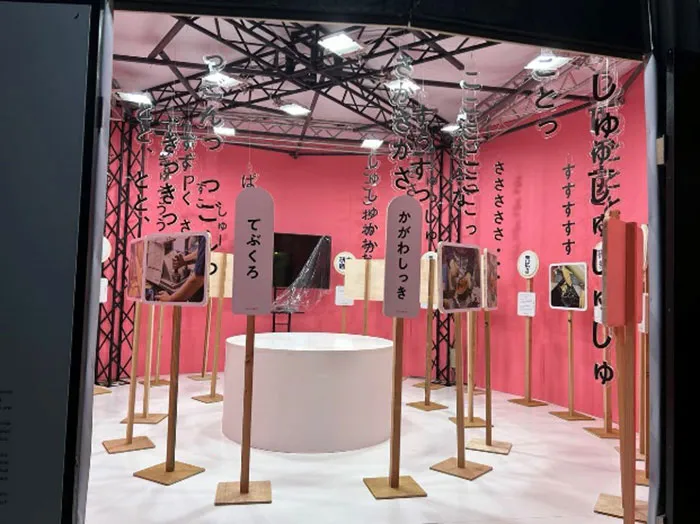
SANUKI ReMIX Media Cooperation: Yuki Yamada, Tourism Development Producer, JTB Takamatsu Branch
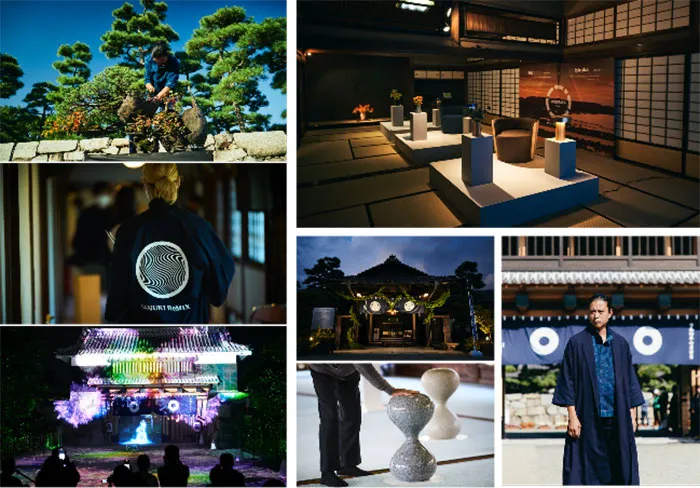
SANUKI ReMIX Media Cooperation: Yuki Yamada, Tourism Development Producer, JTB Takamatsu Branch
4. Promoting Tourism to Our Region
The results of the previous survey revealed that the tourism activities of foreign visitors to Japan—beyond the Expo itself—will generate economic ripple effects across regions nationwide. While current surveys indicate that these effects are concentrated in gateway regions such as the Tokyo Metropolitan Area and the Kansai region, as well as areas along the Golden Route, future initiatives—as demonstrated by the case of Takamatsu City—are expected to extend these benefits to more distant regions as well.
With approximately 28.2 million visitors expected at the Osaka-Kansai Expo—including about 3 million international tourists—it is crucial for regions across the country to refine their tourism resources, expand experiential tourism content tailored to travel needs, and build regional brands to draw the world’s attention to their own areas. In doing so, regions must consider the characteristics of their target customers and promote travel themes that their region can uniquely offer.Today’s travelers have clear motivations for travel, such as a strong intellectual curiosity and a keen interest in nature, history, local culture, and culinary traditions, and they place a high value on experiences that can only be had in a specific region.In response to this trend, various forms of tourism—such as health tourism, adventure tourism, sports tourism, ecotourism, and gastronomic tourism—have emerged. Regions can leverage the Osaka-Kansai Expo to showcase their unique attractions to visiting tourists by presenting their appealing tourism resources within the context of “○○ tourism,” thereby highlighting new points of interest. To achieve this, regions should focus on the following five points.
First, based on the region’s history, culture, nature, and industries, conduct research to identify what tourism resources the region possesses, determine which resources could serve as strengths when compared to competing regions, and assess whether those resources align with market trends and the needs of the target tourists. This will enable a better understanding of the region’s tourism strengths and facilitate discussions on which demographic to target.Second, work with local stakeholders to brainstorm images associated with these key tourism resources and establish a concept. This process will help build the narrative around the tourism resources. Third, plan actual tourism itineraries based on this narrative and the resources. At this stage, invite target tourists to participate in test tours and refine the itineraries based on their feedback.The fourth step is improving the reception infrastructure. To attract international visitors with a new narrative, it is necessary to simultaneously enhance various reception facilities, including support for multiple languages, religious needs, and public health, as well as the provision of Wi-Fi and local transportation. Finally, the fifth step is building a sales network and disseminating information.While purchasing channels vary depending on the characteristics of the target audience, when approaching international visitors to Japan, it is important to reach out not only through online sales but also to local travel agencies, and it is necessary to disseminate information through these channels. By addressing these five points, it will be possible to use the Expo as an opportunity to convey the new appeal of the region to international tourists, enabling a wider variety of regions to benefit from the legacy effects of the Expo on tourism.
<Reference>
The following assumptions were made for the estimates.
- Tourism spending was calculated as the number of tourist arrivals multiplied by the average spending per tourist.
- For the number of inbound tourists, we used data from the 2019 edition of “FF-Data (Inbound Foreign Visitor Flow Data),” a survey conducted by the Ministry of Land, Infrastructure, Transport and Tourism. We extracted data for the second and third quarters, which correspond to the period during the Osaka-Kansai Expo, and calculated ratios based on actual figures for Osaka Prefecture as the point of departure (or arrival) and the 47 prefectures as the point of arrival (or departure). In doing so, we excluded from the estimates the number of people for whom both the point of departure and arrival were Osaka Prefecture.
- Based on these ratios, the 3 million foreign visitors to the Osaka-Kansai Expo were allocated by prefecture. We estimated the number of people who traveled to another prefecture after visiting the Osaka-Kansai Expo, as well as the number of people who were staying in another prefecture before visiting the Expo.
- Regarding the average spending per foreign tourist, the Basic Plan for Promoting Japan as a Tourism Nation, announced in March 2023, set a target of 200,000 yen per foreign tourist by 2025; we used this target value. We assumed that half of the 200,000 yen target (100,000 yen) would be spent on consumption related to the Osaka-Kansai Expo, and the remaining half would be spent in prefectures before and after the visit.
- For the composition of the 100,000 yen, we used the results from the 2019 Survey on Consumption Trends of Inbound Tourists. However, since a significant portion of transportation costs within the prefecture is attributable to inter-prefectural travel, we did not use the 2019 figure of 10.5% but instead allocated half of that amount (5.25%) to transportation costs.
- When allocating each expenditure category to the input-output table, transportation costs were split equally between “Transportation and Postal Services” and “Personal Services.” For shopping expenses, 60% was classified as “Food and Beverages” and 40% as “Other Manufactured Industrial Products.”Accommodation, food and beverage, entertainment, service, and other expenses were grouped under “Personal Services.” A 30% commercial margin was set for shopping expenses and classified under “Commerce.” Similarly, a 4% transportation margin was assumed and allocated to “Transportation and Postal Services.” However, since the classifications in the input-output tables vary by prefecture, the categories were adjusted as appropriate.
- To calculate induced output, we used the inverse matrix coefficient tables (open-type) from the 2015 Input-Output Tables (major categories) for each prefecture. However, since the 2015 Input-Output Tables for Nara Prefecture had not been published as of July 2023, we used the 2011 Input-Output Tables instead.
- Regarding the calculation of tourism expenditure mentioned above, while prefecture-level per capita expenditure figures should ideally be used, national figures were employed instead. Although geographical factors will need to be considered in the future, national results were used for the sake of practicality.
著者