The Future of Regional Arts Festivals

During the COVID-19 pandemic, as people were asked to restrict their activities, the phrase “non-essential and non-urgent” was applied to culture and the arts, leaving deep scars on those involved in and supportive of these fields. At the same time, regional arts festivals have taken root across the country, and this year is packed with full-scale events for the first time in a long while. Can regional arts festivals continue to be something of value to many people? We examine the unique value of these festivals in light of the achievements they have brought about.
1. The Establishment of Regional Art Festivals
Museum walls are usually white. This exhibition style, known in the art world as the “white cube,” became widespread relatively recently, after 1976. Its fundamental philosophy is to eliminate background distractions as much as possible so that viewers can appreciate the artwork in its purest form. If this is considered the standard for contemporary indoor exhibitions, then regional art festivals represent the exact opposite.
Regional art festivals are held with the aim of bringing new appeal and perspectives to a region by fostering interaction among diverse people—transcending attributes such as location and age—through the fusion of contemporary art with the region’s unique landscape and the culture it has cultivated over time. This, in turn, increases visitor numbers and revitalizes the region.While many adopt a triennial (held every three years) or biennial (held every two years) format, numerous art festivals are scheduled for 2024, including the Sapporo International Art Festival, the Echigo-Tsumari Art Triennale, the Yokohama Triennale, and the Northern Alps International Art Festival, and many art fans are eagerly anticipating them.
The movement of regional art festivals in Japan began with the inaugural “Echigo-Tsumari Art Triennale” in 2000 and the first “Yokohama Triennale” in 2001.Furthermore, the “Setouchi International Art Festival,” launched in 2010 based on the activities of the Benesse Art Site Naoshima, raised the profile of art festivals held in regional areas and served as a catalyst for their expansion into many regions.
2. The Impact of Regional Art Festivals
(1) Economic Impact
The Setouchi International Art Festival has been held five times to date, welcoming approximately 1 million visitors each time. During the 2019 edition, overseas visitors accounted for 23% of the total, and the economic impact reached approximately 18 billion yen (even during the 2022 edition, held amid the COVID-19 pandemic, it amounted to about 10.3 billion yen).
The Echigo-Tsumari Art Triennale generated an economic impact of approximately 6.5 billion yen in the Echigo-Tsumari region, which is facing depopulation and an aging population, while the North Alps International Art Festival, a later entrant, generated an economic impact of 1 billion yen in its inaugural year. In rural areas where tourism demand is subject to seasonal fluctuations, the economic impact of hosting an art festival is of immense significance.
(2) Revitalization of Local Communities
Let us take the Setouchi International Art Festival, which has a long history, as an example. The main venues for its inaugural edition were seven islands: Naoshima, Teshima, Megijima, Ogijima, Shodoshima, Oshima, and Inujima. Since then, the venues have expanded to include surrounding islands, generating corresponding social benefits.
On Naoshima, which had been promoting revitalization through art even before the festival began, there was not a single café prior to 2004; by 2023, this number had increased to 53, creating many places where local residents can gather.On Oshima, due to the presence of a convalescent facility for leprosy survivors, there were no regular ferry routes available to the general public until recently; however, following the festival’s inaugural event in 2010, a regular ferry route open to the general public was established in 2019.On Teshima, efforts have gone beyond simply building an art museum; community activities have been promoted, and a project to restore lost terraced rice fields is underway. The island that has seen the most significant change is Ogijima. Faced with the prospect of all children leaving the island, efforts to encourage relocation intensified, and a closed elementary school and daycare center reopened thanks to the art festival. Currently, the island’s population is about 130 people, of whom approximately 50 are newcomers.
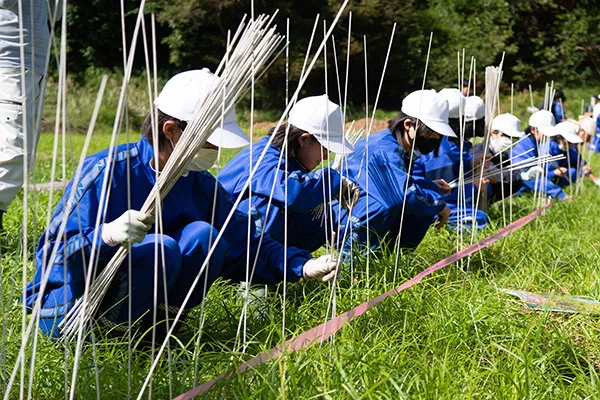
Not limited to the Seto Inland Sea region, many art festivals rely on people called “supporters” to assist with planning and operations. These supporters come from a wide range of generations and locations; they include local residents, of course, as well as “professional art festival supporters” involved in festivals across the country.There are also many repeat visitors; at the Daichi Art Festival, approximately 40% of attendees are said to be repeat visitors. Centered around this “art festival” held every two to three years, interactions take place between supporters and repeat visitors from both within and outside the region, as well as with different artists each time. This revitalizes the town’s activities and serves as a catalyst for collaborations that extend beyond the event period.
(3) Creating New Legacies
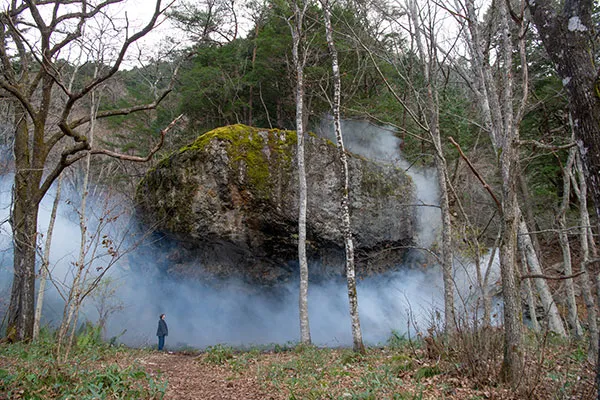
In regional art festivals, there are two types of art: “art that can only be seen during the festival period” and “art that remains as a permanent exhibition.”When first installed, art appears as a “foreign element” in a positive sense. The value lies in that sense of foreignness and its fusion with the local landscape, creating a “momentary (phantom-like) landscape” that allows people to enjoy a fresh impression and a shift from the conventional scenery. On the other hand, works that remain as permanent installations eventually cease to be “foreign elements” through the accumulation of time in the region; they become local symbols or hubs for attracting visitors, forming a new core for the community.
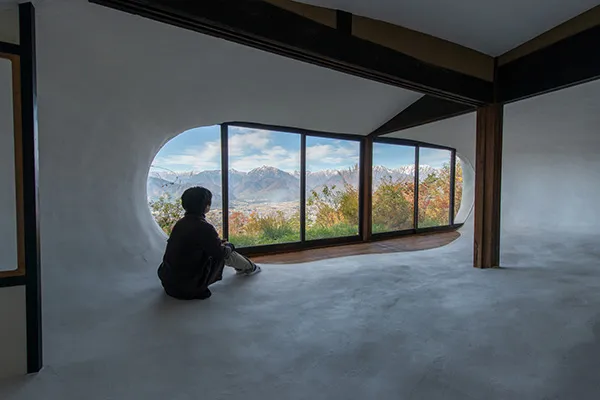
“Shinano-Omachi Jikkyo-sha,” a work by the creative team “mè” that repurposed a dilapidated traditional house, was presented at the first edition of the Northern Alps International Art Festival in 2017 and remains on permanent display today. It is a spatial art installation made possible precisely because Takagariyama offers a prime vantage point for viewing the Northern Alps from within Omachi City.
The Kiyotsu Gorge Tunnel, which has become one of the representative landmarks of Echigo-Tsumari, was renovated as the art installation “Tunnel of Light” for the 2018 Echigo-Tsumari Art Triennale. Some of you may have seen photographs of the gorge stretching beyond the tunnel, reflected in the water’s surface. Along with the interior renovation of the tunnel, an entrance facility featuring a café and footbaths was established, transforming it into an artistic tourist spot that represents the region.
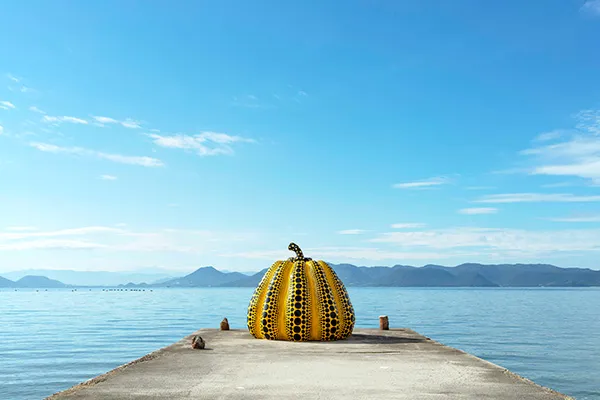
Yayoi Kusama’s “Pumpkin,” installed for “Open Air ’94 ‘Out of Bounds’—Contemporary Art in the Seascape,” held on Naoshima in 1994 prior to the international art festival, was designed with this specific location in mind. Its colors and size were determined so that the landscape—where the pumpkin and the surroundings become one—would form a complete work of art. Today, it is arguably the most iconic site within the Benesse Art Site Naoshima.
3. Why “Art” Is the Ideal Partner
While it is common to pair tourism with a specific theme as a way to attract visitors to a region, there are several reasons why art festivals centered on “contemporary art” have endured over the long term and become firmly established across the country.
(1) Ease of Conveying the Region’s Message
The first reason is the natural affinity between using art as a medium to convey a region’s originality and message. Mr. Shioda of Benesse Art Site Naoshima—which has been promoting regional revitalization projects centered on Naoshima since 1988—emphasizes the importance of “illuminating nature, humanity’s greatest teacher, through art” and “making art production a sustainable endeavor by utilizing local resources to create what does not yet exist.”
This philosophy leads to the uniqueness of the art experience as site-specific work—an experience that can only be fully appreciated by visiting the location in person—and aligns perfectly with the region’s message: “We want people to see the true character of our community through art.” To achieve this, art festivals across the country utilize commissioned works.Commissioned works do not involve simply installing existing pieces created by artists in a region; rather, artists reside in the area, sometimes utilizing local materials, to create art that can only exist in that specific location—and the process itself holds significance. Places that were not traditionally considered “must-see spots” for tourists become destinations through art, transforming into places worth seeing and learning about.For the local community, this approach offers the advantage of strategic design through the selection of locations and themes, allowing them to convey the memories and messages of the land to visitors through the lens of art. By dispersing destinations, visitors can be guided along routes that differ from conventional tourist patterns, leading to longer stays.
Furthermore, at these art festivals, it is common not only to place art within rural landscapes and natural scenery but also to renovate underutilized assets—such as abandoned houses and closed schools—to revitalize them as artworks in their own right or to use them as production bases. This promotes the renewal of the local landscape, prevents the hollowing out of the region, and demonstrates to local residents that the area is “not stagnating.”
(2) Ease of Collaboration and Co-creation
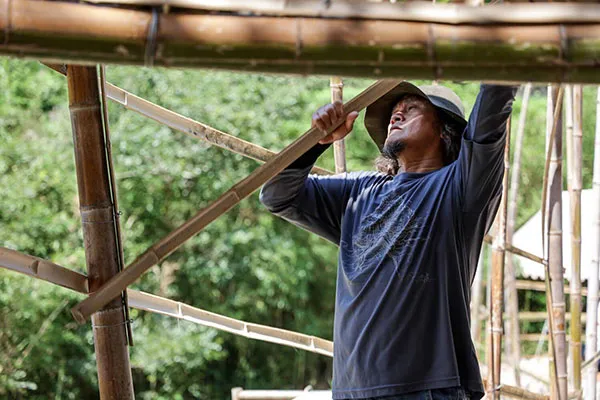
Another reason lies in the “ease and freedom of collaboration with the region (its people and resources).” While individual contemporary artworks follow strict logic, works created for regional art festivals have “integration with the region” as their theme, making it essential to utilize the local landscape and materials. The artwork takes shape through interactions with various people during the creative process, as well as through elements of serendipity.
Artists who participated in the Northern Alps International Art Festival have commented, “During the creative process, I was able to gain valuable life experience through interactions with local people and exposure to local customs,” and “More than the artwork itself, it was the support I received—people showing interest in or empathizing with the peripheral aspects of the work, the stage just before its completion—that really sustained me.”
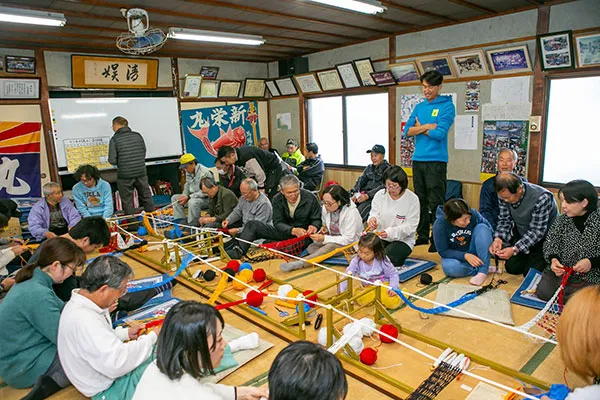
Through the process of collaborating with local residents on the creation of artworks, residents are exposed to the artist’s sensibilities and gain insight into how the region is perceived from the artist’s perspective.By interacting with local people, artists foster a deeper understanding of the region that goes beyond the visible landscape. The art created through this synergy becomes “ours” for the local residents, rather than simply “something someone else bought and installed.” During the festival, which serves as the unveiling of these works that have become “ours,” scenes can be seen everywhere of residents involved in the creation frequently visiting the works to explain the production process to visitors.In Omachi City, a system was established in which, in addition to existing restaurants and shops, a group of women not employed in the food service industry—the “YAMANBA Girls”—took on the role of operating the official restaurant. The high degree of flexibility and freedom that allows people from diverse backgrounds—adults, children, and the elderly—to get involved at various stages from production to the event itself is a defining characteristic of contemporary art as a medium.
4. The Next Steps for the Art Festival
(1) Management and Executive Structure
In regional art festivals, which require specialized expertise in the arts, more than half often appoint “supervisors” such as general producers, directors, curators, or overall supervisors. This approach has the advantage of ensuring the quality of the art event and ensuring that the concepts the region wishes to convey permeate the entire project.On the other hand, a key challenge has been raised regarding the similarity among individual art festivals due to the limited number of specialized personnel and teams capable of fulfilling these responsibilities. Furthermore, since supervisors play a leading role in selecting participating artists, it is undeniable that this can lead to a bias in the selection of artists. The benefits of collaboration mentioned earlier are limited to the process that begins after the artists have been selected.To ensure that regional art festivals maintain greater originality and sustainability than ever before, it may be worth considering ways to strengthen the essence of “regional identity” in the planning and artist selection processes. This could include increasing the participation of artists with ties to the region and actively involving residents in the process of constructing the messages the region wishes to convey.
(2) Ensuring Quality Through “Criticism” and “Documentation”
On the other hand, potential obstacles to strengthening regional identity include ensuring artistic quality and preserving records of the works. While art is something that general audiences can freely enjoy, the art world requires that creation and criticism go hand in hand. Regional art festivals primarily consist of temporary exhibitions, and since their value can only be fully experienced by visiting the venue within a limited timeframe, they are structurally difficult for critics to evaluate.Furthermore, for works created by incorporating elements of chance through collaborative processes with local residents, it becomes difficult to critique the work’s individual quality or rigor. To improve the festival’s own quality, contribute to artists’ growth, and promote the archiving and transmission of works, we believe it is essential to incorporate a system for art criticism into the event.At the same time, we could explore initiatives such as highlighting the value of the “process” of collaborative creation—by documenting and archiving that process, or producing video works themed around the festival and its artworks from both artistic and archival perspectives—to establish a cycle where art gives rise to further art.
(3) Strengthening the Relationship Between Artists and the Local Community
In Omachi City, separate from the Northern Alps International Art Festival, the “Shinano-Omachi Artist-in-Residence Program” has been held eight times between 2016 and 2023. By creating numerous opportunities for citizens to observe the creative process of artists residing in the region outside the context of the art festival, the program increases public exposure to art and lays the groundwork for active citizen participation in the festival.
Such initiatives foster a sustained relationship between artists and the community—one that goes beyond simply moving from one art festival to another and instead involves continuous engagement with a specific region, potentially transforming the local landscape over time. This approach could serve as the seed for mechanisms that integrate art into medium- to long-term community development efforts.
(4) Expanding the Target Audience
One characteristic of art festival visitors is that they are predominantly young people in their 20s and 30s, particularly women; there is no doubt that holding the festival has broadened the demographic of visitors to the area.Many art festivals target repeat visitors and art enthusiasts as their core audience, and their promotional materials and descriptions are often tailored to this art-oriented demographic. However, unless the festival attracts people who are not interested in art, its impact will not extend beyond art enthusiasts or repeat visitors to various art festivals.
From an economic perspective, the goal of an art festival should be to attract people to the region who are neither art fans nor regular visitors—those who have “stumbled upon” information about the festival by chance—and to encourage people visiting for other purposes, such as sightseeing or summer activities, to use the festival as an opportunity to visit places they had not originally planned to go.
To achieve this, it is necessary to create tools that encourage interactive appreciation—allowing those unfamiliar with contemporary art to experience how to engage with art itself—rather than relying solely on guidebooks centered on artwork maps and descriptions. For example, by conveying how the appearance of a work changes depending on the viewing angle or time of day, visitors can realize that the art is integrated not only with the landscape but also with the weather and time of day. Additionally, by using tools that help verbalize the sensations experienced when encountering art—such as asking what one heard while viewing a piece, which part caught their attention most, and why, or describing the feelings evoked by viewing the work against the backdrop of the surrounding landscape—visitors can learn how to appreciate contemporary art through their encounter with the festival, thereby bringing art and people closer together.By using tools that help visitors verbalize their sensory experiences—such as describing the feelings evoked by viewing the work in conjunction with the surrounding landscape using adjectives—we can create opportunities for people to learn how to appreciate contemporary art through their encounters with the festival, thereby bringing art and people closer together.
5. Conclusion
If art is deemed non-essential, then for whom are regional art festivals intended? What is the intrinsic value they offer to those who engage with the region through art, as well as to all visitors? While actively acknowledging the economic benefits and sense of civic pride that art festivals bring to a region, I believe that art and culture should not, ultimately, be merely a means to sustain and develop the local economy.
Art does not directly make our lives more convenient or enrich them in the same way that household appliances, mobility, or smartphones do. In fact, the sensibility we call “art” existed long before humanity even developed writing. Since we have chosen art—which inherently exists as a value concept distinct from direct economic activity—as a method for regional revitalization, it is necessary to weave into the narrative of the arts festival the idea that the region should not merely utilize or consume art as a context, but rather contribute to improving the quality of art within the country and fostering the development of artists’ activities.We have reached a turning point where we must take the next step to ensure that regional art festivals continue to demonstrate lasting value without becoming mere events.
With the cooperation of: Benesse Art Site Naoshima, Omachi City
著者