Survival Strategies for a Town Lacking Distinctive Character: Lessons from Yorii Town, Saitama Prefecture
How can we identify a path to success in a region where its defining characteristics are hard to pinpoint? Drawing on our experience implementing community development initiatives in Yorii Town, Saitama Prefecture—a place that is neither quite a “city” nor quite the “countryside,” and which has failed to establish itself as a tourist destination—we explore the direction this “town without a distinct identity” should take.
1. Case Study in Yorii Town, Saitama Prefecture
Currently, regional revitalization and town-building initiatives are being carried out in various areas across the country, and as an expert in this field, I have been involved in numerous regions. Based on that experience, I consider one of the most challenging types of regions to be those that are neither heavily urbanized nor severely depopulated or disadvantaged—areas that do not clearly fall into the categories of “city” or “countryside,” and lack specific attractions capable of drawing tourists, making it extremely difficult to identify their unique characteristics.
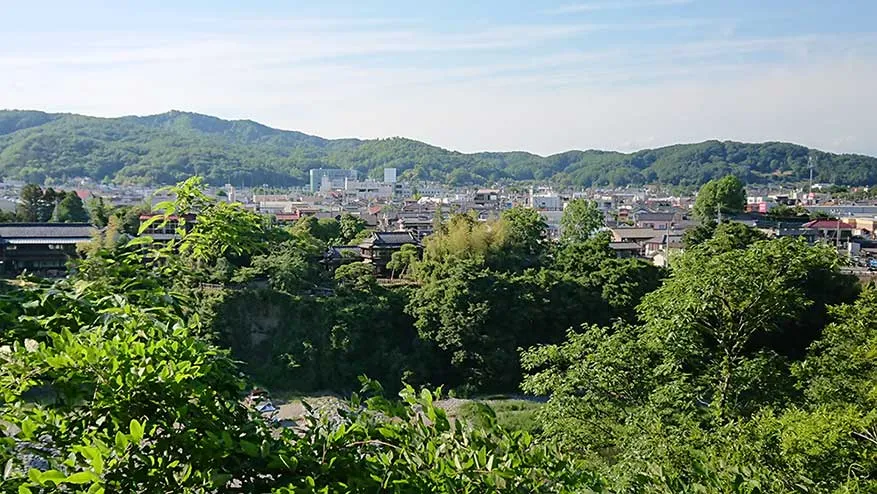
Furthermore, disadvantaged areas—such as depopulated regions, remote island regions, peninsular regions, and mountain villages—each have their own laws for regional revitalization and benefit from various support systems, including national grants. The town I will discuss here, Yorii Town in Saitama Prefecture, is my hometown. It is located in the northwestern part of Saitama Prefecture and has a population of approximately 30,000.Although the population is declining, it is not a depopulated area, and while it is close to mountains, it does not qualify as a mountain village. In other words, it is an area facing severe challenges but unable to receive support under the aforementioned laws.
I have chosen to call these areas—which are difficult to categorize, face many challenges, yet cannot receive national support—"towns without a distinct identity," precisely because I am a local. Through my own experiences of exploration, I will introduce the reality of such regions.
2. Voluntary Revitalization and Regional Positioning
I returned to my hometown of Yorii Town in April 2018. This move was prompted by my appointment as a town manager responsible for managing downtown revitalization projects in Yorii Town. Upon assuming this role in local community development, my first priorities were to encourage residents’ voluntary activities and to clarify the town’s positioning, including its relationship with surrounding areas.
As mentioned earlier, I deliberately described Yorii Town as a “town without character,” but “character” is based on comparison with others and does not express the region’s absolute appeal. If residents consistently strive to make the town better today than yesterday, and tomorrow better than today, the town’s appeal will naturally rise, regardless of relative comparisons. We needed to put into practice the Analects’ saying, “Those who are near will be persuaded, and those who are far will come.” I believed that establishing a foundation for these efforts was the first step.
Furthermore, while I felt it was difficult to identify Yorii Town’s unique character when viewed in isolation, from a macro perspective, it is adjacent to Nagatoro Town—one of Saitama Prefecture’s leading tourist destinations—Ogawa Town, recognized as a mecca for organic farming, and Fukaya City, the birthplace of Eiichi Shibusawa. Viewed from a broader regional perspective, this area can be considered rich in character. On the other hand, these municipalities lack horizontal collaboration and are failing to generate synergistic effects. The surrounding municipalities possess a certain appeal, and neither residents nor tourists are particularly conscious of municipal boundaries. Therefore, we concluded that Yorii Town should adopt a strategy that leverages its location while drawing on the appeal of its neighbors.
3. Fostering Community and Encouraging Internal Initiatives
While implementing the aforementioned strategy, we paid particular attention to how we communicated. Although Yorii Town is my hometown, I had been away for 18 years, so there was much about the area I did not know. Local communities often have a closed-off aspect and may exhibit varying degrees of resistance toward outsiders or unfamiliar matters. It is common for relationships to become strained if one approaches the situation incorrectly. Precisely because it was my hometown, I had to be especially careful.
The “Yorii Town 100-Person Meeting” was an initiative designed to appeal to residents’ sentiments and naturally encourage endogenous community development.
(1) Yorii Town 100-Person Council
We launched the Yorii Town 100-Person Meeting as a foundation to encourage spontaneous revitalization. This initiative adopted the “100-Person Meeting” brand, which is held in approximately 100 districts nationwide, making Yorii the first district in Saitama Prefecture to host such a meeting.
The Yorii Town 100-Person Meeting is a community event where, at each session, five guests speak for 10 minutes each about their past, what they are currently doing, and their future aspirations, while interacting with the participants. It is held once a month, and because the total number of guests reaches 100 after 20 sessions, the group disbands at that point. While such community events are easy to launch, they are difficult to sustain; many events fade away naturally as the motivation of the organizing members wanes. In contrast, since the Yorii Town 100-Person Meeting is scheduled to disband after the 20th session, the end is clearly defined from the start, reducing the mental burden and anxiety on the organizers.
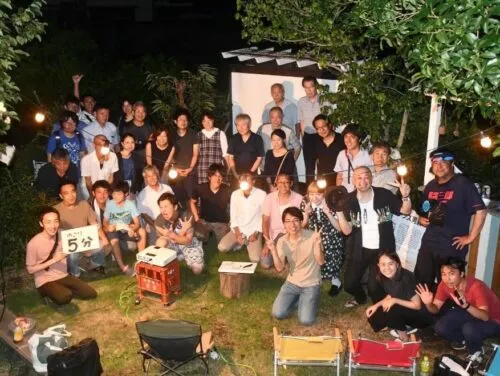
The initial motivation for starting the Yorii Town 100-Person Meeting was to understand who lives in this town, what activities they engage in, and what they think about. We explained that it was simply a community event with no specific agenda, rather than a “town-building” event, as the latter term tends to raise the barrier to participation. We also heard questions about the point of holding such a local community event
, with some suggesting that most people in town already knew each other. However, once we got started, we realized those concerns were completely unfounded. Many people were in a state where they “knew each other by sight, but didn’t know each other deeply.” Even when meeting in town or at meetings, people rarely spoke about their pasts or their feelings toward the town, so we hadn’t reached a deep understanding of one another. Consequently, the Yorii Town 100-Person Meeting served as a catalyst for connections to form among residents, and several initiatives have since been launched. Although it
was an extremely simple community event, I believe that by continuing to participate not as an outside consultant but as a resident myself, I was able to contribute to the town’s endogenous development.
Furthermore, the Yorii Town 100-Person Meeting was extremely helpful in building relationships. Although I am a native of Yorii Town, I had been away from the area for 18 years. I knew there would be a certain number of people who were not pleased to see me suddenly return with the title of “Town Manager.” If I had asked those individuals to “please cooperate with town development,” they would likely have resisted. However, when I asked them to “please speak for 10 minutes at the 100-Person Meeting,” they would accept, saying, “Well, if you ask, I guess I have no choice.” It was extremely helpful in building relationships with people who had kept their distance from me due to preconceptions.
(2) The YORIMaMa Project
When considering how to differentiate ourselves from our distinctive neighboring regions while effectively leveraging the strengths of both, we focused on “child-rearing.” In Yori Town, despite having zero children on waiting lists for childcare, there were many mothers who were not
working. I had the opportunity to interview mothers who were not working even though they had their children in daycare. They shared concerns such as, “Even with my child in daycare, I never know when they might get sick and I’ll be called in,” and “My company expects me to work full-time, so I can’t work flexibly. ”While sudden
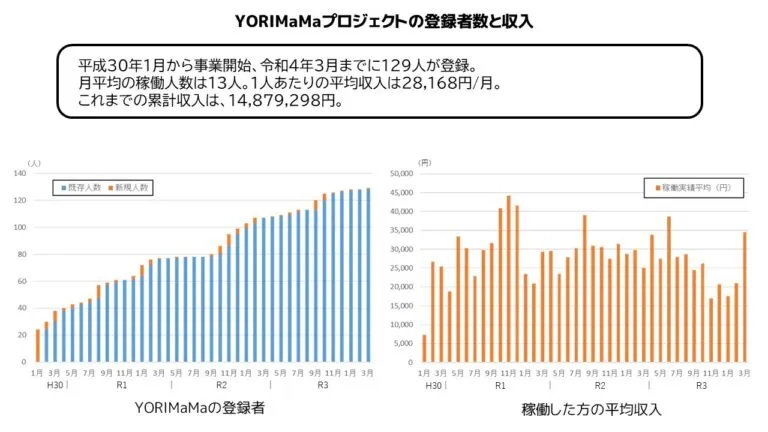
schedule changes due to children’s needs are unavoidable for parents, I wondered if we could eliminate an environment where this prevents people from working. Consequently, I introduced Under→Stand, Inc.—a company offering “AnyMaMa,” a service where mothers form teams to work from home—to Yori Town. We then launched “YORIMaMa,” a service enabling mothers living in Yori Town to prioritize their children while working from home.This project, implemented through a comprehensive partnership agreement between Yori Town, Under→Stand, and myself as the town manager, began in the fall of 2018. Capitalizing on the demand for remote work driven by the COVID-19 pandemic, it has grown steadily in Yori Town. To date, approximately 130 people have registered, and cumulative earnings have exceeded 14 million yen (as of March 2022).
While this initiative primarily aims to support mothers in remote work, diversify work styles, and foster a community of mothers, we also view it as having an aspect of promoting relocation. By conveying the message that “if you move to Yorii Town, you’ll find support for various work styles,” we can enhance the appeal of the region by leveraging the attractions of neighboring towns such as Nagatoro, Ogawa, and Fukaya, while simultaneously establishing Yorii Town as the go-to destination for those looking to settle down.
4. Fun Over What’s “Right”
Building on the diverse communities that emerged within the region following the “Yorii Town 100-Person Meeting,” we launched several projects. Our guiding principle is “Fun over Right.” Insisting on what is “right” inevitably leads to clashes and friction. Moreover, because both sides believe they are right, these conflicts are difficult to resolve. This makes for an extremely inefficient approach to community activities.
Therefore, we decided to strengthen the community by launching activities that intuitively make people think, “That’s fun!” or “That’s great!” and to transform that into a force for town development. Although the world was in the midst of the COVID-19 pandemic, we implemented two projects during that time.
(1) Yorii Mandarin Orange Beer
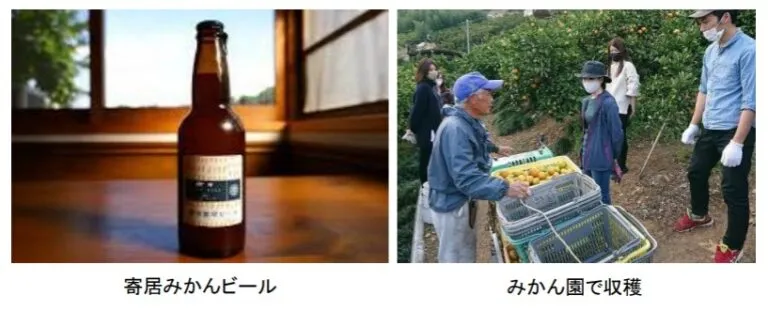
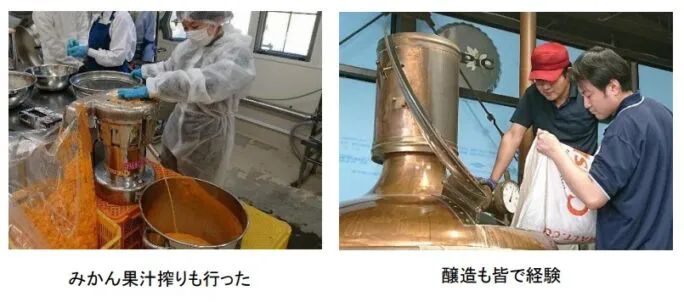
Yorii Town is known for its mikan oranges, and mikan juice is a universally recognized local specialty. Believing that a craft beer made with these oranges would delight every resident, we launched the initiative on a whim. We developed it together with young staff from a local izakaya and a butcher shop. Since Yorii Town has a strong pork-eating culture, we wanted to create a scene where people drink mikan beer while eating pork. For brewing, we partnered with Chichibu Beer, which operates in the Chichibu region.
The entire development team brewed the beer together, designed the packaging, and went around approaching restaurants in town. While we also sold it at liquor stores, we sent out a message encouraging people to drink it at restaurants as much as possible, partly to support the restaurants that were struggling right after the state of emergency was lifted. Although the official launch date was July 20, the entire 1,000-liter batch sold out before the Obon holiday in August. It sold out with unprecedented speed—even before the newspaper article
featuring the development team was published. Since then, the Mikan Beer development team has created a second batch of Mikan Beer as well as Ume Beer (plum beer), applying that experience to their own business.
(2) GOOD PARK
Prompted by the need to avoid the “Three Cs” (closed spaces, crowded places, and close-contact settings) during the COVID-19 pandemic, the Ministry of Land, Infrastructure, Transport and Tourism relaxed the criteria for street use permits, allowing sidewalk space to be utilized as outdoor seating areas. Normally, setting up chairs and tables on the road to create a continuous outdoor seating area requires a “Road Occupancy Permit” from the road authority and a “Road Use Permit” from the police; therefore, this decision garnered significant attention as a major deregulation measure. Many restaurants
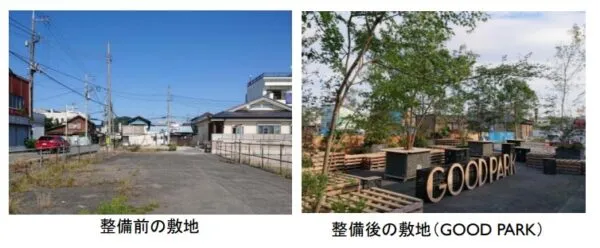
in Yorii Town approached us to ask if they could set up outdoor seating in front of their establishments. However, Yorii Town lacked roads with sufficient width to accommodate such seating, making it impossible to establish outdoor seating areas. Yet, a survey of the town’s downtown area revealed unused vacant lots scattered throughout the area. Consequently, we secured a lease for town-owned land that had been set aside for road widening and decided to utilize it as a temporary public square.
We partnered with a local landscaping company with whom we had developed a close relationship through the “Yorii Town 100-Person Council.” Yorii Town is a well-known hub for landscaping, home to many tree growers, landscape contractors, and horticultural businesses. When we reached out, eight landscaping professionals who shared our vision came together. The site was an empty lot covered in asphalt, making it impossible to plant trees directly in the ground. Additionally, since this was a temporary use with a limited timeframe, we utilized agricultural mesh pallets to create giant planters and installed the vegetation within them. The process of transforming a mere vacant lot into a park over a construction period of about two weeks was truly moving.
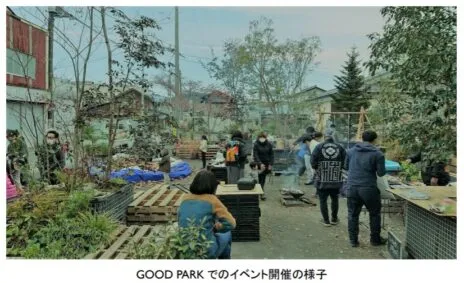
This GOOD PARK project received the Chairman’s Award from the Urban Greenery Organization at the 41st Green City Awards, the Sotonoba Future Award at Sotonoba 2020, and the Encouragement Award at the 3rd Saitama Prefecture Shopping District Renovation Competition. It was recognized as a new way to utilize outdoor spaces during the COVID-19 pandemic. Inspired by this experience, the members who developed GOOD PARK established the general incorporated association Dokodemo Hiroba and have since expanded their activities beyond Yorii Town to participate in space utilization projects across the country.
Both Yorii Mikan Beer and GOOD PARK began not with a grand mission statement, but with a shared sentiment of “It would be nice if this existed.” In developing community-driven town planning, it is crucial that stakeholders participate enthusiastically and take proactive action as if the project were their own personal cause.
5. Business Development to Enrich Daily Life
(1) Opening of mujaqui, an Organic Restaurant with Lodging
Through my experience as a town manager, the number of people with ties to Yorii Town and the number of new residents has gradually increased. However, the lack of new business operators remained a challenge that was not easily resolved. No matter how many events we held, the town would only come alive for one day out of 365, while the remaining 364 days remained unchanged. Town development only has meaning if it enriches daily life.
Therefore, we decided to launch our own lodging and food service businesses. We focused on two key points:
① Showing town residents the process of renovating vacant storefronts to encourage more people to take on challenges and shift the mindset of property owners. ② Creating new pathways to
attract people and investment to a town that is not a tourist destination.
In rural towns, the lack of vacant storefront utilization and new business startups stems not only from a challenging business environment but also, significantly, from the difficulty in securing rental properties. In many cases, local shop owners continue to live in the same building even after ceasing business operations, so it is very common for them to refuse to rent out their properties even when the shutters are closed. What is needed, therefore, is a mindset among property owners that “renting out the property benefits the town.” To foster this, someone must utilize a vacant storefront to launch an attractive business and demonstrate a success story.
Furthermore, despite the fact that the neighboring town of Nagatoro is a major tourist destination, Yorii Town lacks tourist appeal and is often simply passed through by tourists heading to Nagatoro. Those who visit Yorii for tourism are limited to activities such as hiking, touring castle ruins, and camping along the riverbanks, and the economic impact is by no means significant.
Even if we aim to develop Yorii as a tourist destination, we cannot compete with the long-established tourist town of Nagatoro right next door. However, even without becoming a full-fledged tourist destination, simply becoming a spot where some of those passing through stop by can have a significant positive effect on the local economy. I believe the foundation of tourism promotion lies in creating pathways for people to move. When people move, money follows. So, how do we get them to stop by? As
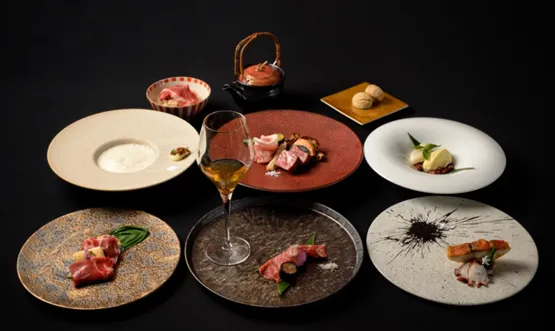
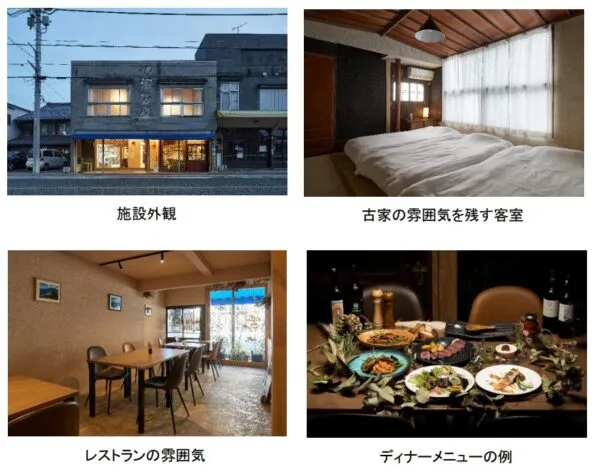
mentioned earlier, adjacent to Yorii Town is Ogawa Town, known as a mecca for organic farming, and as a result, there are many organic farmers in Yorii Town as well. I wanted to highlight the fact that organic vegetables are readily available here as a unique local attraction, which led me to conceive the idea of an organic restaurant. I chose Italian cuisine because it allows diners to simply enjoy the ingredients. Since it’s an Italian restaurant, we naturally wanted guests to enjoy wine as well. However, we could easily imagine that many tourists would arrive by car and that a significant number of guests would not drink alcohol. We concluded that for guests to feel comfortable dining and drinking wine, they needed to be able to stay overnight right there. This was the catalyst for the “Organic Restaurant Where You Can Stay” concept. Even without getting bogged down in terms like “gastronomic tourism,” simply thinking about how to make the most of local resources led us to a similar conclusion. I truly realized the importance of drawing inspiration from the realities on the ground. While carefully timing
the opening amid the COVID-19 pandemic, we renovated the site of a 100-year-old traditional Japanese confectionery shop in the center of Yorii Town, and in August 2022, the “Organic Restaurant Where You Can Stay,” mujaqui, opened its doors. Although accommodation and dining are integrated, the concept differs from that of a traditional auberge. The restaurant remains the main focus, while the lodging is designed as a simple guesthouse.
6. Survival Strategies for a Town Lacking Distinctiveness
To revitalize endogenous initiatives, we used the “Yorii Town 100-Person Meeting” as a catalyst to build broad connections. We then fostered endogenous efforts by forming a community centered around projects like the YORIMaMa Project, Yorii Mandarin Beer, and GOOD PARK. YORIMaMa emerged from the challenges faced by mothers, while Yorii Mandarin Beer and GOOD PARK were born from local industries. The catalysts were simple.
In terms of positioning, the YORIMaMa Project established the position of “Yoriyama Town: A Place to Live,” while the organic restaurant and lodging facility mujaqui combined the local resource of organic vegetables with the town’s potential as a gateway to Nagatoro to create the position of “an organic restaurant where you can stay.” Although both are still in progress, they have undoubtedly become part of daily life in Yoriyama Town.
In a town lacking distinct character, there is no need to forcefully search for unique strengths by comparing it to other regions. Instead, it is important to first look inward at the region to carefully consider how to utilize its challenges and resources, and then look outward to identify areas where we can rely on others and find a position for coexistence from a broader perspective.
By strategically alternating between these internal and external perspectives to formulate survival strategies, I believe we can develop a flexible approach that focuses not on “winning” but on “not losing” amid increasingly fierce competition among local governments.