The key to tourism at Shinto shrines and Buddhist temples lies in balancing "cutting-edge innovation" with "timeless tradition"

In the past, Shinto shrines and Buddhist temples were at the forefront of their time, serving as centers and hubs of culture and technology. The towns surrounding them were lined with trendy goods and popular cuisine for visitors, and buildings utilizing the latest technologies were constructed there. While the roles of shrines and temples have evolved over time, in today’s world—where social environments, market demands, and technology are rapidly changing and advancing—we will explore the potential for these institutions to adapt flexibly to these changes and utilize tourism as a means to once again convey their original significance and value to society.
In the past, Shinto shrines and Buddhist temples were at the forefront of their time, serving as centers and hubs of culture and technology. The towns surrounding them were lined with trendy goods and popular cuisine for visitors, and buildings constructed using the latest technologies were erected there. While the roles of shrines and temples have evolved over time, it is well known that foreign visitors to Japan find them and their surrounding landscapes appealing as tourist destinations. For example, Fushimi Inari Taisha has ranked as the number one “tourist spot popular with foreigners” in Japan for three consecutive years (according to a 2016 TripAdvisor survey).
Since FY 2016, the Japan Tourism Agency has promoted regional tourism through “theme-based tourism” with the aim of forming tourism networks across multiple regions. One of the support projects selected in the first year was “Shrine and Temple Tourism: Pilgrimage Journeys,” and initiatives to utilize shrines and Buddhist temples as tourism resources are attracting significant attention.
In today’s world, where social environments, market needs, and technologies are rapidly changing and evolving, might it be possible to flexibly adapt to these changes and use tourism as a means to once again convey the true significance and value of shrines and temples to society?
1. The Form of Shrine and Temple Tourism Actively Designed by the Shrines and Temples Themselves
Until around 1955, Kiyomizu-dera Temple in Kyoto had very few tourists, and there were no shops at all on Sannenzaka.The area south of Kiyomizu-dera—roughly from the current Nishi-Otani area to Sennyū-ji—was known as Toribe-no. Since before the Heian period, it had served as the eastern cemetery and burial ground, alongside Renda-no to the north and Kano to the west. In other words, this area was a site for sky burial, and the positive image associated with it today had not yet taken root in the public consciousness. Subsequently, Kiyomizu-dera allocated 30 million yen to attract tourists.They conceived the “Womb Tour,” in which the space beneath the hall is likened to the womb of the Great Bodhisattva of Compassion, with monks providing commentary and guidance. They reached out to local businesses and successfully attracted three shops to Sannenzaka. Intrigued media outlets came to cover the story, and as the number of tourists surged, the number of shops on Sannenzaka increased from three to fifteen within a few months.
Dazaifu Tenmangu Shrine in Fukuoka, revered as the god of learning and attracting approximately 7.5 million visitors annually, had only drawn about 300,000 visitors per year until around 1956. Furthermore, Dazaifu Tenmangu was originally the “God of Sincere Hearts” (a deity who protects children’s health) and had not been marketed as the “God of Learning.”
Although the location—an hour’s drive from Fukuoka—was by no means convenient, the shrine read the trends of the times: (1) a growing population leading to a competitive society and (2) the advent of the car-centric society. It focused on “academic success,” one aspect of the divine power associated with “Makoto-gokoro,” and developed a parking lot.By deliberately locating the parking lot away from the sacred precincts and designing the approach path to guide pedestrian traffic, they contributed to the revitalization of the entire area, including the approach path. Even today, the shrine maintains a proactive stance toward infusing the site with “newness,” as evidenced by the presence of a Starbucks designed by Kengo Kuma.
It is not the case that all famous shrines and temples today have been continuously bustling since ancient times. The key to their success lies in accurately grasping shifts in market trends, devising innovative methods that align with the times to convey the essence of faith without altering it, and promoting these efforts as an integral part of revitalizing the surrounding community. This approach has allowed these shrines and temples to become established as both the core of their regions and as significant tourist attractions.
2. The items distributed at shrines and temples are surprisingly modern
The items distributed at shrines and temples that are perceived as “historical” or “traditional” from a modern perspective have emerged through new initiatives in each era that incorporated innovative perspectives and fashion sensibilities. Indeed, we are now in an era where it is no surprise to see new offerings and new ways of conveying messages of faith emerge—ones that respond to the needs of a market in the midst of change, driven by the evolution of ICT and the increasing number of foreign visitors to shrines and temples.
"Amulets" are faith wrapped in fashion
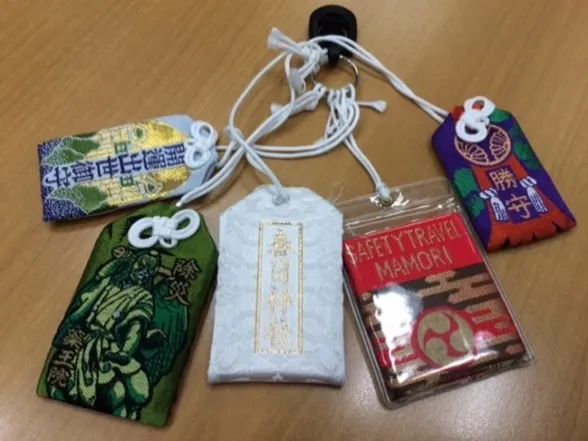
It was around the Heian period that amulets made of wood or paper came to be commonly used as "omamori." While there was a desire to keep these amulets close to one’s body at all times, carrying them as plain paper or wooden tablets was impractical. The most orthodox method—carrying them inside a container—became the established practice. In particular, aristocratic women, who were very conscious of fashion, took great care in designing these "containers."These were haute couture “kake-mamori” (suspended amulets), beautifully crafted to look stylish even when worn around the neck like a necklace over a kimono.
The question of how to wear amulets stylishly continued to be seriously considered in subsequent eras. Among the common people of the Edo period, it is said that “chest amulets” (mune-mori)—where amulets were placed in cloth pouches, which could be considered the prototype of today’s amulet pouches, and hung from the neck—became popular.
"Ema" became portable in the latter half of the Showa era
Ema originated from the practice of dedicating live sacred horses to shrines. This later evolved into the dedication of framed ema, but the custom of dedicating large framed ema fell out of favor in the early Showa period. In 1973 (Showa 48), Yushima Tenjin developed the current form of ema for the purpose of “praying for exam success,” and it became a huge hit, spreading to shrines and temples nationwide.
3. Consumer Needs Regarding Amulets
To understand consumers’ needs and attitudes toward “amulets,” we conducted an online survey to investigate their past purchases, expectations, and priorities regarding amulets.Among items purchased at shrines and temples, “amulets” stood out at 83.6%, followed by “ofuda” (sacred talismans) at 34.2%, “ema” at 27.6%, and “cell phone straps” at 13.7%, indicating an overwhelmingly high demand for amulets.When broken down by gender and age group, men in their 20s and 30s had a low purchase rate for ema, while women in their 50s and 60s accounted for over 10% of goshuincho purchases.

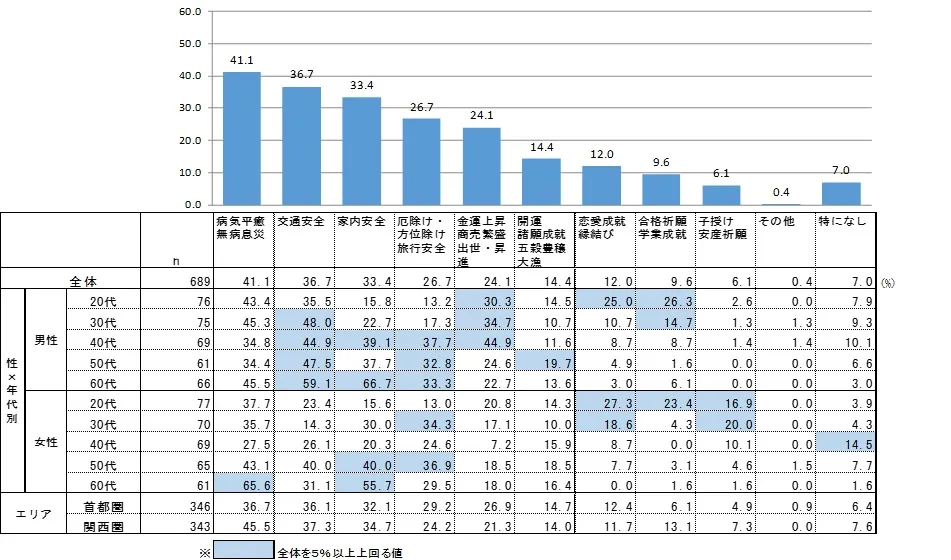
Regarding the benefits sought from amulets purchased for oneself, “recovery from illness/good health” was the most common at 41.1%. This was followed by “traffic safety” at 36.7%, “domestic safety” at 33.4%, and “warding off misfortune, bad luck from directions, and travel safety” at 26.7%.Among men in their 20s to 40s, the percentage for “improved financial luck/business prosperity/career advancement” was high; specifically, among those in their 40s, it reached 44.9%, tying with “traffic safety” for the top spot. Additionally, “success in love/matchmaking” and “praying for exam success/academic achievement” among men and women in their 20s, as well as “praying for conception/safe childbirth” among women in their 20s and 30s, were also relatively common.Demand for “non-purpose-specific amulets” that pray for daily safety and peace—such as “good health” and “domestic safety”—is relatively high among the elderly in their 60s. On the other hand, demand for purpose-specific amulets praying for business success surges significantly among men, particularly those in their 40s who are in the prime of their working lives.Furthermore, while “romantic success” is often associated with women, it is interesting to note that one-quarter of men in their 20s have purchased such amulets, and the proportion is higher among men in their 20s than among women in their 30s.
Regarding services that allow users to create one-of-a-kind amulets by combining various parts or adding their names, 59.4% of the total respondents expressed an intention to use such services.When broken down by gender and age group, over 70% of women in their 20s and men in their 30s expressed an interest, and the percentage of those with a strong interest also exceeded 30%. In addition to a high level of interest in amulets that protect specific individuals, the demand for “amulets tailored to one’s own personal worries and prayers” is overwhelmingly high among those in their 30s and younger, revealing a striking difference in mindset compared to older generations.
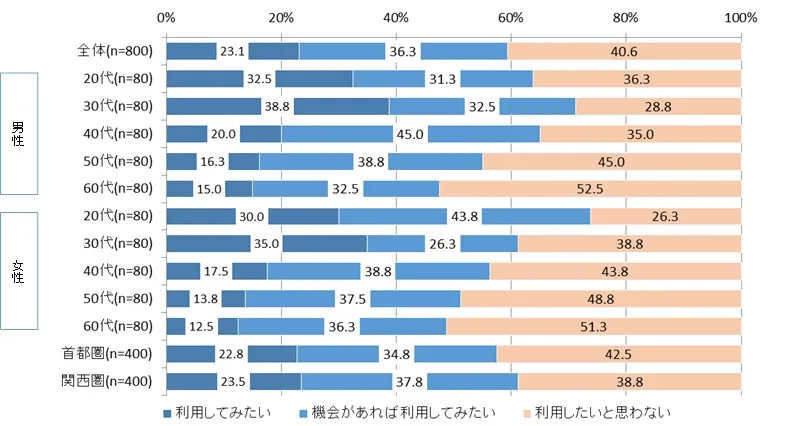
creation services (Source: “Consumer Attitudes Survey on Amulets,” JTB Tourism Research & Consulting, August 2016)
4. Specific Initiatives at Shrines and Temples in Recent Years
In recent years, in response to social changes driven by shifts in market trends and the development of ICT technology, a variety of initiatives have been launched with the aim of bridging the gap between consumers and shrines and temples, as well as contributing to the revitalization of these religious sites and their surrounding communities. It is noteworthy that a significant number of these initiatives have been realized through active collaboration and cooperation between shrines and temples and private companies, or at the initiative of private companies.
Example 1: Utilization of Digital Technology
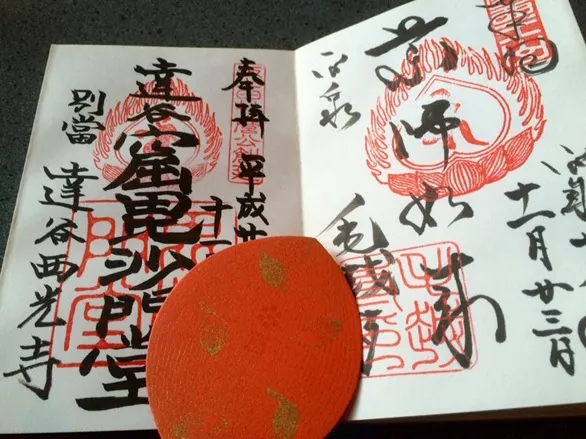
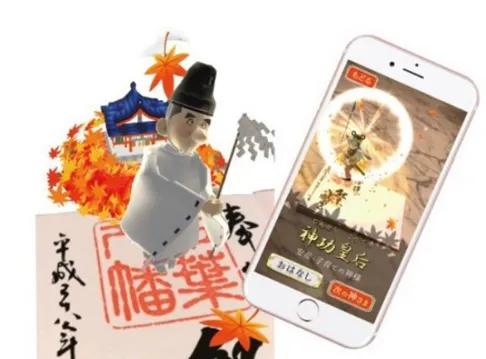
Momiji Hachimangu Shrine in Fukuoka City, Fukuoka Prefecture, created an app called “Goshuin AR” where a deity pops out when you point your smartphone camera at a goshuin (shrine stamp). It became a hot topic on Twitter with comments such as “This is so exciting!” “AR is a great way to see things that exist but aren’t physically there,” and “I suddenly really want to go there and get that goshuin.” The app is available for download from the official website, and AR-compatible goshuin images are also distributed for those who cannot visit in person.
Example 2: Strengthening Ties with Local Industries
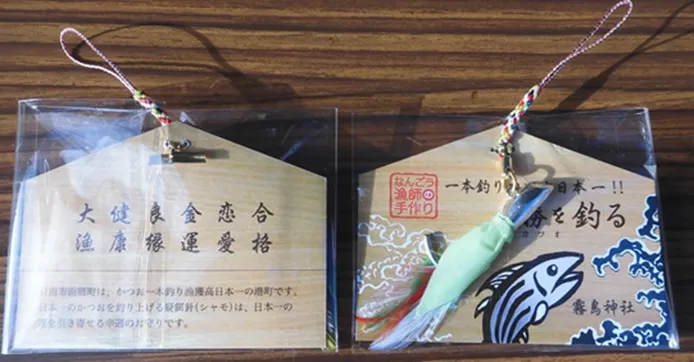
Kirishima Shrine in Nichinan City, Miyazaki Prefecture, developed an ema (votive tablet) themed around “single-line skipjack tuna fishing,” a representative local industry, aiming to create a synergistic effect in raising awareness of this practice.Made using hooks actually used in single-line bonito fishing (to ensure safety), these ema are designed as good-luck charms based on the superstition of “reeling in your target catch.” They are intended to grant wishes related to “reeling in your target,” such as success in exams or romance. Development was realized in January 2017 with the cooperation of the Nango Town Chamber of Commerce and Industry.
Example 3: Revitalization Through Story Connections Across Regions
At Ashikaga Orihime Shrine in Ashikaga City, Tochigi Prefecture—where the goddess Orihime is enshrined—tanzaku (wishing strips) collected from ANA’s destinations around the world are dedicated annually. This is part of the Tanabata Tanzaku Dedication Event, which began within the ANA Group in 2008, and the number of tanzaku collected exceeds 30,000.
Example 4: Promoting the Value of "Amulets" to Foreigners
In other countries as well, there is a culture of amulets (for warding off evil or bringing good luck), such as the “Miraculous Medal” (Catholicism), the “Hand of Fatima” (Islam), and the “Nazar Boncuk” (Turkey). For foreign visitors, Japanese omikuji and amulets are viewed as “popular souvenirs”—items that allow them to experience Japanese culture—once they understand these functions.At Zojo-ji Temple in Shiba, Tokyo, omikuji are available in English, and at Asakusa Shrine, a panel with English descriptions accompanying photos of the amulets is displayed at the distribution counter.
Example 5: A System Where Daily Spending Leads to Donations to Shrines and Temples
Kashima Shrine in Kashima City, Ibaraki Prefecture, has partnered with MI Card, a credit card company within the Mitsukoshi Isetan Group, to issue the “Kashima Shrine Card,” marking the first credit card issued by a shrine.Under this system, annual card fees and points accumulated through card usage are donated to support the Shiki-no-Taisha Mifune Festival and the preservation and succession of cultural properties. In addition to receiving annual gifts based on spending, cardholders enjoy benefits such as guided tours by shrine priests during visits and free admission to the Treasure Hall.
5. Future Potential for Shrine and Temple Tourism
Against the backdrop of market changes driven by the increase in foreign visitors to Japan, the diversification of destinations and experiential needs, the design-oriented and purpose-specific preferences of younger generations—who are not necessarily “history and culture enthusiasts”—toward shrine stamps and amulets, and the advancement of ICT, tourism is positioned as one of the initiatives that will unhesitatingly take on the challenge of aiming for the cutting edge of the times.Shrines and temples have always evolved by absorbing the latest teachings, architectural styles, and educational methods. It is crucial to possess the flexibility to adapt to market trends and the needs of the times, and to convey the “authentic culture” of tradition and faith through the active use of the latest technologies.Methods for conveying the significance and value of shrines and temples to visitors in a visual and sensory way range widely—from experiential activities such as zazen meditation and sutra copying to events and concerts that harness the power of the venue, as well as items such as amulets. History clearly shows that if these methods incorporate cutting-edge technology, design, and art to create spiritually profound experiences, they will not only be accepted in the modern market across national borders but will also endure for future generations.
The desire among young people for amulets tailored to specific purposes stems from their expectations and respect for shrines and temples; it can be understood as a manifestation of their desire to borrow the power of these sacred sites to address their own individual, concrete concerns in daily life. The distance between young people and shrines and temples is by no means great; they are developing a familiarity with the beauty of temple stamps and amulets from a new, unconventional perspective, and they possess the initiative to experience the power of these places firsthand, often under the banner of “power spots.”The role of shrines and temples as celebratory spaces—symbols of special occasions—shares a commonality with the sense of the extraordinary expected from the act of travel. As one form of shrine and temple tourism, it is important to convey a spiritual essence that allows people to open the door to this extraordinary space at any time through tangible tools like amulets, rather than simply consuming a trip that becomes a memory.Furthermore, these tools must, on the one hand, possess forms and functions that align with consumers’ modern needs and sensibilities—whether as “objects” or as fashion items. The very nature of amulets—that something intangible and precious resides deep within objects designed with a modern sensibility—is itself a form of fantasy. And isn’t this fantasy the most accessible gateway for conveying the significance and faith associated with shrines and temples?
著者