The Direction Shrines and Buddhist Temples Aim to Take in Local Communities

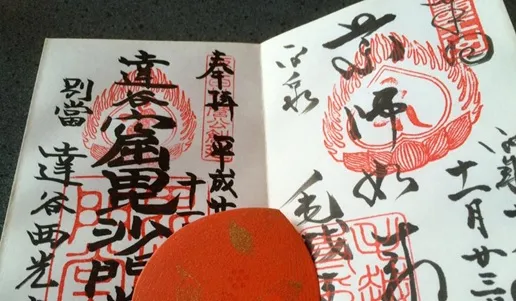
In recent years, the physical and psychological hub functions of Shinto shrines and Buddhist temples—which once served as the core of local communities—are gradually being lost. At the same time, we are seeing the emergence of young women who collect “pictures of handsome monks” and “goshuin” stamps. Together with shrines and temples seeking ways to revitalize their communities, we will examine—using specific examples—how to preserve culture and cultural assets, the roles these institutions should play within local communities, and strategies for contributing to the local economy through human interaction.
~The Fate of Shrines and Temples: Using Tourism and Community Engagement as a Hook, Yet Never Becoming a "Tourist Destination"~
In recent years, as regional populations have declined, issues such as the decline of long-standing local communities and the hollowing out of neighborhoods have come to the fore. Amidst this, there are concerns that shrines and temples—which have historically served as the physical and psychological hubs of these communities—are losing their central role.
In this social climate, it is reasonable to assume that what people expect from shrines and temples—whether in their daily lives or while traveling—will evolve with the times. Recent trends, such as the rising sales of “Beautiful Monks: A Pictorial,” a photo book spotlighting monks, and young women lining up at shrine offices to collect “goshuin” stamps, would have been unimaginable just ten years ago. That said, shrines and temples cannot escape their fundamental mission of preserving faith and traditional culture. Alongside shrines and temples that are exploring regional revitalization strategies through the lenses of tourism and human interaction, we will examine—using specific examples—the preservation of culture and cultural assets, the functions shrines and temples should fulfill within local communities, and strategies for contributing to the local economy through human interaction.
1. Introduction: The Current Situation Facing Shinto Shrines and Buddhist Temples
Japan’s population is declining rapidly, and it is said that around 2020, even urban areas such as Tokyo will begin to see a decline in population. Due to population decline and the increase in single-person households, Buddhist temples are experiencing a significant drop in the number of parishioners. Furthermore, many temples that do not have parishioners—referred to as “prayer-only temples”—and Shinto shrines are struggling financially as demand for prayer services decreases. Furthermore, amid social structural changes such as the concentration of the population in urban areas, challenges such as a lack of successors at rural shrines and temples and a decline in the number of local residents who can carry out rituals are becoming increasingly pronounced.
On the other hand, the public’s travel needs are becoming increasingly diverse. We are seeing a growing trend toward Buddhist experiences such as sutra copying, zazen meditation, and Ajikan meditation, alongside the “power spot” boom centered on young women and the “goshuin” stamp collection boom triggered by events like the Ise Grand Shrine’s Shikinen Sengu ritual.
Furthermore, with the increase in foreign visitors to Japan, the number of people visiting shrines and temples in search of “scenery that is quintessentially Japanese” and “experiences that are quintessentially Japanese” continues to rise. As international flights begin serving regional airports and the number of overseas cruise ships calling at ports increases, the distribution of foreign tourists across Japan is expanding; they are now visiting shrines and temples not only in Kyoto and Nara but throughout the country.
Compared to churches in the historic centers of Western cities, which still serve as the “heart and symbol” of their towns, can shrines and temples in Japan still function as “symbols” of their communities in the modern era? Or, as both Japan’s social structure and tourism market undergo significant changes, are the functions society expects from these sites shifting, and are they being called upon to fulfill new roles? We explore the possibilities of what roles tourism and cultural exchange demand of shrines and temples, and how connections between these sites and consumers can enable them to assume new functions within local communities.
2. The Psychological Distance Between Shrines and Temples and the Public: The Key Lies in Reaching Casual Visitors
To understand the psychological and physical distance between shrines and temples and consumers, we conducted an online survey to investigate knowledge of and interest in shrines and temples, frequency of visits and reasons for visiting, and the experiences sought at shrines and temples as travel destinations. According to the results, more than half of respondents expressed interest in both shrines and temples and in history and culture, and this tendency increases with age. On the other hand, less than 40% of respondents reported having a certain level of knowledge about shrines and temples or history and culture.
Furthermore, the “enthusiast segment”—those with both a high level of interest and knowledge regarding shrines, temples, and history and culture—is predominantly male, accounting for only 16% of the total. While this “enthusiast” segment comprises nearly 30% of men in their 60s and 70s, the survey also revealed a tendency for the “casual segment”—those with high interest but low knowledge—to be more prevalent among women.
Until now, when it came to travel with the primary purpose of visiting shrines and temples, the mainstream approach has been to develop products targeting the “enthusiast segment”—such as older adults—who “love shrines, temples, and Buddhist statues. ”However, since the demographic with a high level of interest in shrines and temples is by no means the largest segment, focusing solely on promoting the appeal of these sites to the “enthusiast market”—who will come “even if left alone”—will inevitably lead to a shrinking market against the backdrop of a declining population. Therefore, the key to bridging the gap between the general public and shrines and temples lies not in providing content with a strong educational focus aimed at deepening knowledge of these sites and historical culture, but rather in how to offer content that allows interested groups to approach them casually.
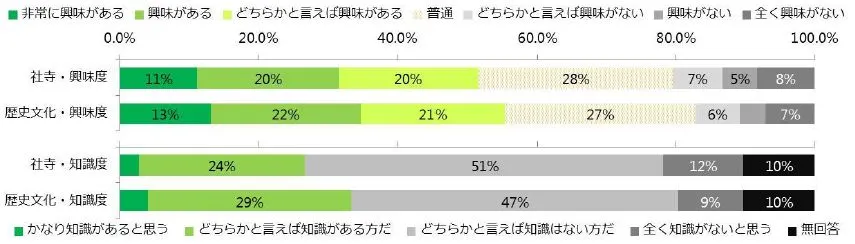
(Source: “Consumer Attitudes Survey on Shrines and Temples,” JTB Tourism Research & Consulting, June 2015)
3. Target Audiences Vary by Purpose
When asked about the purpose of visiting shrines and temples, “Hatsumode” (New Year’s visits) stood out, accounting for over 70% of responses, with no significant differences observed across age groups. This was followed by funeral-related purposes such as “visiting graves,” “attending festivals or temple fairs as a visitor,” and “memorial services or funerals.” Meanwhile, less than 5% of respondents had experienced activities with specific purposes, such as collecting “goshuin” (temple stamps) or staying at “shukubo” (temple lodgings).
Looking at characteristics by gender and age group, women in their 20s to 50s visited more frequently than men of the same age for purposes such as “amulets,” “fortune slips,” and “energy or healing.” Among them, young women in their 20s and 30s showed a particularly pronounced tendency to visit with a rather casual mindset, citing reasons such as “forest bathing and nature appreciation (e.g., cherry blossom viewing),” “fortune slips,” and “energy or healing. ”Women visit shrines and temples for purposes other than funerals even if they are not enthusiasts, and appealing to this “casual segment” is considered key to attracting visitors.
Regarding desired experiences at shrines and temples, many people prefer to have “prayers and blessings” performed at shrines and temples within their familiar daily living areas rather than at those located in travel destinations. On the other hand, at shrines and temples in travel destinations, in addition to food and lodging-related experiences such as “matcha and Japanese sweets,” “shojin ryori,” and “shukubo” (temple lodging), experiences that offer a unique sense of exclusivity to that particular shrine or temple—such as “special viewings,” “shrine/temple and town walking” tours, and “goshuin” (temple stamps)—are popular. It is interesting to note that the preferred travel companions vary depending on the level of specialization, purpose, and recreational value of the experience. For instance, “daily rituals” and “sermons”—which can be considered closer to the essence of shrines and temples—are typically enjoyed alone; “special viewings” and other activities focused on “gaining a deeper understanding and enjoyment” are often shared with a close partner such as a spouse; and “matcha and Japanese sweets” or “shojin ryori” are typically enjoyed with friends, allowing everyone to experience the travel atmosphere regardless of their level of expertise. Furthermore, the estimated per-person costs are approximately 3,000 yen for “shojin ryori,” 8,500 yen for “shukubo,” and 2,500 yen for “guided tours.” This indicates that these experiences offer an extremely accurate sense of value compared to existing offerings currently available.
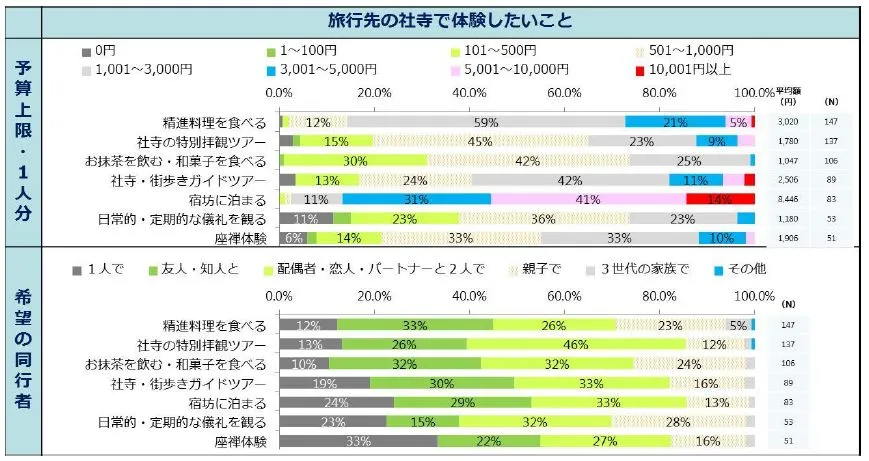
(Base: Men and women aged 20–79 who are interested in experiencing the above locations, excluding those with little interest in either Japanese shrines and temples or history and culture (N = 1,088))
(Source: “Consumer Attitudes Survey on Shrines and Temples,” JTB Tourism Research & Consulting, June 2015)
4. “Attraction Activities” as a Means of Preserving Culture and Faith: The Fate of Shrines and Temples That Must Not Become “Tourist Destinations”
Next, we have organized the challenges from the perspective of the shrines and temples themselves. The more famous a shrine or temple is as a tourist destination, the more critical it becomes to address concerns regarding the maintenance and management of its architecture, grounds, and gardens (including the preservation and restoration of cultural properties) and to stabilize its operations. To resolve these issues, many shrines and temples have begun organizing various events and actively seeking to host commercials and TV dramas. However, this presents a dilemma, as those involved in the management of these shrines and temples unanimously assert that “shrines and temples must not become tourist attractions or theme parks.” The essential mission of shrines and temples is to preserve their original significance as places of worship without compromising it, while also continuing to instill in the Japanese people a sense of prayer and gratitude as part of their daily lives. Tourism promotion efforts must not hinder the fulfillment of this mission; rather, tourism and community engagement must serve as tools to help achieve it. To this end, individual shrines and temples are exploring appropriate strategies and testing various initiatives. We investigated case studies ranging from shrines and temples renowned as tourist destinations to community-based ones aiming to foster human interaction within local communities, as well as multi-sect communities without their own temples.
Case Study 1: Engaku-ji Butsujitsu-an: Exploring the Role of a Temple as a Hub for Cultural Dissemination
Engaku-ji Butsujitsu-an in Kamakura is a small Buddhist temple that can hardly be described as a tourist attraction. Here, the focus is on initiatives that go beyond mere visitor attraction events; instead, the temple promotes itself as a cultural salon within the local community, serving as a place to learn about and experience history and culture. Rather than leaving visitor attraction entirely to travel agencies or event companies, the temple has taken a noteworthy approach by hiring specialized staff to ensure the quality of experiential programs and to ensure that promotional activities do not compromise the aspects of faith and culture. This allows them to focus on creating programs that combine meaningful messages with entertainment value. To address the challenge of sustaining operations through admission fees alone, the temple is establishing a foundation for providing “accurate,” “enjoyable,” and “high-quality” content, while exploring ways to pass on religious traditions through promotion and hands-on program experiences.
Case Study 2: Daigo-ji Temple: Educational Outreach Utilizing Over 70,000 Designated Cultural Properties and the Site’s Natural Environment
Daigo-ji Temple in Kyoto, a UNESCO World Heritage Site, has made educational outreach in collaboration with children and universities a core component of its activities. The goal is to convey the importance of preserving the history of shrines and temples and protecting the environment through educational experiences that leverage the temple’s vast mountains and gardens, as well as its numerous cultural properties. The “Kyoto Forest Project: A Bridge Connected by Cherry Blossoms,” conducted in partnership with local elementary schools, is an initiative aimed at creating a circular society by composting the vast amounts of fallen leaves generated at Kyoto’s temples and shrines and using the resulting compost to nurture new greenery. In addition, the temple actively hosts university internships and offers appreciation classes at local junior high schools, providing students with opportunities to engage with cultural properties through the temple. By returning to the role that temples and shrines once played as educational institutions, these initiatives focus on social contribution through the dissemination of education to the local community. They can be described as efforts that emphasize the unique social impact that only temples and shrines can create.
Case Study 3: Shrine and Temple Festival “Kōgen”: Forming a cross-denominational consultative body to convey traditional culture to young people through a modern approach
The Kogen Executive Committee, which describes itself as “interdenominational” and is composed of representatives from Shinto shrines and Buddhist temples, is a collaborative body that holds diverse events in Tokyo. It has narrowed its target audience to “young people” and aims not to “proselytize” but to “convey the power to shape the future through Japan’s traditional culture and customs, which continue to innovate daily.” The committee’s activities began with events centered on Buddhism and music, inspired by the Great East Japan Earthquake. A key feature of the festival is that, in addition to standard festival content such as live music, talk shows, and projection mapping, it offers numerous hands-on workshops unique to a temple and shrine festival. With over 100 events ranging from tea ceremony, calligraphy, incense appreciation, and Noh theater to mizuhiki cord-making and incense-making, the “Death Experience Tour”—which allows participants to simulate the experience of their own death—is said to be particularly popular. Although volunteer-based, the group has established a robust operational structure and utilizes crowdfunding to enable detailed, low-cost project development. Based at Zojo-ji Temple in Tokyo, the scale of the events has expanded year by year as the number of supporters has grown. One reason Yogen is attracting attention is its modern approach: rather than a series of short-term or one-off events, it positions this initiative as a “project” led by volunteers, working to achieve a common goal that transcends religious denominations and geographical boundaries. Consequently, the organization clearly defines its target audience and carefully selects supporters and partner companies, resulting in a project narrative that is exceptionally clear.
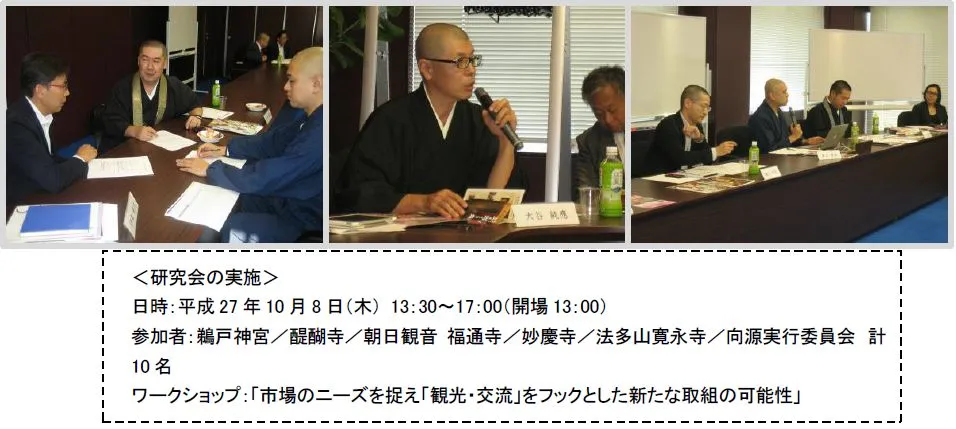
We held a study group, centered on representatives from the shrines and temples mentioned above, to explore potential future developments for this initiative. In addition to reaching a common understanding regarding the importance of interdenominational collaboration and methods for conveying “lifestyles”—such as faith and prayer, which are often difficult for the general public to grasp—discussions were held on potential methods and initiatives to spark interest in shrines and temples among the general public, encourage visits, and foster a cycle leading from first-time visits to repeat visits and ultimately to community building. Opinions were exchanged on how to convey the significance of “omamori” (amulets) and create stories that lead to purchases, as well as strategies for maximizing the use of “Hatsumode” (New Year’s visits to shrines and temples) as an excellent promotional opportunity.
5. The Direction Temples and Shrines Should Take, Using Tourism and Community Engagement as a Hook
To overcome the dilemma shared by shrines and temples—balancing visitor attraction with the preservation of faith and tradition—what is needed is not merely an approach focused on providing tourism content, but rather mechanisms to increase the number of visitors who come with a spirit of prayer and reverence. Depending on the type of common illuminations or events, there may be little necessity for them to be held at a shrine or temple, and they risk ending up as one-off visitor attraction events. To fully leverage the unique setting of shrines and temples—a setting that cannot be replicated by other facilities—and to convey the fundamental attitudes and perspectives toward nature, culture, and history that lie at the core of the Japanese spirit, it is crucial to have “interpreters” who can bridge the gap between shrines and temples and the tourism industry. These interpreters must understand the religious practices, customs, history, and culture of these sites and be able to devise programs and content that allow the general public to participate and enjoy them. Through the hands of such “interpreters,” we can return to the origins and significance of items and experiences—such as amulets, fortune slips, and experiential programs—and, at times, through modern interpretations, awaken the interest and understanding of casual visitors. To ensure that everyone—whether enthusiasts or casual visitors—can intuitively grasp these concepts and experience and understand the intangible elements, such as healing and spiritual power, that people often seek at life’s turning points, experiences facilitated by interpretations from Buddhist monks and Shinto priests are sure to become increasingly widespread. At the same time, cooperation among multiple organizations—transcending sectarian and geographical ties—is likely to advance further among shrines and temples that share the common goals of passing down history and culture, as well as preserving traditions of healing and prayer.
Ahead of the “Festival of Culture” at the 2020 Tokyo Olympics, efforts to create cultural events are gaining momentum not only in the Tokyo metropolitan area but across the country. The potential for utilizing shrine and temple landscapes, facilities, rituals, philosophies, and beliefs—which form the core of the “distinctively Japanese culture” that the large number of expected international visitors seek—along with various programs and tools that allow people to experience them firsthand, is truly vast. It is hoped that shrines and temples will seize these opportunities to move beyond the framework of revitalizing individual facilities. Instead, they are expected to develop strategies in which they themselves serve as “interpreters,” engaging both the local community and visitors, and assuming a new role as the core of regional revitalization.
著者