Will Japan Become the World's First Hydrogen Energy City?

Given its extremely low environmental impact, there is a growing movement across Europe to develop public transportation systems that utilize hydrogen energy, which is widely regarded as a promising next-generation energy source. Initiatives in Japan are also beginning to gain momentum.
Since the start of the 21st century, environmental awareness has reached unprecedented levels, and addressing global environmental issues has become a top priority for humanity. The Kyoto Protocol, aimed at preventing global warming, has been in effect since 2005, and in December 2015, at COP21—where leaders from 150 countries gathered—the Paris Agreement on measures to combat global warming after 2020 was adopted.
Because hydrogen energy has a very low environmental impact, it is viewed with great promise as a next-generation energy source, and efforts to develop public transportation systems utilizing hydrogen energy are gaining momentum.
In Europe, fuel cell buses began operating in nine cities, including Amsterdam, London, and Barcelona, as part of the CUTE (Clean Urban Transport for Europe) project starting in 2003. Currently, 90 fuel cell buses are in operation across the EU, and plans are underway to add more than 100 additional buses in the future. In November 2016, an international conference on zero-emission buses was held in London, which was a great success, with more than 250 companies from 22 countries participating.
Additionally, in March 2017, French rail vehicle manufacturer Alstom successfully conducted a test run of a rail vehicle capable of mass transit powered by fuel cells—a world first. This train is scheduled to begin operation in Germany in 2018.
There are various benefits to using fuel cell vehicles, the main ones being as follows.
- High energy efficiency, low cost, and the ability to travel long distances
- They are environmentally friendly, emitting only water (water vapor) during operation
- Quiet operation
- They do not emit carbon dioxide, helping to combat global warming and contribute to achieving national goals
Meanwhile, looking at Asia, China is also implementing various initiatives to prevent global warming. While not many people may be aware of this, China’s installed wind power capacity was the world’s largest as of 2013, accounting for approximately 30% of the global total. In March 2017, Qingdao Sifang Locomotive & Rolling Stock Co., Ltd., a Chinese rail vehicle manufacturer, announced that it would supply eight fuel cell trams (with a capacity of 285 passengers) to Foshan City, adjacent to Guangzhou. The new line is planned to be approximately 17.4 kilometers long and have 20 stations.
So, how are efforts progressing in Japan?
On April 11, 2017, the government held a meeting of relevant ministers to accelerate the introduction of energy sources to replace oil and natural gas, and Prime Minister Shinzo Abe stated, “We will lead the world in realizing a hydrogen society.” The government also plans to further promote the adoption of renewable energy sources such as solar and wind power, with a basic strategy scheduled to be formulated within the year.
In fact, Japan was the first country in the world to launch residential fuel cells. Although the “Ene-Farm,” launched in 2009, did not gain widespread adoption initially due to its high price, the introduction of new models, subsidies, and price reductions have given momentum to its adoption in recent years, leading to a cumulative total of 200,000 units installed by May 2017. Installation in homes is expected to reduce CO2 emissions by 38% and cut utility costs by approximately 50,000 yen per year (for families of three or more).
The automotive industry is also making progress in fuel cell technology. In December 2014, Toyota unveiled the MIRAI, the world’s first mass-produced fuel cell vehicle. Furthermore, in February 2017, Toyota delivered the first fuel cell bus to the Tokyo Metropolitan Government. An additional 100 units are scheduled to be added by 2020.
Furthermore, at the end of May 2017, 11 companies, including Toyota, Nissan, and Honda, agreed to install 160 hydrogen refueling stations across Japan by 2020, with plans to expand to 320 stations by 2025.
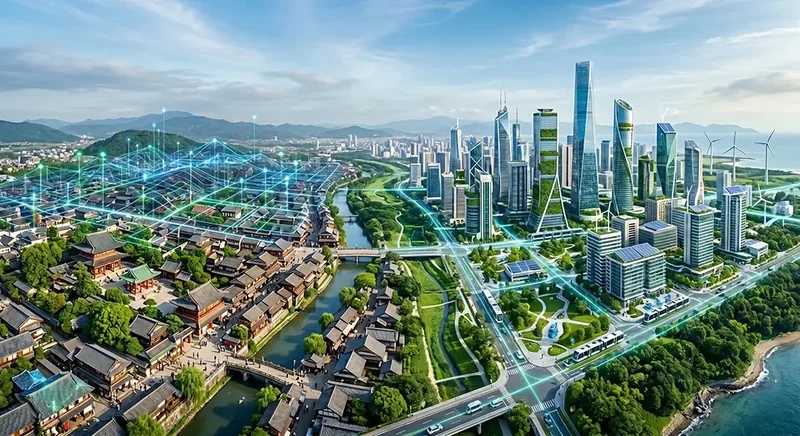
Imagine a city where every vehicle is equipped with a fuel cell and there is no engine noise. Silence, clean air, and green spaces would spread throughout the city. Furthermore, if fuel cells were used in homes and utility costs were reduced, people might be able to spend the savings on leisure activities. While no country or city has yet achieved a zero-emission transportation network, if Japan were to be the first to make it a reality, it would likely attract global attention.
Sources: COP21, CHIC, The Telegraph, Bloomberg, IEA, Greenpeace
著者