“Tourism × Peace”: The History of Humanity Woven by Tourism and Security

Tourism is not limited to leisure and economic activity; throughout history, it has been deeply intertwined with the movement and interaction of people, as well as with social security. This article looks back on the impact that war and technological innovation have had on tourism and explores the role tourism plays in promoting peace and international understanding in the modern world.
1. Tourism and War: Two Sides of the Same Coin Since Ancient Times
Since ancient times, a close and inseparable relationship has existed between travel and war, as revealed by a review of history.Humankind moved in search of new living and trading areas, and when encountering external enemies in the process, they launched expeditions into enemy territory to contest land and trade rights. Through this process, they developed means of transportation, methods for carrying essential supplies, and maps to guide their journeys—thus establishing the various tools that form the basis of modern travel.
These methods have undergone various developments throughout history. Food preservation techniques, exemplified by dried meat, made naval battles and expeditions—such as those in the Peloponnesian War—possible, while the invention and refinement of the compass ushered in the Age of Discovery, leading to European domination of the world.To travel long distances, including by sea, humanity made various inventions; however, the very fact that such travel became possible often led to the ironic situation where invasions and disputes occurred at the destinations reached.
However, these advancements in transportation also made travel unrelated to warfare possible. A prime example of this—and, in a sense, a form of early tourism—is pilgrimage.The oldest pilgrimage in human history was likely the Jewish pilgrimage to Solomon’s Temple. However, given the geographical scope of Jewish life at the time, this pilgrimage involved travel within a relatively limited area.However, as Christianity spread and the number of Christian pilgrims traveling from Europe to the Holy Land of Jerusalem increased, travel for purposes other than military or trade flourished. It is well known that the pilgrimage churches where these pilgrims stayed were called “hospices,” and that the hospitality offered there is the etymological origin of the word “hospitality.”
On the other hand, these pilgrimages also gave rise to a different form of warfare. The Crusades, as everyone knows, are a prime example of this.Although there are various theories, the Crusades—which originated at the Council of Clermont in 1095—were a series of wars waged intermittently over nearly 200 years in approximately nine campaigns by Western European nations to recapture the Holy Land of Jerusalem from Islamic states.These large-scale expeditions, undertaken at a time when medieval transportation systems were underdeveloped, saw both successes and failures; however, in the process, travel routes connecting Western Europe and the Middle East were established.The Mediterranean Sea, which served as a transport route and supply base for the Crusades, and the Republics of Venice and Genoa—the leading coastal states of the region—reached their zenith during this period. Venice, in particular, used the Fourth Crusade to seize Zara and Constantinople, ushering in its golden age and laying the foundation for its development as a modern tourist destination.
War involves the movement of large numbers of combat personnel, along with the weapons, food, and other supplies they require. To facilitate this, sea routes and roads were developed. Furthermore, to procure food and other necessities locally, services for supplying food, water, fuel, and other essentials along the march routes became well-established.As for lodging, while camping in the open was common, people also stayed in monasteries and fortresses; even though these were not commercial lodging facilities, arrangements for accommodating large groups of people became well-established.
In this way, a series of facilities and infrastructure that form the foundation of tourism—such as roads, modes of transportation, lodging, and the replenishment and provision of essentials like food and drink for the movement of large groups of people—were developed and improved alongside warfare.
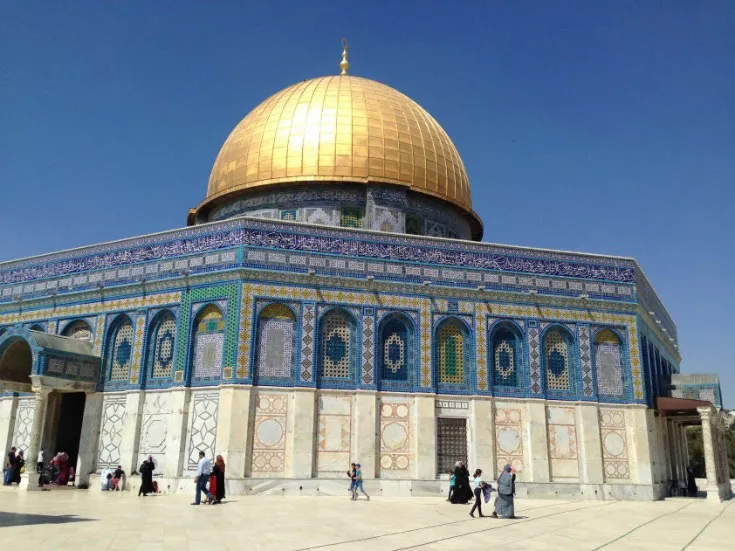
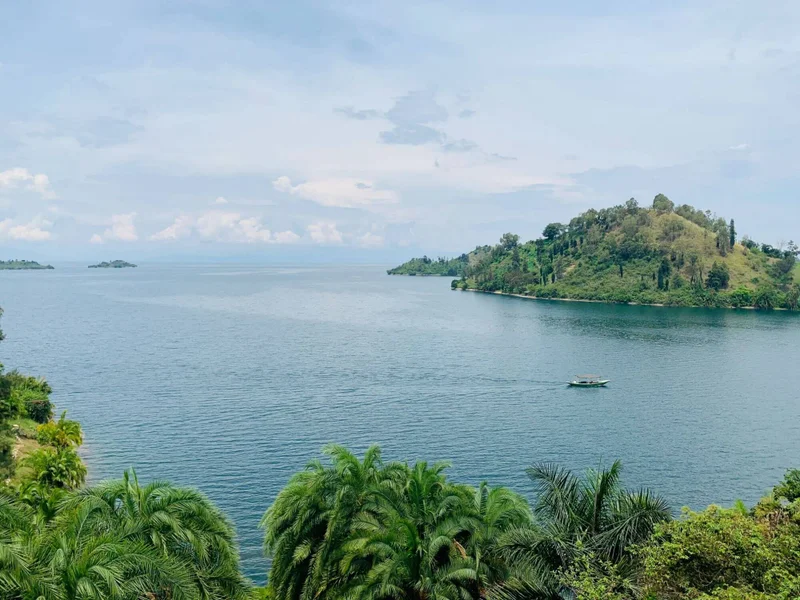
It has long been a destination for pilgrims and, at times, a site of conflict.
2. The Relationship Between Tourism and War as They Developed Alongside Industrialization
In the 19th century, the practical application of railroads and steamships rapidly improved people’s mobility, and once again, it was the military sector that was the first to adopt and utilize these developments.Helmut von Moltke, who later became Chief of the General Staff of Prussia and a Field Marshal of the German Empire, recognized the utility of railroads while serving concurrently as a director of the Berlin-Hamburg Railway and actively advocated for their military use.Moltke established a Railway Division within the General Staff, consulted with the Ministry of Commerce and Industry regarding the military use of railways, and demanded the construction of one double-track railway line per corps in western Prussia.The rapid development of railroads in the mid-19th century transformed the nature of warfare. Specifically, it made it possible to employ strategies involving dispersed advances and concentration at the decisive battlefield; Prussia, having expanded its railroad network, went on to win both the Austro-Prussian War and the Franco-Prussian War.
As warfare became more modernized, maps were created to accurately chart the terrain. Not only did engineers and military personnel travel to survey and draw these maps, but the precise topographic maps and railway route maps produced as a result also contributed to tourism during subsequent peacetime.
The railway network, which was rapidly developed not only for military purposes but also for industry and logistics, facilitated the movement of people and, as a result, gave rise to the concept of rail travel. Compared to travel by horse-drawn carriage or on foot, rail travel not only dramatically increased the distances people could travel but also enhanced travel safety.At that time, traveling on foot or by horse-drawn carriage carried a high risk of encountering robbers and other criminals, but traveling by rail significantly reduced that risk. The railway made it easier for the wealthy to travel to summer and winter resorts, and, of course, it was also used for sightseeing, just as it is today.In particular, in Britain, the “Grand Tour”—an overseas journey undertaken by the children of the wealthy upon completing their studies to broaden their education—saw its scope expanded significantly by the railroad, allowing travelers to explore much wider regions.Although this differed from modern school trips in that it was a long-term journey accessible only to the wealthy—who could afford the expenses of accompanying tutors and the like—it can be considered a precursor to educational travel.
It was also in the mid-19th century that Thomas Cook—often regarded as the founder of the modern travel agency—was established and began arranging group tours; this period marked the establishment of travel and tourism in their modern sense. Indeed, the modernization of tourism was established in parallel with the modernization of warfare.
As the 20th century began, the invention and practical application of tanks, airplanes, submarines, and wireless communication led to the further modernization of warfare. These advances in transportation and communication made it possible to transport people farther, faster, and more safely, which inevitably spurred the development of tourism.The first airline established for the purpose of passenger transport was Deutsche Luftfahrt-Gesellschaft (DELAG), founded in October 1909—well before the outbreak of World War I in 1914. However, this airline operated rigid airships, primarily for sightseeing and on irregular routes connecting Hamburg with other regions.
Civilian air transport was temporarily suspended due to World War I, but once the war ended, passenger transport became active using surplus military aircraft. KLM Royal Dutch Airlines, established in 1919 immediately after the end of World War I and considered the oldest surviving airline, was a leading airline that began operations using precisely this business model.
3. The Two World Wars and Tourism
The interwar period between World War I and World War II was a time of fleeting peace, but historically, it was also a period when the economic depression caused by the Great Depression and the resulting international tensions over economic blocs and colonies gradually came to the fore.In an effort to secure railway rights, sea routes, and air routes, nations stationed troops at bases along railway lines and on islands, developed airfields, and dispatched naval fleets.During this period, aircraft in particular underwent remarkable technological advancements, and warships—partly due to the influence of disarmament treaties—saw technological innovations in various areas, such as the enhancement of non-battleship vessels and the installation of powerful armaments within limited displacement limits.
These technological innovations, along with the development and maintenance of rail, air, and sea routes, ultimately led to a boom in civilian travel. It was also in 1935 that the famous “Asia” train of the South Manchuria Railway connected Dalian and Harbin in 13 hours and 30 minutes.The “Asia” was equipped with air conditioning in all cars—a groundbreaking feature at the time—and featured a dining car and an observation car. It offered services such as cocktails on board, providing a level of service comparable to today’s premium trains or cruise trains, and was highly regarded by travelers of the era.The “Yamato Hotels,” developed by the South Manchuria Railway itself at various locations along the line, were modern, high-quality lodging facilities—a concept akin to today’s hotel chains, which guarantee consistent quality through a unified brand. Furthermore, incorporating lodging facilities into the development of areas along the railway line was an advanced model for its time.
After World War I, Japan assumed the mandate to administer the South Pacific Islands, formerly under German control. Due to the constraints of this mandate, Japan was unable to establish military facilities there; consequently, it focused its efforts on developing air routes in the region, with the dual objectives of securing transportation hubs and preparing for future military use.Specifically, beginning in 1939, Dai-Nippon Airlines launched a scheduled air route between Yokohama, Saipan, and Palau, operating civilian air transport using civilian versions of the Navy’s Type 97 flying boat.In 1940, a regular air route was established between Bangkok, Thailand—one of the few independent nations in Southeast Asia—and Tokyo, allowing connections in Bangkok with Imperial Airways of the United Kingdom, KLM, and Air France.It should be noted that much of Dai-Nippon Airlines’ aircraft and crew were soon incorporated into the “13th Special Transport Flight Squadron” during the “Greater East Asia War” that was about to begin, and they came to play a key role in the war effort.
Although transportation developed in this way during the first half of the 20th century, creating an environment similar to today’s travel and tourism, overseas travel by airplane was still largely limited to the business travel needs of a select few bureaucrats, military personnel, and civilians; for the general public, overseas travel was not yet something that anyone could easily undertake.
It was the Third Reich (Nazi Germany) that systematically promoted this form of leisure among the populace and utilized it as a national policy.In 1933, the Third Reich established the “KdF” (Kraft durch Freude, or “Strength Through Joy”) as a subsidiary organization of the German Labor Front. Under state supervision, this organization planned travel, tourism, sports, concerts, and various festivals, aiming not only to enhance the welfare of the people but also to increase their cooperation with the Nazi regime through these activities.
Among the KdF’s initiatives, travel and tourism were a particular focus. The KdF built a massive resort complex on the island of Rügen and organized package tours aboard cruise ships and music concerts, thereby making leisure activities—which had previously been out of reach for the working class—widely available to the entire population.These KdF-organized trips can be considered the precursors to modern package tours, and by the late 1930s, the KdF itself had grown to such a scale that it was effectively regarded as the world’s largest travel agency.
Although the timeline differs, in Japan, as a large-scale military event involving mass troop movements, the “Army Special Grand Maneuvers” were held annually from 1892 to 1936—excluding the early years and the period of the Russo-Japanese War—in which multiple divisions, divided into two corps, participated on a scale of tens of thousands.These exercises were held at different locations each year, taking place throughout the country from Hokkaido in the north to Kagoshima in the south.While divisions stationed in the vicinity of the exercise area participated, the fact that the Emperor attended in person meant that these exercises were major events attracting not only officials from the General Staff Office and other central agencies on temporary assignment but also large numbers of onlookers—including ordinary citizens from surrounding areas—drawn by the Emperor’s visit.Numerous vendors flocked to the drill grounds and surrounding areas, banking on these spectators, and the scene resembled that of modern events and festivals, with members of the public buying boxed lunches from vendors to watch the exercises.
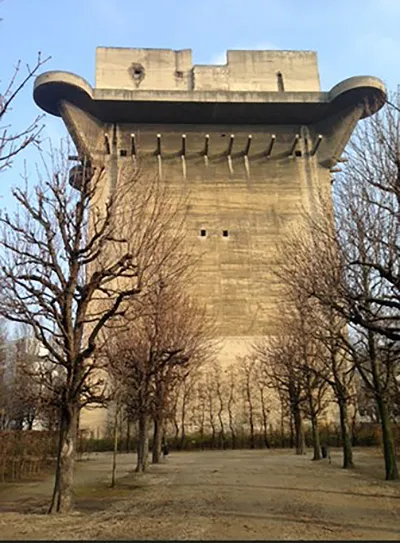
Several anti-aircraft gun turrets built during World War II still stand in Vienna and Hamburg. Because they are massive and sturdy, they are difficult to demolish; while some have been repurposed for other uses, others, like this one, have been left to stand as they are. In recent years, these wartime relics have quietly gained popularity as destinations for “dark tourism.”
4. The Development of Tourism in the Postwar Era and Tourism as a “Peace Industry”
Following Japan’s defeat in World War II, the rapid postwar reconstruction of the economy and infrastructure led to an expansion in transportation demand, prompting the development of the transportation network accordingly.Much of the military-industrial complex that had developed before and during the war was converted to civilian production, and in Japan—aided by the special demand generated by the Korean War—the economy and industry, particularly manufacturing, recovered rapidly.Tadanori Miki, a former Navy Technical Major who had been involved in the development of the “Ginga” bomber and the “Ouka” kamikaze aircraft at the Naval Aviation Technical Arsenal, contributed to the development of the Shinkansen 0 Series, thereby playing a key role in postwar high-speed mass transit.Catering companies that had developed alongside the increased mobilization of the military began producing a wide variety of regional “ekiben” (station boxed lunches), which came to meet the demand for food during tourism and business trips in the period of rapid economic growth. Thus, the legacy of World War II came to be utilized for the development of tourism in the postwar era.
It is often said that human history is the history of war, but as we have seen above, tourism has also developed while being closely intertwined with war in various forms. However, in recent years, attention has increasingly focused on tourism’s role as a “peace industry” that helps deter war.
Dark tourism is one such example. Dark tourism is a form of tourism in which people witness and experience the mistakes committed by humanity or the disasters that occurred in the past, and through this negative legacy, draw lessons to prevent the repetition of such tragedies or engage in self-reflection.Well-known examples include the Atomic Bomb Dome in Hiroshima and the Auschwitz-Birkenau Concentration Camp. Due to the nature of the subject matter, this form of tourism is characterized by a large number of sites and ruins related to war.Dark tourism related to war takes place not only at these well-known sites but also in various locations around the world. For example, in Prague, Czech Republic, walking tours are organized that allow participants to learn about and experience the history of the Nazi occupation by visiting various sites in the city where the SS was active during the Nazi occupation.
By visiting these sites and ruins, people learn about the horrors of nuclear weapons and the tragedy of the Holocaust; they reflect on the mistakes of history and consider the importance of preventing such events from recurring.In that sense, although they are a negative legacy of the past, they currently function as places of learning that contribute to peace and security in the present and future.
On the other hand, some of these war-related facilities and sites are linked to ideology and propaganda, and rather than prompting reflection on past tragedies, they foster hostility.We must also accept the reality that war-related facilities and historical sites carry the risk of having entirely different effects depending on how they are presented and experienced.
Tourism, through visits to different regions, fosters some form of interaction—albeit to varying degrees—with local people and cultural artifacts. Consequently, if visitors have a positive experience, their image of that destination naturally improves. This, in turn, has the potential to contribute to the prevention of war.According to a 2024 survey conducted by the Genron NPO, while less than 3% of Chinese people who had never visited Japan held a favorable image of the country, 55.6% of Chinese people who had visited Japan held a favorable image of it.In other words, through tourism—by coming into contact with people and cultures from different countries and regions—it is possible to foster a favorable image and promote mutual understanding. If such mutual understanding through tourism increases, it is expected that security threats will decrease accordingly, and the risk of war will also decline relatively.
The contribution of tourism to peace is not limited to its psychological benefits.Tourism is, by its very nature, an activity that involves spending money at the destination. In relatively poor developing countries, the money spent by inbound tourists represents valuable foreign currency and serves as an export industry that provides immediate cash revenue for the local economy. In other words, it is a transfer of income and wealth from rich countries to poor ones.Given that war often arises from economic disparities, this transfer of wealth can, in the long run, help nip the seeds of war in the bud. Tourism thus serves a dual purpose: it simultaneously fosters mutual understanding among people and facilitates the transfer of wealth.
It is often said that while technology has developed alongside war, it has also contributed to human progress. Tourism, too, has developed alongside war, yet it is also a “peace industry” that contributes to national security. Moreover, anyone can start participating in it as early as tomorrow, and it likely offers a meaningful and enjoyable experience for the individual.For our country, which is facing a declining population and intense international competition across various industries, the fact that tourism is one of the most promising industries for the future offers great hope in a world still plagued by unceasing conflict.
著者