Growing with Nature: A Corporate Strategy to Enhance the Well-being of Employees and the Environment

With “well-being” increasingly becoming a key concept in corporate management, companies are being challenged to balance “personal happiness and organizational performance” and to redefine the meaning of “true productivity.” In today’s world, where businesses are expected to operate with a strong awareness of their social impact, we will examine exemplary corporate initiatives.
Redefining Happiness in a Steady-State Society
The workplace environment has changed dramatically alongside technological advancements since personal computers began to spread just about 30 years ago. Faster processing of massive amounts of data, quick responses, and online meetings that can be held seamlessly while on the go...
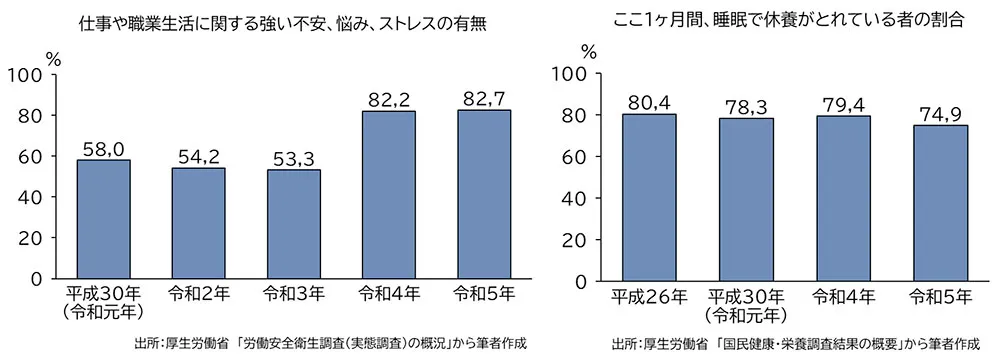
In terms of output, improved productivity should have led to shorter working hours, but the reality is quite different. It is as if the speed of a treadmill keeps increasing, forcing us to run at an athlete’s pace for the same amount of time as before. More than 80% of workers experience anxiety, worries, or stress, and the quality of their sleep remains poor. Despite the growing number of healthcare support systems, products, and services available, this situation remains serious.
It has been a long time since the concept of a “steady-state society”—one that does not take economic growth as an absolute given but instead aims for sustainable resource cycles and human well-being—was first proposed. It is now clear that the traditional equation of “consumption = satisfaction” and “growth = success” no longer holds true. Happiness is no longer defined solely by material wealth; non-material elements such as spiritual fulfillment, health, and social connections have become essential components of well-being.
In the corporate world as well, employee well-being is no longer viewed merely as a benefit but is now recognized as an essential investment for enhancing creativity, productivity, and engagement. Now that digitalization has increased work productivity, it has become crucial to reevaluate how we use “time” itself.
One initiative gaining attention is the “Forest Program,” where employees work in natural settings while learning about and enjoying the environment. This is one of the new solutions for human capital management. Based on the idea that “happiness leads to results,” it aims to foster sustainable well-being for employees, companies, and the natural environment. As an excellent example of “Well-Pa” (Well-being Performance), this initiative is gaining momentum.
Challenges in the Current Social Environment
The emergence of such initiatives stems from the challenges currently faced by “employees,” “companies,” and “the environment.”
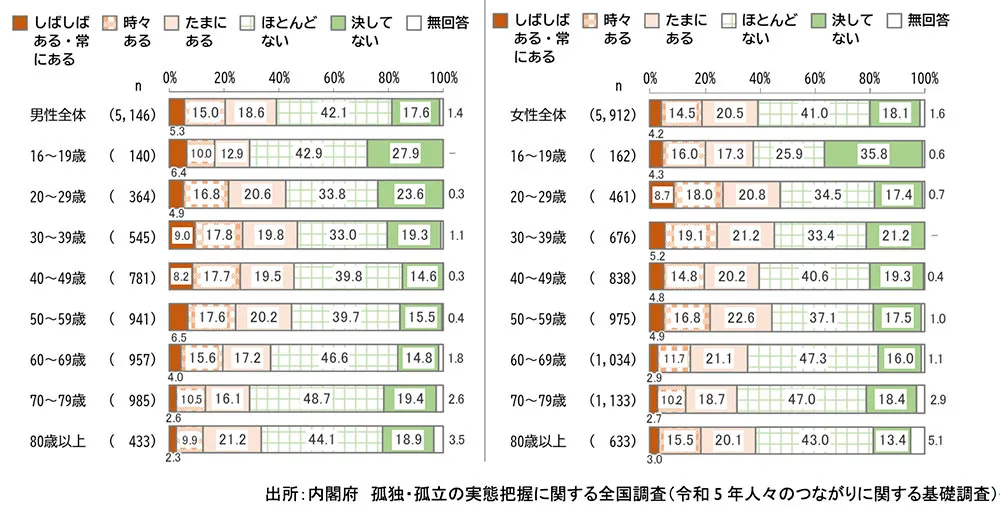
First, looking at the situation of employees, while mental health issues have been mentioned previously, “loneliness” has also become a social issue in recent years. According to a survey by the Cabinet Office, the percentage of people who answered that they “feel lonely” was high among men in their 30s and 40s and among women in their 20s. When including those who feel lonely “all the time” to “occasionally,” the results show that approximately half of the population feels lonely.While “connection” is a key element in maintaining well-being, the fact that a high percentage of the working-age population—who should have frequent contact with society—feels lonely is a cause for concern.
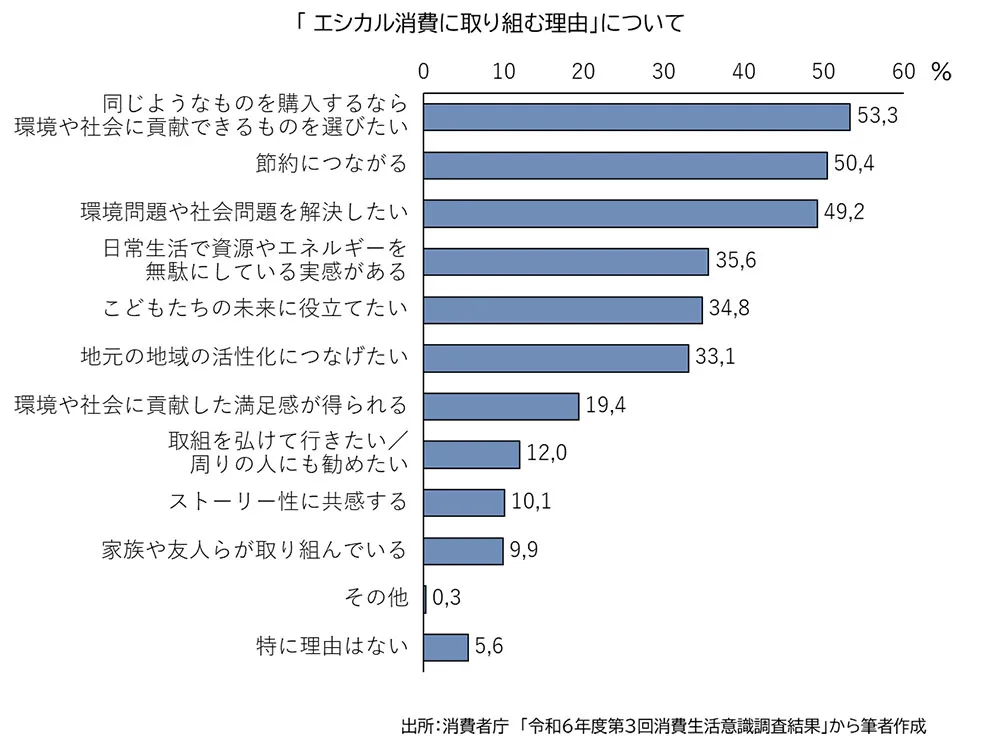
Next, regarding companies, there has been a growing focus in recent years on better initiatives related to the environment, local communities, and employees, and the responsibility placed on them has become heavier.As terms like “sustainability” and “SDGs” become more widespread, the specific sustainability initiatives a company undertakes have become a key factor for investors when making investment decisions. Furthermore, not only is “ethical consumption”—the practice of choosing environmentally friendly products and services—on the rise, but a new value system known as “ethical job hunting” has also emerged, where job seekers prioritize whether they can identify with a company’s ethics, SDGs, and CSR activities.
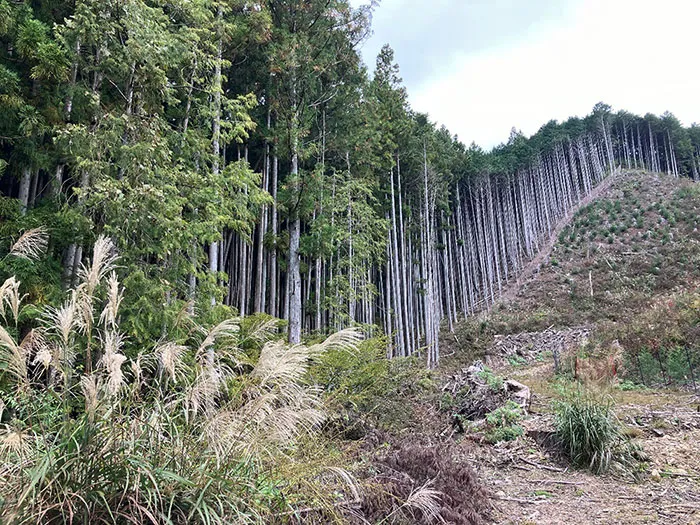
Finally, the environment—particularly Japan’s forests, which symbolize the country’s rich natural heritage—faces challenges such as declining logging due to reduced timber use and forest degradation. Although forests cover approximately two-thirds of Japan’s land area, the population of mountain villages accounts for only about 3% of the national total.These vast forests are not being adequately managed, and it cannot be said that we are fully reaping their benefits. Although many planted forests have reached harvest age, they are being left untended because proper logging and reforestation are not being carried out.In densely packed forests, trees cannot grow to their full potential, and their root systems remain underdeveloped. This weakens the soil’s ability to retain moisture, increasing the risk of soil erosion. At the same time, habitats for diverse flora and fauna are lost, leading to a decline in biodiversity. Forest degradation triggers climate change, landslides, flood damage, wildfires, and wildlife damage, directly and indirectly impacting our lives.
Proactive efforts to promote the well-being of both employees and the environment lead to corporate well-being
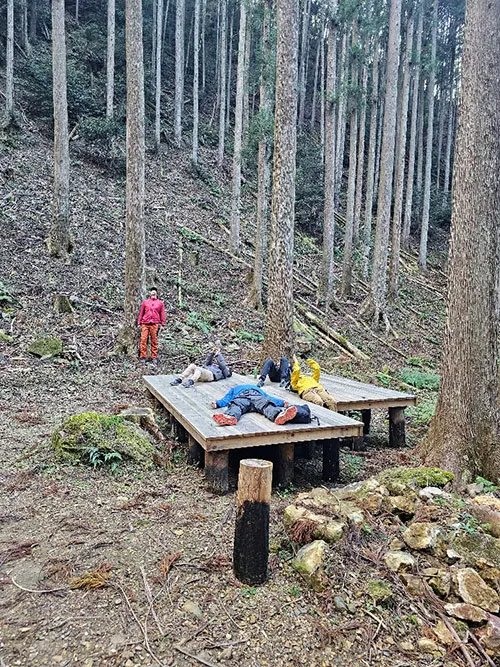
Forest programs that utilize forest spaces are indeed one effective means of addressing these challenges. The Forestry Agency is promoting this initiative as the “Forest Service Industry,” and it is expected to yield multifaceted benefits, including the promotion of employees’ physical and mental health, the resolution of issues facing the natural environment and mountain villages, and the enhancement of corporate value. A key aspect of these forest programs is that they incorporate both recreational elements that employees find enjoyable and educational elements that raise environmental awareness.
Currently, the Forestry Agency is in the process of registering “Forest Service Industry Promotion Areas,” which now number 58 nationwide (as of June 2, 2025), offering a variety of forest activities.For example, these include forest bathing backed by scientific evidence; environmental education to deepen understanding of the relationship between humans and nature and the significance of wood utilization; forest activities that foster communication; and campfires that promote mental well-being. The range of activities is diverse, including game meat BBQs designed to raise awareness of wildlife damage and mountain biking through the forests.
For companies, this is expected to yield benefits such as preventing employee absences and turnover, as well as reducing medical expenses, ultimately leading to long-term cost savings.
Furthermore, experiences in the extraordinary environment of nature contribute to team building and enhanced communication, thereby boosting the performance of the entire organization. In addition, collaborative efforts toward environmental conservation in nature help employees realize the company’s social role and can increase loyalty to the company.To make it easier for companies to utilize forest programs, the Forestry Agency has published “Corporate x Forest Programs: Utilization for Human Capital Management,” which introduces the significance of these programs and case studies. According to research results by Dr. Ochiai of the National Hospital Organization Tokyo Medical Center, featured in this document, spending time in forests has been shown to reduce the secretion of cortisol, a stress hormone, suggesting that it leads to reduced stress among employees.Training in an environment removed from the daily routine encourages deep introspection and strengthens relationships, which in turn leads to improved psychological safety in the workplace and helps prevent employee turnover.
For mountain village communities, corporate training programs can generate new economic opportunities. As forest management progresses through local service providers offering forest programs, it becomes possible to foster opportunities for co-creation with companies.
Furthermore, such initiatives are needed not only in forests but also in various other environments, including oceans affected by pollution, rivers closely linked to people’s daily lives, and satoyama landscapes where humans and nature coexist.
Outlook for the Future
With the growing emphasis on the SDGs and well-being, an era has already begun in which we seek a more fundamental and sustainable form of happiness. Initiatives like forest programs serve as spaces for “recovery” and “creation”—forms of active rest—and will help pass on a positive natural environment to future generations.
Companies are not merely “places for generating results,” but communities that support the “quality of life” of each and every employee. Isn’t now precisely the time to create the future of “work”?
著者