Travel Trends Forecast for 2026 (January–December)
This report provides estimates regarding travel by Japanese citizens lasting one night or more, based on various economic trends, consumer behavior surveys, transportation and tourism-related data, and questionnaire surveys conducted by the JTB Group. The company has been conducting these surveys continuously since 1969. (Our company is responsible for the research and analysis in this report.)
Key Findings
- Outlook for Travel Trends in 2026
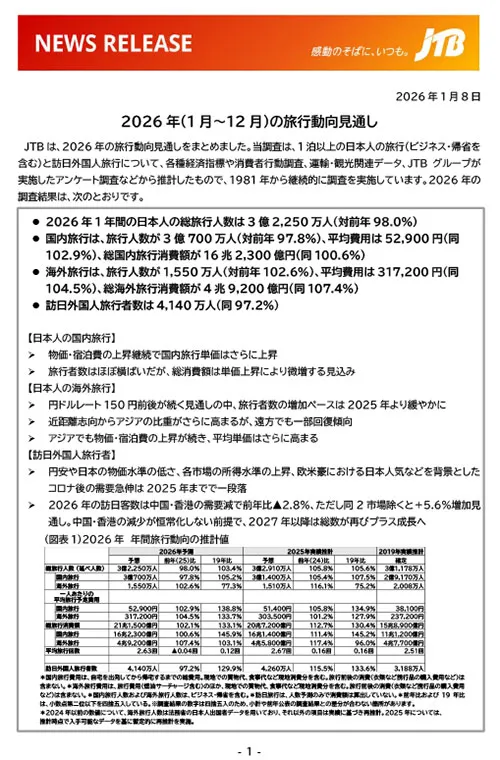
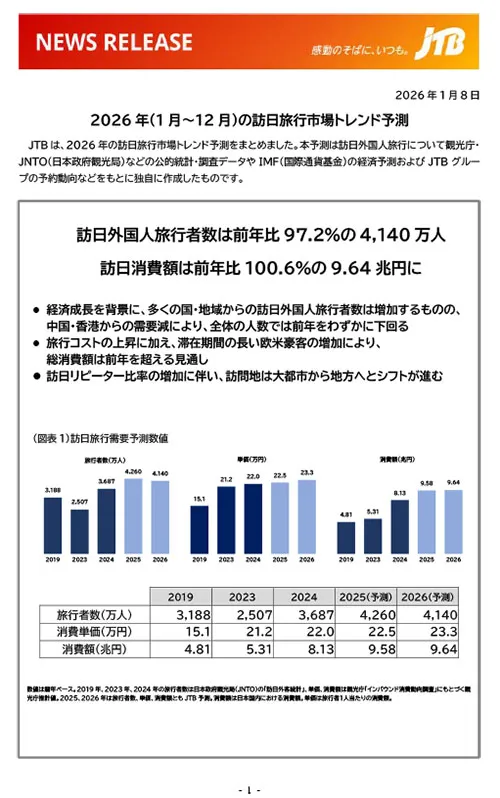
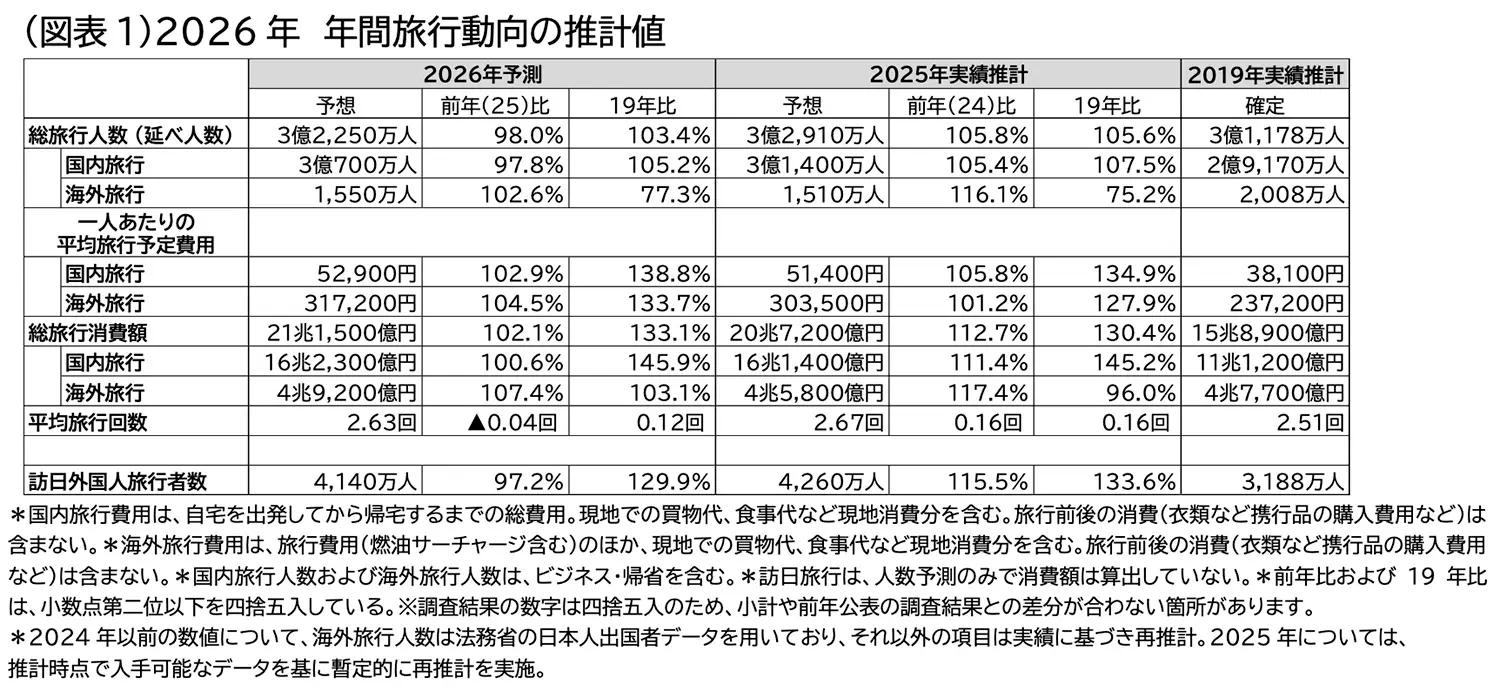
The total number of Japanese travelers in 2026 was 322.5 million (98.0% of the previous year’s figure) For domestic travel, the number of travelers was 307 million (97.8% of the previous year), the average expenditure was 52,900 yen (102.9% of the previous year), and total domestic travel spending was 16.23 trillion yen (100.6% of the previous year). For overseas travel, the number of travelers was 15.5 million (102.6% of the previous year), the average expenditure was 317,200 yen (104.5% of the previous year), and total overseas travel spending was 4.92 trillion yen (107.4% of the previous year) The number of foreign visitors to Japan was 41.4 million (97.2% of the previous year’s figure)
- Domestic Travel by Japanese People
As Prices and Accommodation Costs Continue to Rise, the Average Spending Per Domestic Trip Is Expected to Increase Further
Although the number of travelers is expected to remain largely flat, total spending is projected to increase slightly due to higher per-person spending
- Japanese Travel Abroad
With the yen-dollar exchange rate expected to remain around 150 yen, the pace of growth in the number of travelers is projected to slow starting in 2025
While the focus on short-distance travel will lead to an even greater emphasis on Asia, there are signs of a partial recovery in long-distance travel as well
Prices and lodging costs continue to rise in Asia as well, pushing the average spending per traveler even higher
- International Visitors to Japan
The post-COVID surge in demand—driven by the weak yen, Japan’s low price levels, rising income levels in various markets, and the popularity of Japan in Europe, the U.S., and Australia—is expected to level off by 2025
In 2026, the number of visitors to Japan is projected to decline by 2.8% year-over-year due to reduced demand from China and Hong Kong; however, excluding these two markets, the figure is expected to increase by 5.6%. Assuming the decline in visitors from China and Hong Kong does not become a permanent trend, total visitor numbers are expected to return to positive growth starting in 2027.
1The Current Situation of Travelers
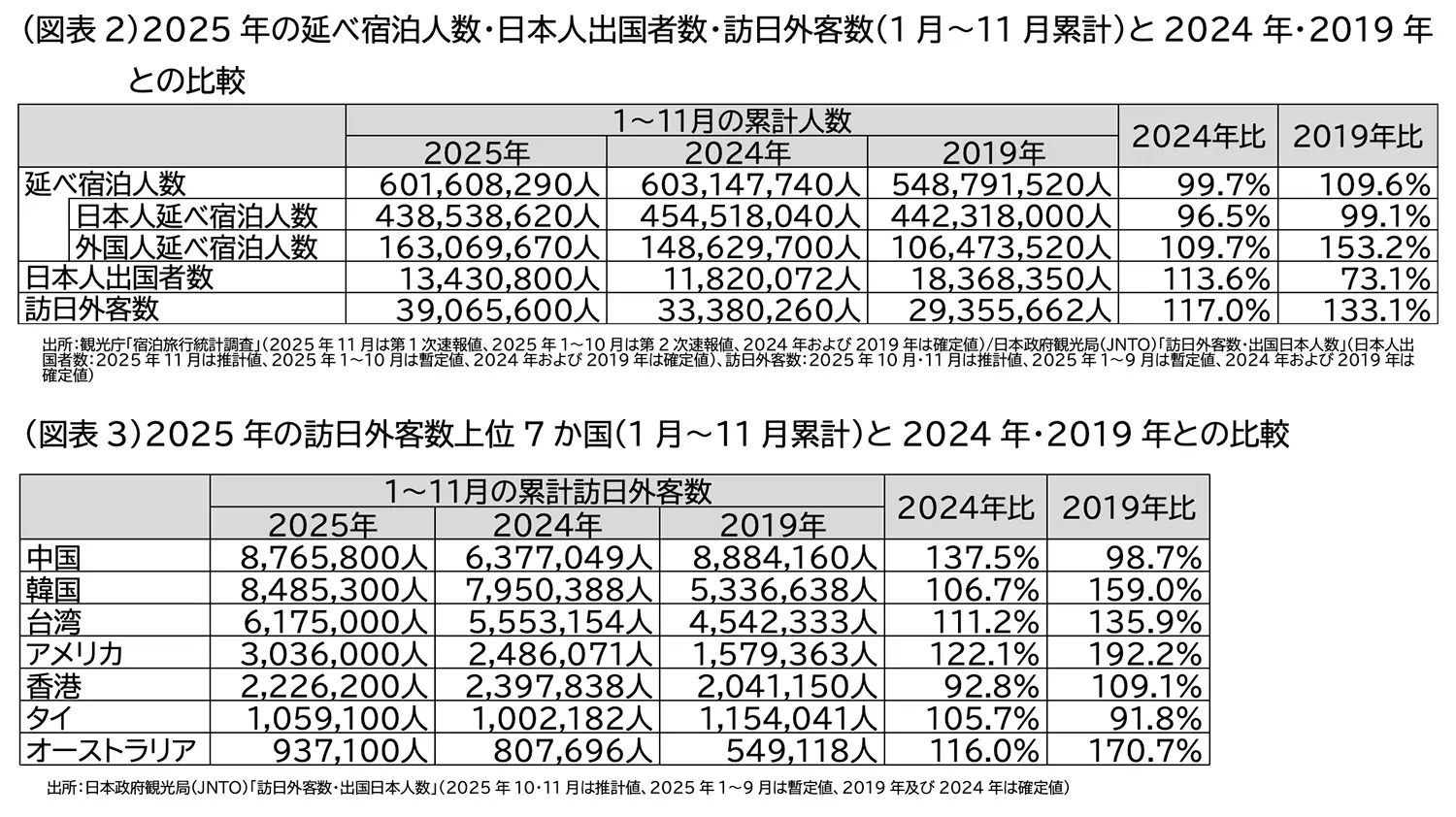
Regarding domestic travel, the number of overnight stays in 2025 has been sluggish due to factors such as the domestic economic situation and rising prices.Looking at total overnight stays in 2025, the YTD total from January through November was 438.54 million overnight stays, representing 96.5% of the figure for the same period in 2024 (454.52 million overnight stays) (Figure 2).
Regarding overseas travel, in 2025, amid rising prices both domestically and abroad, a weak yen, and global political instability, the sector has continued to recover gradually since the end of the COVID-19 pandemic.The YTD number of Japanese travelers departing the country from January through November 2025 was 13.43 million, representing 113.6% of the figure for the same period in 2024 (11.82 million) and exceeding the previous year’s level (Figure 2).
As for inbound tourism, the number of international visitors to Japan continued to grow steadily in 2025, driven by factors such as the continued weakening of the yen. The YTD number of international visitors to Japan from January through November 2025 was 39.07 million, representing 117.0% of the figure for the same period in 2024 (33.38 million) (Figure 2).By country and region, the YTD totals for January–November 2025, in descending order, were: China (8.77 million, a 137.5% increase compared to the same period in 2024),South Korea (8.49 million, 106.7% compared to the same period in 2024), and Taiwan (6.18 million, 111.2% compared to the same period in 2024) (Figure 3).
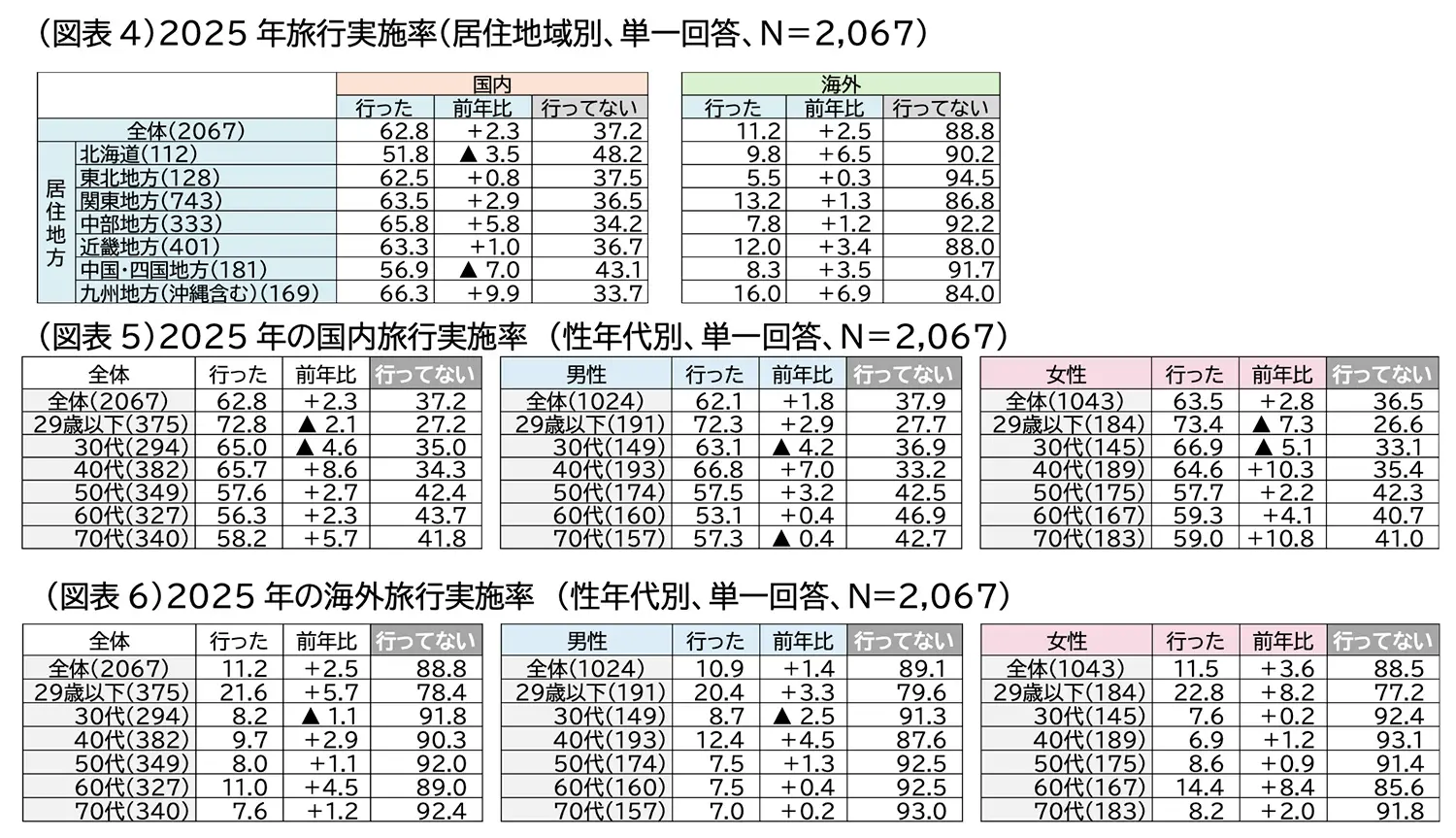
According to the travel survey conducted this time, the percentage of people who took a trip lasting one or more nights during the one-year period from January to December 2025 was 62.8% for domestic travel, an increase of 2.3 percentage points from the previous year.By region of residence, the percentage of people who took domestic trips was highest in the Kyushu region (66.3%), followed by the Chubu region (65.8%) and the Kanto region (63.5%) (Figure 4).By gender and age group, the proportion of people who took a domestic trip was highest among “women aged 29 and under (73.4%),” though this figure decreased by 7.3 percentage points from the previous year.This was followed by “men aged 29 and under (72.3%, up 2.9 percentage points from the previous year),” “women in their 30s (66.9%, down 5.1 percentage points),” and “men in their 40s (66.8%, up 7.0 percentage points).”Among women, the participation rate decreased for those in their 30s and younger, while it increased for those in their 40s and older (Figure 5).
Regarding overseas travel, the total percentage of people who traveled was 11.2%, an increase of 2.5 percentage points from the previous year.By region of residence, the percentage of respondents who traveled was highest in the “Kyushu region (including Okinawa) (16.0%),” followed by the “Kanto region (13.2%)” and the “Kinki region (12.0%)” (Figure 4).By gender and age group, the rate was highest among “women aged 29 and under (22.8%),” an increase of 8.2 percentage points from the previous year, followed by “men aged 29 and under (20.4%, up 3.3 percentage points from the previous year),”"women in their 60s (14.4%, up 8.4 percentage points from the previous year)," and "men in their 40s (12.4%, up 4.5 percentage points from the previous year)." Thus, the rate increased in all groups except for men in their 30s (Figure 6).Participation rates were high among younger generations both domestically and internationally, and an increase was observed among men in their 40s in both groups.
22026 Calendar and Major Events
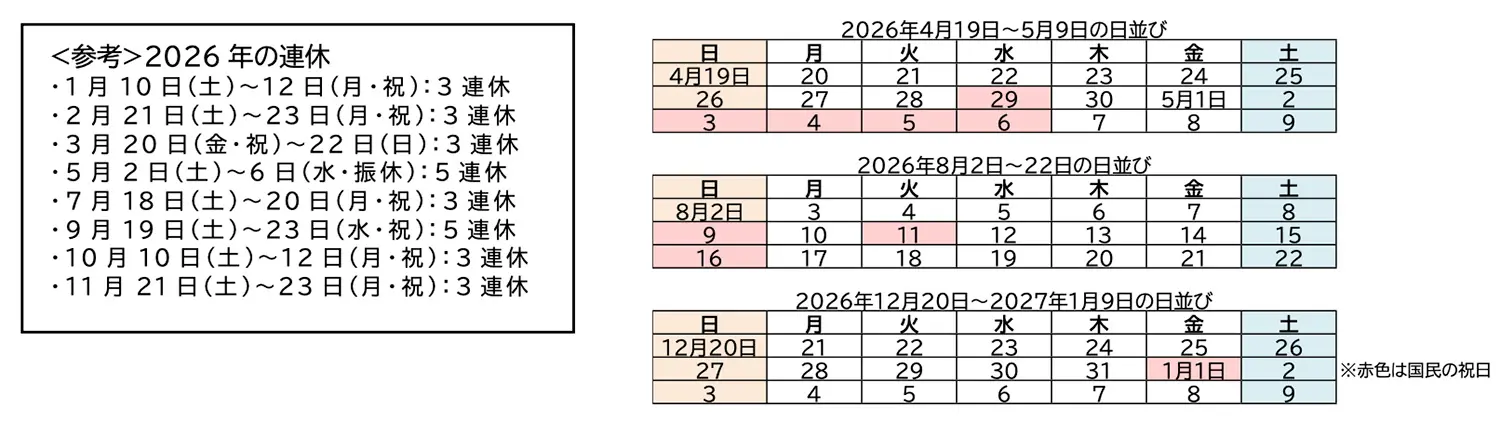
In 2026, there will be eight periods of three or more consecutive days off (six three-day weekends and two five-day weekends). Compared to the nine such periods in 2025 (eight three-day weekends and one four-day weekend), this represents a decrease of one period; however,there will be five-day holidays during Golden Week (May 2 (Sat) – 6 (Wed)) and Silver Week (September 19 (Sat) – 23 (Wed, holiday)), and for summer vacation, if you take Monday, August 10 off, you’ll have a four-day holiday from Saturday, August 8 to Tuesday, August 11.For the year-end and New Year’s holidays from 2026 to 2027, taking Monday, December 28, through Thursday, December 31, off results in a 9-day holiday period from Saturday, December 26, to Sunday, January 3; compared to 2025, this can be described as a year with more extended holiday periods.
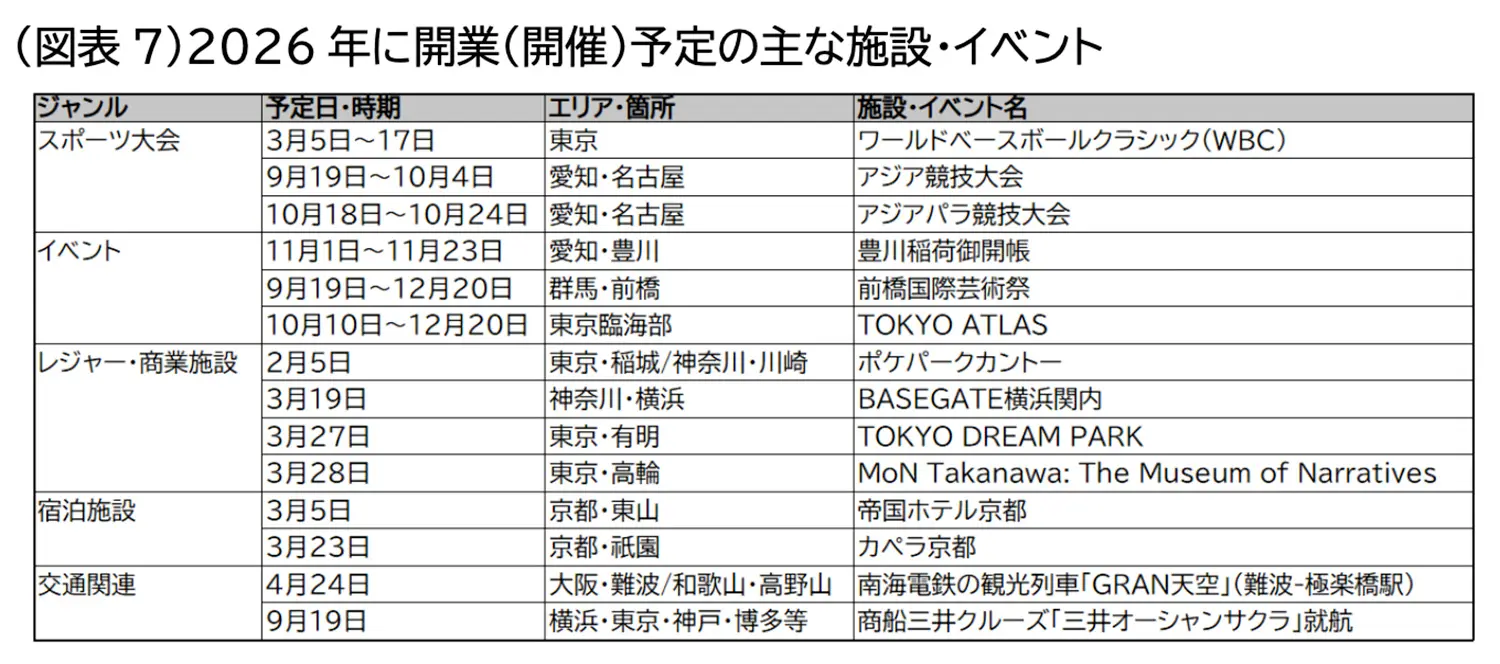
The major facilities and events scheduled to open or take place in 2026 are shown in Figure 7.
Events
In early spring, the “World Baseball Classic (WBC),” which attracts global attention, will be held, and large numbers of spectators from both Japan and abroad are expected to attend. The Asian Games and Asian Para Games will be held in Aichi and Nagoya.In the fall, the Toyokawa Inari Shrine in Toyokawa, Aichi, is scheduled to open its main hall to the public for the first time in 72 years. Additionally, numerous events are planned across the country, including new art events such as “TOKYO ATLAS” in the Tokyo Bay area and the “Maebashi International Art Festival 2026” in Maebashi, Gunma.
Internationally, the Milan-Cortina 2026 Winter Olympics and Paralympics will be held in Italy in February, and the FIFA World Cup™ will take place in the United States, Canada, and Mexico from June to July. Furthermore, a ceremony commemorating the completion of the Sagrada Família in Barcelona, Spain, is scheduled and is expected to attract global attention.
New Openings and Anniversaries
In the leisure and commercial sectors, “PokéPark Kanto” will open in February at Yomiuri Land, which spans Tokyo and Kanagawa. Tokyo DisneySea and Universal Studios Japan will celebrate their 25th anniversaries.In Ariake, Tokyo, “TOKYO DREAM PARK”—featuring theaters and auditoriums—will open, aiming to serve as a hub where entertainment and technology converge.
In the art museum sector, “MoN Takanawa: The Museum of Narratives” will open in Takanawa, Tokyo, with a mission to “connect culture for the next 100 years.”In the hospitality sector, the “Imperial Hotel Kyoto” (Gion, Kyoto) and “Capella Kyoto” (Higashiyama, Kyoto) will open, expanding the options for luxury stays.
In the transportation sector, the “Mitsui Ocean Sakura,” a cruise ship connecting Yokohama, Tokyo, Kobe, and Hakata, will begin service in September, expanding services where the journey itself becomes part of the travel experience.
3Domestic Travel Trends *Excludes international visitors to Japan; refers to domestic travel by residents of Japan
- The number of domestic travelers in 2026 is projected to be 307 million (97.8% of the previous year’s figure)
- Per-person travel expenditure is 52,900 yen (102.9% of the previous year)
- Total domestic travel spending is projected to reach 16.23 trillion yen (100.6% of the previous year’s figure).
While wage growth is expected to slow, rising prices and soaring lodging costs are projected to continue, leading to a further increase in the average cost per domestic trip. Consequently, the number of travelers is expected to remain roughly flat compared to the previous year, while total spending is projected to rise slightly due to the increase in average spending per trip.
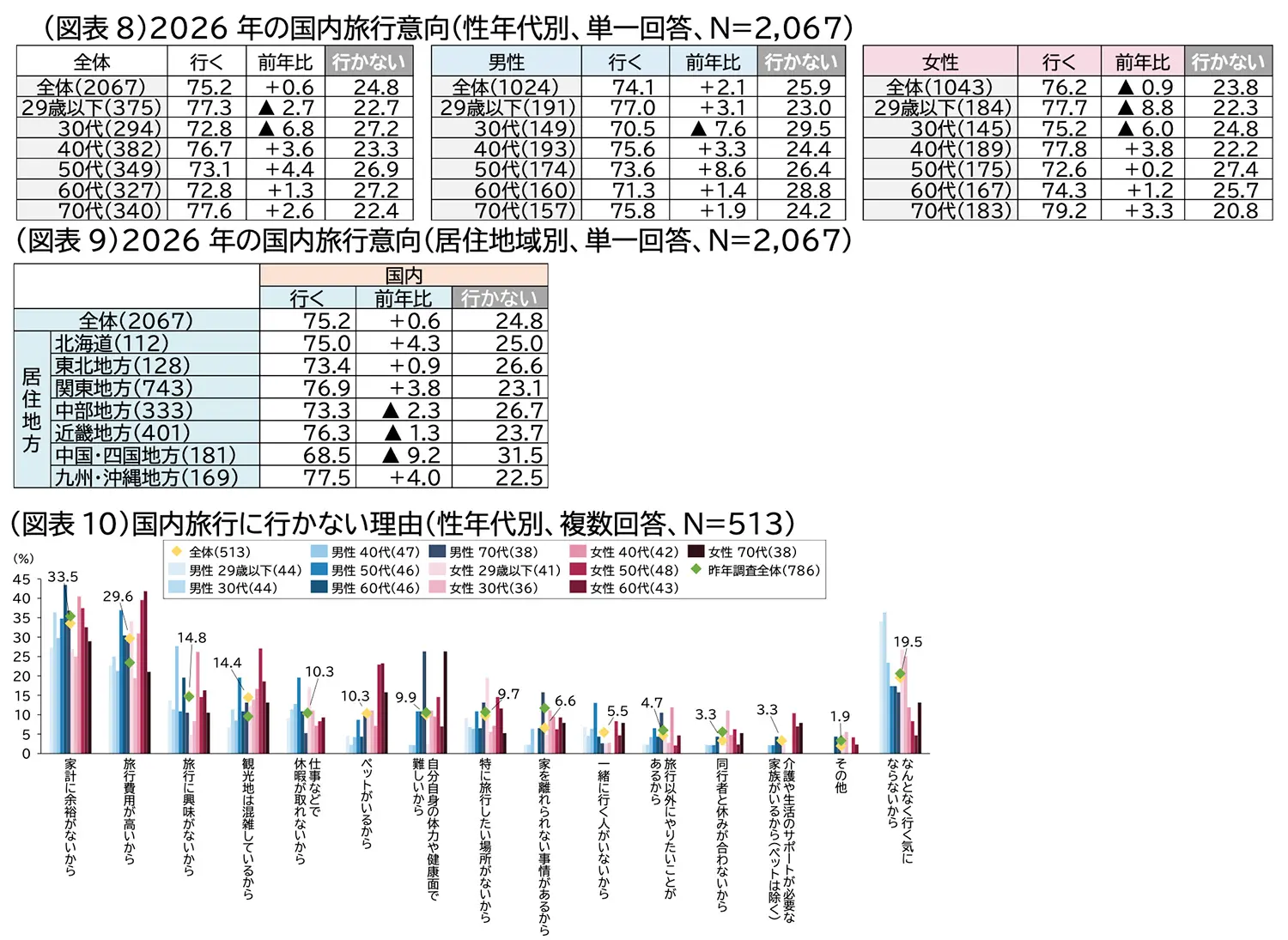
According to the aforementioned survey, when examining the intention to take a domestic trip of at least one night between January and December 2026 by gender and age group, the percentage of people planning to travel domestically was highest among “women in their 70s (79.2%),” followed by “women in their 40s (77.8%),”“women aged 29 and under (77.7%)” and “men aged 29 and under (77.0%)”; the figures tended to be relatively higher among women (Figure 8).By region of residence, the percentage of people planning to take a domestic trip was highest in the “Kyushu region (77.5%),” followed by the “Kanto region (76.9%)” and the “Kinki region (76.3%)” (Figure 9).
24.8% of the total respondents answered that they “never” took a domestic trip.The main reasons were “insufficient household income (33.5%)” and “travel costs are too high (29.6%)”; as in the previous year, cost-related reasons ranked highest, with “travel costs are too high” rising by 6.2 percentage points from the previous year.The high cost of travel appears to be a particular obstacle for women in their 50s and 60s (Figure 10).
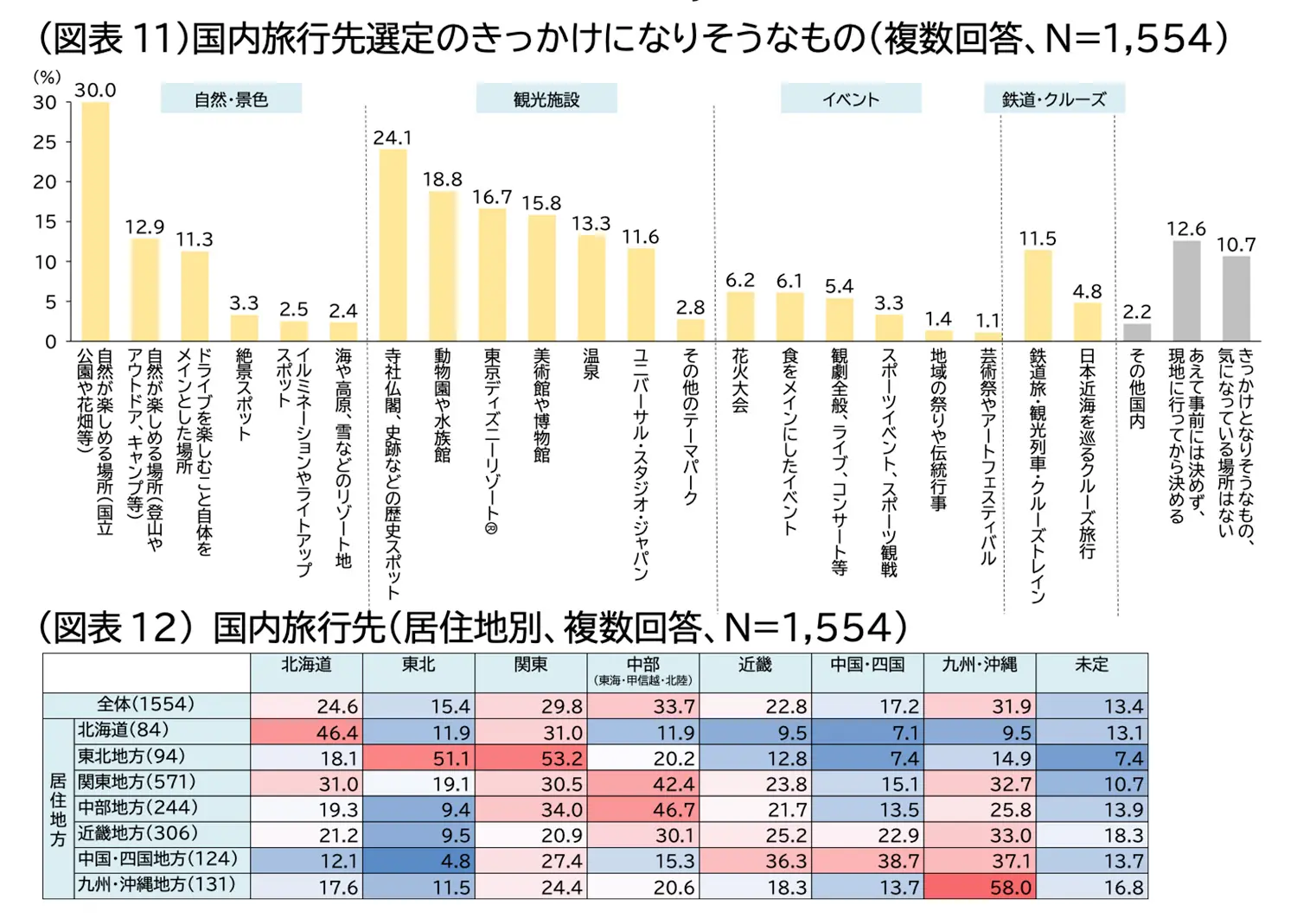
When respondents who planned to take a domestic trip were asked what factors might influence their choice of destination, “places to enjoy nature (such as national parks and flower fields)” was the most common answer at 30.0%, followed by “historical sites such as shrines, temples, and historic sites” at 24.1%.When broken down by gender and age group, “places to enjoy nature (such as national parks and flower fields)” were popular among men in their 70s and women in their 60s and 70s, while the percentage of respondents citing zoos, aquariums, and theme parks was higher among both men and women in their 20s and 30s (Figure 11).Additionally, open-ended responses revealed interest in “JUNGLIA OKINAWA,” which opened in 2025; Huis Ten Bosch, which has added a new area; and Kabuki, which has garnered attention due to a popular movie.
Regarding travel destinations currently being considered, “Chubu (33.7%)” ranked highest, followed by “Kyushu and Okinawa (31.9%)” and“Kanto (29.8%),” a trend largely consistent with last year’s results. However, “Kinki (22.8%)” saw a slight decline, resulting in a reversal of rankings with “Hokkaido (24.6%)” (Figure 12).
4Trends in Overseas Travel
- The number of overseas travelers in 2026 is projected to be 15.5 million (102.6% of the previous year’s figure)
- Per-person travel expenses: 317,200 yen (104.5% of the previous year)
- Total spending on overseas travel will reach 4.92 trillion yen (107.4% of the previous year’s figure)
Although some time has passed since the COVID-19 pandemic, the recovery in overseas travel has been gradual due to factors such as the sharp depreciation of the yen and soaring prices in the previous year, and is expected to slow further starting in 2025.Travelers are gradually coming to terms with the weak yen, and while travel to Asia remains strong, some distant destinations are also showing signs of recovery. Furthermore, as prices and accommodation costs continue to rise even in Asia, the average travel expenditure per person is expected to increase further.
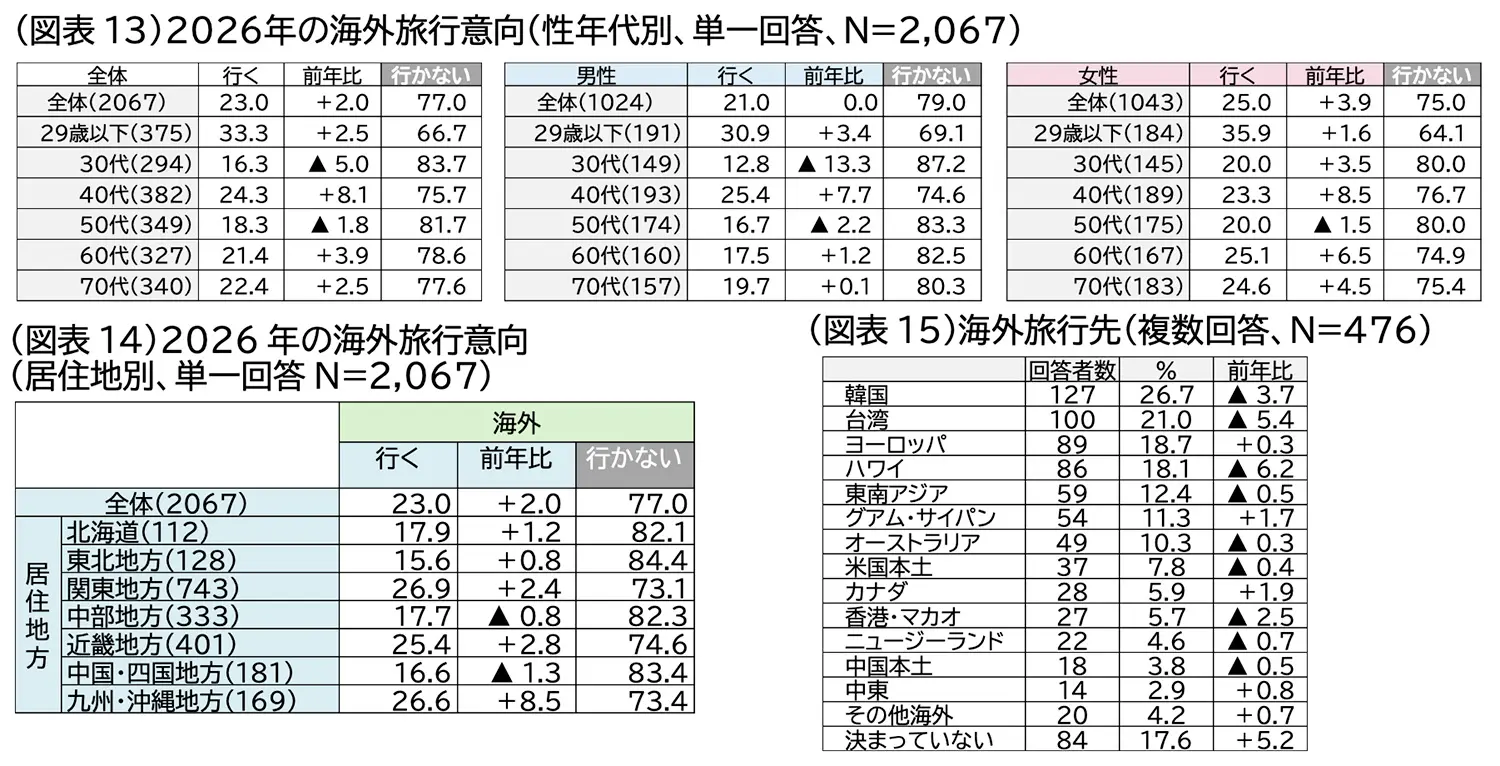
According to the aforementioned survey, 23.0% of respondents indicated they “plan to go” on an overseas trip of at least one night between January and December 2026, marking a 2.0-point increase from the previous year.Although the growth has slowed compared to the period from 2024 to 2025, it can be said that the desire for overseas travel continues to rise.By gender and age group, the highest intention to travel was among “women aged 29 and under” at 35.9%, followed by “men aged 29 and under” (30.9%), representing increases of 1.6 percentage points and 3.4 percentage points, respectively, from the previous year (Figure 13).
By region of residence, the percentage of respondents who “plan to travel” was highest in the “Kanto region (26.9%),” followed by the “Kyushu region (26.6%)” and the “Kinki region (25.4%)” (Figure 14).
Regarding current travel destinations, “South Korea (26.7%)” ranked highest, followed by “Taiwan (21.0%)”—with neighboring countries and regions leading the way—while medium- to long-distance destinations such as “Europe (18.7%)” and “Hawaii (18.1%)” also remain popular(Figure 15).
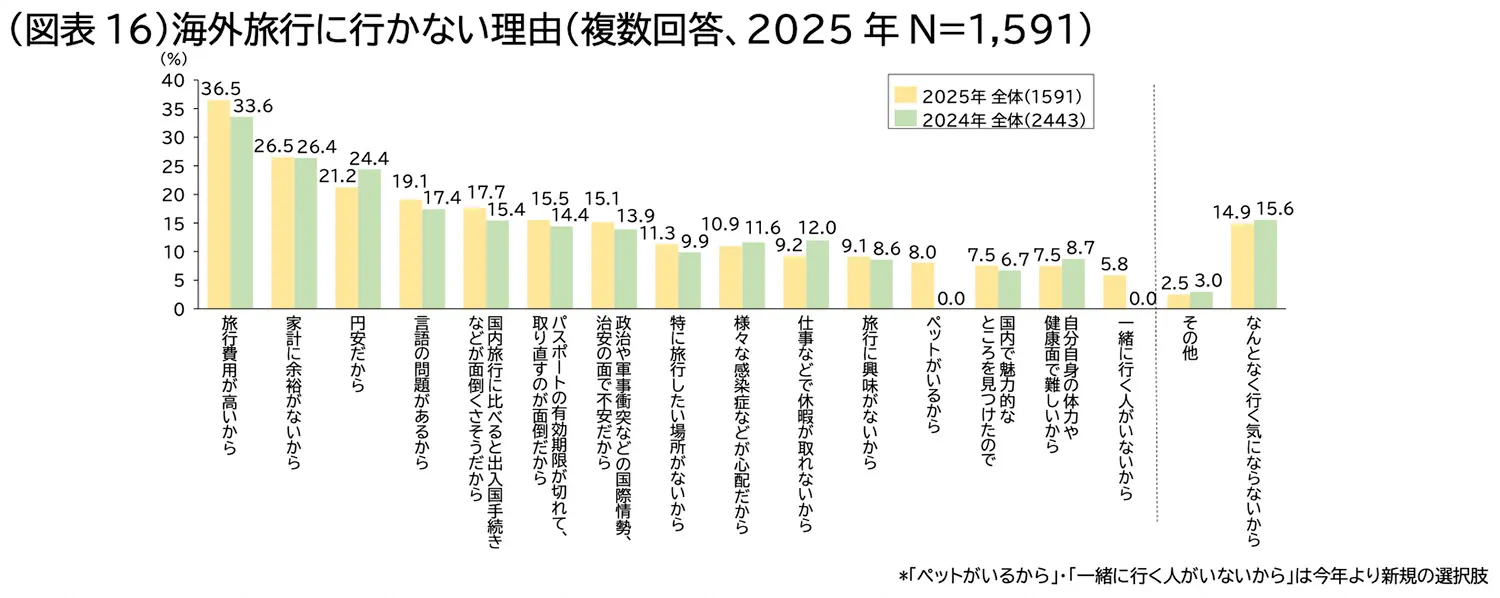
77.0% of respondents said they “never go on overseas trips”; as with domestic travel, financial reasons ranked highest, but for overseas travel, “travel costs are too high (36.5%)” was cited first, followed by “the household budget doesn’t allow for it (26.5%),” reversing the order seen for domestic travel.The third-ranked reason, “Because the yen is weak (21.2%),” decreased by 3.2 percentage points from the previous year. Aside from financial reasons, psychological factors such as “language barriers,” “immigration procedures seem like a hassle,” and “it’s a hassle to renew my passport” appear to be significant barriers (Figure 16).
5International Visitors to Japan
The number of international visitors to Japan in 2026 was 41.4 million (97.2% of the previous year’s figure)
The number of international visitors to Japan, buoyed by a weak yen during the post-COVID recovery, posted consecutive double-digit growth rates and reached a record high in 2025. However, the rapid recovery in demand has run its course, and growth rates are expected to level off going forward. Coupled with a decline in demand from China and Hong Kong, the number of visitors in 2026 is projected to fall below the previous year’s level.
The high growth rate in demand for travel to Japan from 2024 to 2025 can be attributed to the weak yen, low domestic prices in Japan,rising income levels in various markets compared to pre-COVID levels, and growing popularity of Japan—particularly in Europe, the U.S., and Australia. However, the effect of these factors in boosting demand is expected to largely run its course by 2025, and in 2026, the natural increase in outbound travel demand driven by economic growth in each market is expected to be the primary driver of growth in the number of visitors to Japan.
A potential downside risk is a decline in demand for travel to Japan from China and Hong Kong. Based on the rate of decline in international airline seat capacity between Japan and China as of early December 2025, this forecast assumes that the number of travelers during the forecast period will be 20 percent lower than the previous year. For more details, please refer to the “Inbound Travel Market Trend Forecast” released on the same day, Thursday, January 8.
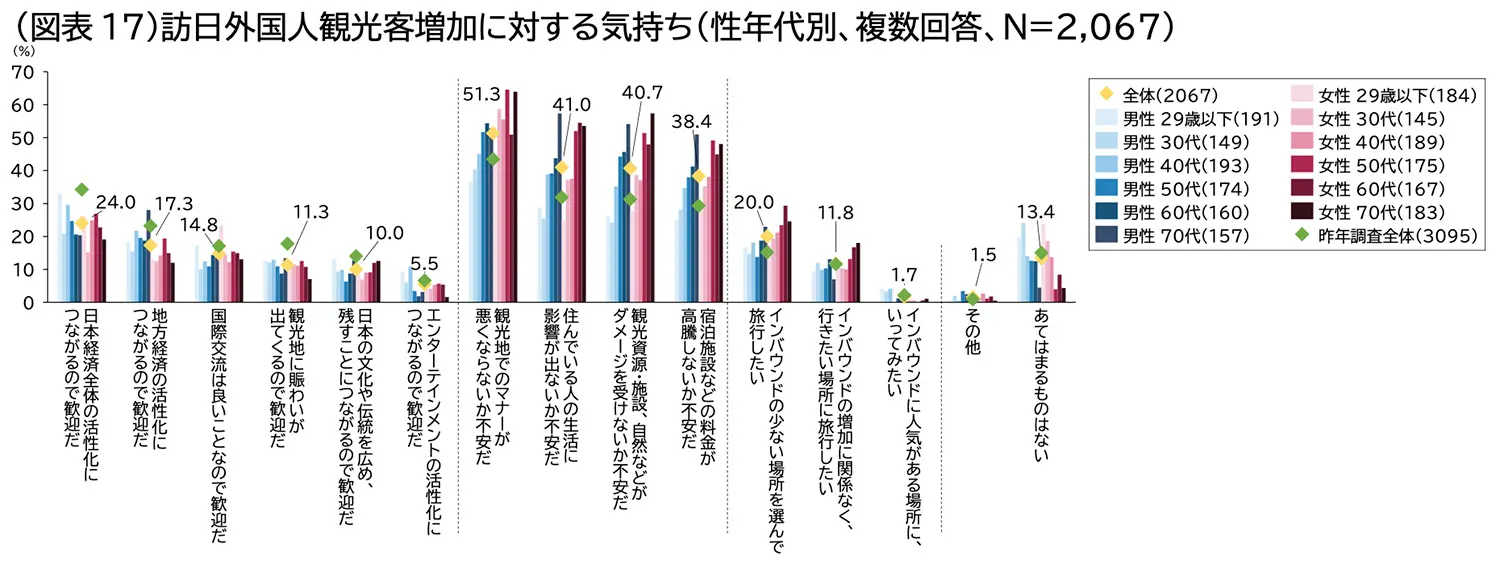
Meanwhile, regarding the increase in foreign tourists visiting Japan, we asked the respondents in this survey how they felt about this trend. The most common concerns were: “I’m worried that manners at tourist spots will deteriorate (51.3%),”“I’m worried it will affect the lives of local residents (41.0%),” and “I’m worried that tourist attractions, facilities, and nature will be damaged (40.7%).” These concerns were particularly high among the senior demographic.On the other hand, the percentage of respondents who welcomed the trend—such as those who said, “I welcome it because it will revitalize the Japanese economy as a whole (24.0%)”—tended to be higher among younger generations. Even among the senior demographic,“I welcome it because it will revitalize local economies (17.3%)” was higher among men in their 70s, and “I welcome it because it will help promote and preserve Japanese culture and traditions (10.0%)” was higher among women in their 60s and 70s (Figure 17).
6The Economic Environment and Living Conditions Surrounding Travel
According to forecasts from several economic research institutions, the real GDP growth rate for the Japanese economy in FY 2026 is expected to be roughly between +0.7% and +0.9%. While this represents a slight slowdown compared to the outlook for FY 2025, the Japanese economy continues to show signs of a gradual recovery.
Factors supporting this growth include robust capital investment and continued inbound demand. Additionally, the inflation rate is expected to peak in 2025 and then slow down. Against the backdrop of labor shortages, high wage increases of around 5% are forecast for the 2026 spring wage negotiations, and personal consumption is expected to remain resilient.
On the other hand, challenges such as a slowdown in the global economy due to U.S. tariff hikes and international tensions, concerns about a decline in GDP caused by the weak yen, domestic labor shortages, low productivity, and fiscal consolidation pose downside risks.
Overall, while the Japanese economy is expected to grow moderately in 2026 due to resilient domestic demand, addressing overseas risks and domestic structural issues will be key.
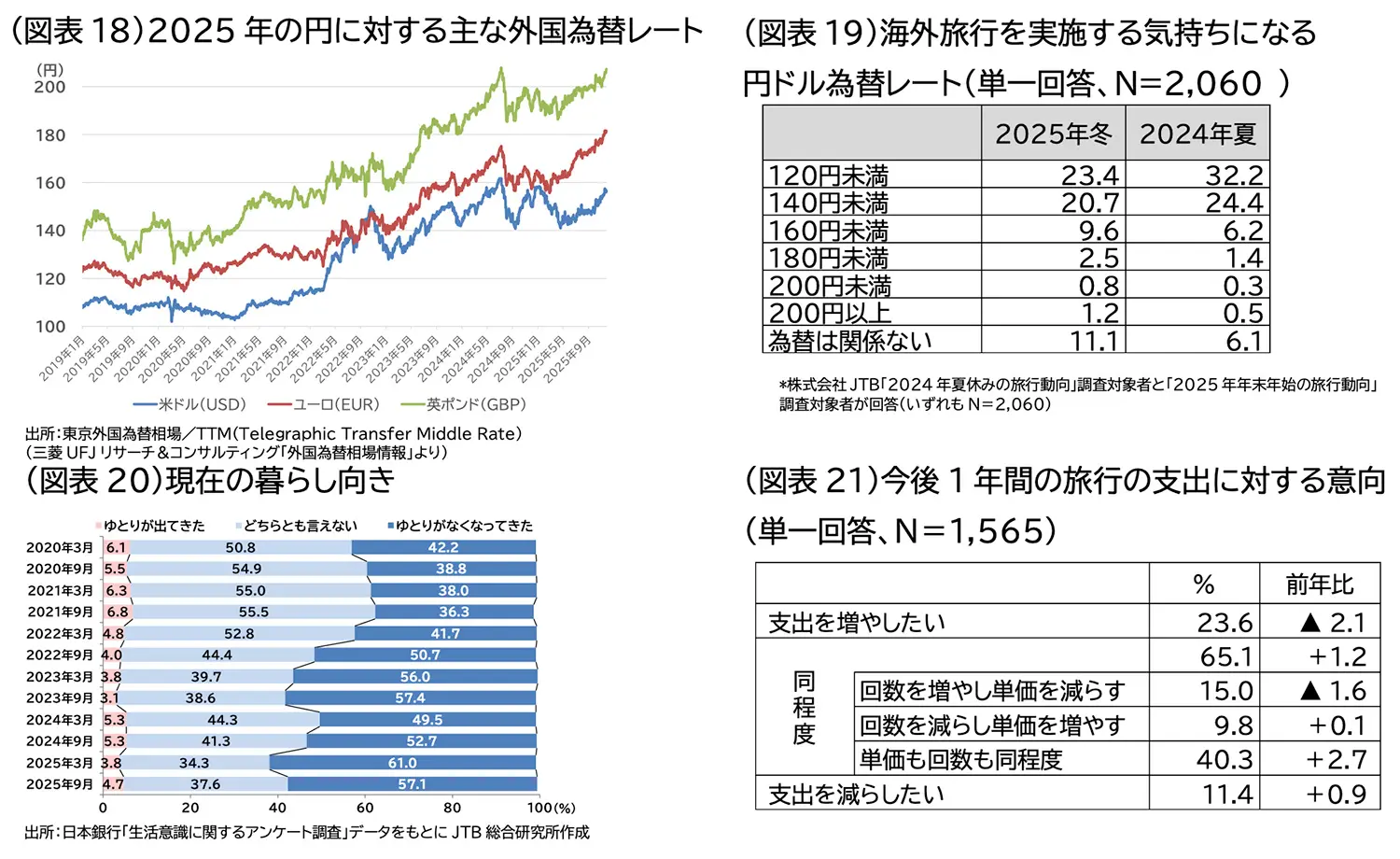
Looking at the current economic situation, the yen-dollar exchange rate hovered around 110 yen in 2019 but subsequently saw the yen weaken and the dollar strengthen. This trend has continued into 2025; although the rate rebounded to the low 140s in April, it has been hovering around 155 yen as of December.(Figure 18). Furthermore, when comparing the results of a survey on the “yen-dollar exchange rate that makes people feel like taking an overseas trip”—conducted among those planning summer vacations in 2024 and year-end and New Year’s trips in 2025, including those planning domestic travel—the percentage of respondents citing “less than 120 yen” decreased by 8.8 points,“less than 140 yen” decreased by 3.7 percentage points, and the combined percentage for rates of 140 yen or higher increased by 5.5 percentage points. Furthermore, the percentage of respondents who said they “would consider overseas travel regardless of the exchange rate” also increased by 5.0 percentage points, suggesting growing acceptance of a weaker yen (Chart 19).Looking at the “Current Standard of Living” section of the Bank of Japan’s “Survey on Public Attitudes Toward Daily Life,” the percentage of respondents who reported “having more financial leeway” rose in September 2025, and the “Current Standard of Living” index improved slightly; however, it has not yet returned to pre-2021 levels (Figure 20).Furthermore, in the aforementioned survey, when respondents who indicated they “go on trips” were asked about their “intentions regarding travel spending over the next year,” the percentage of those who said they “want to increase spending” (23.6%) exceeded those who said they “want to reduce spending” (11.4%) (Figure 21).