The Tokyo Convention & Visitors Bureau and JTB Tourism Research & Consulting Co., Ltd. Conduct Joint Research on a "Decarbonization Roadmap" for the Travel and Tourism Industry—Toward Decarbonization in the Travel and Tourism Sector
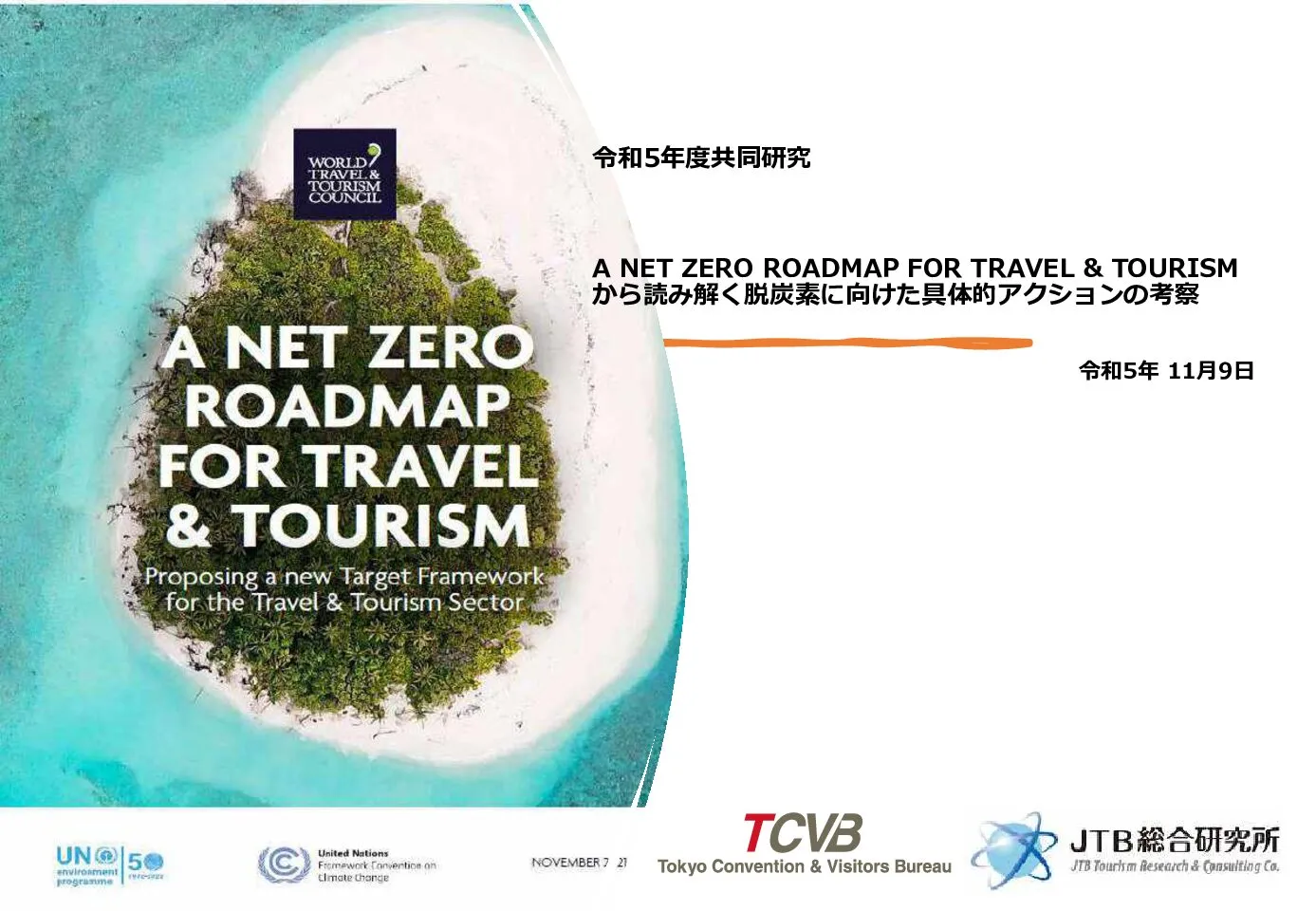
This marks the first translation in Japan of the research report “A NET ZERO ROADMAP FOR TRAVEL & TOURISM,” published by the World Travel & Tourism Council (hereinafter “WTTC”) in November 2021. This report examines the contents of the original study with a view toward identifying concrete actions.
Conducted a joint research project titled "Examining Concrete Actions Toward Decarbonization Based on 'A NET ZERO ROADMAP FOR TRAVEL & TOURISM'"

Research Objectives and Overview
In August of this year, the European Union’s meteorological agency announced that July had been confirmed as the hottest month on record globally. While the Paris Agreement—the international framework for combating global warming—sets a goal of limiting the rise in global temperatures to 1.5 degrees Celsius above pre-industrial levels, achieving this remains a daunting challenge. The Tokyo Metropolitan Government has also set a "Carbon Half" target to reduce greenhouse gas emissions by 50% by 2030 compared to 2000 levels, but according to the latest report, emissions in 2021 decreased by only 2.3%.
Domestically, efforts to address climate change are accelerating, particularly in the energy, manufacturing, and transportation sectors. So, what steps should the travel and tourism industry take, and how should it proceed?
To explore this question, we were the first in Japan to translate the research report “A NET ZERO ROADMAP FOR TRAVEL & TOURISM,” published by the World Travel & Tourism Council (hereinafter “WTTC”) in November 2021.This report outlines the current status and proportion of CO2 emissions from the global travel and tourism industry, as well as decarbonization roadmaps and specific necessary actions for five major sectors, including aviation, accommodation, and tour operators.
Based on this report, our joint research report focuses specifically on travel agencies—for whom calculating CO2 emissions is particularly difficult—to examine the challenges and steps involved in decarbonization efforts. We have summarized the necessary initiatives, drawing on the latest domestic and international case studies.
Why Are Travel Agencies Struggling to Make Progress on Decarbonization? Findings from This Study
- In the travel and tourism industry, so-called “travel agencies” face significant challenges in measuring CO₂ emissions due to the coexistence of diverse business models and the breadth of their supply chains; as a result, efforts in this area have not progressed much even overseas.
- The key to making progress lies in calculating two types of emissions—those related to the company’s own activities (such as office operations and employee business travel) and those associated with customers’ travel—to the extent possible, setting targets, and reducing them through ongoing monitoring.
- For the travel and tourism industry as a whole to address climate change, initiatives led by industry associations are essential.
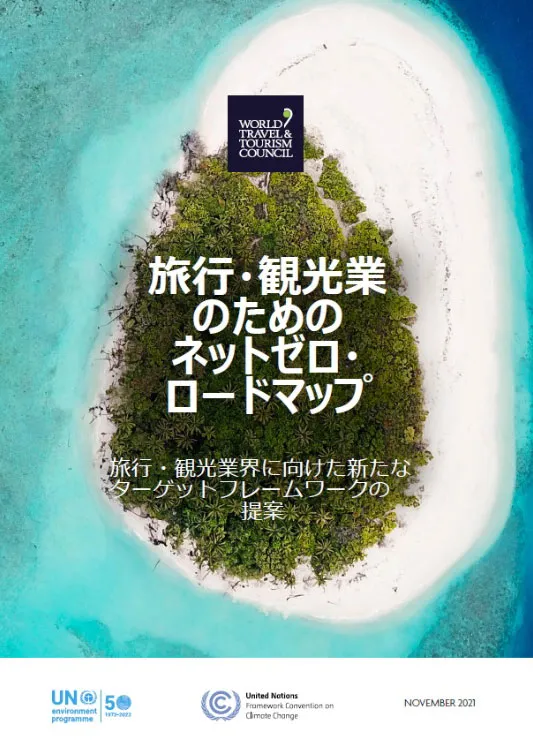
First, the travel industry comprises a mix of entities with different business models, such as tour operators, travel agencies, and online travel agencies. Some tour operators even own their own hotels and aircraft. Travel agencies are also divided into brick-and-mortar and online businesses. This situation makes it difficult to calculate CO2 emissions in a unified manner or to obtain reliable estimates. Furthermore, as illustrated in the figure above using inbound tourism to Japan as an example, travel companies have extensive supply chains, and the challenge lies in clearly defining the scope of emissions to be attributed to the company itself.
Next, to promote decarbonization in the travel industry, it is necessary to visualize the scope of emissions that can be calculated—specifically, “emissions related to the company’s own activities, such as office operations and employee business travel” and “emissions related to customer travel”—set targets, and then monitor and reduce them. Furthermore, if reductions are difficult to achieve through these internal efforts alone, utilizing carbon offsets while advancing through the steps can also contribute to these efforts.
Finally, initiatives led by industry associations are also extremely important. Industry associations and similar organizations need to provide more opportunities for education and knowledge sharing regarding climate change countermeasures and decarbonization management, as well as introduce support programs from relevant government ministries that can be actively utilized.
The Importance of Decarbonization in the Travel and Tourism Industry
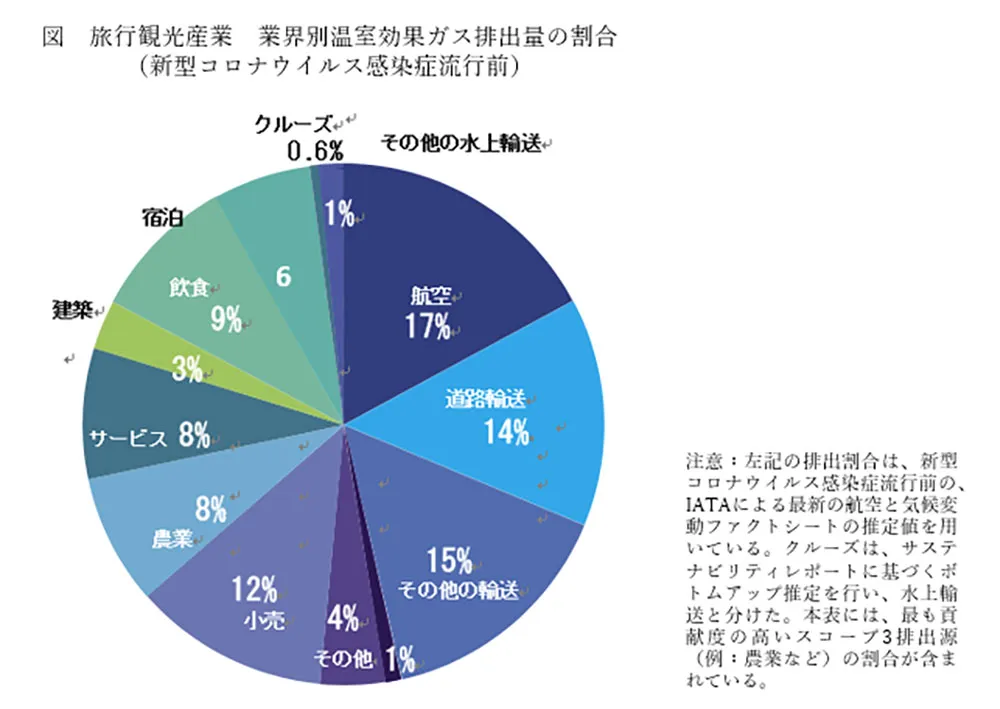
According to a 2008 study by the UNWTO and others, greenhouse gas emissions related to the travel and tourism industry were estimated to account for approximately 5% of global emissions, with transportation alone accounting for 75% of the industry’s total emissions and accommodation accounting for 21%.
According to this report, the travel and tourism industry is currently estimated to account for <8%–11%> of global greenhouse gas emissions, indicating that the industry is responsible for approximately one-tenth of global greenhouse gas emissions.Furthermore, the report highlights that the travel and tourism industry contributes over 10% to global GDP, and given the breadth of its value chain, it argues that the industry bears a significant responsibility and has great potential to pursue decarbonization.
The translated version of "A NET ZERO ROADMAP FOR TRAVEL & TOURISM," which is the outcome of this joint research, outlines sector-specific roadmaps detailing how the travel and tourism industry should promote decarbonization. Furthermore, based on the content of the WTTC report, this joint research report focuses on decarbonization efforts by “travel agencies.” By citing specific examples from domestic and international companies, it addresses the “what” and “how” of decarbonization initiatives for travel agencies. We invite you to read the published materials for further details.