Survey on Perceptions of Overseas Travel Costs and Changes Before and After the Pandemic ~ Overseas Travel After the Pandemic: What I Actually Experienced ~
Key Findings
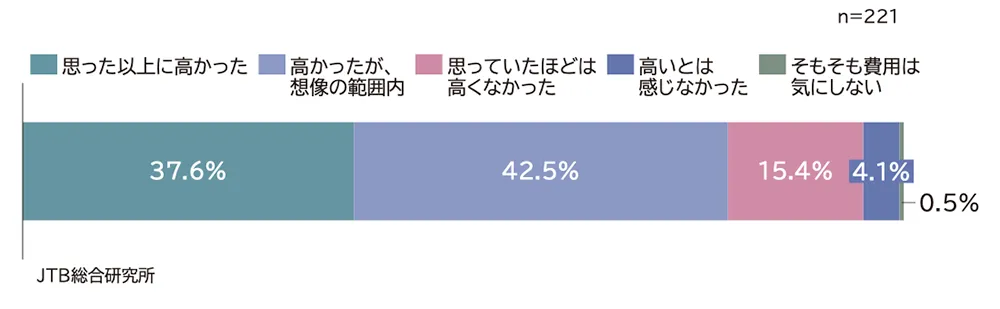
- Were you prepared for the high costs? To be honest, while the costs were high, the most common response (42.5%) was “within my expectations.” Meanwhile, 37.6% said “higher than I expected,” meaning that combined, about 80% felt the costs were high.
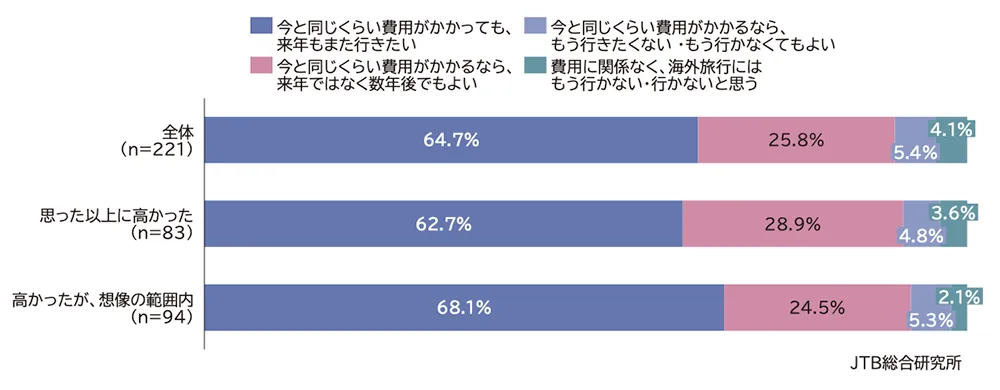
- Even if it’s expensive, I still want to go again! Even among those who felt it was “more expensive than expected,” 62.7%—and 64.7% overall—said, “Even if it costs about the same as this year, I want to go again next year.”
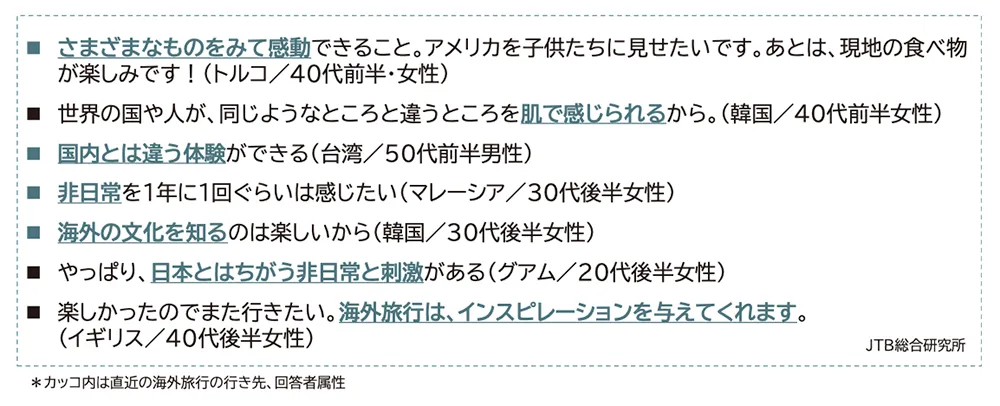
- The reasons I want to travel abroad are that I can "see a variety of things and be moved by them" and that it "inspires me."
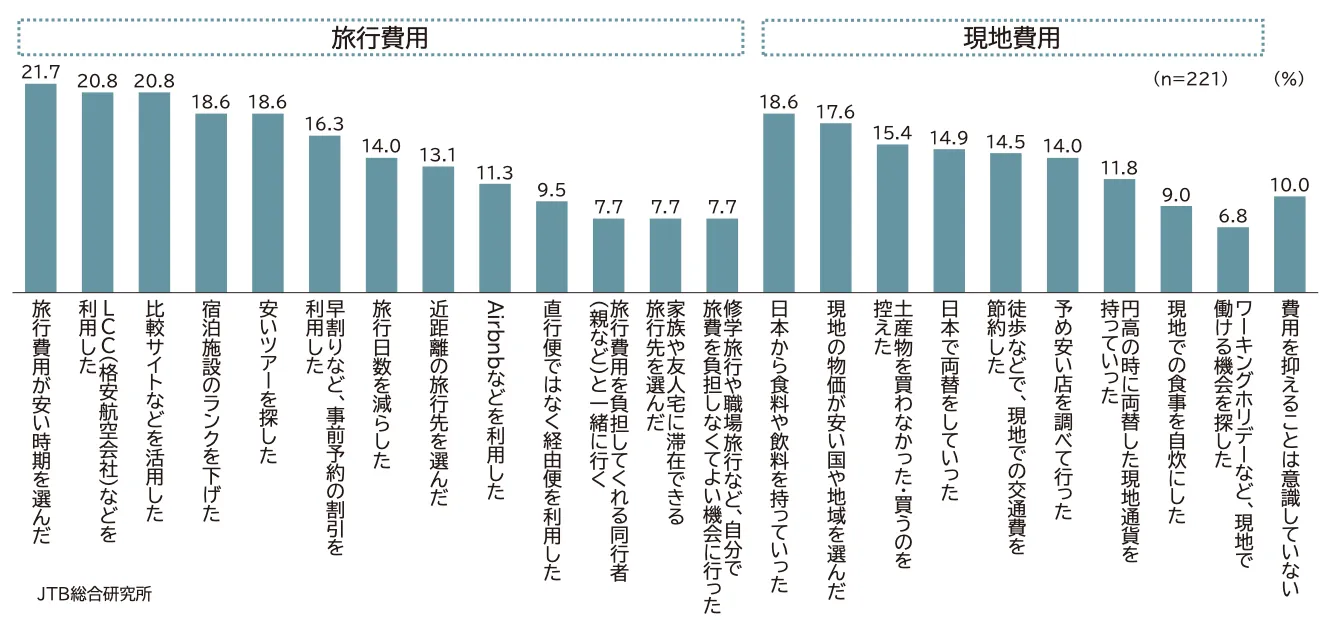
- There are many ways to keep costs down. Save on both travel and accommodation expenses to travel smartly.
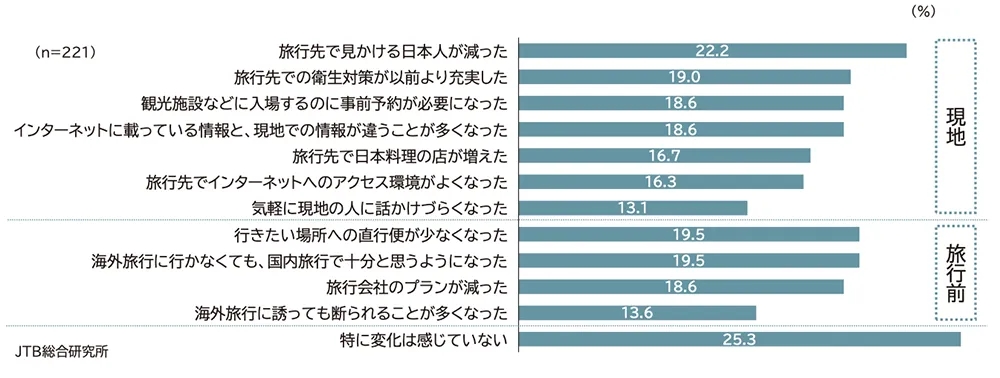
- Changes I noticed on the ground compared to before the COVID-19 pandemic: "Fewer Japanese tourists at travel destinations," "Hygiene measures are more thorough than before," "Advance reservations are now required to enter tourist attractions and other facilities," and "There are often discrepancies between information found online and what I find on the ground."
Were you prepared for the high costs? To be honest, while the costs were high, the most common response (42.5%) was “within my expectations.” Meanwhile, 37.6% said “higher than I expected,” meaning that combined, about 80% felt the costs were high.
We asked people who traveled abroad in 2023 or later—a period marked by a weakening yen—how they actually felt about the cost of their trips. The most common response was “It was expensive, but within my expectations” at 42.5%, surpassing the 37.6% who said “It was more expensive than I expected.”Although a combined total of about 80% felt that costs were “high,” it appears that many people went on overseas trips having already braced themselves for the higher costs to some extent (Figure 1).
Even if it’s expensive, I still want to go again! Even among those who felt it was “more expensive than expected,” 62.7%—and 64.7% overall—said, “Even if it costs about the same as this year, I want to go again next year.”
Next, since overseas travel is expensive, we asked whether people felt they “didn’t want to go anymore” or “still wanted to go again.”The results showed that the majority of respondents—64.7% overall—said they would “still want to go even if it cost about the same as it does now.” Even among those who felt it was “more expensive than expected,” 62.7% said they would still want to go (Figure 2).
The reasons I want to travel abroad are that I can "see a variety of things and be moved by them" and that it "inspires me."
So, what is it about overseas travel that makes people want to go, even if it’s expensive? Based on our interview survey, responses included “being able to see a variety of things and be moved by them,” “experiencing a sense of the extraordinary and excitement that’s different from Japan,” and “gaining inspiration.” Perhaps there is something deeply moving about actually visiting a place that cannot be found in everyday life (Figure 3).
There are many ways to keep costs down. Save on both travel and accommodation expenses to travel smartly.
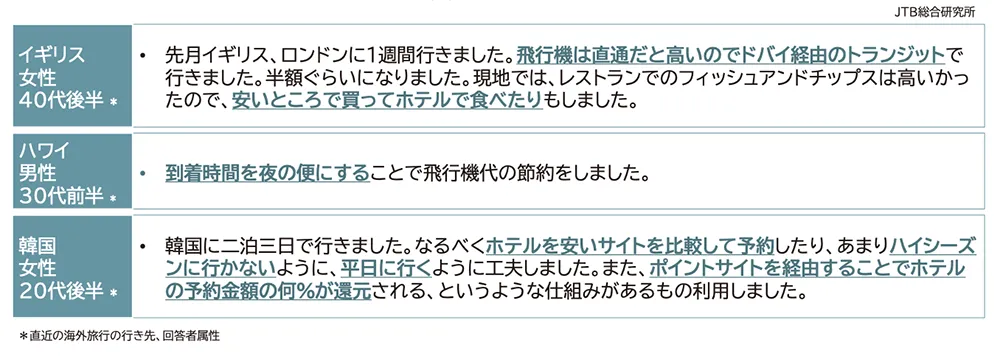
Even if you’re determined to travel abroad no matter the cost, it’s always better to keep expenses down. Through surveys and interviews, we asked people for specific ways they cut costs. To reduce travel expenses, people mentioned “choosing a time of year when travel is cheaper,” “using LCCs (low-cost carriers),” and “utilizing comparison sites.” As for ways to reduce accommodation costs,“bringing food and drinks from Japan,” “choosing destinations with low prices,” “exchanging currency in Japan before departure,” and “searching for inexpensive shops in advance.” It seems that everyone is using various strategies to travel wisely (Figures 4 and 5).
Changes I noticed on the ground compared to before the COVID-19 pandemic: "Fewer Japanese tourists at travel destinations," "Higher standards of hygiene measures than before," "Advance reservations are now required to enter tourist attractions and other facilities," and "There are often discrepancies between information found online and what I find on the ground."
Finally, we asked respondents what changes they noticed in their overseas travel destinations before and after the COVID-19 pandemic.Regarding changes observed on-site, some respondents noted that “the number of Japanese tourists has decreased,” likely because the number of international travelers has not yet fully recovered. Other top-ranked changes included “local hygiene measures have become more thorough than before,” “advance reservations are now required to enter tourist facilities,” and “there are often discrepancies between online information and what is available on-site.”
Regarding changes felt when planning trips, responses such as “there are fewer direct flights to desired destinations,” “I’ve come to feel that domestic travel is sufficient even without going abroad,” and “travel agency packages have decreased” suggest that options for considering overseas travel destinations remain limited (Figure 6).
Summary
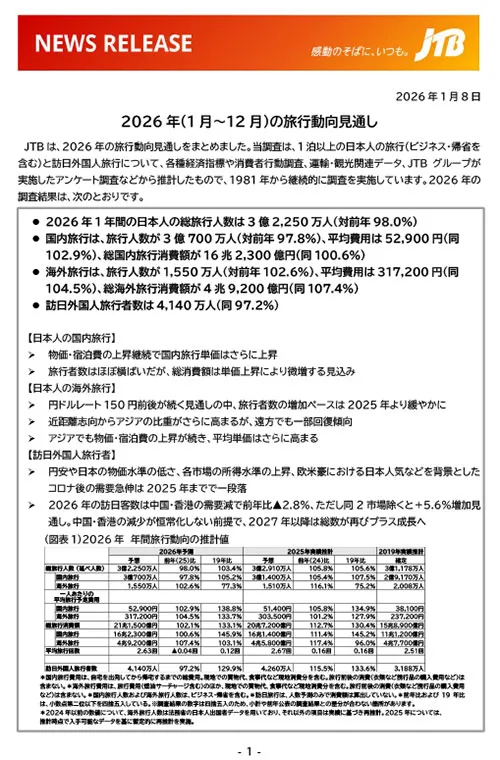
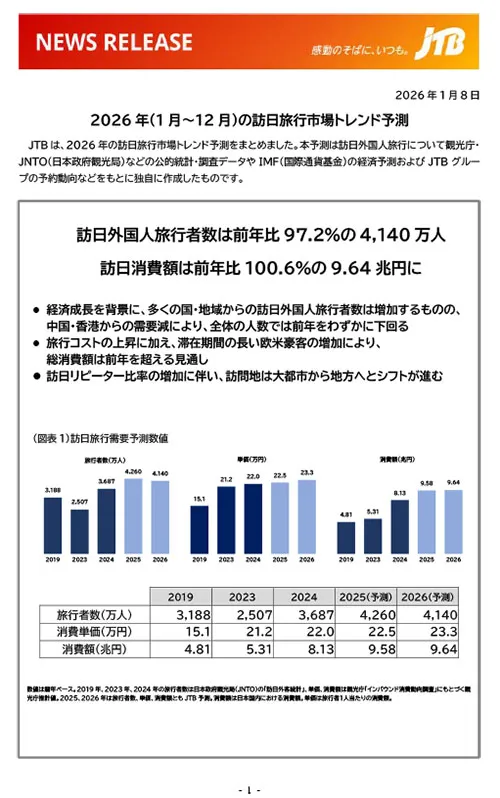
As mentioned at the beginning, while the number of inbound tourists visiting Japan has increased, the number of Japanese travelers going abroad has not yet fully returned to pre-pandemic levels. However, the results of this survey show that there are still quite a few people who want to travel abroad even if it is expensive, and that they are finding various ways to make such trips happen.In the past, even after the number of outbound travelers declined due to events such as 9/11 and SARS, the number of Japanese travelers recovered steadily, albeit later than that of travelers from other countries.It is expected that numbers will recover again after the COVID-19 pandemic, even if it takes some time. However, a major difference between the COVID-19 pandemic and events like 9/11 or SARS is that the period during which people were physically unable to travel abroad lasted for a long time. According to the survey results, approximately 20% of respondents answered that they “have come to feel that domestic travel is sufficient, even without traveling abroad.”Additionally, 13.6% of respondents said they “are now often turned down when inviting others to travel abroad.” Our previous research has shown that during periods of market expansion, the behavior of “inviting or being invited” significantly mobilizes a segment of the population—often referred to as “swing voters”—who do not usually travel, thereby revitalizing the market.It seems that creating opportunities and building momentum for overseas travel is crucial to reviving habits that have been interrupted.
Furthermore, regarding changes felt after the COVID-19 pandemic, it became clear that while advance reservation systems and digitalization have advanced due to factors such as visitor capacity limits, information is changing rapidly depending on the situation, and online updates are struggling to keep up. Isn’t ensuring that accurate information reaches travelers in a timely manner also crucial for lowering the barriers to overseas travel?