The State of Overseas Tourism in 2019: The Strong Growth of Japanese Overseas Travel and the Profile of Travelers
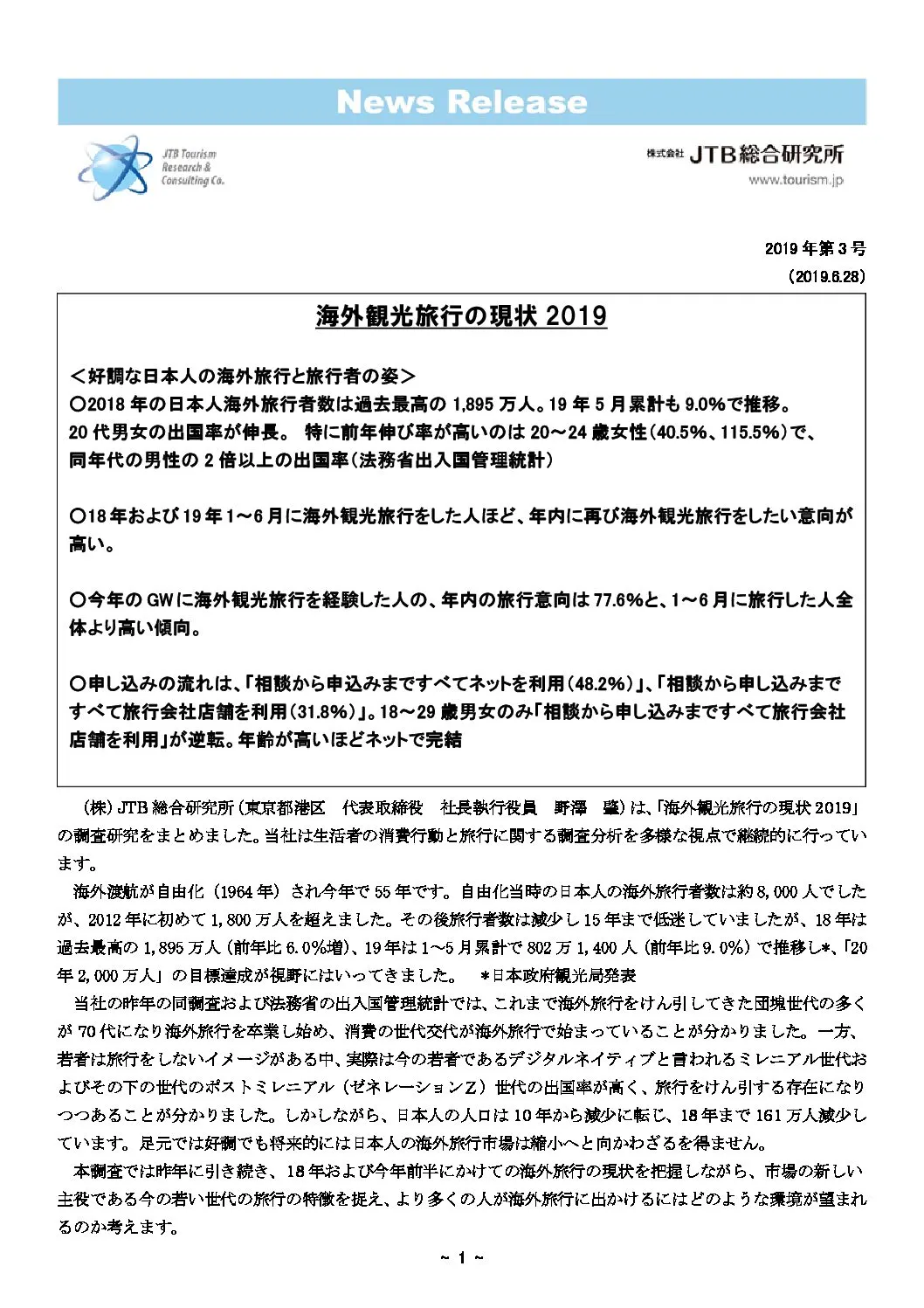
This year marks the 55th anniversary of the liberalization of overseas travel (1964). While the number of Japanese travelers abroad was approximately 8,000 at the time of liberalization, it exceeded 18 million for the first time in 2012.Although the number of travelers subsequently declined and remained sluggish until 2015, it reached a record high of 18.95 million in 2018 (a 6.0% increase from the previous year). From January to May 2019, the cumulative total stood at 8,021,400 (a 9.0% increase from the same period the previous year)*,bringing the goal of “20 million in 2020” within sight. *Source: Japan National Tourism Organization.
Our survey from last year and immigration statistics from the Ministry of Justice reveal that many members of the baby boomer generation—who have historically driven overseas travel—are now in their 70s and beginning to retire from international travel, indicating that a generational shift in consumer spending is underway in the overseas travel sector. Meanwhile, despite the perception that young people do not travel, we found that the outbound travel rates are actually high among today’s youth—the so-called “digital natives” of the Millennial generation and the younger Post-Millennial (Generation Z) generation—and that they are becoming the driving force behind travel. However, Japan’s population began to decline in 2010 and had decreased by 1.61 million by 2018. Even if the market is currently strong, the Japanese overseas travel market is inevitably headed for contraction in the future.
Following last year’s survey, this study examines the current state of overseas travel from 2018 through the first half of this year. We aim to identify the travel patterns of today’s younger generations—the new leaders of the market—and consider what kind of environment would encourage more people to travel abroad.
Key Findings
- The number of Japanese travelers abroad reached a record high of 18.95 million in 2018. The cumulative total through May 2019 also remained steady at 9.0%.The rate of outbound travel among men and women in their 20s has increased. In particular, the year-over-year growth rate was highest among women aged 20–24 (40.5%, 115.5%), with their outbound travel rate more than double that of men in the same age group (Ministry of Justice Immigration Statistics).
- People who traveled abroad for leisure in 2018 and from January to June 2019 are more likely to want to travel abroad for leisure again within the year.Only among men and women aged 18 to 29 did the trend reverse, with more people “using travel agency branches for everything from consultation to booking.” The older the age group, the more likely they were to complete the entire process online.
- Among those who traveled abroad during this year’s Golden Week, 77.6% intend to travel again within the year, a higher percentage than among those who traveled between January and June.Only among men and women aged 18 to 29 did the trend reverse, with more people using travel agency branches for everything from consultation to booking. The older the age group, the more likely they are to complete the entire process online.
- The booking process was as follows: "Everything from consultation to booking was done online (48.2%)" and "Everything from consultation to booking was done at a travel agency branch (31.8%)."
JTB Research Institute Co., Ltd. (Minato-ku, Tokyo; President and CEO: Hajime Nozawa) has compiled the research report “Current State of Overseas Tourism 2019.” The company continuously conducts surveys and analyses of consumer behavior and travel from diverse perspectives.
This year marks the 55th anniversary of the liberalization of overseas travel (1964). At the time of liberalization, the number of Japanese travelers abroad was approximately 8,000, but in 2012, it exceeded 18 million for the first time. Although the number of travelers subsequently declined and remained sluggish until 2015, it reached a record high of 18.95 million in 2018 (a 6.0% increase from the previous year). From January to May 2019, the cumulative total stood at 8,021,400 (a 9.0% increase from the same period the previous year),* bringing the goal of “20 million travelers by 2020” within sight. *Source: Japan National Tourism Organization
Our survey from last year and immigration statistics from the Ministry of Justice reveal that many members of the baby boomer generation—who have historically driven overseas travel—are now in their 70s and beginning to retire from international travel, indicating that a generational shift in consumer spending is underway in the overseas travel sector. Meanwhile, despite the perception that young people do not travel, we found that the outbound travel rate is actually high among today’s youth—the so-called “digital natives” of the Millennial generation and the younger Post-Millennial (Generation Z) generation—and that they are becoming the driving force behind travel. However, Japan’s population began to decline in 2010 and had decreased by 1.61 million by 2018. Even though the market is currently strong, the Japanese outbound travel market is inevitably headed toward contraction in the future.
Following last year’s survey, this study examines the current state of overseas travel from 2018 through the first half of this year. It also identifies the travel patterns of today’s younger generations—the market’s new key players—and explores what kind of environment would encourage more people to travel abroad.