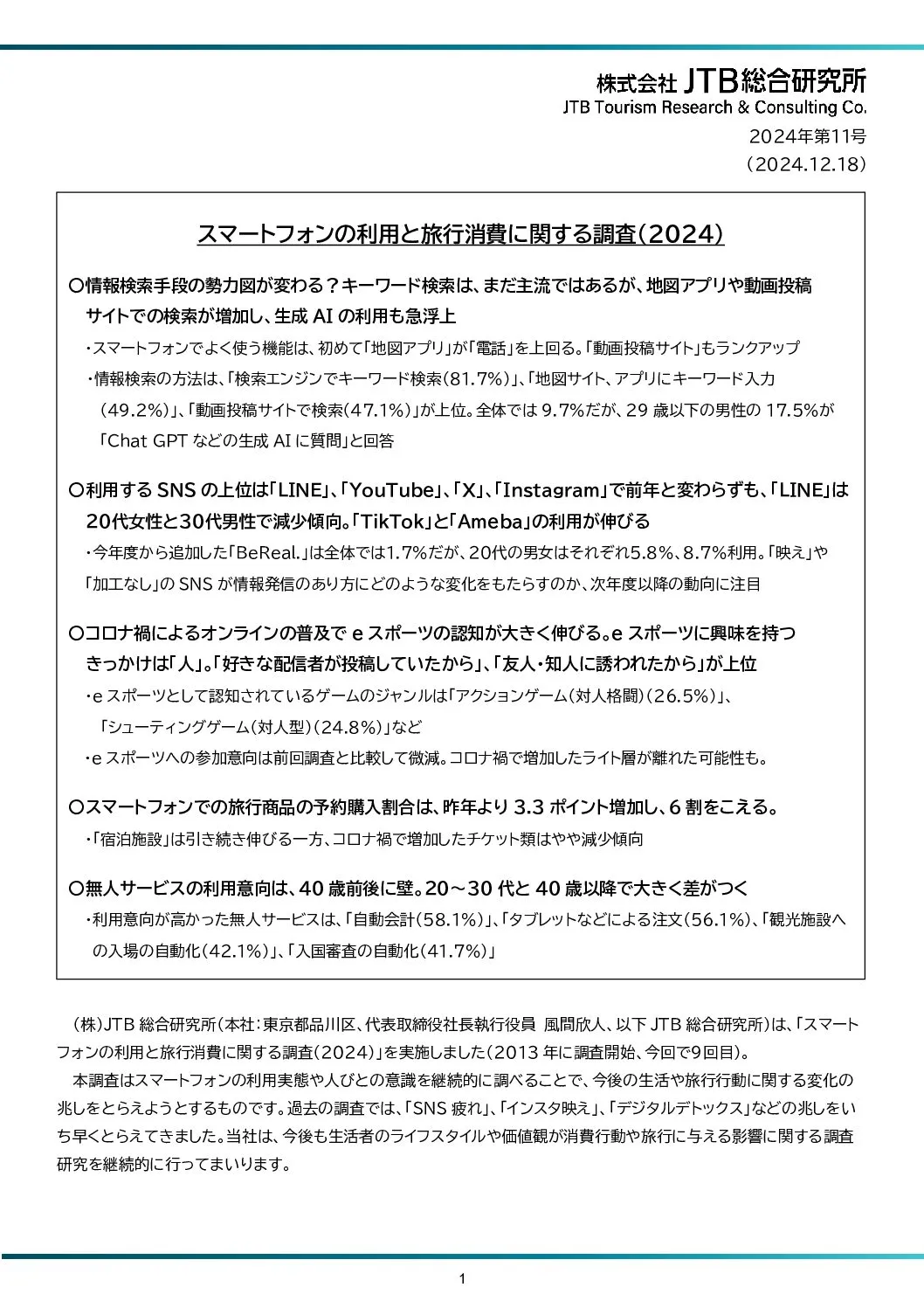
Survey on Smartphone Use and Travel Spending (2024)
This survey aims to identify early signs of changes in future lifestyles and travel behavior by continuously examining actual smartphone usage patterns and public attitudes. Past surveys have been among the first to identify trends such as “social media fatigue,” “Instagrammability,” and “digital detox.”We will continue to conduct research on how consumers’ lifestyles and values influence their consumption behavior and travel habits.
Key Findings
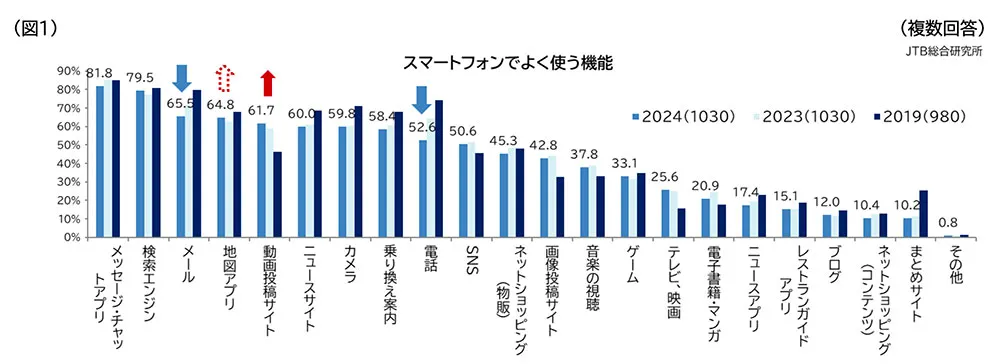
- Is the landscape of information search changing? While keyword search remains the mainstream method, searches via map apps and video-sharing sites are on the rise, and the use of generative AI is rapidly gaining traction.For the first time, "map apps" have surpassed "phone calls" as the most frequently used smartphone feature."Video-sharing sites" have also moved up in the rankings.
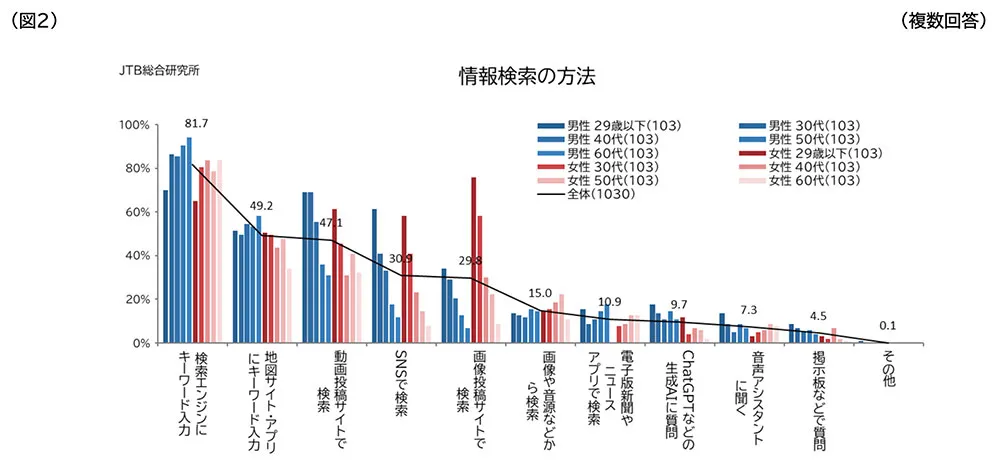
The top methods for searching for information are "keyword search using a search engine (81.7%)," "entering keywords into map sites or apps (49.2%)," and "searching on video-sharing sites (47.1%)."While the overall figure is 9.7%, 17.5% of men aged 29 and under responded that they “ask questions to generative AI such as ChatGPT.” - The top social media platforms used remain unchanged from the previous year—"LINE," "YouTube," "X," and "Instagram"—though usage of "LINE" is on the decline among women in their 20s and men in their 30s. Meanwhile, usage of "TikTok" and "Ameba" is on the rise.Although "BeReal," which was added in FY 2023, accounts for only 1.7% of the total, 5.8% of men and 8.7% of women in their 20s use it. We will be watching trends in the coming FYs to see how social media platforms focused on "Instagrammable" content and "unedited" photos will change the way information is shared.
- The rise of online activities during the COVID-19 pandemic has significantly increased awareness of esports. People are the primary reason for developing an interest in esports, with "seeing a favorite streamer post about it" and "being invited by friends or acquaintances" ranking among the top reasons.The game genres recognized as esports include "action games (player vs. player) (26.5%)" and "shooting games (player vs. player) (24.8%)"
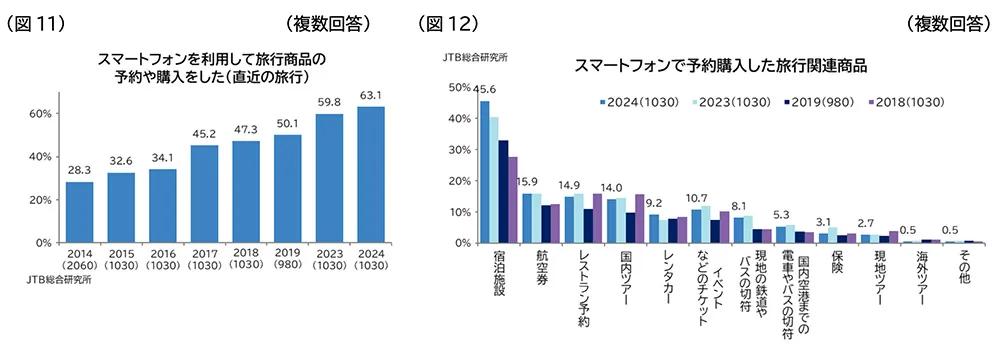
Interest in participating in esports has declined slightly compared to the previous survey. It is possible that casual players, whose numbers increased during the COVID-19 pandemic, have since lost interest. - The percentage of travel products booked and purchased via smartphone increased by 3.3 percentage points from last year, exceeding 60%.While the "accommodation" sector continues to grow, ticket sales—which had increased during the COVID-19 pandemic—are showing a slight downward trend.
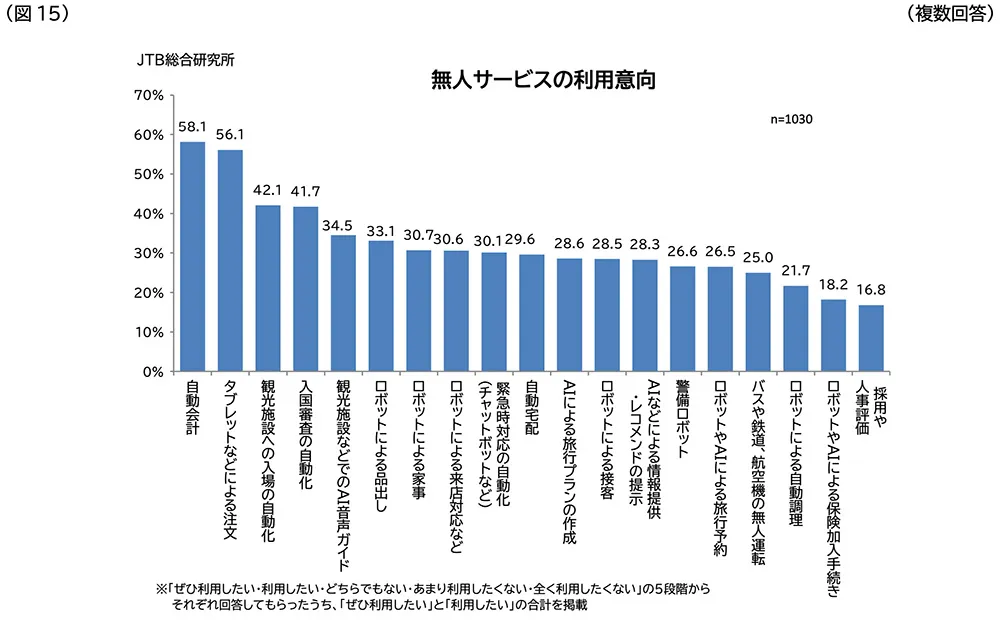
- Interest in using unmanned services hits a wall around age 40. There is a significant gap between those in their 20s and 30s and those aged 40 and older.The unmanned services that showed the highest level of interest were "self-checkout (58.1%)," "ordering via tablets or similar devices (56.1%)," "automated entry to tourist attractions (42.1%)," and "automated immigration screening (41.7%)."
Internet and Smartphone Usage Patterns
Is the landscape of information-gathering methods shifting? While keyword searches remain the mainstream method, searches via map apps and video-sharing sites are on the rise, and the use of generative AI is rapidly gaining ground.
Among frequently used smartphone features, phone calls dropped significantly from 4th place in FY 2022 to 9th place, while “map apps” surpassed phone calls for the first time, ranking 4th. While messaging and chat apps—which have become the mainstream for communication—still have a usage rate exceeding 80%, they are showing a slight downward trend and have leveled off (Figure 1).
Furthermore, regarding methods of information search, while keyword searches via search engines remain the highest at 81.7%, the share of map apps and video-sharing sites has also exceeded 40%.Searches using generative AI, such as ChatGPT, also show a growing presence, accounting for 9.7% overall and 17.5% among men aged 29 and under. This suggests that the landscape of information gathering methods is undergoing significant change (Figure 2).
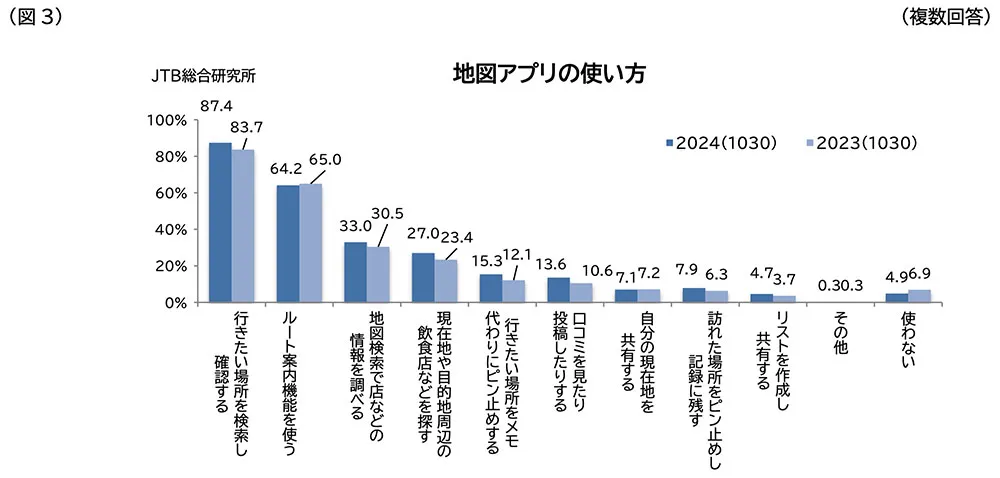
Specifically, when asked about how they use map apps, “searching for a destination and confirming its location” was more common than using the route guidance feature (Figure 3).
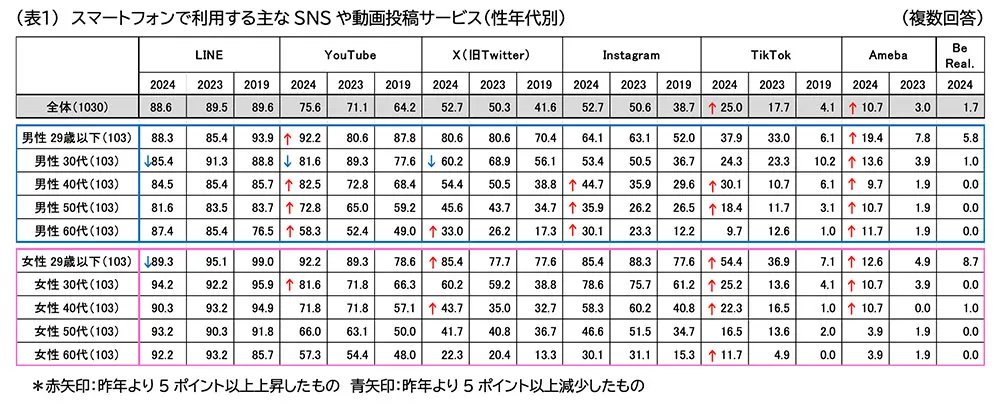
The top social media platforms used remain unchanged from the previous year—"LINE," "YouTube," "X," and "Instagram"—though "LINE" is showing a downward trend among women in their 20s and men in their 30s. Meanwhile, usage of "TikTok" and "Ameba" is on the rise.
The top social media and video-sharing services used on smartphones were “LINE,” “YouTube,” “X,” and “Instagram,” with results unchanged from last year. However, “LINE” showed a slight downward trend, particularly among women in their 20s and men in their 30s.On the other hand, "TikTok" and "Ameba" saw an increase of more than 5 percentage points compared to the previous FY.Additionally, "BeReal," which was added to the survey in FY2023, accounted for 1.7% of the total user base. However, 5.8% of men and 8.7% of women aged 29 and under use it, showing a trend similar to that of "TikTok" in its early days.It will be interesting to see whether its popularity will expand from the younger generation to a broader range of age groups in the future (Table 1).
Smartphone Gaming and Esports
The spread of online activities due to the COVID-19 pandemic has significantly increased awareness of esports.
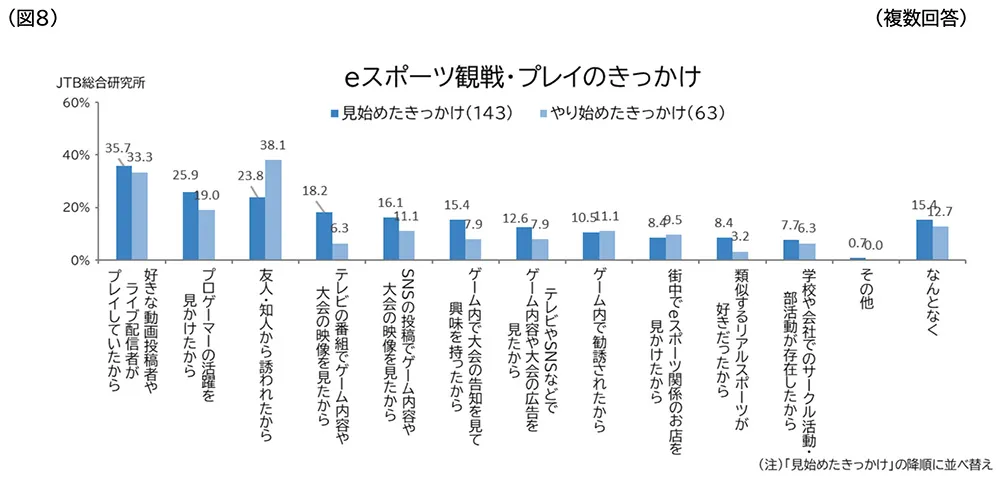
The primary reason people become interested in esports is "people." The top reasons cited were "because a favorite streamer posted about it" and "because a friend or acquaintance invited me."
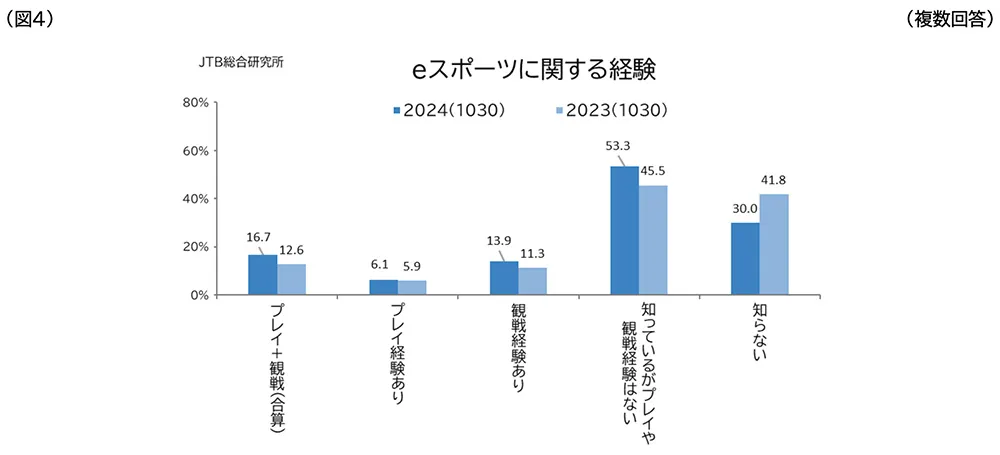
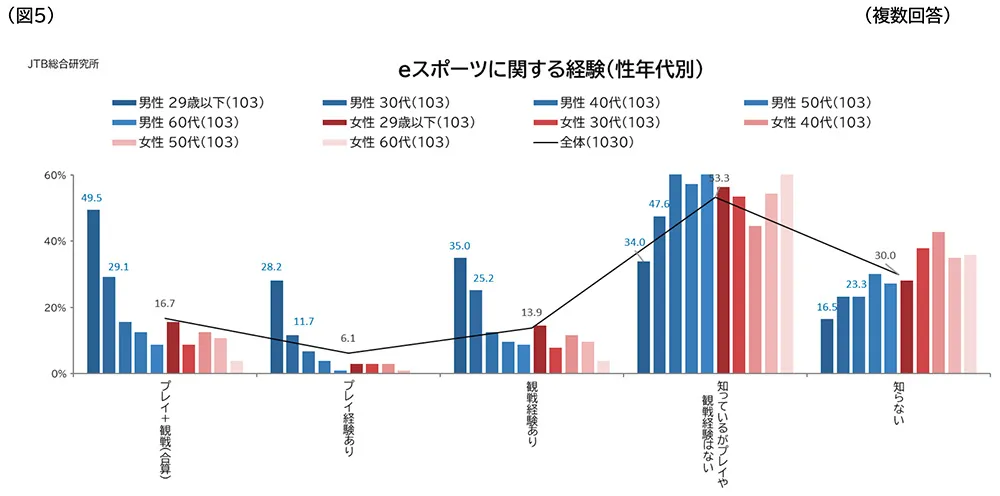
Looking at experience with and interest in esports, the percentage of respondents who answered “I don’t know” decreased from 41.8% to 30.0% compared to FY 2022 survey results, indicating an overall increase in esports awareness (Figure 4).Furthermore, when broken down by gender and age group, higher rates were observed among men aged 29 and under and those in their 30s. While the overall percentage of people who have played or watched esports was 16.7%, it was 49.5% for men aged 29 and under and 29.1% for men in their 30s (Figure 5).
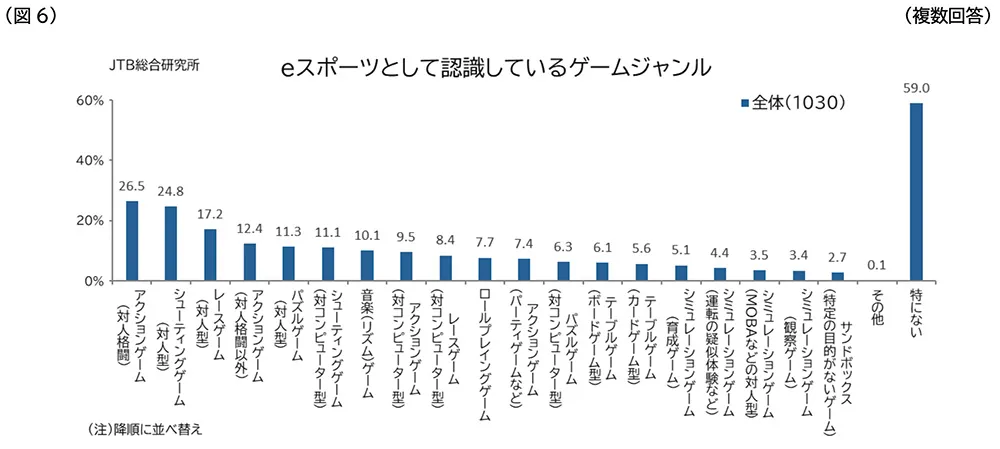
Regarding game genres recognized as esports, “action games (player vs. player)” (26.5%) and “shooting games (player vs. player)” (24.8%) both exceeded 20%, indicating they are recognized as the main esports games (Figure 6).
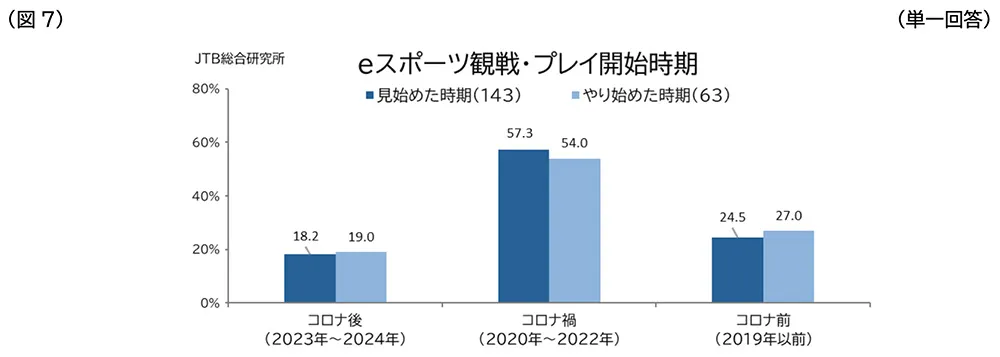
Regarding the time when respondents began watching or playing esports, “during the COVID-19 pandemic (2020–2022)” accounted for the majority of responses, indicating that the increased demand for stay-at-home activities during the pandemic served as a catalyst (Figure 7).
When asked specifically about the reasons for watching or playing, the top responses were “I became interested because my favorite YouTubers or streamers were playing,” “I saw professional gamers in action,” and “I was invited by friends or acquaintances.” This indicates that the primary motivation stems from people rather than interest in the games themselves(Figure 8).
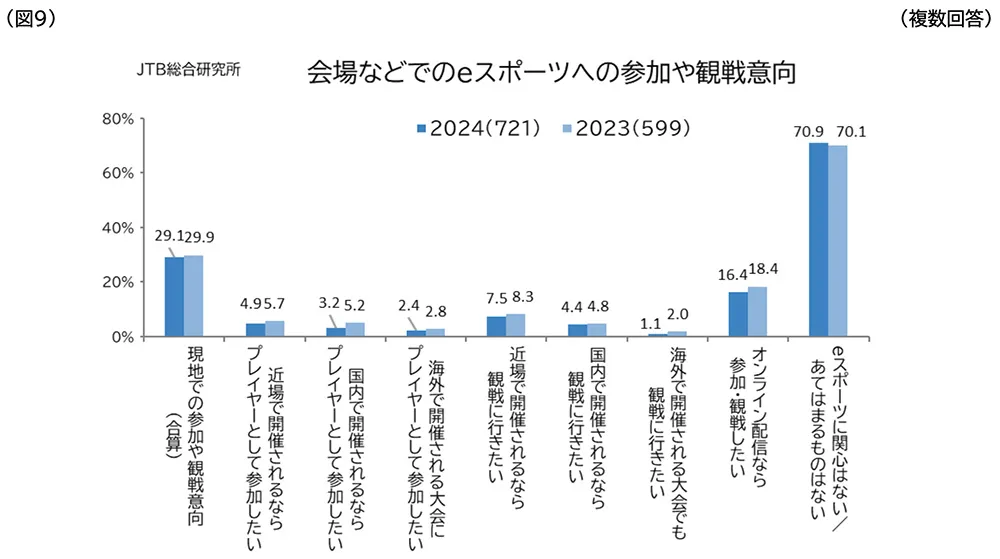
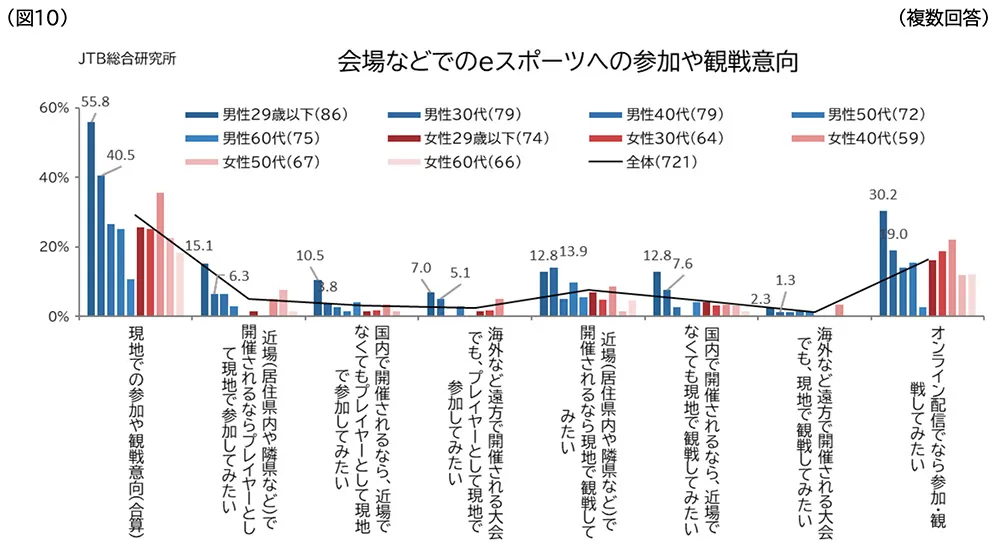
Regarding intentions to play or watch esports, the percentage of respondents who selected “I have no interest in esports / None of the above apply” increased from 70.1% in FY 2022 to 70.9%, indicating a slight decline in the intention to participate in esports.However, when broken down by gender and age group, 55.8% of men aged 29 and under and 40.8% of men in their 30s expressed an intention to participate or watch events in person, indicating a high level of interest (Figures 9 and 10).
Regarding the Use of Travel Products and Services
The percentage of travel products booked and purchased via smartphone increased by 3.3 percentage points from last year, exceeding 60%.
The proportion of travel-related products booked or purchased via smartphones has continued to rise since the survey began in 2013, exceeding 60% in the 2024 survey (Figure 11).In terms of the breakdown of travel-related products purchased, “accommodations” continued to grow, pulling ahead of other categories. Meanwhile, ticket purchases—such as “airline tickets,” “tickets for events and other activities,” “local train and bus tickets,” and “train and bus tickets to domestic airports”—which had risen during the COVID-19 pandemic, showed a slight downward trend (Figure 12).
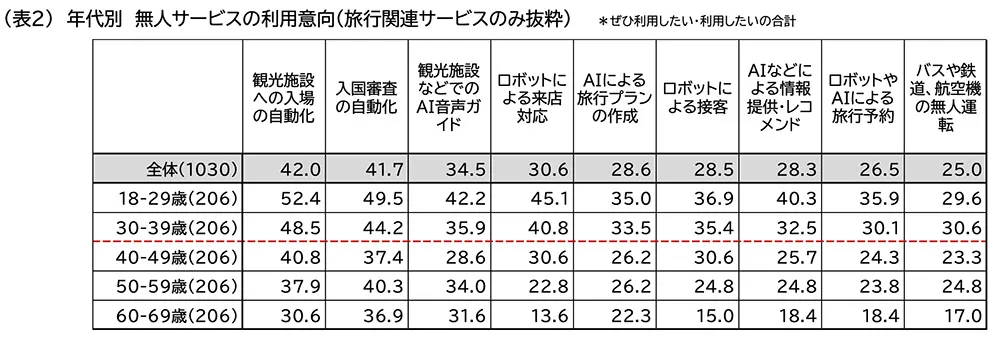
Intent to use unmanned services hits a wall around age 40. There is a significant gap between those in their 20s and 30s and those aged 40 and older.
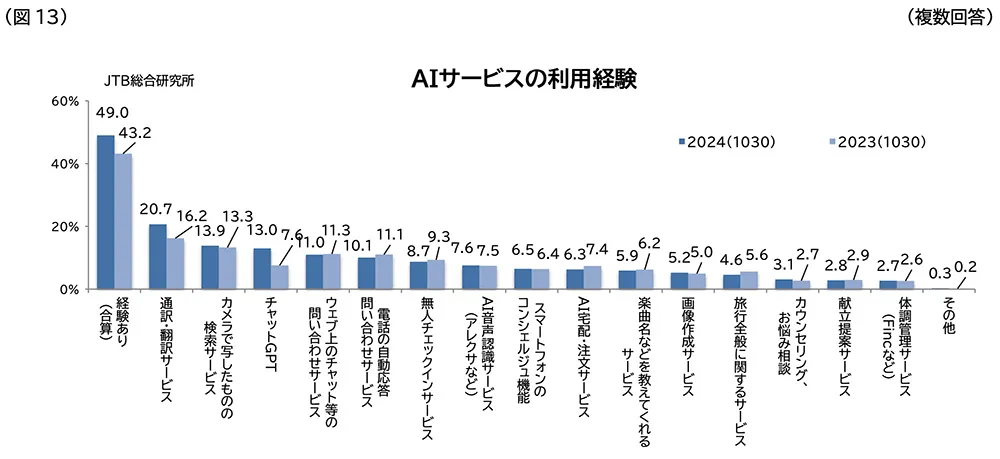
Next, we asked about the use of AI services, which are becoming increasingly common across various fields. The percentage of respondents with experience using such services (combined) rose by 5.8 percentage points from 43.2% in FY 2022 to 49.0%, reaching nearly half of all respondents. Furthermore, the use of “interpretation and translation services” and “ChatGPT” showed an upward trend (Figure 13).
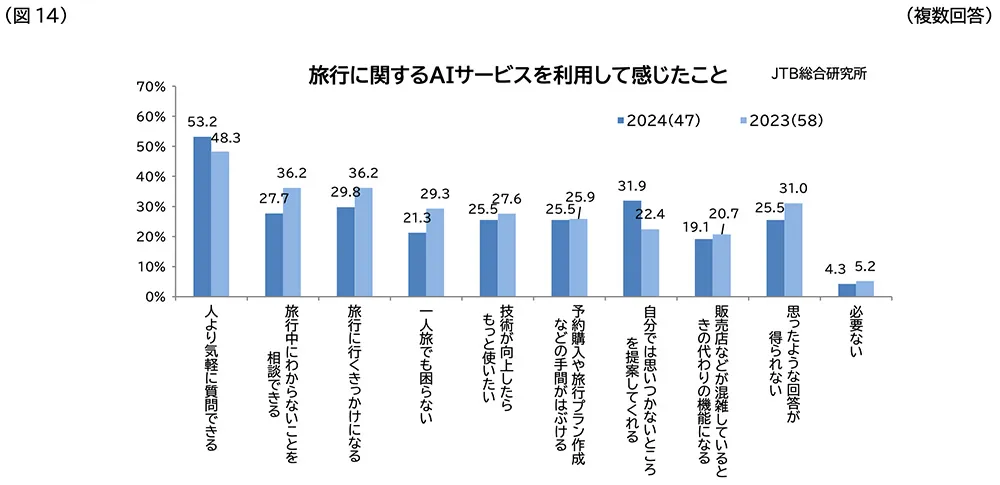
When asked how people felt about using travel-related AI services, “I can ask questions more casually than I would with a person” remained the top response. It is also notable that “It suggests places I wouldn’t have thought of myself” saw a significant increase. This may indicate that the accuracy of AI has improved (Figure 14).
Next, we asked about intentions to use unmanned services, not limited to AI. The results showed that procedural-related services ranked highest, including “automated checkout,” “ordering via tablets,” “streamlined entry to tourist facilities,” and “automated immigration checks” (Figure 15).
Furthermore, when examining usage intentions by age group, a trend emerged across all services: those aged 39 and under showed a higher willingness to use these services compared to those aged 40 and over. It appears there is a barrier to the use of unmanned services around the age of 40 (Table 2).
Summary
Major Changes in Information Search Methods
Since the widespread adoption of the internet, keyword searches on search engines have been the primary method of information retrieval. However, a survey conducted in FY 2023 revealed a growing trend toward using map apps and social media for information searches, while this year’s survey showed an increase in the use of generative AI tools like ChatGPT for the same purpose.While past SEO strategies focused on creating content tailored to search engine algorithms, going forward, it will likely become more important to create high-quality content that truly meets user needs—emphasizing comprehensiveness, accuracy, clear citation of sources, and thorough fact-checking. In any case, it seems necessary to reevaluate the very nature of how information is provided.
Intent to use "unmanned services," including AI, varies significantly by age group
We found that there is a significant difference in the willingness to use "unmanned services," including AI, between those aged 39 and under and those aged 40 and over. When providing services, determining the target audience will likely become even more important.
Furthermore, regarding travel-related AI services, while FY 2023 saw a high rate of use during travel (such as being able to ask questions about things you don’t understand while traveling or not getting stuck even when traveling alone), this year’s survey results show an increase in the percentage of respondents who cited “suggesting places I wouldn’t have thought of myself.”As AI becomes more advanced in the future, we can expect it to stimulate latent demand. On the other hand, there is also the possibility that content previously unrelated to tourism will become in demand. It may be effective to redefine what travelers seek in tourism resources without being bound by conventional wisdom.
Awareness of esports has risen significantly due to the spread of online activities during the COVID-19 pandemic
It is believed that the shift from offline to online activities during the pandemic, coupled with the expansion of stay-at-home demand, has led to an increase in viewing of videos and live streams on platforms such as YouTube. The results of this survey suggest that the relationship between consumers and esports has strengthened as a result.On the other hand, since the intention to participate in esports has decreased compared to FY 2020, it is possible that the casual audience that grew during the pandemic is gradually “drifting away” from esports.Going forward, to prevent this trend of casual fans drifting away from esports—that is, to deepen their connection to esports—the key will likely be how to foster genuine interest and engagement in esports and gaming itself among those who began watching or playing primarily because of specific individuals, such as content creators or professional gamers.