The Growing Potential and Challenges of Workation
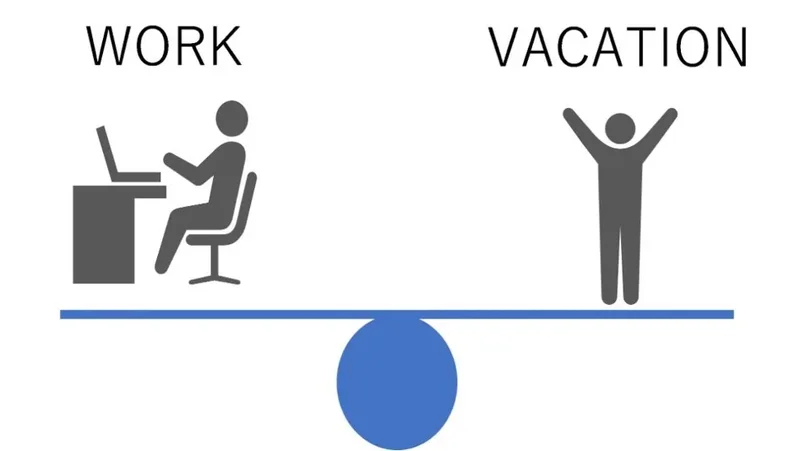
Have you heard of the term “workation”? It’s a portmanteau of “work” and “vacation,” referring to “a system where people take time off while working in locations different from their usual workplace, such as resort areas or rural regions.”It is a “flexible work style in which individuals proactively choose to incorporate the sense of a special vacation into their daily work,” and it is gaining attention as a “new way of working” (work style).
Have you heard of the term “Workation” (Note 1)? It is a portmanteau of “work” and “vacation,” referring to “a system where people take time off while working in locations different from their usual workplace, such as resort areas or rural regions.” It is “a flexible work style in which individuals proactively choose to incorporate the sense of a special vacation into their daily work,” and is gaining attention as a “new way of working” (work style).This year, JTB Tourism Research & Consulting launched the “Workation Study Group” and is conducting surveys and research with external experts to explore future developments and address challenges related to workation. In this column, we will examine the background behind the growing interest in workation, its benefits, and potential concerns, while also considering changes in attitudes and behaviors toward work and its impact on tourism demand.
(Note 1) While "Workcation" is the standard English term used overseas, in Japan it is sometimes written as "Worcation," and the spelling has not yet been standardized.
1. “Workcation”: A Work Style Unbound by Time and Place
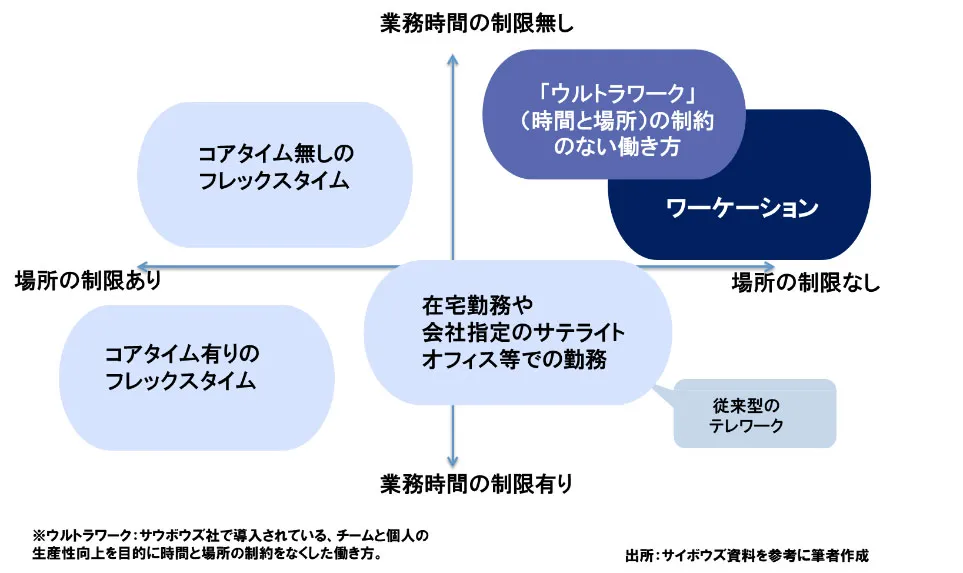
From a labor management perspective, “workcation” refers to “working during specific periods, such as while on vacation,” “after applying to and receiving approval from the company,” “at a location other than the usual workplace or home,” and “utilizing telework or similar methods. ”Applying this to the actual work environment, we can define a workcation as “a system that allows employees, at their own discretion and with their employer’s approval, to simultaneously engage in work and vacation by utilizing telework or similar methods at a location other than their usual workplace or home.”
This can be illustrated as shown in the figure below. Workation allows employees to combine work and vacation without being constrained by time, depending on company regulations, at a location of their choice (Figure 1).
(Figure 1) The Relationship Between Time, Place, and Various Work Styles

2. Workation: A Source of High Expectations
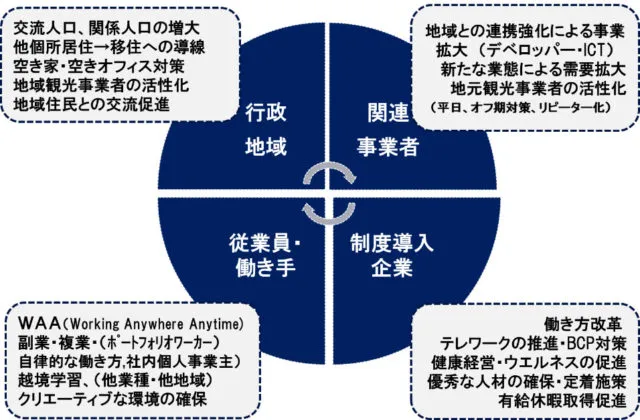
The main stakeholders related to workation can be broadly divided into four categories: (1) companies implementing the system, (2) employees utilizing workation, (3) the regions hosting workation and their local governments, and (4) private-sector businesses involved in workation. Each of these stakeholders has various expectations based on their respective positions (Figure 2).
1) For Companies Implementing the Program
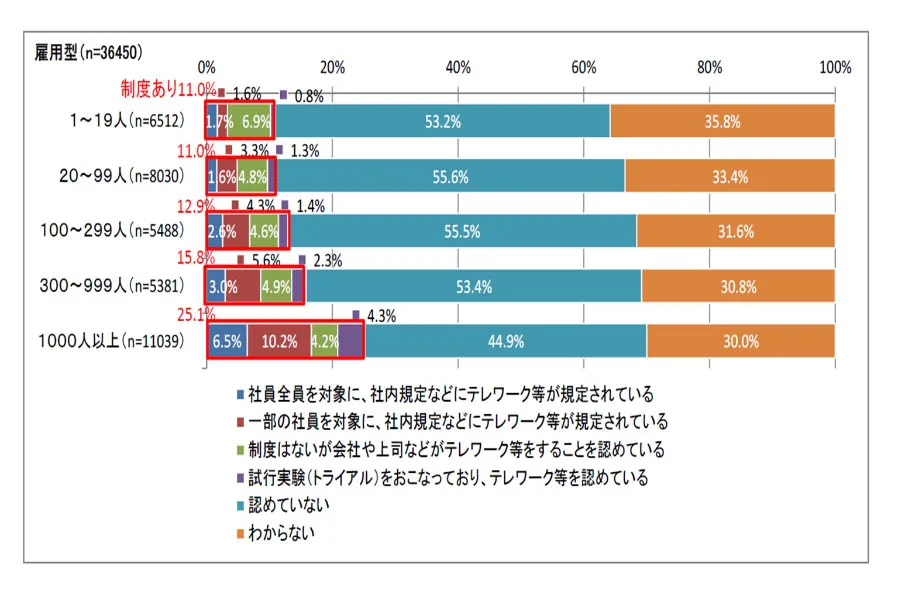
For companies, addressing work-style reform is a priority—particularly the promotion of annual paid leave, as this spring’s legal amendments mandate that all workers with 10 or more days of leave must take at least five days annually. Workation has the potential to make it easier for employees to take their leave. Furthermore, as employee values diversify and the preference for flexible work arrangements grows from the perspectives of diversity and inclusion, measures to secure and retain top talent are crucial.As a preliminary step toward introducing workation, it is essential to establish the infrastructure for implementing and operating telework, implement flexible work hours, and foster a workplace culture that respects highly flexible work styles. Promoting workation within the company on this foundation will also enhance the company’s appeal. Furthermore, various benefits can be expected, such as improved employee well-being, a focus on health management, and a more conducive environment for creative thinking through a change of scenery. In fact, the number of companies with telework systems is steadily increasing, and this trend is expected to accelerate further in the future, in conjunction with the strengthening of business continuity planning (BCP) measures (Figure 3).
2) From the Perspective of Employees
Workation programs also offer significant benefits to employees. Workation has the potential to free employees from the ultimate choice between “vacation or work?” Furthermore, it facilitates a more autonomous and flexible work style—not just for travel, but also for volunteering, pro bono activities, cross-disciplinary learning outside one’s daily organization, side jobs, multiple careers, and hobby pursuits—thereby expanding the range of work options available.
3) Expectations of local communities and governments hosting employees on workation
Workation is currently linked to various government initiatives, such as creating and increasing the “related population,” regional revitalization, local economic stimulation, and the promotion of telework. It is highly compatible with programs like the “Hometown Telework Project” and initiatives to promote migration and community exchange. In particular, Wakayama and Nagano Prefectures are actively building their brands as leaders in workation. In November 2019, with these two prefectures taking the lead, the “Workation Municipalities Council” is scheduled to be established, with the aim of promoting workation through collaboration among approximately 70 local governments nationwide.
4) Business Initiatives to Capture New Demand
A wide range of industries—including developers and the real estate sector operating shared offices and coworking spaces, the renovation industry, ICT and other infrastructure providers, telecommunications carriers, the hotel and resort industry, as well as training, recruitment, and staffing agencies—are eyeing opportunities for business expansion.
(Figure 2) Four Stakeholders Related to Workation and Their Expectations for Workation

(Figure 3) Status of Telework System Adoption (FY 2017)
3. Challenges in Promoting and Establishing Workation Programs
As described above, while there are high expectations for workation, several challenges must be addressed to ensure its future adoption.
First, when a company introduces and institutionalizes workation, it is necessary to establish management systems—such as labor management—and relevant regulations. For example, when traveling to a workation destination, deviations from or interruptions of the commute—as defined by the Workers’ Accident Compensation Insurance Act—are generally not covered by the system, except for specific exceptions. Therefore, employees using the system must fully understand how workation trips are treated under these regulations. Additionally, regulations or guidelines should be established in advance to clarify the reimbursement of actual expenses, such as transportation, communication, and accommodation costs, for travel to the workation location. Furthermore, ongoing preparation and communication are essential to ensure that managers can effectively oversee their subordinates’ attendance and work progress during workation periods.
Furthermore, it appears that not all employees are necessarily welcoming of this system at this point.
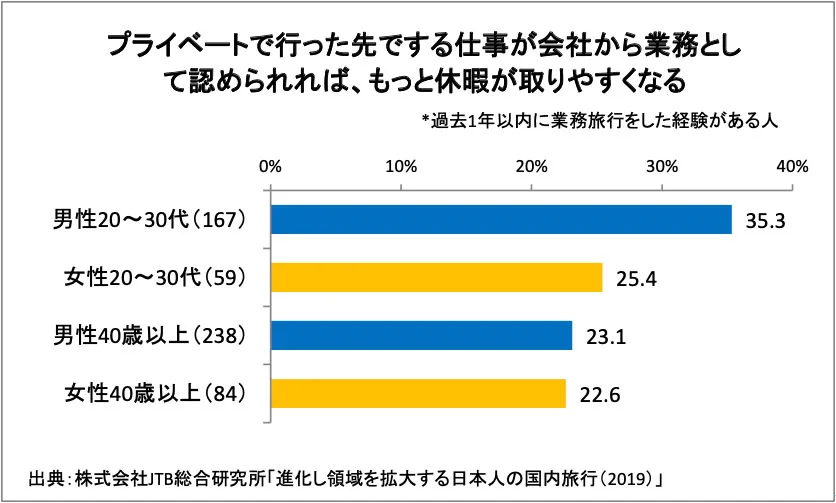
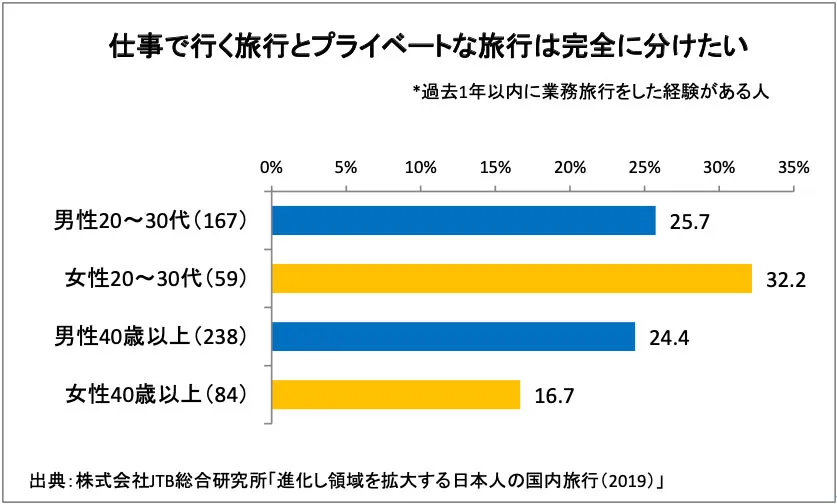
According to the “Domestic Travel by Japanese People: Evolving and Expanding” survey conducted by JTB Tourism Research & Consulting (2019) in September, expectations and evaluations of workation vary significantly by age group and gender (Figure 4). Furthermore, the difficulty of implementation varies by industry and job type. It is common for companies to have job roles that are unsuitable for telework or workation, and in such situations, it is anticipated that there will be significant hurdles in coordinating with internal departments and labor unions regarding the introduction of the program.
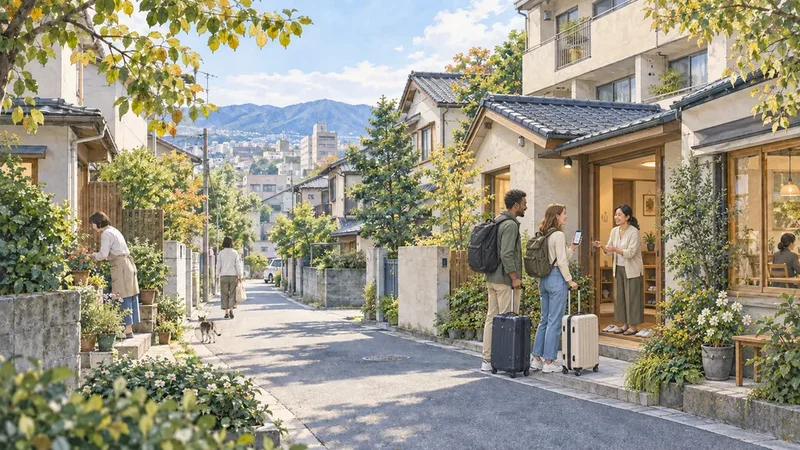
Furthermore, the rapid intensification of workation-focused policies and promotions across various regions is somewhat concerning. Currently, in urban centers and their suburbs, there is a rapid increase in well-equipped, stylish, and affordable coworking spaces with a pleasant atmosphere (Note 2). Additionally, a diverse range of new accommodation facilities—often featuring cafes or bars that facilitate communication among coworking space users—are proliferating and thriving.
People who actively engage in workation are not necessarily seeking scenic locations, famous tourist spots, or luxurious facilities. What they desire is a sense of escape from the ordinary within a community characterized by loose ties and a comfortable atmosphere—essentially, a comfortable “third place.” Many users view these spaces as places for cross-boundary learning, where they can maintain relationships with a sense of appropriate distance from one another and discover new value and insights through interaction. A steadily growing number of people are striving to realize a new work-life style that goes beyond traditional concepts like “Work & Life Balance” or “Work & Life Integrated.” This approach weaves elements of “Learning” and “Social” into work and life, and “blends” them according to individual styles and values—including relationships with local communities outside of daily routines.
This trend is emerging as a global phenomenon, centered primarily on Millennials and Post-Millennials. It is therefore not advisable to promote business initiatives in a region without first adequately targeting the people who are actively utilizing workation programs. As competition among regions is expected to intensify in the future, if we hope to attract people from Tokyo and its suburbs who are willing to invest time and money to visit and return, we must reaffirm that, in addition to the appeal of the “location” as a workation destination, the presence of “people” and “community” is crucial. I would like to challenge the conventional approach of promoting workation initiatives based solely on physical infrastructure.
(Figure 4-1) Perspectives on Workation

(Figure 4-2)
(Note 2) According to a CBRE (2018) survey, the number of coworking spaces opened has been on an upward trend since 2010. In particular, the market expanded rapidly in 2017 and 2018, surpassing the total floor area of 330,000 tsubo opened over the 17-year period from 2000 to 2016 in just two years.
4. The New Value and Impact Created by Workation
Workation is still a relatively new concept, and the increase in companies adopting it and its actual implementation are just beginning. Until now, efforts to expand domestic travel demand—such as increasing the number of public holidays, implementing “Happy Monday” (creating three-day weekends), promoting the use of paid leave, and spreading out vacations—have treated “work (working days)” and “leave (vacations/holidays)” as entirely separate entities. However, if hybrid systems like workation—which blend “work” and “vacation”—become commonplace in the future, the tourism industry could experience a Copernican shift in thinking, opening up the possibility of expanding demand on weekdays and during off-peak seasons. We can already see a path emerging where such trends will lead to regional revitalization and an increase in community engagement and the “relationship population. ”Above all, as reforms in how we take time off progress, workers themselves may become healthier and more energetic, potentially leading to a society where it is easier to perform productive and creative work. The period of next year’s TOKYO 2020 coincides precisely with the summer vacation season. From the perspective of easing congestion in Tokyo to ensure the smooth running of the Games, it is expected that this will serve as a catalyst for a surge in the number of companies adopting workation systems and the number of people utilizing them. As one of the legacies of the Olympics, this marks the dawn of a new era of “vacation reform.” Doesn’t the thought of an era where more people can work freely and vibrantly fill you with excitement?
*[Related Information] For more on workation, please also refer to the explanatory column below.