The resurgence of in-person MICE events in the post-pandemic era, accelerated by widespread vaccination

In the United States, where vaccination rates are high, in-person consumption is on the rise. Even in the MICE industry—which was expected to shift primarily to hybrid formats—there is growing momentum toward a return to in-person events, and CES has finally announced that it will be held in person in Las Vegas. Here, we examine what the business environment for MICE looks like as we move toward the post-pandemic era.
Last year, the MICE industry prioritized “holding events” online; however, as challenges have emerged with both online and hybrid formats, there are growing calls both domestically and internationally for the resumption of in-person MICE events. Against this backdrop, as vaccination efforts progress, various initiatives aimed at a full-scale resumption are beginning to take shape in Europe and the United States. The Japanese MICE industry must also proceed with preparations while closely monitoring these developments.
I. The Spread of Vaccinations and Global Moves Toward the Resumption of In-Person MICE Events
(1) First, let’s briefly review the past year.
Starting around February 2020, cancellations of large-scale MICE events were announced one after another, and by April—when Japan issued its first state of emergency—all MICE events, both domestic and international, had come to a halt. In Japan, online MICE events gradually became possible starting around summer, and by fall, trade shows had resumed with a capacity limit of 5,000 attendees. Meanwhile, in Europe and the U.S., where the number of infections was orders of magnitude higher, lockdowns continued, and it could be said that full-scale online events did not begin until after summer. During that time, it appears that many people working in the MICE industry lost their jobs.
(2) The Global MICE Industry Finally Turns a Corner
International MICE industry associations, sensing a crisis in this situation, continued to explore ways to sustain the industry—issuing statements in the chairman’s name and organizing support activities for those who had lost their jobs. One such effort was the regular survey of members. With the future remaining uncertain, surveys conducted up until the fall of 2020 yielded few positive responses. However, with the rapid rollout of vaccinations in the U.S. starting at the end of the year, a glimmer of hope has finally begun to appear in these survey results.
In a survey of business event attendees conducted by the Professional Convention Management Association (PCMA) (conducted in late 2020 and released in mid-January 2021), 54% of respondents selected the option stating, “I am likely to attend a domestic or global business event in 2021, even before herd immunity is achieved.” This represents a sharp increase of 38 percentage points compared to the survey conducted last October.
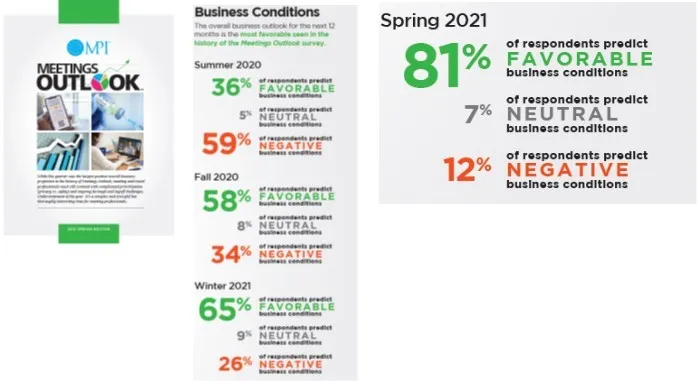
Survey results published in “Meetings Outlook 2021 Spring” (released in May 2021) by MPI (Meeting Professionals International) also show an unprecedented level of positive responses. Regarding business over the next year, 81% of meeting planners predict a “favorable” business climate, while those with a negative outlook have dropped to 12%.
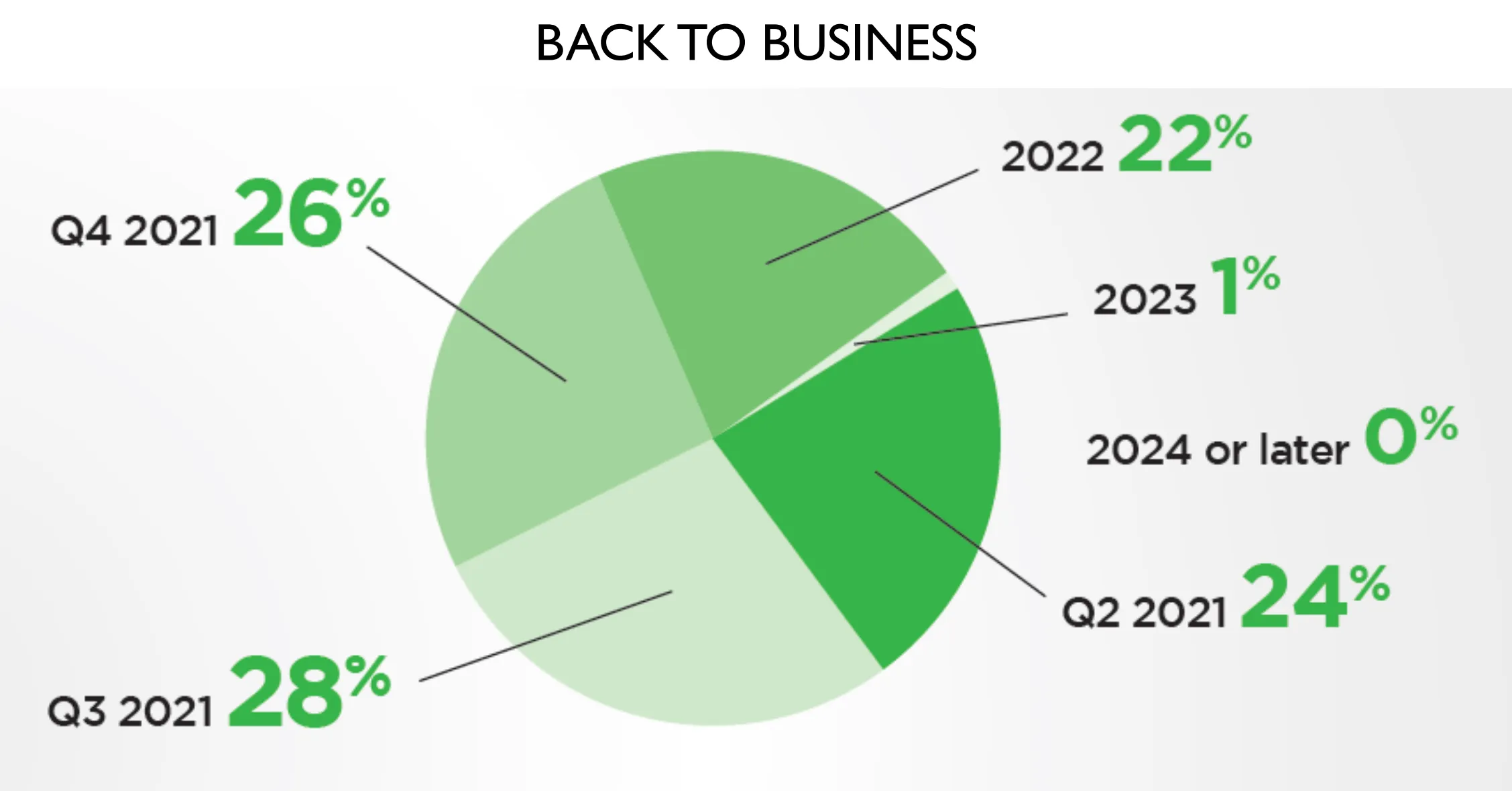
In response to the question, “When will business return to pre-pandemic levels?” 24% of meeting planners chose Q2 (the second quarter), 28% chose Q3 (the third quarter), and 26% chose Q4 (the fourth quarter), with a total of 78% selecting a specific quarter within FY.
(3) Should MICE participants be required to be vaccinated?
An interesting article appears in this "MPI Meetings Outlook 2021." While the aviation industry is debating whether to make vaccination a requirement for passengers, discussions are also beginning in the MICE industry. When surveyed about whether they plan to require MICE participants to be vaccinated, only 12% answered "YES," 45% answered "NO," and 43% answered "Don’t know. "While the article mentions the possibility of events requiring participants to be vaccinated, it also includes comments from organizers stating, “Vaccination is a personal choice and cannot be mandated.” It also notes that “submitting a negative test result, which is considered a lower hurdle than vaccination, is a more realistic option.”
(4) Handling of Attendee Health Information
The Incentive Research Foundation has released a document titled “HEALTH INFORMATION & ATTENDEE PRIVACY.” This document addresses the handling of participants’ health information—such as vaccination status, travel history, and temperature checks during the event—collected to reduce the risk of infection, in addition to the personal information typically entered during standard registration. Health status is the most personal of information, and surely it requires a different level of handling than the personal information MICE events have handled in the past.
(5) CES Announces In-Person Event!
The most encouraging recent news in the MICE industry is likely the announcement that CES (formerly the Consumer Electronics Show, the world’s largest consumer electronics trade show) will “hold an in-person event in Las Vegas in January 2022.”Reportedly, 1,000 companies—including major tech firms such as Amazon, AMD, AT&T, Dell, Google, Hyundai, IBM, Intel, Lenovo, LG, Panasonic, Qualcomm, Samsung, and Sony—have already confirmed their participation. The event itself will be hybrid, and technical sessions will be available for online viewing.
Additionally, in Japan, CEATEC (a trade show similar to CES, focusing on home appliances and electronic devices) has announced that it will be held in October at Makuhari Messe as a hybrid event combining in-person and online components.
(6) Current trends in overseas cities
Australia is currently the most active destination. With air travel to and from New Zealand already resumed, Australia is promoting itself in the MICE industry as a destination where “in-person events can be held at any time. ”ICC Sydney (Sydney’s convention center) uses the tagline “READY FOR YOUR EVENT.” Its newsletter features three topics: operational guidelines for safely hosting events; proposals for legacy programs—which are particularly necessary at a time when the significance of hosting MICE events is being questioned; and a new menu collection.
In Europe, the London Convention Bureau has released three new promotional materials. The ‘London Event Planner Guide 2021’ covers everything meeting planners need to know, including information on safety and security, introductions to new venues, sustainability, programs for team-building and incentive groups, industry partnerships, and a list of partners.
‘London Hybrid Events’: This guide showcases 18 venues equipped to host hybrid events, complete with photos of their setups. ‘Open Air Spaces for Meetings & Incentives’: This guide features hotel outdoor spaces and open-air venues, along with their capacities.
II. Considering Japan’s MICE Industry Post-COVID
What kind of MICE events will be held in Japan once the COVID-19 pandemic subsides?
(1) “Intellectual Property”: A New Challenge for Online MICE
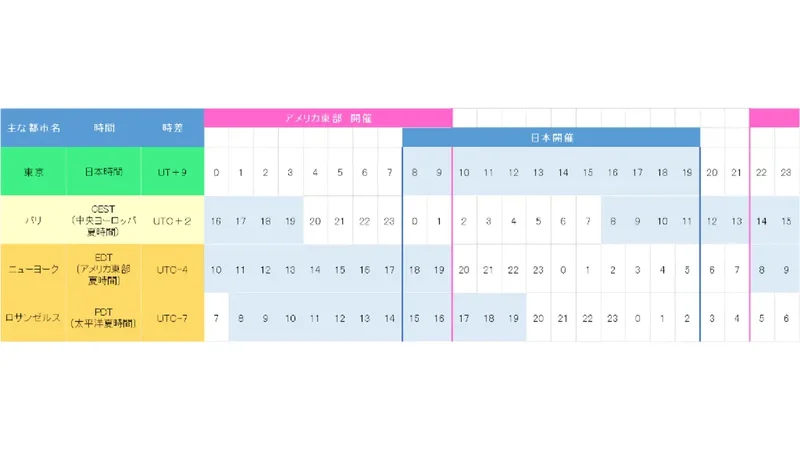
Online MICE events have become established in Japan as well. While I previously wrote about time zone issues, a new challenge has emerged: the content suitable for in-person participants is not the same as what can be discussed online. One issue is the handling of intellectual property
. Many speakers are reluctant to discuss information online that could potentially infringe on intellectual property rights. If the purpose of MICE is to share the latest technology and information, imposing restrictions on what can be discussed risks diminishing the value of MICE itself. Organizers are likely facing the significant challenge of establishing methods to protect speakers’ intellectual property.
(2) Is the Era of Quality Over Quantity Upon Us?
Prior to the COVID-19 pandemic, MICE events were evaluated based on the number of participants. Organizers constantly employed every possible measure to increase attendance, and if more participants registered than the previous event, it was hailed as a “success with record-breaking attendance.” However, due to COVID-19, attendance limits have become necessary, and events are now required to be held with a new set of values different from before. The most
obvious example of this within the MICE sector is likely trade shows. Previously, trade shows that attracted as many visitors as possible were regarded as “better” events. However, due to the pandemic, many trade shows in Japan are now held while adhering to a daily attendance limit of 5,000 people. The Japanese trade show industry deserves credit for continuing to hold events without causing any clusters. On the other hand, there is concern regarding the business results of exhibitors—the most important objective of trade shows. I heard from one organizer that “many exhibitors say their business results haven’t changed even though visitor numbers have dropped.” While this is still just speculation, it suggests that visitors who make the trip to the venue during the pandemic likely have a clear purpose and are highly motivated to engage in business discussions.
(3) The Significance of Hosting Appropriate MICE Events
In the future, MICE events will undoubtedly be required to create venue environments with an “appropriate” number of attendees. Furthermore, I believe both “MICE events open to a wide range of participants” and “core meetings where closed-door members can speak freely without worrying about intellectual property infringement” are necessary. Organizers must incorporate these two—or even more—diversified event styles while ensuring operations that guarantee safety and peace of mind. It will be necessary to clarify the “purpose” of hosting events more than ever before and to take the “appropriate measures” to achieve that purpose.
(4) What Kind of MICE Events Should Japan Attract Post-COVID?
With the planned attraction of Integrated Resorts (IRs), attention is once again turning to MICE. In addition to major cities that have long been proactive in attracting events, there are now many municipalities and regions looking to begin promoting MICE for the first time. Many local governments start by targeting international conferences and academic meetings, as the outcomes of these events are easy to measure and they offer significant brand-building potential. However, these events are actually difficult for new entrants to secure because the decision-making process takes a long time, and venues with no track record are rarely selected.
On the other hand, incentive travel—which is essentially an extension of tourism and involves groups of various sizes—is considered an effective way to build a track record. Above all, incentive organizers need to differentiate themselves from competing companies and are constantly seeking new venues, so even cities with no track record have a chance of attracting them. Furthermore, the decision-making process is much shorter compared to international conferences and academic meetings. For local governments looking to launch MICE initiatives, incentive travel may well be the most suitable option for attracting events. Once
international travel is permitted again, actively courting incentive groups and implementing programs in regional areas that have seen little inbound tourism—particularly those utilizing open-air spaces with low infection risks—could offer the “unprecedented, special experiences” that incentive travel prioritizes most.
******
There is no doubt that the MICE business model is undergoing a major transition period triggered by the pandemic. Going forward, local governments, venues, and all businesses involved in MICE may be tested on how well they can meet the needs of organizers and participants in terms of the event environment and content provided.
著者