The MICE Industry in the Era of Living with COVID-19: New Challenges Emerging as MICE Events Resume Online

While many MICE events have been canceled due to the novel coronavirus, discussions are underway regarding the "New Normal" in the MICE sector. We will look back on the past year in the domestic and international MICE industry and examine the challenges that have come to light.
Although the MICE industry came to a complete standstill due to the sudden onset of the COVID-19 pandemic, I believe the shift toward resuming in-person events through online formats—which began before last summer—represents significant progress. At the same time, as online events have become the norm, new challenges are beginning to emerge. I would like to reflect on the past year in the domestic and international MICE industry and consider the challenges that have come to light.
1. Trends in the MICE Industry Over the Past Year
For the MICE industry, which has always been based on face-to-face interaction, it goes without saying that the COVID-19 pandemic dealt an unprecedented blow. Based on communications from members of global MICE organizations MPI (*1) and PCMA (*2), the following trends emerged in how the global MICE industry and the Japanese MICE sector responded to COVID-19.
Around January 2020, when the spread of COVID-19 began to pose a major problem, MICE professionals both in Japan and abroad appeared to be simply monitoring the situation. Even in February, when news about the cruise ship was being reported daily, promotional emails from overseas cruise companies targeting incentive travel professionals were still arriving.
Perhaps the first major event in the MICE industry was the announcement on February 13 that the Mobile World Congress, set to open in Barcelona, had been canceled. The cancellation of this large-scale event, which had been expected to attract over 100,000 participants, had a significant impact, and it seems that this marked the beginning of widespread postponements and cancellations in the MICE sector.
Subsequently, MICE organizations moved to conduct surveys of their members and formulate guidelines for the resumption of in-person events from spring through summer. In Japan, the Osaka Convention & Visitors Bureau was quick to announce guidelines for event organizers in early June, and JNTO conducted an emergency survey of MICE ambassadors.
Looking at the results of the surveys that PCMA has been conducting regularly since April among its members (approximately 1,000 meeting planners and 500 related businesses), it became clear that while organizers and meeting planners initially attempted to weather the storm by “postponing” events, as time passed, they were increasingly unable to make accurate forecasts for the future.
Then, in the summer, a major event company in Asia announced its de facto closure.
During this period, many conference organizers, PCOs (Professional Congress Organizers), meeting planners, and trade show organizers initially postponed their events. However, as these events were subsequently canceled, they were constantly scrambling to coordinate with stakeholders—announcing cancellations, negotiating cancellation fees, contacting participants, booking venues for the following year or later, establishing operations in line with guidelines, and assessing new costs.
In Japan, online events began in earnest around June; in July, the MICE industry held hybrid meetings (combining in-person and online formats); and in September, trade shows resumed while adhering to a daily attendance limit of 5,000 people. Naturally, international events have been canceled or moved online.
*1 MPI (Meeting Professionals International): MPI is an international non-profit organization with over 17,000 members—including travel agencies, venues, and suppliers—from 75 countries worldwide. *2
PCMA (Professional Convention Management Association): An organization primarily composed of business event organizers, meeting planners, and suppliers. It has approximately 7,000 members across 37 countries in North America, Europe, the Middle East, and Asia.
2. Online MICE and Challenges
The most common topic of discussion among MPI and PCMA members was, “What is the best platform for online MICE?” The MICE industry has long been considered reluctant to adopt new technologies. Industry professionals, who believed that “the value of MICE can only be demonstrated face-to-face,” avoided online MICE for many years due to a business model that relies on physical movement. However, the sudden impact of the COVID-19 pandemic forced them to host online MICE events, and it appears they began scrambling to gather information in response.
In Japan, a study session held in October by the Japan Convention Association (JCA) featured discussions on online and hybrid MICE. It was emphasized that risk management is more critical than ever when hosting online and hybrid MICE events, and that it is essential to ensure clients understand the potential risks that may arise during the event, including issues related to the communication environment. Furthermore, it was confirmed that as MICE operators are being called upon to assume new roles unlike those of the past, efforts must be made to avoid ambiguity regarding the division of responsibilities.
On the other hand, starting around summer, comments regarding the limitations of online MICE began to increase. The most difficult aspect of online events is incentives. Incentive travel and events, which companies have traditionally used to maintain the engagement of sales staff and employees and boost their motivation, have become completely impossible to hold. For companies, a decline in sales staff and employee engagement could further exacerbate the deterioration of sales performance caused by the COVID-19 pandemic, and there are also concerns about employee turnover. However, incentive programs—which in recent years have been organized with a strong emphasis on “experiences”—have predominantly involved travel, and there are no known success stories of online incentive programs.
Furthermore, regarding trade shows, we often hear the sentiment that “it is difficult to conduct serious business negotiations online.” For small and medium-sized enterprises, trade shows are a vital venue for acquiring new customers. The information disclosed during business negotiations with new partners is heavily influenced by the mutual trust between the parties. People judge whether they can trust someone based on communication cues such as the other person’s attitude, words, voice, manner of speaking, and eye contact. Many exhibitors and attendees feel that such critical communication cannot be fully achieved without meeting in person, and that it is difficult to gauge the other party’s reactions.
3. Advantages and Disadvantages of Hybrid Meetings (Combining In-Person and Online)
Hybrid meetings—where only those who can physically attend the venue participate in person, while others join online—are expected to continue even after the COVID-19 pandemic subsides. The reason for this is that it has become clear that online participation allows for the acquisition of a demographic that previously could not attend due to time or cost constraints. In other words, those who feel limited by online participation will return to in-person events, while those who were previously unable to attend will easily join online. The general consensus is that if the total number of participants increases, this will lead to the revitalization of the MICE industry itself.
Hybrid meetings do present challenges, however. The most difficult issue to resolve is creating opportunities for interaction between in-person and online participants. In-person events naturally offer opportunities for serendipitous encounters—such as during coffee breaks, receptions, or at exhibition halls—where people, technologies, and products come together unexpectedly. Many participants value this sense of serendipity as a key reason for attending MICE events. However, since this is difficult to achieve online, the inability to foster relationships that develop from such chance encounters is viewed as a major drawback for MICE events. While some MICE events do create networking opportunities online, they likely fall short of fully realizing these unexpected discoveries and encounters.
4. Event Schedule
While there is a certain number of participants who can manage online events, participation from regions with time zone differences presents a higher barrier.
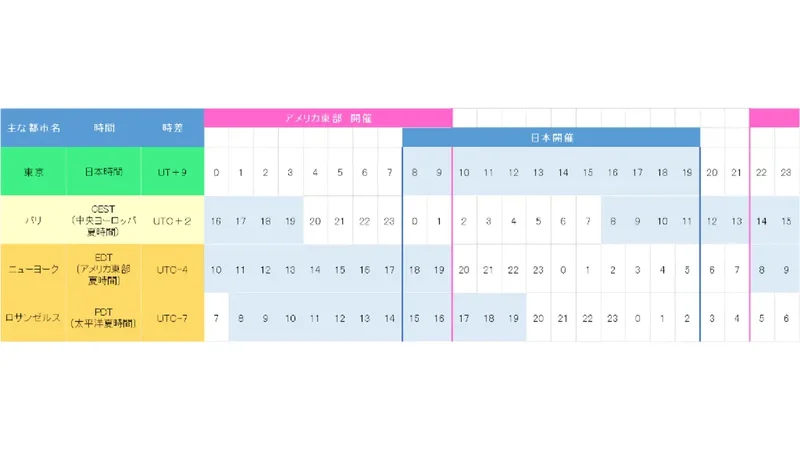
Assuming people are active from 8:00 AM to 8:00 PM and that this is the time when MICE events can be held in Japan, participants from Europe can only attend for a mere 4 hours, those from the U.S. East Coast for 2 hours, and those from the West Coast for 5 hours.
The situation is particularly serious when events are held on the U.S. East Coast. In a forum discussing critical global issues, European participants can attend for 6 hours, and those on the U.S. West Coast for 9 hours, but participants from Japan can only attend for 2 hours. We must take care to ensure that Japan does not fall behind in this field.
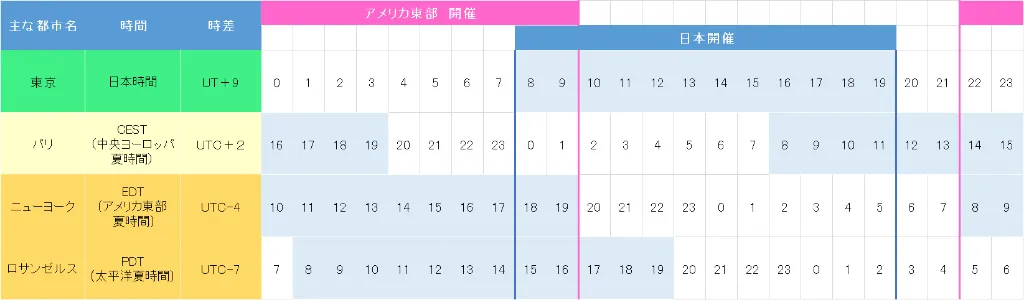
MICE organizers also adjust event times to allow as many people from different countries as possible to participate. Here are two examples.
Example 1
In the session titled “What are Hybrid Meetings?” at the ICCA (International Congress & Convention Association) Asia Pacific Chapter Summit held last December, Professor Yoshifumi Kitamura of the Research Institute of Electrical Communication at Tohoku University—who served as the Program Chair for CHI 2021 (Conference on Human Factors in Computing Systems 2021)—proposed a method of dividing the event into three time slots.
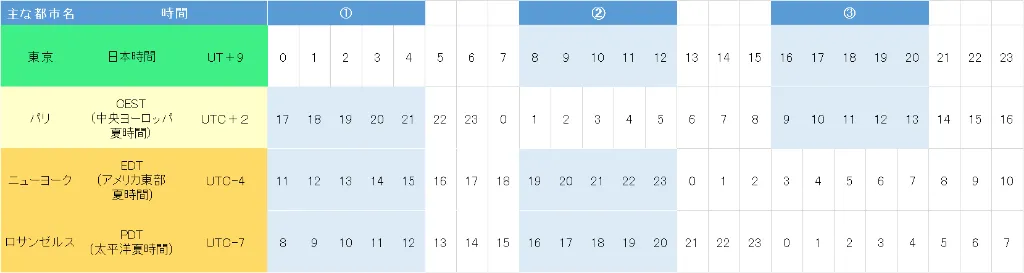
*From Professor Kitamura’s presentation materials
at the ICCA AP Summit: ① Europe, U.S. East Coast, U
.S. West Coast; ② Japan, U.S. East Coast, U
.S. West Coast; ③ Japan, Europe
*This is a tentative schedule as of December 2020 and differs from the actual CHI schedule.
CHI 2021 was an international conference on “Human-Computer Interaction” scheduled to be held at Pacifico Yokohama with 4,000 participants from 50 countries. Professor Kitamura described the advantage of an online format as “leveling the playing field for participants” and expressed his desire to make the most of the benefits of an online event, which allows people to participate without having to travel to the venue.
Example 2
The following are the session times for the SITE Global Conference, an international conference on incentive travel hosted by an international organization, held on February 2–3 (Central Time).
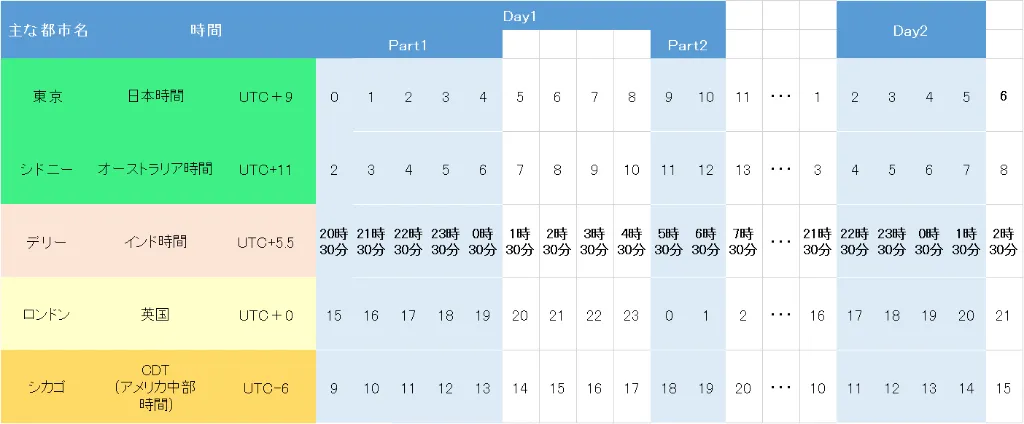
This schedule was designed because the majority of participants were from North America and the conference was being managed from Chicago. Part 2 of Day 1 was designated as “A3+I” (standing for America, Asia, Australia, and India), a program scheduled for late at night to accommodate participants outside of Europe. The recorded videos were made available in the archive starting the following day.
Given the time differences, there will inevitably be time slots that are difficult for participants from certain regions to attend. If the goal is to facilitate discussions where everyone can participate, attendees have no choice but to join even if it means participating late at night or early in the morning. Additionally, the scheduling is significantly influenced by where the conference is being managed. At the SITE conference, there were many speakers and an awards ceremony. The production involved a fast-paced sequence of the overall MC, moderators, speakers, slides, and video clips appearing on the platform via Zoom and YouTube. Consequently, there were frequent screen transitions, and I imagine this made for a rather demanding operation for the organizers, including the preparation. Considering all this, the schedule felt challenging for participants from Japan, but it may have been the result of the organizers doing their utmost to accommodate everyone.
5. Other Challenges
When considering how to host smarter online or hybrid MICE events, there are numerous challenges in terms of technology, production, and operations. As we seek to monetize these events, we must also address how to demonstrate value to sponsors and what we can offer them—issues that will need to be resolved moving forward. Furthermore, if in-person attendance declines, the economic impact from direct spending at the host location will diminish, and we may no longer be able to count on the same level of support from local governments and other entities as in the past. The MICE industry prioritized “holding events” by leveraging technology. As the importance of human interaction is being reaffirmed, I believe there is a possibility that MICE will be reevaluated. I believe the day when we can meet in person will return, but I hope that by then, MICE will have evolved to a higher level—not merely reverting to the past, but earning even greater recognition than it did before the spread of COVID-19.
著者