Insights Gained from the Resumption of Travel in the Era of Living with COVID-19
It has been seven months since the COVID-19 pandemic began. In this column, we examine travel trends up through this summer—a period marked by the resumption of travel under the “living with COVID-19” approach—from the perspective of both consumers and travelers. The rapid digitalization of daily life has also given rise to new trends, such as online tours. We explore how current developments will impact the future of travel and tourism, and what considerations are necessary.
As the COVID-19 pandemic has spread across the globe, we have faced a range of challenges in our daily lives that we could never have imagined. In particular, the impact of restrictions on our freedom to go out and travel has been significant, and the economic losses and psychological strain are immeasurable. Even now, there is no definitive solution to the pandemic, and the outlook for global tourism remains uncertain. According to the International Air Transport Association (IATA), international air travel is not expected to return to pre-pandemic levels until 2024 or later.
However, domestic travel in Japan is gradually recovering, step by step, based on the premise of living with COVID-19, as the Go To Travel Campaign expanded to include trips to and from Tokyo starting in October. Since February of this year, when the spread of COVID-19 began, our company has been conducting regular surveys on public sentiment regarding the recovery of travel and tourism, observing changes in consumers’ mindsets and lifestyles. Here, I would like to take a moment to provide an overview of domestic travel trends up to this summer and organize my thoughts on what these trends signify, particularly in light of the resumption of inbound tourism and overseas travel.
While there are several key points to consider, this article will focus on the following three, taking into account the results of our previous surveys and keeping the length of the text in mind.
- Current travel trends are characterized by “affordability, proximity, and brevity” in the new normal. Travel attitudes have shifted from “waiting for the pandemic to subside” to “traveling with caution.” The primary purposes of travel are “escape from daily life” and “rest,” marking a temporary return to travel as an end in itself.
- The generational shift among travelers, which had been progressing slowly, is accelerating. While enthusiasm among the senior demographic remains low, young people show high levels of interest
- The rapid digitization of daily life and changes in touchpoints with travelers. The significance of online tours
In addition to this column, we have compiled a detailed fact sheet available for download.
1. Current travel trends reflect the “New Normal” of “cheap, nearby, and short”: A shift in mindset from “waiting for the pandemic to subside” to “traveling with caution.” The purpose of travel is “escape from daily life” and “rest.” Experiences involving interaction with local communities have temporarily receded, and travel itself has become the primary goal
(1) Our Forecast for the Resumption of Travel Under the State of Emergency
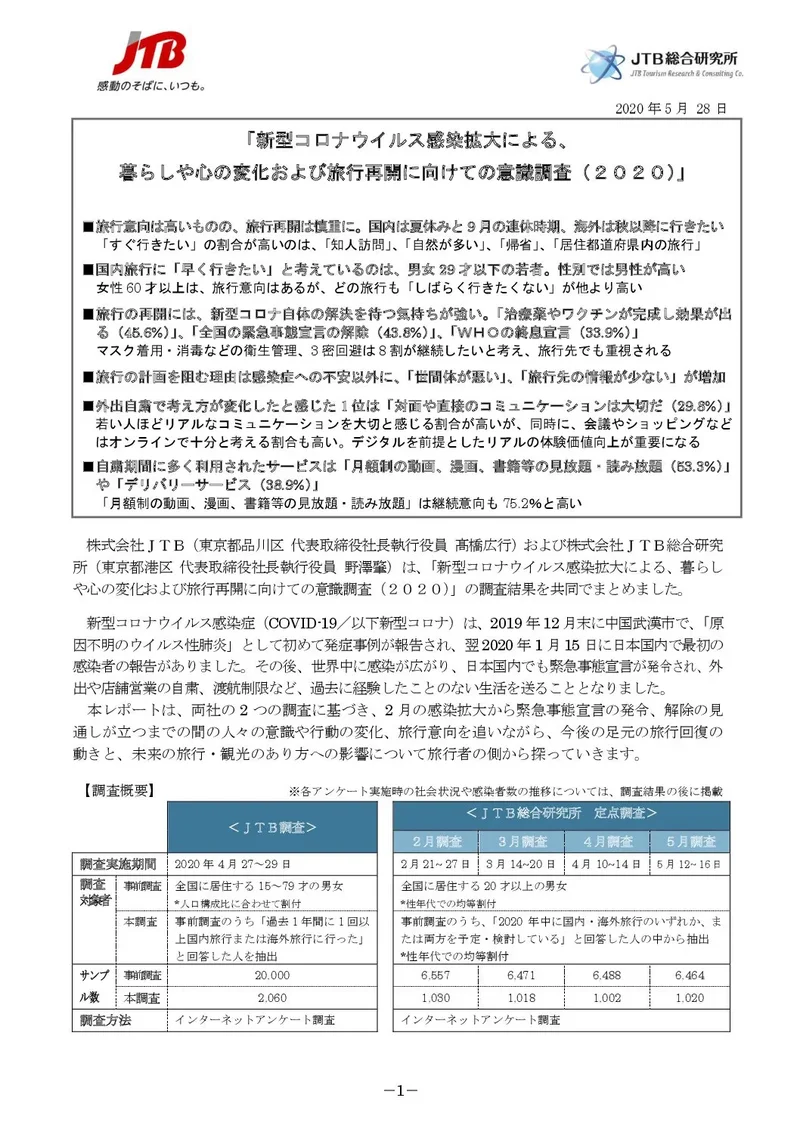
Initially, based on survey results and interviews with stakeholders, we predicted that the resumption of local travel would take the form described below.
- "Affordable, nearby, and short" in the new normal—that is, "safe and secure (avoiding the three Cs), nearby, traveling with close associates (family or small groups of close friends), and for a short duration"
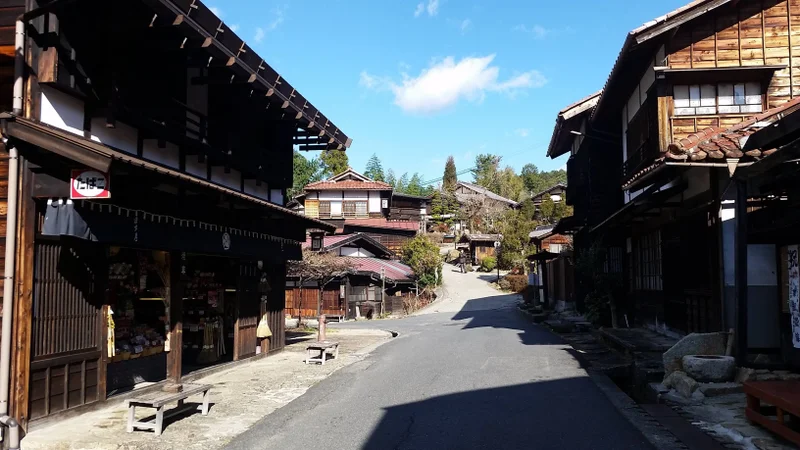
- Travel by car to hot spring resorts or scenic spots within one’s residential area or neighboring regions, as day trips or one-night stays
- Young people in their 20s (both men and women) are enthusiastic about resuming travel, while women’s interest declines as they age, with senior women in particular showing a tendency toward reluctance
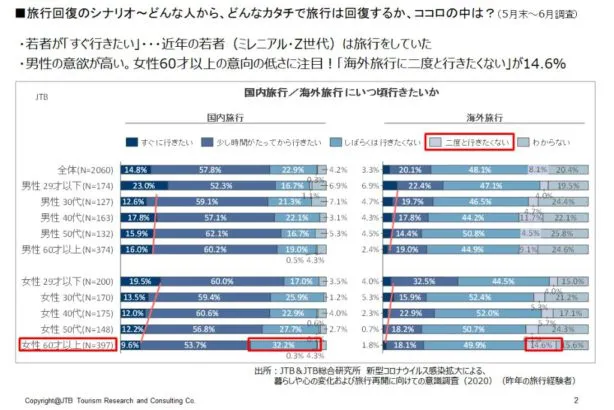
Regarding the third point mentioned above—which age group has the highest travel motivation and is most likely to resume travel—men and women in their 20s show the highest motivation (Figure 1). This is likely due to the stable economy and strong employment environment of recent years, which have served as tailwinds; young people were already actively traveling before the pandemic; and they have parents from the “Bubble Generation” who enjoyed spending, so they have relatively frequent travel experiences from their childhood even during economic downturns, which has influenced them.On the other hand, senior women—who had previously driven travel spending—now show the lowest travel intentions, with 32.2% stating they “do not want to go on domestic trips for a while” and 14.6% saying they “never want to go on overseas trips again.” It remains to be seen whether these attitudes will improve over time and what factors might boost their enthusiasm; these are points that warrant close attention.
(Figure 1) When do you feel like traveling after travel restrictions are lifted? (Domestic travel / Overseas travel)
(2) This Summer’s Travel Trends Revealed by Big Data and Surveys
So, what kind of travel did people engage in this summer? As reference data, let’s examine out-of-area travel by residents of the Greater Tokyo Area (Tokyo and the three neighboring prefectures)—the largest market—using Agoop’s analysis of inter-prefectural travel during the long holiday period.
(Figure 2) Destinations of Tokyo Metropolitan Area Residents Traveling Outside Their Place of Residence During the Long Holidays in August and September (Average Number of People per Day)
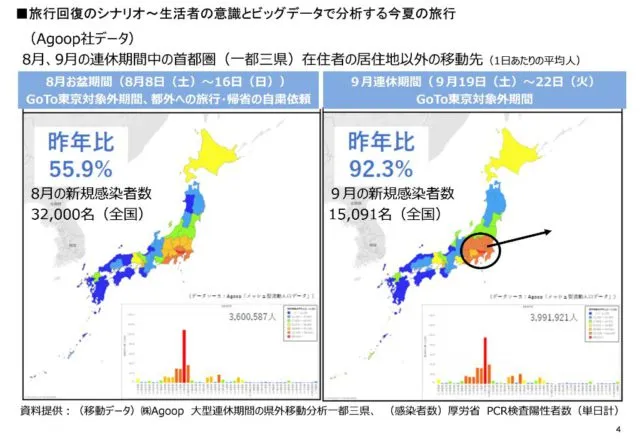
The number of Tokyo Metropolitan Area residents traveling outside the region during the Obon period in August remained at 55.9% of the previous year’s level (including day trips). This is believed to be largely due to the resurgence in new infections from late July through August, the exclusion of Tokyo-originating and -destination trips from the Go To Travel Campaign, and the Tokyo Metropolitan Government’s request to residents to refrain from traveling outside the prefecture or returning to their hometowns during the Obon period.Destinations were predominantly in the Kanto region and Nagano Prefecture, areas near the Greater Tokyo Area that are relatively accessible by car (Figure 2). According to other data from Agoop, tourist destinations such as Karuizawa and Hakone saw a greater decline in visitors from outside the Greater Tokyo Area during the Obon period, while the number of travelers from the Greater Tokyo Area did not decrease as significantly as those from other regions.
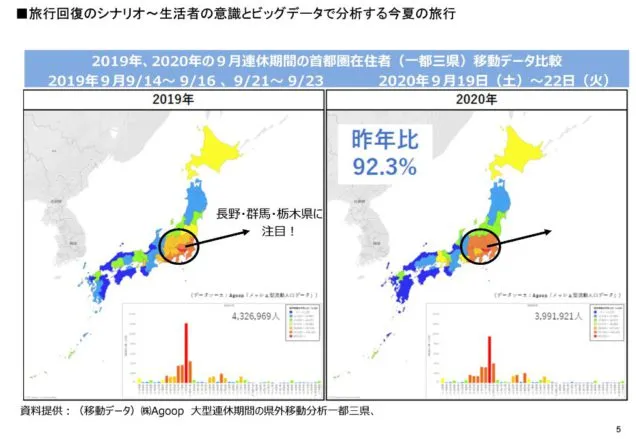
On the other hand, the number of new infections declined in September, and it had been decided that the Go To Travel Campaign would include trips to and from Tokyo starting in October. In response to these developments, the number of travelers residing in the Tokyo Metropolitan Area and the three neighboring prefectures during the September holiday period reached 92.3% of the previous year’s level, marking a significant improvement from August.Furthermore, when comparing the September long weekend period in 2019 with that of 2020, it can be seen that the average daily number of travelers to Gunma, Tochigi, and Ibaraki prefectures—located near the Tokyo metropolitan area—as well as Nagano Prefecture, was higher than the previous year (Figure 3). These prefectures are close to the Tokyo metropolitan area and are home to famous tourist destinations such as Hakone, Karuizawa, and Nikko, which attract many visitors; it is likely that they were perceived as being relatively more accommodating in accepting travelers.
(3) Changes in Attitudes Toward Travel, and the Purposes and Expectations of Travel During the COVID-19 Pandemic
(3)-1: Was the September long weekend a turning point in attitudes toward travel under “living with COVID-19”?
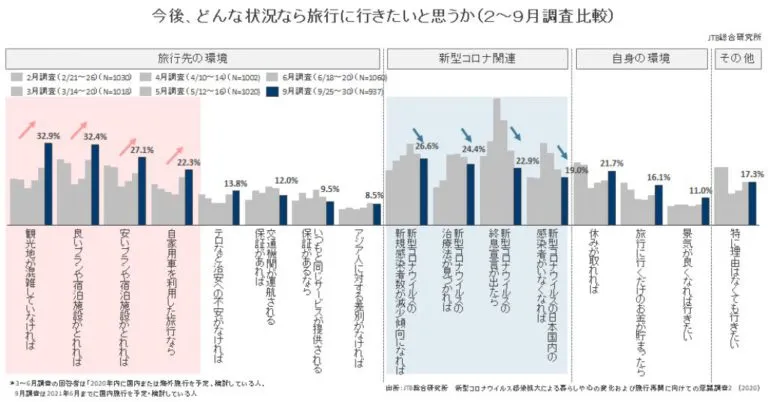
The significant improvement in travel during the September long weekend can also be understood in terms of shifts in public sentiment. We asked the same question—"Under what circumstances would you travel in the future?"—from February through September to track changes in public sentiment. In the September survey, for the first time, factors related to travel destinations and travel products—such as "tourist spots not being crowded" and "if I can secure a good/affordable plan or accommodation"—overturned the priorities previously associated with the resolution of the COVID-19 pandemic.This appears to mark a turning point in attitudes toward “traveling while accepting life with COVID-19” (Figure 4).
(3)-2: What people now expect from travel is “rest and relaxation” and “a break from daily life.” Travel itself has become the goal
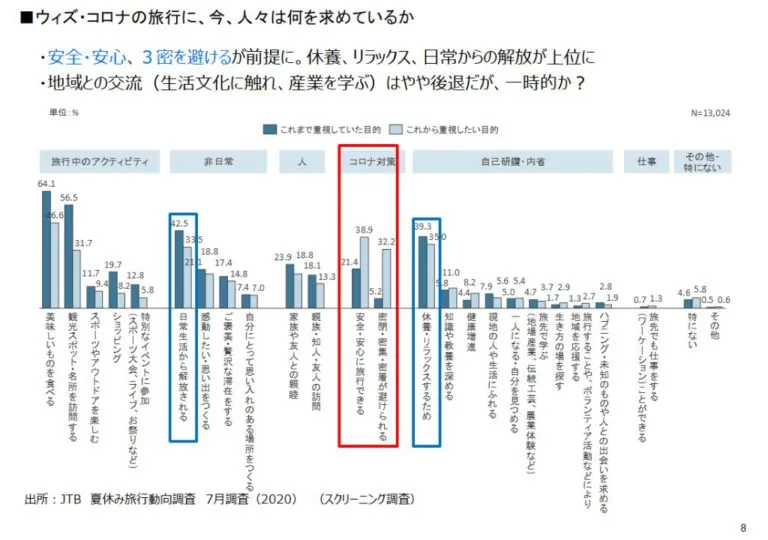
In recent years, new tourism promotion initiatives had been underway in areas outside famous tourist destinations, such as experiences rooted in local culture and community walks. However, due to the COVID-19 pandemic, exchange events like “open factory” tours were canceled one after another.Among the purposes and expectations of travel, the desire for “introspection and self-improvement”—such as “interacting with local people and their way of life” and “learning about local industries and agriculture at the destination”—which had been gradually gaining traction in recent years, particularly among young people, has retreated somewhat due to the pandemic.On the other hand, alongside “COVID-19 precautions (safety and security, avoiding the ‘three Cs’),” the desire for “rest and relaxation” and “escape from daily life” has grown stronger (Figure 5). This can be interpreted as a result of stress caused by the prolonged pandemic, with travel itself becoming the primary goal, much like in earlier times. Destinations such as Hakone and Karuizawa—which are easily accessible by car from the city center, surrounded by nature, and popular with tourists—appear to be chosen as places where travelers can spend time safely with close companions.
However, younger generations inherently have different preferences regarding social interaction at travel destinations compared to older generations. Many view travel as a means of self-realization and wish to do something together in places that hold personal significance, even if they are not famous tourist spots. Going forward, if understanding of regional tourism—including infection prevention measures—and systems for resuming social interaction are established, interest in new forms of tourism based on local lifestyles and culture is expected to revive. Until then, it is necessary to retain fans, create touchpoints, and disseminate reliable information.
(Figure 4) Circumstances under which people would like to travel in the future (Trends in attitudes from February to September) (Multiple responses)
(Figure 5) Travel purposes prioritized before the COVID-19 pandemic and those they wish to prioritize going forward (multiple responses)
2. The generational shift among travelers, which had been progressing slowly, has accelerated; enthusiasm among seniors has waned, while that of young people remains high
(1) Travel Activity from April to September
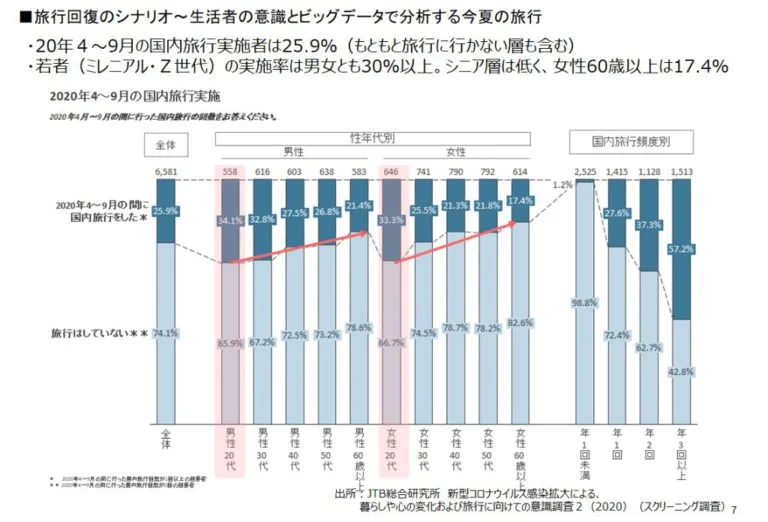
During the state of emergency, the desire to travel domestically was highest among young men and women in their 20s, while it was low among senior women, who had previously driven travel spending. To assess the current situation, we surveyed travel experiences over the six-month period from April to September. Overall, 25.9% of respondents traveled at least once during this period.For reference, under normal circumstances, more than 60% of people travel at least once a year. Across all age groups, the highest travel rates were among men and women in their 20s—Generation Z and Millennials—both exceeding 30%, which was in line with expectations. However, this may change depending on future employment conditions. Society as a whole must prevent a situation where “young people do not travel = cannot broaden their horizons.”
On the other hand, the travel participation rate declined as age increased, with women aged 60 and older recording the lowest rate overall at 17.4%, matching their intentions during the state of emergency. Notably, the participation rate among men aged 60 and older was low. While their initial desire to travel was high, on par with men in other age groups, their actual participation rate was the lowest among men (Figure 6).Since there have been no changes in the daily lives or incomes of senior men, there is no clear reason for them to refrain from domestic travel. Possible factors include their spouses—who often travel with them—being reluctant to travel, a tendency to travel in the spring and fall to avoid the crowds of the summer peak season, and changes in mood due to the prolonged COVID-19 pandemic; however, this situation requires close monitoring for the time being.
(Figure 6) Domestic Travel Experience Between April and September 2020
(2) The Accelerating Generational Shift in Travel Consumption
(2)-1: Efforts to Revive Travel Among Healthy Seniors, While Simultaneously Preparing for the Next Generation in Anticipation of Their Retirement
A key characteristic of travel consumption during the COVID-19 pandemic is the caution shown by the senior demographic, which had previously driven consumption. In recent years, as the baby boomer generation has entered their 70s, the number of people “retiring” from overseas travel has gradually increased. However, due to the pandemic, even the younger seniors in their 60s have shown lower enthusiasm for both domestic and overseas travel. Regarding overseas travel, international flights are not expected to return to pre-pandemic levels until 2024.Until then, the limited number of routes and high airfares will continue to make overseas travel difficult, and it is not impossible that seniors will simply “retire” from travel rather than see a full recovery. However, senior women in particular tend to travel with a wide variety of companions—spouses, daughters, multigenerational families, and friends—and are a group that naturally has many opportunities to travel. Efforts are needed to encourage a return to travel, particularly for those who are healthy and have a history of frequent travel, by directing them toward East Asia—where a rapid recovery is expected for overseas travel—or domestic travel, with a focus on maintaining their health.
(2)-2: The Next Generation of Seniors Is Not the Same as the Current Generation
Previous generational studies have shown differences in travel spending between the baby boomer generation, the 60-somethings below them, and the next generation of seniors in their 50s. Seniors in their 60s were among the first to experience diverse forms of travel in their youth, such as skiing, tennis, and road trips. Since men in this age group also have experience with overseas business trips, the proportion of package tour users decreases significantly starting from this generation.Furthermore, as internet usage became widespread around the age of 40, they have no reservations about purchasing travel products online. Those in their 50s and older tend to use travel agency websites more than OTAs. Many men in their 50s also purchase directly from airlines and hotels. We believe that the generational shift currently occurring in senior travel consumption differs from previous shifts, and we recommend approaching this with the understanding that not only do purchasing habits differ, but the experiential value they seek to enjoy through travel is also distinct.
3. The Rapid Digitalization of Daily Life, Changes in Touchpoints with Travelers, and the Significance of Online Tours
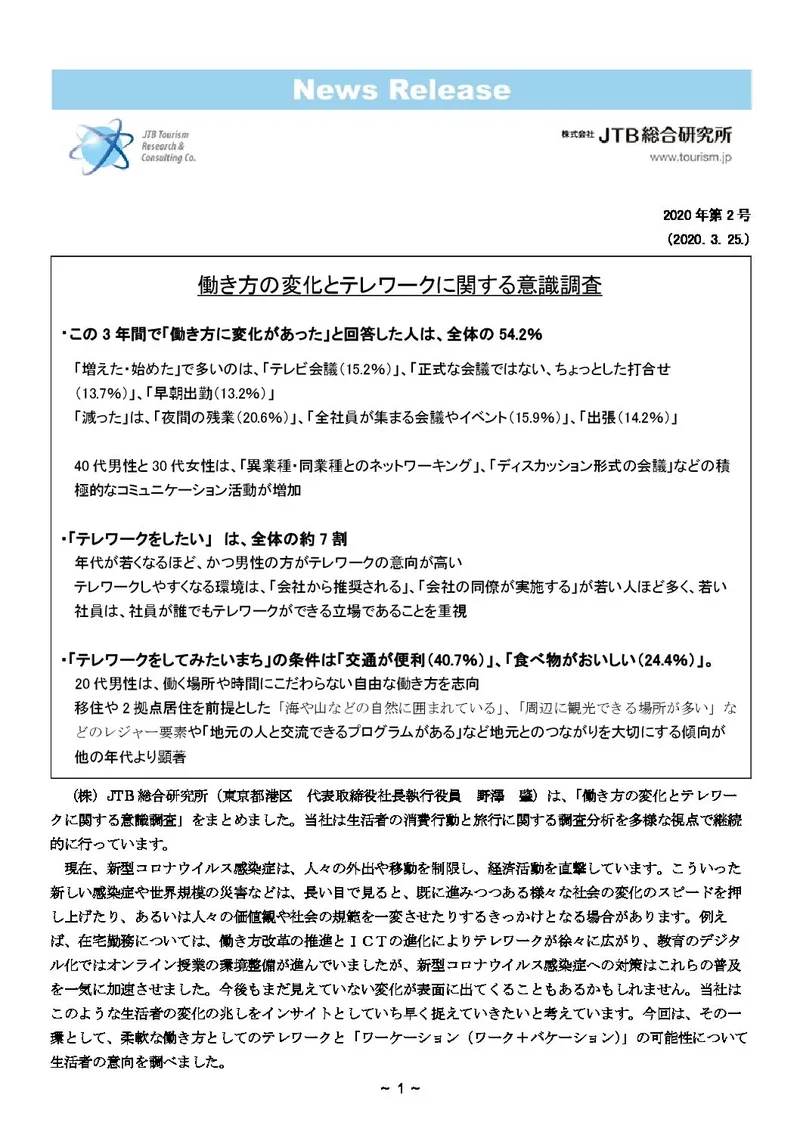
The self-imposed restrictions on going out during the state of emergency effectively forced the acceleration of the digitalization of daily life that had been gradually progressing prior to that. The most prominent examples are online classes, remote work, and, in the tourism sector, “workation,” which is generating buzz as a future trend. However, from the perspective of travel styles that emerged and spread during the COVID-19 pandemic, online tours offer significant insights for considering future consumer trends.
(1) Utilization Rates of Online Tours During the Pandemic
Looking at the broader trend of online tours during the pandemic, one of the earliest examples was the online seminars offered by HIS America (H.I.S. U.S.A. HOLDING, INC.) when the world was under state of emergency declarations and people were staying home. These seminars, led by instructors living abroad, were conducted online and attracted a growing number of participants.Even after travel restrictions were lifted, many people remained hesitant to travel, leading to an increase in online tours that connected participants live with local tourist destinations to enjoy virtual sightseeing experiences. Online tours of domestic tourist destinations flourished during the summer vacation travel season in August. At that time, as COVID-19 cases were rising again and travel to distant locations and remote islands became difficult, numerous tours were organized by local bus companies, tourism operators, and travel agencies. In addition, many individuals offered online tours on C2C sharing economy sites.
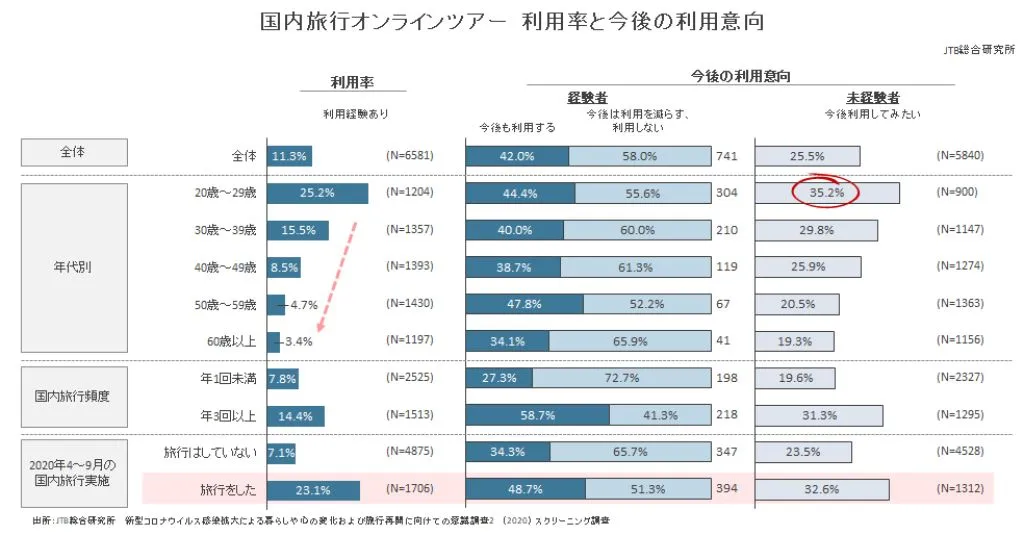
Figure 7 shows the results of a screening survey regarding the use of domestic online tours up to this summer. The overall usage rate was 11.3%. The usage rate was highest among those in their 20s, at 25.3%. Among those aged 60 and older, it was 3.4%. Looking at trends by travel frequency, those who travel three or more times a year had a usage rate of 14.4%, which was higher than the average, and their intention to use the service again was also high at 69.8%.When examining trends by travel experience between April and September of this year, 23.1% of those who actually traveled used online tours, compared to 7.1% of those who did not travel. At this point, it has been found that online tours are more commonly used by those with extensive travel experience, and their intention to use them again is also higher.
(Figure 7) Domestic Travel Online Tours and Future Usage Intentions (by Users and Non-Users)
I intend to discuss online tours themselves on another occasion, but at this point, it appears that online tours do not yet pose a competitive threat to real-world travel. For consumers with a strong interest in travel, a pattern seems to be emerging: by participating in numerous online tours, they can enjoy the experience while using it as a reference for post-COVID travel choices, and if their interest grows, they are likely to go on actual trips in the future. Furthermore, while there were initially promotional events with free participation, paid tours have now become the norm. For organizers, free events have limitations in terms of sustainability, and for participants, paid tours are likely perceived as more cost-effective than actual travel and provide a tangible sense of supporting local communities.
Currently, most organizers are businesses and travel agencies whose primary livelihood is in-person tourism. If travel recovers further in the future, they may return to their core businesses, and it is not impossible that live online tours will decrease. However, given how widespread online tours have become, there is no need to distinguish between “real customers” (those who visit or purchase) and online participants. Online participation also enables marketing opportunities. In recent years, a concept known as “OMO (Online Merges with Offline)” has gained traction in marketing—the idea that “all customer touchpoints originate online, with in-person (offline) experiences encompassed within that framework.” This trend is expected to accelerate in the tourism sector as well. For overseas travel, which remains off-limits for the foreseeable future, there is a need to create frequent, high-quality touchpoints (not necessarily “luxurious” or “high-end,” but rather “relatable”) and build a loyal fan base.
4. Summary: Change Often Began Before the Pandemic—We Are Now Being Given a Strong Push Forward
This article has outlined the insights gained from the resumption of travel in the “With Corona” era. However, I understand that the shift toward new travel styles driven by generational change and digitalization began years ago, and the pandemic has merely served as an external force pushing us forward.
In Kotler’s *Marketing 4.0* (Asahi Shimbun Publications), he identifies “young people,” “women,” and “netizens (NETWORK + CITIZEN)” as the new customer base. He describes them as follows: “Young people are the ones who take the lead in using new things,” “Women are the ones who research the best options and spread the word,” and “Netizens are people who are active on networks without regard to nationality. ”In the past, the key customer base was reportedly “men,” “the elderly,” and “those in power”—people who held the money and drove consumption. While the new customer base is thought to have a greater influence on others rather than driving consumption themselves, I suspect there has been some resistance to shifting focus in that direction until now.
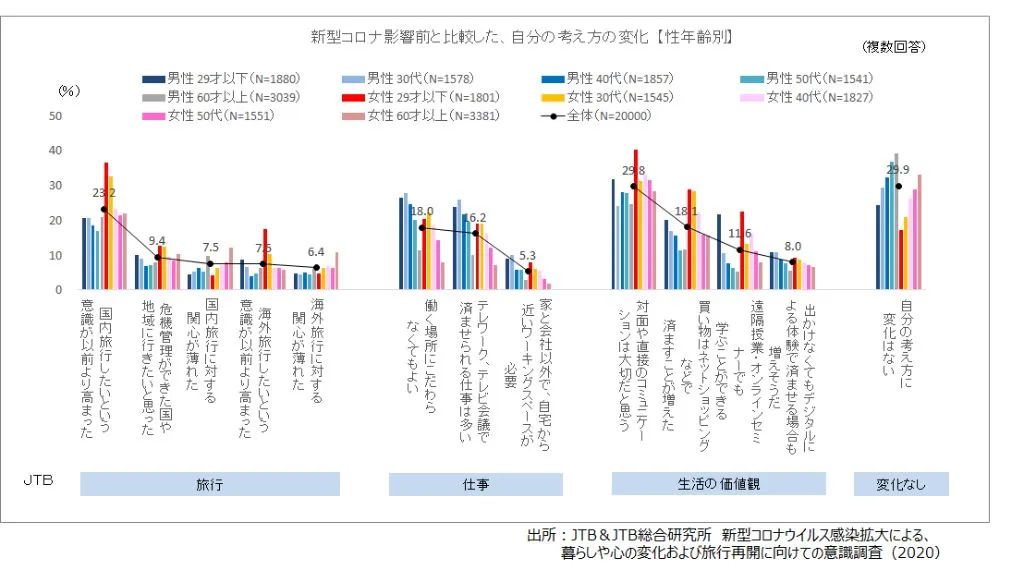
Finally, please refer to the graph below. Respondents were asked to select changes in their own mindset compared to before the COVID-19 pandemic. The proportion of people who answered that their mindset had not changed was higher among men and increased with age. On the other hand, the younger generation was more flexible toward digitalization, having experienced remote work and realizing that they do not need to be tied to a specific workplace and that many tasks can be handled via remote work or video conferencing. At the same time, the younger generation believes that “face-to-face and direct communication are important. ”The younger generation seeks the benefits of the real world while taking for granted the efficiency and convenience offered by the online (digital) realm.
Although there is still no end in sight to the COVID-19 pandemic, if we are to look to the future and consider what lies ahead, it is important to adopt Kotler’s “human-centered” approach and devise services, systems, and cultures that support and express human values for the next generation and the generations to come. I believe this will lead to innovation in travel and tourism in the post-COVID-19 future.
(Figure 8) Changes in personal views compared to before the COVID-19 pandemic (by gender and age)
Related Information: 2020 Survey on Travel, Tourism, and the COVID-19 Pandemic