Toward the Restart of Tourism: The Future of Tourism in the "New Normal"
In the travel and tourism industry, the “new normal” refers to a state of affairs in which infection prevention measures—designed to minimize the risk of infection in various situations during travel—are naturally integrated into everyday operations. At the World Travel & Tourism Council (WTTC) Recovery Initiative, which our company recently attended, information was shared regarding potential future changes in the market and protocols, as well as specific initiatives and behavioral changes at accommodations, restaurants, conference facilities, airports, and other venues. We would like to share this information with you.
1. What Is the "New Normal" in Travel and Tourism?
In Japan, the state of emergency has been extended until the end of May. During a press conference, Prime Minister Abe stated, “We must establish a ‘new normal’ for the COVID-19 era as soon as possible.”
The term “New Normal” was first proposed by American economists during the 2008 Lehman Shock to describe a new state of affairs that emerged after the economic crisis, one in which society could not simply return to the way things were but was forced to undergo structural changes. In the context of the current COVID-19 pandemic, the term has been widely used since around February 2020 to describe the “New Normal” that we are all facing globally.
In the context of travel and tourism, the “New Normal” refers to a state of affairs in which infection prevention measures—designed to minimize the risk of infection spreading through travel and tourism activities—are incorporated until COVID-19 vaccines and treatments become widely available to the public. Discussing and reaching a shared understanding of what “travel and tourism in the new normal” should look like will serve as a vital guidepost for those involved in the travel and tourism sector—including travel and tourism businesses, travelers, and local residents—as they work toward a healthy and sustainable resumption of travel spending.
Since the declaration of the COVID-19 pandemic, our company has participated in the World Travel & Tourism Council’s (hereinafter: WTTC) WTTC Recovery Initiative (hereinafter: the Initiative) and has begun sharing best practices and gathering information on travel and tourism from WTTC member companies and countries and regions around the world. In collaboration with international tourism organizations, we are involved in gathering information on government travel restrictions and tourism industry support policies through the Initiative, as well as making policy recommendations to governments worldwide, and are advancing discussions on “tourism and travel in the new normal.” In this article, we would like to share information that will be useful to Japan’s travel and tourism industry regarding potential future changes in markets and protocols (procedures).
2. Market Recovery Scenarios
It is generally believed that the order of recovery for travel will follow a pattern of starting close to home and gradually expanding to more distant destinations in every country. In the case of Japan, specifically, recovery is expected to proceed in the following order: demand for restaurants near home, day trips to nearby areas, domestic staycations, travel to neighboring countries, regional travel within Asia or Europe, and finally, long-distance international travel between continents. Looking at the domestic travel market in Japan, we can expect a recovery in domestic dining and day trips, followed by travel within the Asia-Pacific region. Regarding inbound tourism, we believe we should also focus on the recovery of the Asia-Pacific market. Additionally, there is a view that young travelers aged 18 to 35, who appear to be less affected by the pandemic, will be the first segment to resume travel activities. This is also considered a market where we must proceed with due attention to measures such as COVID-19 testing.
3. Initiatives and Changes in the Hotel and Accommodation Industry
Furthermore, travel procedures that were once taken for granted are expected to undergo changes within the “new normal.” Check-in and check-out procedures, which are essential for travel, actually involve frequent opportunities for person-to-person contact and exposure to surfaces touched by many people. Therefore, a fundamental review of these operational procedures will be necessary. Specifically, risks can be mitigated by implementing hand sanitization procedures for tasks such as luggage handling and the handling of cash and documents; promoting online check-in via the web; introducing unmanned payment stations and contactless cashless payment systems; and moving toward paperless operations.
Rearranging the layout of facilities and equipment to ensure social distancing is also a critical initiative. Re-evaluating the capacity limits for restaurants and conference facilities, revising business plans, and incorporating these changes into future products and services are among the measures that should be addressed immediately. Additionally, facilities involving physical activity, such as gyms where clusters have occurred, must ensure that participants maintain a distance of at least two meters. Social distancing must be observed not only in customer-facing areas but also in employee work spaces. It is necessary to measure personnel density in offices and work areas and install appropriate equipment. Furthermore, for operations that utilize transport equipment such as elevators—which are enclosed spaces—where maintaining a 2-meter social distance is difficult, procedures such as using stairwells must also be considered.
4. Initiatives and Changes in the Aviation and Cruise Industries
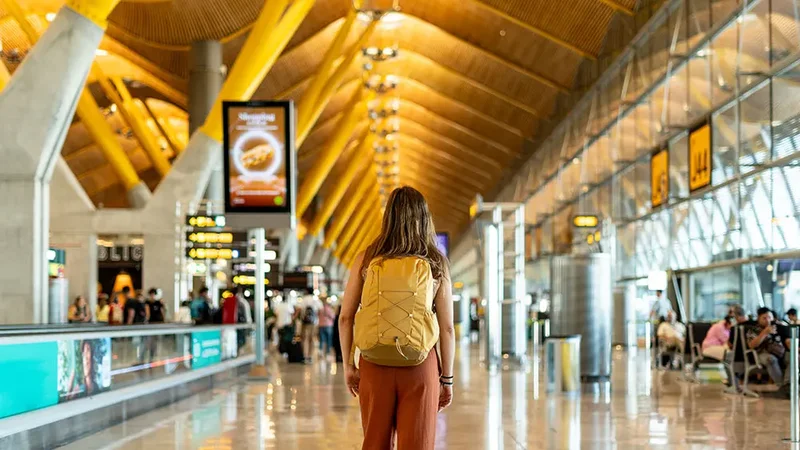
Discussions are also underway regarding changes in the environment surrounding the aviation and cruise industries. Travelers may be required to undergo COVID-19 testing at departure and arrival airports. Emirates Airlines has already begun piloting a rapid blood test that provides results in 10 minutes, starting in April. In May, London’s Heathrow Airport implemented UV disinfection of baggage trays, head temperature checks using thermography, and the introduction of contactless security screening devices.
As air travel demand recovers, measures are being considered to ensure meticulous attention to infection risks among crew and passengers. These include requiring masks during airport stays and flights, seating arrangements that maintain social distancing, and integration with mobile apps for contact tracing. Furthermore, to ensure infection prevention on board aircraft and ships, crew members are implementing additional measures such as wearing masks and gloves and changing them frequently, as well as frequently cleaning passenger seats and cabins. Further discussions are likely to take place regarding how services such as onboard cruise ship buffets and in-flight meal service are provided.
Carnival Cruise Line, a member of the WTTC, has introduced measures such as strict hand sanitization on board, replacing handshakes and hugs with hand signs (sign language) as a new greeting method, and promoting new etiquette for buffet service. Emirates and Japan Airlines have begun introducing new procedures and methods via their websites and videos, including thorough cabin cleaning, the use of face shields and clothing covers to prevent droplet transmission during check-in and service, and the provision of boxed meals and beverages.
5. Rules and Procedures for Entry, Exit, and Cross-Border Travel
Going forward, the WTTC initiative is focusing on the infection testing procedures and standards that are expected to be mandated by various countries for entry, exit, or cross-border travel. In particular, since travel and tourism to destinations in Europe, Asia, and Africa often involve visiting multiple countries, failure to harmonize procedures and standards with neighboring countries could lead to travel inconveniences or result in these destinations being avoided by travelers. As with visa waivers, establishing response procedures and standards based on uniform criteria across multiple countries and regions—such as in the Asia-Pacific region—to facilitate seamless travel will be a key focus in future discussions. In this context, the “Travel Corridor” initiative (the “COVID-Safe Travel Zone around Tasmania”) announced on May 5 by the prime ministers of New Zealand and Australia—which aims to facilitate travel between the two countries—brings a ray of hope for the future of “travel and tourism in the new normal” and is an initiative that deserves close attention. If Japan also moves forward with such frameworks, it may accelerate the recovery of outbound and inbound travel in East Asia and the Asia-Pacific region.
Going forward, under the “new normal”—a period of coexistence with COVID-19—it is expected that discussions regarding travel and tourism protocols (procedures and standards) will accelerate rapidly around the world.
In advancing these discussions, I believe it is important to take a comprehensive view based on the concept of sustainable tourism, considering four key perspectives: that of global citizens, that of travelers, that of workers in the travel and tourism industry, and that of residents of tourist destinations. I look forward to continuing to share the content discussed in this initiative with all of you involved in the travel and tourism industry as appropriate.
Reference Sources
- World Travel & Tourism Council (WTTC) WTTC outlines what “the new normal” will look like as we start to travel (Hiroki Tagawa, Chairman of JTB, serves as Vice Chairman for the Asia-Pacific region at the WTTC)
- Carnival Cruise COVID-19 Prevention Video
- Emirates Airlines COVID-19 Measures Video
- Japan Airlines COVID-19 Measures Website
- CNN Article on the New Zealand-Australia Travel Corridor Initiative