[Special Contribution] The Revival of Tourism in the Post-COVID Era: Scenarios for Recovery and the Future in Hokkaido’s Tokachi Region

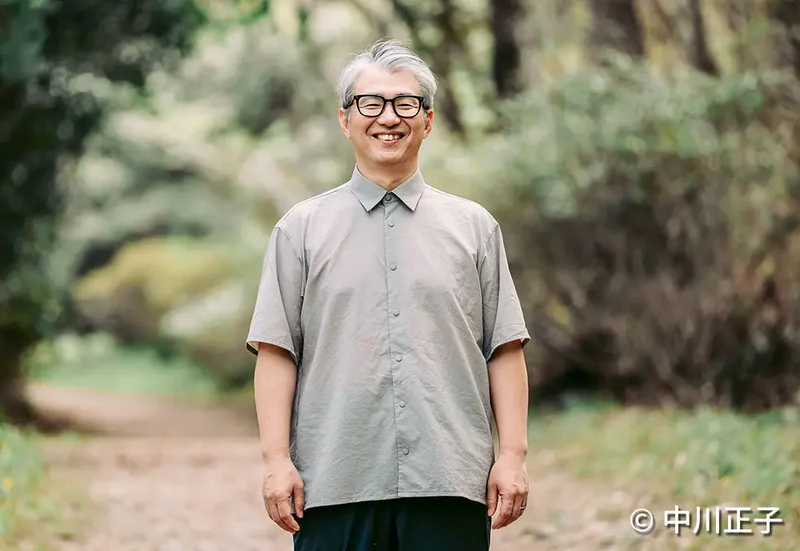
While the novel coronavirus has dealt a severe blow to tourism worldwide, there are also signs of efforts to envision recovery scenarios for after the pandemic subsides and to make concrete preparations.For this issue, we asked Mr. Katsuhiko Hayashi—a young leader based in Hokkaido, where a state of emergency was declared in late February ahead of other prefectures—to contribute an article on his current initiatives for the Tokachi region and his hotel, as he looks toward the future. While managing the Hokkaido Hotel in Obihiro City, Mr. Hayashi is actively involved from a broad perspective in promoting tourism and revitalizing the entire Tokachi region.
In mid-January, I spent a week in Florida, USA, to appear on a local TV program in Hokkaido and to tour an integrated resort (IR). It was during that time that I first learned of the novel coronavirus through an online news report stating, “Pneumonia of unknown origin has broken out and is spreading in Wuhan, China.”At the time, everyone viewed it as a problem far away, predicting that it would eventually subside, just like SARS and MERS. However, since late January, it has spread throughout Asia, including Japan, and is now plunging the entire world into fear.In Tokachi, two cases were confirmed between late February and late April. Although no new cases have been reported since then, the tourism industry has, naturally, suffered significant damage, just as it has across the country.
In this article, I’d like to discuss—from the perspective of business owners operating hotels, restaurants, and other establishments in regional areas (i.e., areas smaller than government-designated cities)—what scenarios they are envisioning and how they are moving forward toward recovery from the novel coronavirus.
1. Initiatives from the Days When Tokachi’s Tourism Brand Was Weak to the Present
In 2008, the Japan Tourism Agency was established, and as regions across the country began competing to promote tourism, Tokachi—where primary industries centered on large-scale agriculture dominate—was widely perceived as a place where “you can eat delicious food, but there’s nowhere worth going out of your way to see.” Consequently, it was not very popular as a destination within Hokkaido, often serving merely as a stopover on the way to other destinations.Recognizing this as a crisis, I came to believe that the gardens scattered throughout the region—along with the scenic roads connecting them—could themselves become valuable tourism resources.The gardens were known for their unique designs—unlike those found in other prefectures—that made the most of Hokkaido’s distinctive climate, natural environment, and surrounding landscapes, attracting gardening enthusiasts and families seeking recreational activities.I devised a plan to link these gardens—with the well-known town of Furano sandwiched between Asahikawa and Tokachi—transforming them from isolated points into a connected route. At the same time, to encourage visitors to explore the wider region, I used Asahikawa Airport and Tokachi-Obihiro Airport as hubs, expanding the network from a line to a broader area.A model itinerary for a two-night, three-day trip was created and named the “Hokkaido Garden Route.” This was in 2009.In FY 2023, partly due to the impact of the Lehman Shock, travel trends favored “cheap, nearby, and short” trips. We focused our efforts on attracting people within a 250-kilometer radius who could travel by private car—including those from the local area—and ensuring their satisfaction.Since then, awareness of the Hokkaido Garden Road has spread; the number of tourists, which stood at 350,000 about three years ago, has risen to 550,000. As intended, this has had a positive economic impact not only on the garden facilities but also on the entire area, including hotels, ryokan, and restaurants.
Then, last year, interest grew further as Tokachi served as a filming location for the NHK morning drama “Natsuzora.”Furthermore, thanks to a stable economy, the first half of FY 2019 (April–September) saw a 16.1% increase in the total number of travelers from outside Hokkaido to approximately 2.06 million, with overnight guests rising 13.1% to 1.04 million, maintaining strong performance.Historical data suggests that the area typically becomes even more bustling in the second year of a drama’s broadcast due to the large number of viewers, so expectations were high this year as well; however, the COVID-19 crisis has dealt a severe blow.
2. Two New Management Strategies Since Becoming Hotel President and Their Application During the COVID-19 Crisis
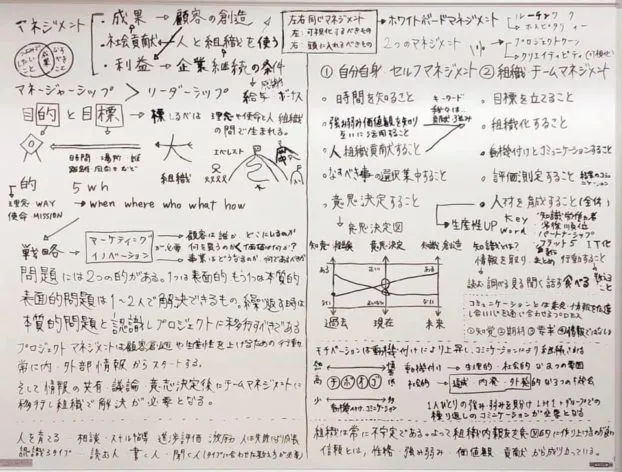
I took over management of the Hokkaido Hotel in March 2017. Over the past three years, I have placed particular emphasis on two key areas.The first is “Whiteboard Management,” a method for corporate operations and human resource development specifically tailored to the hospitality industry, which I developed independently. Specifically, it is a methodology designed to facilitate the development of individuals and teams; solve problems through issue identification and project management; formulate strategies for setting and achieving goals from the perspectives of marketing and innovation; and ensure smooth decision-making and communication.By ensuring the entire company understands these principles, teams can quickly share issues that arise on the front lines, enabling more accurate decision-making within departments and leading to smooth resolutions.
The second initiative focused on improving cash flow and productivity. This required involving not just a select few executives, but a much larger number of employees. Until then, store managers and supervisors had focused primarily on customer service and had almost no opportunity to analyze financial statements or identify problems from a strategic perspective.By holding regular study sessions to identify, discuss, and improve the “products, time, and services” within each department that were either underperforming or performing well, we were able to significantly improve cash flow.
In both cases, we utilized our internal social networking platform, enabling staff to share accurate information and make swift decisions on their own. I consider this a tremendous evolution. Even during the current COVID-19 crisis, I feel that each department is taking appropriate actions while balancing productivity and customer satisfaction.
Furthermore, amid this crisis, I’ve been reflecting on a saying often repeated by my father, Mitsushige Hayashi, the company’s chairman. It comes from Otto von Bismarck, the Chancellor of the German Empire known as the “Iron Chancellor”: “Fools learn from experience; the wise learn from history.”I was a student during the bubble economy and its collapse, and during the Lehman Shock, I was primarily engaged in hands-on field work; as a result, I realized I lacked both managerial experience and the wisdom gained from history. Taking this as a lesson, I resolved to reach out via social media to individuals with deep knowledge of such economic crises.
3. Addressing the Immediate Crisis… The Recovery Scenario Is “Outside, Nearby, Simple”
Around the time the spread of COVID-19 began to reduce people’s mobility, one of the sources I turned to for insights into social and market trends was Hideto Fujino, President and CEO of Leos Capital Works Co., Ltd. I met Mr. Fujino the year before last at a study session on innovation organized by Obihiro City and local banks.
On February 25, when the Nikkei Stock Average began to fall, Mr. Fujino posted the following comment on social media: “For now, self-employed individuals should refrain from renovations or investments—except for what is absolutely necessary—and hold onto their cash. (Mid-text omitted) You should take steps to manage your cash flow. People in rural areas probably don’t fully grasp the situation, but cash flow management is crucial.”I immediately held a meeting with the General Affairs Manager, negotiated with our main bank, and simultaneously reviewed our cash flow projections for the entire year to ensure that even if sales plummeted, it would not affect payments such as salaries. Three days later, a state of emergency was declared in Hokkaido—ahead of the rest of the country—and it became clear to those around us that the situation was becoming more serious.
At the same time, assuming that the COVID-19 outbreak would subside sometime in mid- to late August, we mapped out a scenario for the recovery of domestic travel. We anticipated that business sentiment at the time of the outbreak’s end would be significantly depressed due to the prolonged state of emergency.Therefore, we took inspiration from “Yasukinchotan”—a term frequently used to describe domestic travel during the 2008 Lehman Shock and financial crisis, referring to “cheap, nearby, short-stay leisure.” Predicting that the recovery would begin in earnest during the Silver Week holiday in September, we envisioned that the key themes for tourism would be “outdoors, nearby, and short-term.”Outdoor activities and experiences—such as visiting gardens, viewing autumn foliage, and camping—that can be enjoyed outdoors while avoiding the “Three Cs” (closed spaces, crowded places, and close-contact settings) will form the foundation. We anticipate an increase in travel opportunities where groups of 2 to 4 people—such as families or couples—stay at hotels or ryokans with hot springs in relatively nearby areas rather than traveling far, and make stops by car at roadside stations and similar locations.Therefore, for the time being, we must “create a system to attract visitors from within a radius of about 250 km.” We aim to turn visitors into loyal fans through hospitality that emphasizes building lasting connections. Building on that, we believe we must implement further initiatives that inspire guests to support the region and want to return.
On the other hand, it is said that the recovery of inbound tourism—which has driven Japan’s tourism economy over the past few years—will take at least one and a half to two years. In Tokachi, inbound tourists accounted for approximately 8% of the 2.37 million total overnight stays in FY 2018, a lower percentage than in other major tourist areas within Hokkaido.This is partly due to the fact that economic activities centered on primary industries, such as agriculture, were prioritized, leading to a delayed focus on inbound tourism efforts. However, by leveraging the natural environment—including local cuisine, gardens, and hot springs—the region has successfully attracted a well-balanced mix of travelers from the local area, within Hokkaido, across Japan, and from overseas.As a result, even after the outbreak of the novel coronavirus, the average occupancy rate for 10 hotels in Obihiro City in April remained resilient at just under 40%. However, this does not mean that inbound tourism is being overlooked. We believe it is necessary to restructure our strategy around four pillars: local and Hokkaido residents, domestic travelers, and inbound tourists.
4. Amid a sharp decline in travelers, the region must come together to launch new initiatives
Recently, there has been much discussion about the “new normal” following the end of the COVID-19 pandemic, but it is also expected that travelers’ values and behaviors will change accordingly.We believe one key theme will be “caution about using public transportation to travel to overseas destinations or crowded urban areas,” and another will be “a desire for the sense of freedom and relaxation found in rural areas, along with activities that provide immediate benefits and promote health.”
Therefore, despite the ongoing state of emergency, five hotels featuring hot springs and saunas joined forces to launch the Tokachi Sauna Council on April 16. The impetus for this came from a sauna tour of Finland we participated in last year. We were convinced of the potential for sauna tourism there, as the natural scenery and cuisine are very similar to those of Tokachi.Unlike traditional dry saunas, where temperatures exceed 100 degrees, Finnish-style saunas are humid and do not feel suffocating, making them comfortable and accessible. They are frequently featured in the media for promoting not only physical health and beauty but also mental relaxation.
With an eye toward the end of the COVID-19 pandemic, the council is working to foster regional collaboration. Initiatives include issuing a “Sauna Passport” that allows travelers to visit facilities at reasonable prices, and developing “sauna meals”—delicious dishes made with Tokachi’s local ingredients to enjoy after a sauna session.In addition, the council is collaborating with local hospitals to launch “Sauna Checkups”—a unique initiative modeled after comprehensive health screenings—where participants receive medical examinations before and after the sauna and gain various health-related recommendations from doctors.
There are reports that the government plans to launch large-scale promotional campaigns as part of its post-COVID-19 measures. In the past, reconstruction support discounts were offered in disaster-stricken areas following natural disasters, but since this initiative will cover the entire country, Tokachi must stand out among numerous competitors to be selected. To achieve this, tourism stakeholders must first collaborate to refine the region’s beloved resources into an attractive tourist destination.Furthermore, these initiatives must be new and groundbreaking—the kind that the media will want to cover—and now is the time to develop them within the region.
5. How Should Regional Communities and Businesses Address Risks Such as Disasters Going Forward?
Last August, I had the opportunity to give a lecture on businesses that bridge the environment and tourism to a group of about 20 Chinese entrepreneurs visiting Tokachi. The theme was “Sustainable Environmental Perspectives and Sound Economic Growth,” and the lecture was well-received, with many questions following.Later, in mid-April, after the COVID-19 situation had stabilized in China, I received a request to give an online lecture. Their main question was: Why is Hokkaido able to recover so quickly from natural disasters and see its tourism sector bounce back so swiftly?
Natural disasters in Hokkaido can be broadly categorized into four types: earthquakes, volcanic eruptions, typhoons, and snow-related disasters. However, it is precisely because of these events that visitors can experience hot springs, lakes, an endless supply of pure water, lush forests, snow-based events, and a mysteriously beautiful natural environment.In my lecture, I explained that natural disasters and their blessings are two sides of the same coin, and that failing to respect nature will only lead to greater damage. If the current novel coronavirus crisis is considered an environmental factor, then risks can be reduced by people trusting one another more and adopting lifestyles and economic activities that are mindful of the environment.
Finally
Are you familiar with a “whiteout”? It is a phenomenon in which heavy snow and strong winds turn the entire field of vision white, making it impossible to discern direction or other landmarks.I experienced this on my way from Tokachi to Sapporo. If I stopped the car out of fear, I risked being rear-ended; if there was an accident ahead, I might crash into it. With no other option, I had no choice but to drive slowly while keeping an eye on what was happening in front, behind, and to the sides. Even in such a situation, whenever I spotted the headlights of a passing car or the red taillights of a vehicle ahead, I felt a momentary sense of relief.
My current state of mind is exactly like being in the midst of a whiteout. What, for me, would constitute a resolution in such circumstances? I think it would be having many customers use our services again, just as we did a few months ago, and reconnecting with trusted colleagues and business partners. So, what is that ray of hope? I suppose it would be a return to our previous daily operations, but I believe that is no longer possible.My friends and acquaintances in the IT and consulting industries, who are adapting to these changes, are already driving a transformation in their work across the board—using online platforms like Zoom and Skype for sales, meetings, social gatherings, lectures, learning, and remote work.I believe the true ray of hope for the tourism industry in regional areas lies in proactively changing our mindset—even if it takes time—and putting that into practice to create a “new normal,” all while keeping a close eye on what’s happening around us.
著者