The Future of Esports: The Impact of the COVID-19 Pandemic and Emerging Challenges
The gaming industry has garnered attention as a form of "stay-at-home entertainment" amid the restrictions on activities caused by the novel coronavirus (COVID-19). However, esports—which can be considered a subset of the gaming industry—relies on competition between people to function, and as a result, it has been struggling due to the successive cancellations of major tournaments. This article examines the current state of esports worldwide and explores the future of esports in the "with COVID-19" and "post-COVID-19" eras.
1. A Tailwind for the Gaming Industry from Stay-at-Home Spending
On the 7th of last month, Nintendo Co., Ltd. announced its consolidated financial results for the fiscal year ended March 2020 (April 2019–March 2020), reporting strong performance with net sales up 9% year-on-year to 1.3085 trillion yen, operating profit up 41.1% to 352.3 billion yen, and net income up 33.3% to 258.6 billion yen(Note 1). The company had just revised its operating profit forecast upward to 300 billion yen in January due to strong performance during the year-end shopping season, but it exceeded that forecast by 50 billion yen over the subsequent three months. One of the factors contributing to this strong performance is “stay-at-home consumption. ”Amid restrictions on activities due to the novel coronavirus, interest in video games as a form of entertainment that can be enjoyed at home increased, leading to higher sales of the "Nintendo Switch" home video game console.
Furthermore, the expansion of “stay-at-home consumption” due to stay-at-home orders also influenced game titles. “Animal Crossing: New Horizons,” released on March 20 as the spread of COVID-19 was accelerating, became a massive hit, selling 13.41 million copies within six weeks of its launch (Note 1).This title is a game where players live freely on a blank, uninhabited island. I believe one of the reasons for its success is that the ability to connect to the internet and experience various activities with friends within the game was embraced as a way to stay connected while staying home. It can be said that, while people are unable to go out in the real world, games are increasingly being accepted as a tool for communication with close friends in the virtual space.
There is no doubt that the restrictions on activities due to the novel coronavirus currently occurring worldwide are a tailwind for the gaming industry. So, what kind of impact can be seen in the esports market, which can be considered a part of the gaming industry?
2. The Impact of COVID-19 on Esports
Last December, I visited Katowice, a city in southern Poland. Katowice is the city where the Intel Extreme Masters World Championship (hereinafter IEM), one of the world’s largest esports tournaments, is held annually. However, it was originally an industrial city with coal mines and has long suffered from various environmental issues.Starting in the late 2000s, the city launched various initiatives to overhaul its image as a polluted city, and in 2009, it established the Convention Bureau Katowice (hereinafter CBK), an organization dedicated to attracting MICE events.Since then, vigorous MICE promotion efforts led by the CBK have yielded results. The city hosted the Conference of the Parties to the United Nations Framework Convention on Climate Change (COP24) in 2018 and now supports approximately 40 MICE events annually, establishing its status as a leading MICE destination in Europe.
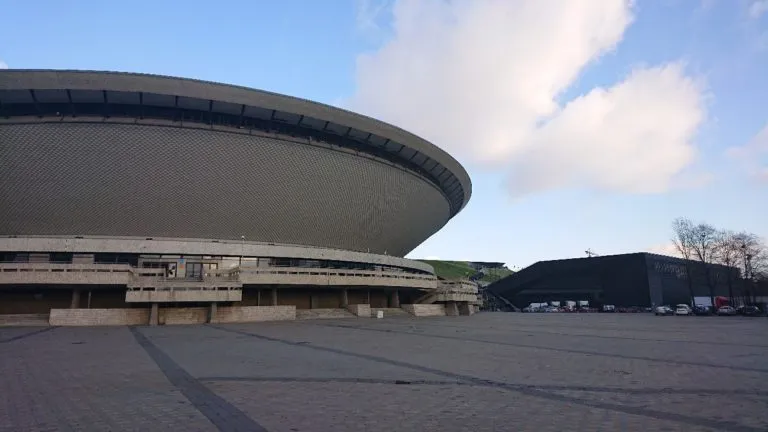
The IEM, a global esports tournament, is the event that the City of Katowice, having successfully attracted MICE events, is focusing its efforts on most. The IEM is also Poland’s largest business event, and the city has decided to provide financial support for hosting the tournament through 2023. Furthermore, with over 170,000 visitors during the event period, the IEM is bringing significant changes to the city’s industries.In 2019, Katowice’s total daily accommodation capacity was approximately 4,000 guests. However, various accommodation facilities—including those from international brands—are currently under construction, with the total number of rooms exceeding 1,000. The city is working toward ultimately developing accommodation facilities capable of hosting 10,000 guests.The industrial city of Katowice has successfully pivoted toward a tourism-focused economy by attracting esports events.
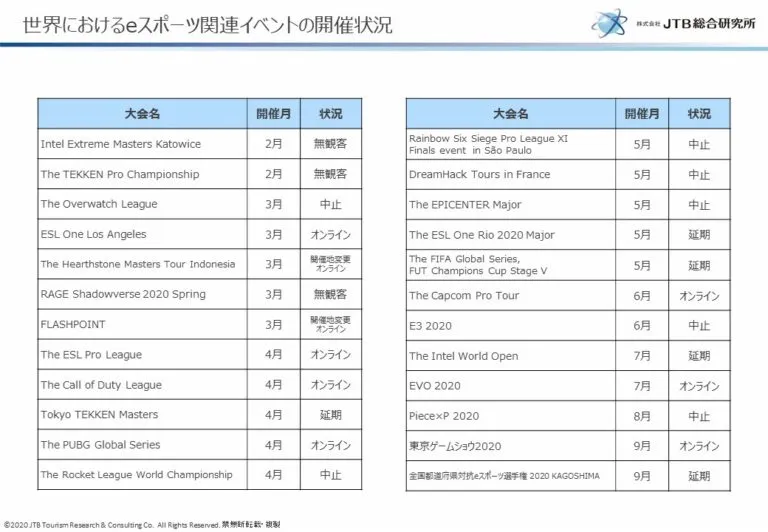
However, IEM Katowice 2020 was also significantly impacted by the COVID-19 pandemic. The event, held from February 28 to March 1, 2020, decided on February 27—the day before the event—to proceed without an audience, and refunds were issued to those who had purchased tickets for on-site viewing. This decision affected other esports tournaments as well, leading to the cancellation, postponement, or shift to online formats for many esports events starting in March.While esports may seem well-suited for an online format, for "esports"—which exists only through competition with others, rather than simply playing a "game" alone—the uncertainty surrounding the holding of tournaments has become a very serious issue.
3. Business Model Considerations Unique to Esports Events
Essentially, esports events have emerged from two main origins. The first involves game developers hosting events to promote game sales. In such cases, developers view the event as a promotional tool, as increased awareness of the game title leads to higher sales volumes and, consequently, greater revenue. The second involves fans organizing events to interact with one another. Since these are fan-organized events, they are run with the help of many fans serving as volunteers.In both of the above cases, unlike events such as music, theater, or sports, these events have grown in an environment where no admission fees or video streaming fees are charged to participants. Due to this background, esports events held around the world face the challenge of covering operational costs as they expand in scale, and even today, there are events that have not yet achieved profitability on their own.
As a solution to this, support from local governments to attract MICE events for the purpose of promoting tourism has become indispensable.In the case of IEM, Katowice has provided financial support amounting to tens of millions of yen. Furthermore, the city and the event organizer, ESL, are working together as one to ensure the event’s success, including operating free shuttle buses to and from surrounding cities and providing on-site operational support. Therefore, to continue delivering events of consistent quality, collaboration with local governments through the hosting of in-person events is essential. Consequently, the spread of the novel coronavirus has created headwinds for the esports market when viewed in isolation.
The impact of COVID-19 on esports extends beyond tournament cancellations and postponements. It also involves the shift of in-person events to virtual spaces. With many events currently facing uncertainty—particularly the cancellation of major global sporting events—various events are being held in virtual spaces, sometimes as esports tournaments.For example, the 2020 Australian Grand Prix, scheduled to take place in Australia on March 15, 2020, as the opening round of the F1 World Championship, was canceled after a staff member tested positive for COVID-19. However, on the same day the race was originally scheduled, an online tournament called the “2020 Not The Australian Grand Prix,” using the racing game “F1 2019,” was streamed on the internet.Although the tournament was organized on short notice, current F1 driver Lando Norris announced his participation, making it a hot topic as a hybrid event blending the real world with the virtual. Of course, these events are not treated as official competitions, but similar initiatives are being implemented worldwide as a way to keep fans engaged while actual races cannot be held.Until now, esports has been viewed globally as a trend primarily among young people, but the online hosting of real-world events is serving as a catalyst for various organizations—including national governments and local municipalities—to begin taking esports seriously.
4. The State of Japan’s Esports Market in the Post-COVID Era
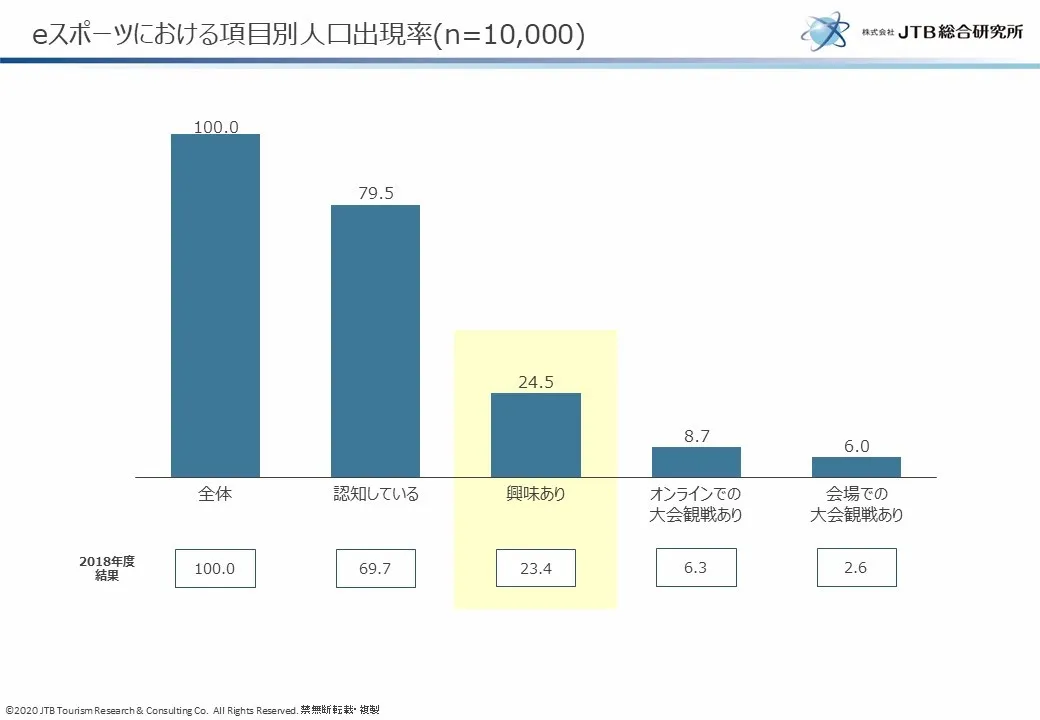
So, what is the current state of Japan’s esports market? To begin with, 2020 marked the third year since 2018—the year the Japan Esports Union (JeSU) was established and esports began gaining traction across Japan. It was expected to be a crucial year in determining whether esports could take root as a cultural phenomenon.To investigate the state of the esports market, our company conducted two online surveys targeting individuals aged 15 to 59: one in March 2019, approximately one year after JeSU’s launch, and another in November following the conclusion of the National Sports Festival.
What emerged from these two surveys is that the lack of growth in the number of people interested in esports may be a bottleneck hindering market expansion in Japan. While awareness of esports rose by 9.8 percentage points from 69.7% to 79.5% between the two surveys conducted approximately eight months apart, the percentage of people expressing interest increased by only 1.1 percentage points, from 23.4% to 24.5%.Given that the public had ample opportunities to learn about esports through various news outlets—such as the National High School Esports Championship and the Ibaraki National Sports Festival—it is understandable that awareness rose by about 10%. However, this also indicates that for those with no prior connection to esports, it continues to be perceived as something outside their sphere of interest. Now that the term “esports” itself has surpassed a certain level of recognition in its third year, the most critical factor for market expansion will be how to effectively reach those who currently show no interest.
For the Japanese esports market, the self-restraint on activities due to the coronavirus can be seen as a unique opportunity. This is because the shift of in-person events to online formats driven by the spread of the coronavirus presents a once-in-a-lifetime chance to convey the appeal of esports to people who are not currently interested in it. It is certainly true that the self-restraint on activities due to the coronavirus is putting the brakes on the growth of the esports market.In fact, many domestic events in Japan have already been canceled or postponed, including the postponement of the “INTEL World Open in TOKYO 2020” (July), the cancellation of the “Tokyo Game Show 2020” (September) (with an online format under consideration), and the postponement of the “Kagoshima National Sports Festival Cultural Program: National Prefectural eSports Championship 2020 KAGOSHIMA” (October).However, regarding the current challenges facing esports in Japan, the shift of in-person events to online formats can also be viewed as an opportunity to convey the value and appeal of esports. Precisely because attention toward games and esports is increasing due to the voluntary suspension of activities caused by the COVID-19 pandemic, this moment represents a major crossroads where the future value of esports is being put to the test.
5. Conclusion
With the arrival of June, it feels as though Japan is finally beginning to return to normal life after approximately two months of restricted activities. Various events, such as professional baseball and the J.League, are moving toward resumption, and I expect activity will gradually pick up as they aim to host events with live audiences.Although the environment has undergone significant changes, this year remains a make-or-break year for the esports market. To ensure that esports continues to grow after the pandemic and to help local governments recognize its importance as a key component of MICE (Meetings, Incentives, Conferences, and Exhibitions) from a tourism perspective, it is crucial to explore how esports can coexist with various in-person events during this current “living with COVID-19” phase.With the cancellation of events like the Koshien High School Baseball Tournament and the Summer Inter-High School Championships, and given that it will still take time before we reach a fully post-pandemic society, I hope that esports will become a familiar presence that offers emotional support to as many people as possible.
Source
(Note 1): Nintendo Co., Ltd., “FY2019 (80th Fiscal Year, Ending March 2020) Financial Results Presentation Materials”