The key to assisting tourists during disasters lies in mitigating the three "no's"

In tourism crisis management, it is essential to specifically anticipate the negative impacts on travelers during disasters. This paper analyzes the effects—such as "discomfort," "inconvenience," and "anxiety"—using the example of a hotel during a power outage. In addition to ensuring travelers' safety, we examine the provision of multilingual information to offer "peace of mind," as well as the countermeasures that businesses and government agencies should prepare.
What Are the Negative Impacts of a Tourism Crisis?
The definition of “tourism crisis management” states: “Anticipating tourism crises that could have a significant negative impact on tourists and the tourism industry (omitted), and responding promptly and appropriately when a crisis occurs.” In this column, I would like to consider specific “negative impacts” on tourists and travelers caused by disasters and crises, and discuss “responses” to eliminate or mitigate those impacts.
In Japan, each local government creates its own regional disaster prevention plan. The opening section of every such plan outlines “anticipated disasters” and the “expected damage” resulting from them. By identifying the types of disasters and the extent of damage expected, local governments develop disaster prevention plans that address what preparations should be made in advance to prevent or mitigate the anticipated damage, as well as how to respond when a disaster occurs. The more specific these assumptions are, the more effective the disaster preparedness becomes.
The “Expected Damage” section of a regional disaster prevention plan primarily outlines projections for building damage, fire damage, human casualties (number of fatalities, injuries, and evacuees, etc.), damage to lifelines (electricity, gas, water, and communications), and damage to transportation and logistics. Based on these projections, stakeholders discuss measures to reduce building damage, minimize human casualties, and restore damaged lifelines quickly, and incorporate these strategies into the disaster prevention plan.
"Negative Impacts" on Tourists and Travelers
What kinds of “negative impacts” might tourists and travelers face? It is easy to imagine the “impacts” that could arise from building damage or fires at the accommodations or tourist facilities they are using, casualties caused by the disaster, disruptions to essential services, and difficulties in moving around or returning home due to transportation disruptions. Even in situations where there is no building damage or human casualties, tourists and travelers will still experience various “negative impacts.”
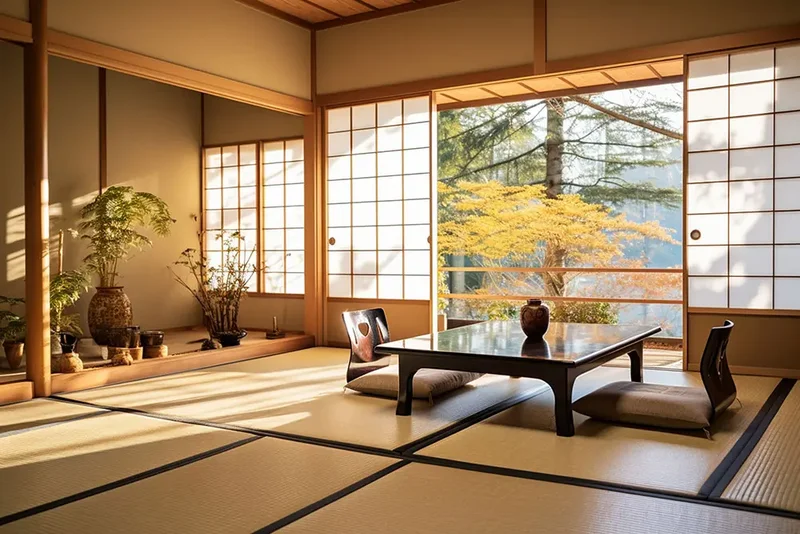
For example, imagine a major earthquake strikes at night while you are staying at a hotel on your trip, causing a power outage. What kind of impact would this have?
Since the power is out, the only lighting in the hotel will be emergency lighting. The air conditioning stops, and if it’s summer, the room temperature will rise. During a heatwave like the one we’ve had this year, without air conditioning, the room might feel like a steam bath. Conversely, in a cold region during winter, if the heating stops, the room temperature will drop rapidly. Even if the water supply isn’t cut off, the pumps that draw water into the rooftop storage tank will stop working, so once the tank runs dry, the building will be without water.If you try to contact family or loved ones, or use your smartphone constantly to check for information, your battery will drain, but you won’t be able to charge it due to the power outage. You will be unable to use any of your smartphone’s functions. The power outage will also knock out the hotel’s Wi-Fi routers, cutting off internet access. Even if you try to evacuate to the lobby or outdoors, the elevators will be out of service, so you’ll have to walk down the emergency stairs.
The Three “Dis” Factors: “Discomfort,” “Inconvenience,” and “Anxiety”
Even just imagining what happens during a power outage after an earthquake brings to mind a situation filled with truly numerous “negative impacts”—namely, “discomfort,” “inconvenience,” and “anxiety.” The darkness caused by the lack of lighting and the heat or cold resulting from the air conditioning shutting down are “discomfort.” The “inconvenience” of not being able to use the restroom or wash your hands because there is no water, coupled with the inability to use your smartphone, only heightens this sense of “inconvenience.”Being unable to contact family or loved ones, or—for foreign travelers—having no idea what the situation is like after the earthquake, coupled with the constant occurrence of aftershocks, is the very definition of “anxiety.”
Furthermore, if rail and road transportation are completely shut down, people will not know how to move from this location to a safer place, or when they will be able to return home or to their own country, causing their “anxiety” to grow even more.
The terms “safety” and “peace of mind” are often used together, but they are not the same. One cannot feel “peace of mind” without “safety,” but no matter how objectively “safe” a situation may be, it is difficult to feel “peace of mind” when one is experiencing “discomfort,” “inconvenience,” or “anxiety.”Tourists and travelers who encounter a disaster while traveling find themselves far from a state of “peace of mind” due to these three “discomforts.” In particular, foreign visitors to Japan who encounter a disaster they have never experienced before may feel a stronger sense of “anxiety,” which can lead to panic or dangerous behavior.
Addressing the Three “Discomforts”
When responding to tourists and travelers during a disaster, ensuring “safety” is naturally the top priority, but mitigating and resolving the three “discomforts” to provide a sense of “peace of mind” is equally important.
So, how can we more effectively address these three “lacks”?
First, we must identify as specifically as possible the three “Discomforts” that tourists and travelers experience when a disaster or crisis occurs. For example, the following impacts can be anticipated.
Examples of events expected to occur due to an earthquake and their impact on tourists (inconvenience, discomfort, anxiety)
| Events Anticipated During a Disaster | Impact on tourists (inconvenience, discomfort, anxiety) |
|---|---|
| Collapse of buildings and facilities; overturning or falling of furniture and equipment | Physical injury to tourists; need to evacuate the facility |
| Tourists taking shelter in designated evacuation centers intended for residents | Exceeding capacity; overcrowding; shortages of water, food, and daily necessities; friction between local residents and evacuees |
| Power outages | Lights go out; air conditioning is unavailable; toilets, baths, and showers are unavailable; elevators stop working; mobile devices cannot be charged; TV and Wi-Fi are unavailable, preventing access to information; shopping and payments are impossible |
| Communication restrictions: Outgoing call restrictions due to network congestion | Unable to make phone calls (landline or mobile); unable to contact family or relevant parties |
| Suspension of public transportation, road closures, and traffic restrictions | Difficulty returning home; unable to visit tourist destinations; unable to travel to the area |
| Aftershocks continue | Anxiety among those unable to return home; anxiety among tourists planning to visit |
For each of these "problems," stakeholders should discuss how to eliminate or mitigate the impact, document the results of these discussions, and compile them into a manual.
For example, when considering the impact of a power outage, the following preparations and responses can be considered.
| Impact of power outages | Measures and Preparations to Eliminate or Mitigate Impacts |
|---|---|
| Lights go out | Have an emergency power supply or on-site generator ready |
| Air conditioning is unavailable | Keep kerosene heaters and heat-retaining aluminum sheets on hand |
| Toilets cannot be used due to water outages | Keep emergency toilets on hand |
| Mobile devices cannot be charged | Wire the emergency power supply to outlets in each guest room so that smartphones can be charged inside the rooms |
| TVs and Wi-Fi are unavailable, making it impossible to obtain information | Post the latest information gathered from radios and other devices that work during power outages on a whiteboard as it becomes available |
A "lack of information" amplifies "inconvenience" and "anxiety"
Among the impacts tourists and travelers experience during disasters and crises, the inability to obtain the information they need—specifically, the latest and most accurate information—amplifies not only “inconvenience” but also “anxiety.” This is particularly true for foreign travelers who suddenly encounter a disaster while traveling in Japan and are overcome with “anxiety.” For them, a situation where they cannot obtain the accurate information they need in a language they understand (their native language or English) is a source of anxiety in itself.If you imagine a situation where you encounter a disaster while traveling abroad and all information is provided only in the local language, you can probably imagine just how anxious that would make you feel.
We often hear from those on the front lines that assisting foreign visitors in Japan during emergencies like disasters is time-consuming. In fact, it’s easy to picture a scenario where a visitor asks the staff at the information desk one question after another and won’t leave until they fully understand and are satisfied, leaving the staff unable to assist others and feeling overwhelmed. They keep asking until they understand because they cannot obtain the information they need in a language they understand, and they are extremely anxious because they don’t know how to act to ensure their safety or when and how they can leave the area.If they can understand the information they need and feel even a little “reassured,” they will be able to use that information to make their own appropriate decisions.
To ensure that tourists and travelers receive the information they need more reliably during disasters and crises, as discussed earlier,
- we must specifically anticipate what kind of information will be needed in an emergency,
- and identify and list the sources and methods for obtaining that information.
- By creating and preparing information provision templates during normal times, you can ensure that all necessary information is provided without omission during emergencies.
- When a disaster or crisis occurs, use the information list to gather the latest and most accurate information,
- and provide it to tourists and travelers in an easy-to-understand manner (e.g., whiteboards, digital bulletin boards, or verbally).
- If communication channels such as Wi-Fi are available, provide links or QR codes to multilingual websites or apps so that tourists can access the information they need on their own.
During disasters and crises, while ensuring the safety of tourists and travelers, we aim to more reliably achieve “safe” and “secure” tourism by regularly considering and preparing measures to eliminate or mitigate the three “no’s.”
著者