Providing Information to Foreign Tourists During Disasters: Ensuring Accurate Information Is Conveyed Brings Peace of Mind

This article examines key points for providing information to foreign tourists during disasters.
In 2018, many foreign tourists faced natural disasters in Japan
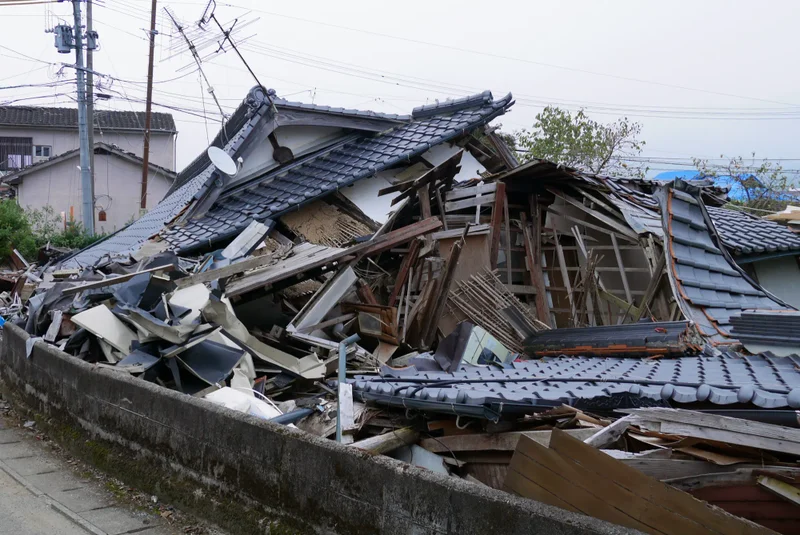
Natural disasters occurred throughout the country, so much so that the kanji character “災” (disaster) was selected as the character of the year. Natural disasters struck various parts of Japan, including the Northern Osaka Prefecture Earthquake in June, the Western Japan Heavy Rain Disaster in July, Typhoons No. 21 and No. 24 in September, and the Hokkaido Iburi-Chubu Earthquake. During Typhoon No. 21, a tanker collided with the access bridge to Kansai International Airport, stranding thousands of passengers and airport staff inside the airport for an extended period. Additionally, during the Hokkaido Eastern Iburi Earthquake, a blackout occurred not only around the epicenter but across the entire island of Hokkaido, significantly impacting residents and tourists alike.
These disasters had a major impact not only on residents and businesses in the affected areas but also on foreign tourists visiting Japan. Various media outlets reported on foreign tourists who were frightened by the terror of the disaster and confused about what to do.A fact-finding survey conducted by the Hokkaido Regional Transport Bureau following the Hokkaido Eastern Iburi Earthquake (Note 1) also reported that “many foreign tourists, driven by surprise and anxiety, immediately went down to the lobbies of their accommodations. They spent the time immediately following the earthquake feeling a stronger sense of anxiety than Japanese people regarding how to cope with the earthquake and power outages, as well as concerns about the structural integrity of the buildings they were in.”
Note 1) Hokkaido Transport Bureau, Ministry of Land, Infrastructure, Transport and Tourism, “Guidelines on Methods for Collecting and Providing Information to Foreign Tourists in Preparation for Major Earthquakes, etc.” (p. 7)
Foreign tourists struggled to obtain necessary information
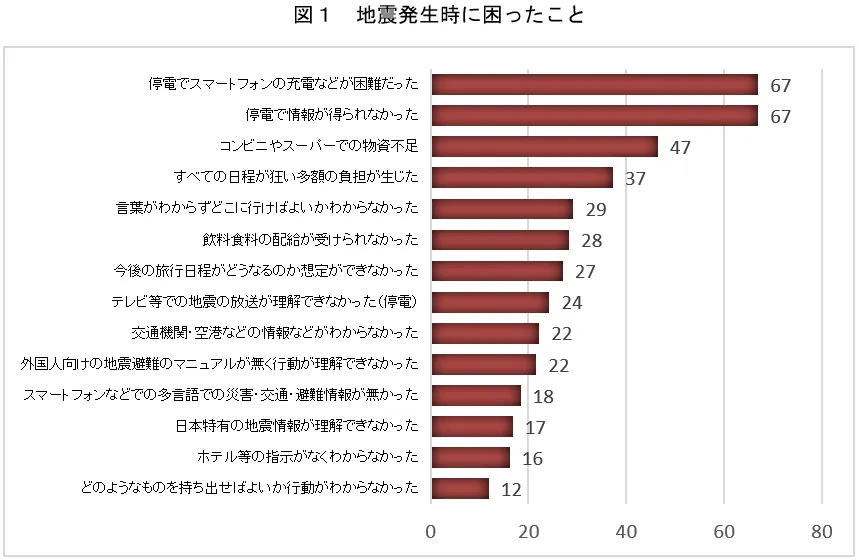
A survey of foreign tourists visiting Japan at the time, conducted by Survey Research Center Co., Ltd. immediately after the Hokkaido Eastern Iburi Earthquake (Figure 1), provides a concrete picture of the specific difficulties foreign tourists faced following the disaster.
The survey results show that two out of three respondents cited “difficulty charging smartphones due to power outages” and “inability to obtain information due to power outages” as problems they faced during the earthquake. Since a power outage affected the entire prefecture after the earthquake, the survey reveals that many foreign tourists struggled to obtain necessary information via their smartphones because they could not charge them due to the outage. Next, the most frequently cited issues were: “My entire itinerary was disrupted, resulting in significant financial burden,” “I couldn’t predict what would happen to the rest of my trip,” and “I couldn’t find information on public transportation, airports, and other services. ”Because the earthquake caused transportation suspensions and schedule disruptions, travelers’ planned itineraries were thrown off course. They were at a loss as to what to do next, and even when attempting to change their plans, they were unable to obtain necessary up-to-date information—such as the operational status of public transportation—leaving them feeling helpless. Aside from “shortages of supplies at supermarkets and convenience stores” and “unable to receive food and beverage rations,” the majority of responses were related to difficulties in obtaining information.
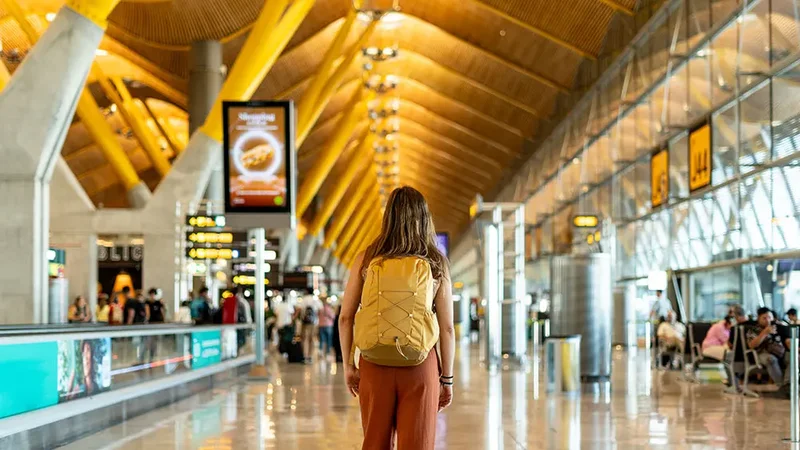
At Kansai International Airport following the passage of Typhoon No. 21, more than 1,000 foreign travelers who were scheduled to return home found themselves in a situation where they were literally “stuck between a rock and a hard place.” The airport was closed due to flooding, leaving no prospect of their return flights operating, and the access bridge was closed, preventing them from leaving the airport island. Since most of the notices and announcements inside the airport were in Japanese, they could not understand the situation. Even after shuttle boats began operating to evacuate stranded passengers from the airport island to Kobe, some foreign tourists, unable to figure out how to board the boats, stood helplessly at the back of the long lines. Here, too, providing information to foreign tourists became a major challenge.
Information from accommodation staff and information provided in English or their native languages proved helpful
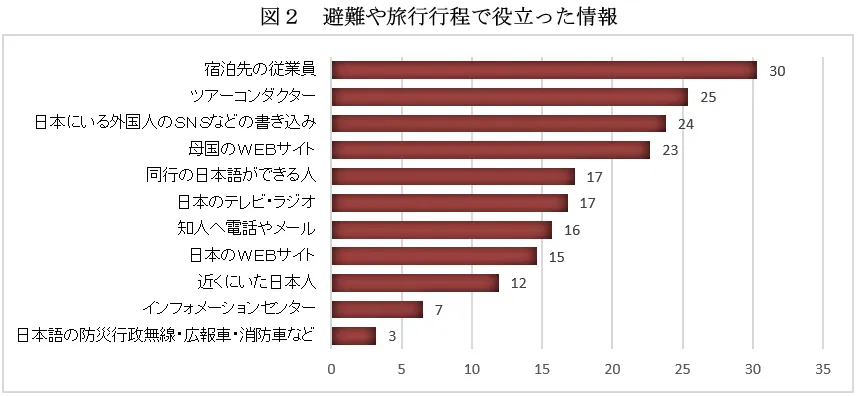
What kinds of information sources were helpful to foreign tourists in such situations? According to the Survey Research Center’s survey, many foreign tourists responded that information from “accommodation staff” was helpful (Figure 2).Since the Hokkaido earthquake occurred in the early hours of the morning, it is likely that there was a high degree of reliance on the staff at their accommodations, who were closest to them. However, if a disaster were to occur during the day, tourist facilities, commercial establishments, public transportation, tourist information centers, tour guides, and tour leaders would also serve as important sources of information.
As for other helpful sources of information, with the exception of “Japanese TV and radio” and “Japanese websites,” most provided information in the travelers’ native languages or in English. In emergencies such as disasters, the key is having access to disaster-related information and transportation updates provided in a language the traveler understands—including informal sources like “posts on social media by foreigners in Japan.”
Why Providing Information to Foreign Tourists in Emergencies Is Important
In response to this situation, the government compiled “Emergency Measures to Ensure the Safety and Security of Foreign Tourists in Emergencies” at the Tourism Strategy Implementation Promotion Council held last September. Of the 27 measures, 20 were specific actions related to providing information to foreign tourists. These measures clearly specify the responsible ministries and agencies as well as implementation schedules, with most set to be initiated and implemented immediately or by the end of FY 2018.
Why is providing information in foreign languages to foreign tourists during emergencies so important? As mentioned earlier, there is a high demand for information in languages foreign tourists can understand during disasters, but there is another reason. Generally, foreign tourists who are unfamiliar with the area and do not understand Japanese are considered a group requiring special consideration during disasters. However, if necessary information can be provided in a language they understand in a timely manner, the barriers to providing that consideration are significantly lowered. If they can grasp the disaster situation and the status of public transportation, many foreign tourists will be able to make their own judgments and take appropriate action. To put it simply, if the necessary information is provided reliably during a disaster and is accurately understood, managing foreign tourists will require significantly less effort.
Initiatives by Government Agencies and the Private Sector to Support Foreign Tourists During Disasters
In preparation for the 2020 Tokyo Olympic and Paralympic Games, which are fast approaching next year, the Ministry of Land, Infrastructure, Transport and Tourism has formulated the “Metropolitan Area Direct-Hit Earthquake Countermeasures Plan” [2nd Edition].A new section added to this plan, titled “How to Ensure the Safety of Large Numbers of Visitors, Including Foreigners,” outlines specific action plans regarding (1) providing information and guiding evacuation to ensure the safety of travelers, including foreigners, and (2) supporting the return of foreign tourists and others to their home countries; however, much of this content relates to providing information to foreign tourists.
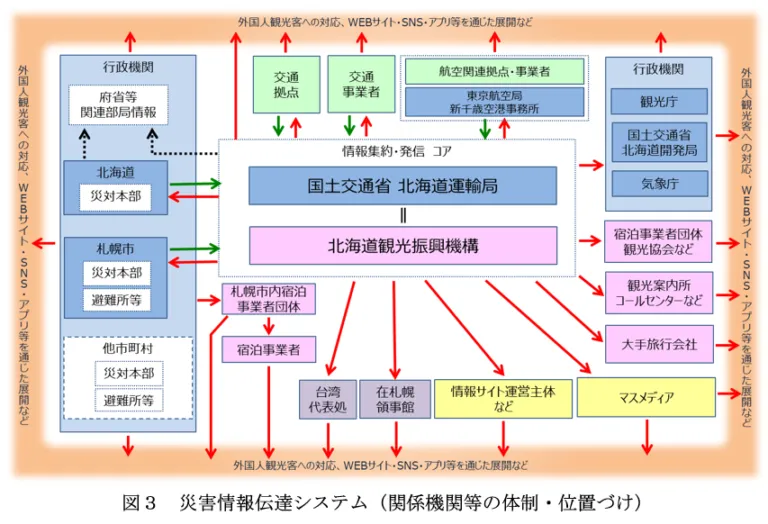
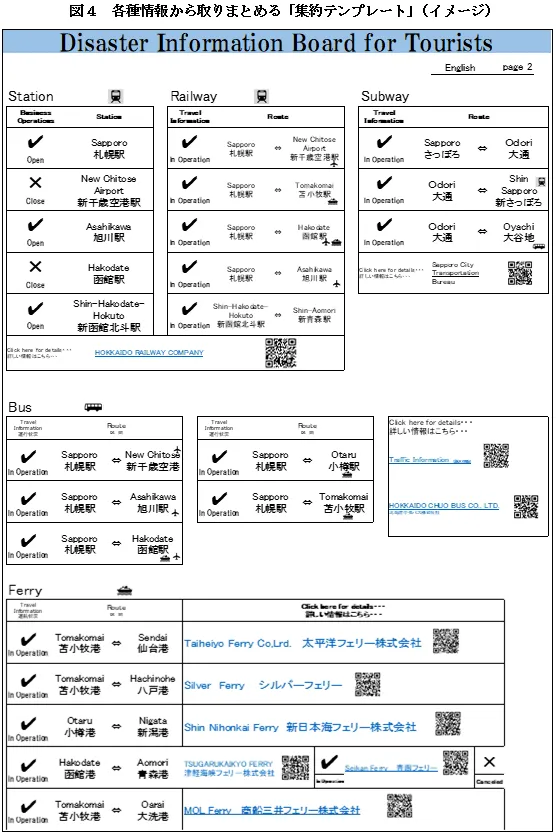
Furthermore, in Hokkaido—where various challenges in handling foreign tourists became apparent during the 2018 Hokkaido Eastern Iburi Earthquake—the Hokkaido Transport Bureau compiled the “Guidelines on Methods for Collecting and Providing Information to Foreign Tourists in Preparation for Large-Scale Earthquakes and Other Disasters” (Note 2). The core of these guidelines is the “Disaster Information Transmission System” (Figure 3), designed to provide foreign tourists with information quickly and accurately during disasters. Previously, national agencies, local governments, DMOs, transportation operators, transportation hubs such as stations and airports, accommodation providers, and travel agencies each disseminated information independently during disasters. However, this made it difficult for travelers on-site to gather the necessary information, and foreign-language support was insufficient. This system aggregates basic information at the Hokkaido Regional Transport Bureau, formats it using pre-prepared multilingual templates in Japanese, English, Korean, and Chinese (Traditional and Simplified) (Figure 4), and disseminates it through various information media.
Note 2: The author participated in the formulation of these guidelines as a member of the review committee.
These guidelines were formulated with the premise of implementation in Hokkaido, and while the “Disaster Information Transmission System” is currently limited to a pilot phase centered on Sapporo City and New Chitose Airport, following field tests and subsequent improvements, it is expected to become a system covering the entire prefecture, including Hokkaido’s major tourist destinations, in the near future. Furthermore, since this is a system that can be implemented anywhere in the country, we hope it will be adopted in regions outside Hokkaido as well, ultimately connecting into a nationwide information network.
Private-sector companies are also actively working to provide information to foreign travelers during emergencies. JR Central has begun broadcasting delay announcements and emergency announcements in English at Tokaido Shinkansen stations and on board trains. Major airports serving international flights are working to hire and train staff capable of handling multiple languages, as well as to provide multilingual guidance using ICT and other technologies. Furthermore, the provision of multilingual information during emergencies at JNTO-certified tourist information centers has been strengthened.
With the advancement of these public and private sector initiatives, I hope that Japan will become a “leading tourism nation” capable of ensuring the safety of tourists and providing them with peace of mind, even should a large-scale disaster—which is predicted to occur in the future—actually strike.
著者