“Tourism × Psychology”: Exploring High-Value-Added Experiential Tourism Through Flow Theory

To provide a fulfilling experience, initiatives focused on the soft aspects are also essential. Drawing on flow theory, we will explore the essence of what makes outdoor activities “fun” and examine the nature of high-value-added experiential tourism.
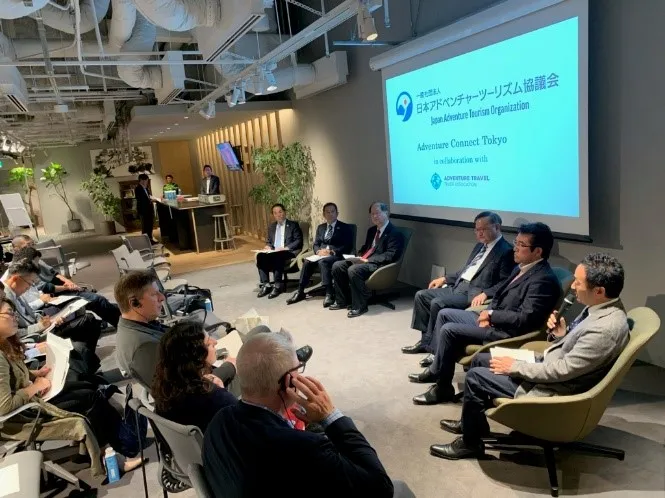
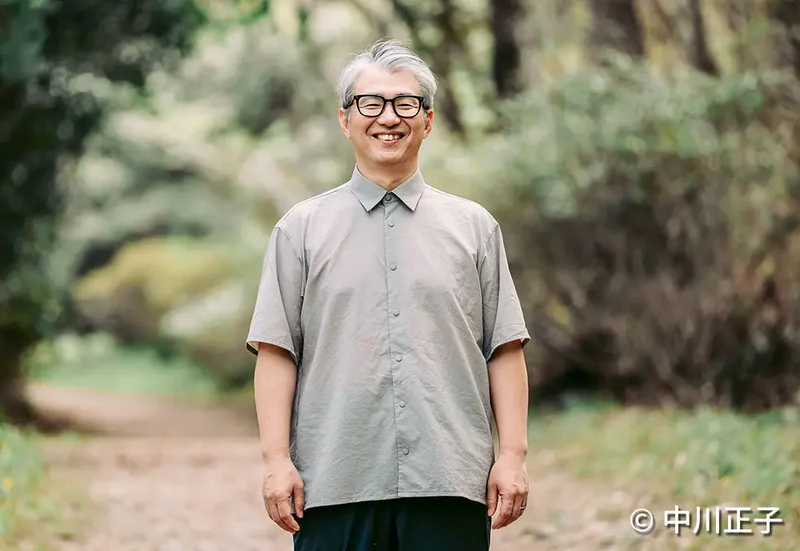
A seminar titled “Outdoor Activities from the Perspective of Flow Theory: What Makes a Tour Enjoyable?” was held during the “2nd iWT International Wellness Tourism EXPO,” which took place at Tokyo Big Sight on May 10, 2024.In this seminar, the author served as moderator, and panelists included Mr. Yushi Kimura, Representative of Activity Research, and Mr. Daisuke Fukuda, Representative of Sup! Sup! Based on Flow Theory proposed by University of Chicago psychologist M. Csikszentmihalyi, a discussion on outdoor activities took place. In this column, drawing on the content of the discussion from that day, I will explore the nature of high-value-added experiential tourism.
1. What is a “flow experience”?
I believe everyone has had the experience of becoming so engrossed in a particular activity that they lose track of themselves, focusing their entire consciousness on it. For example, whether you’re studying, playing sports, reading an engaging novel, or engaging in artistic activities like painting or playing a musical instrument, you’ve likely had experiences similar to this on more than one occasion. Such experiences are referred to as “flow experiences,” and whenever a person demonstrates a high level of concentration, they are invariably in a state of flow.
The concept of the flow experience was proposed by American positive psychology researcher Mihaly Csikszentmihalyi and is explained in detail in his book *Flow: The Psychology of Optimal Experience*. It refers to a psychological state in which a person is completely focused, loses track of time, and becomes fully absorbed in the moment.
The brain state associated with flow is sometimes described using expressions like “getting into the zone” in sports or “a state of selflessness” in martial arts. While “flow” literally means “current,” people in a flow state are completely focused on the task at hand, have no room to think about anything else, and experience a sense of tasks progressing one after another at a comfortable pace.
A flow experience refers to a state in which the activity itself is enjoyable—not because of external rewards—and the act of engaging in the activity becomes the goal. This state maximizes a person’s potential and brings deep satisfaction. Flow is a crucial concept applied across many fields, and it is estimated that there are over 10,000 research papers on the subject.
According to M. Csikszentmihalyi, people in the midst of a flow experience share three common characteristics: (1) clear goals for their actions, (2) immediate feedback, and (3) a perfect balance between their abilities and the challenges they face. In other words, creating these three conditions serves as the gateway to a flow experience. This is referred to as a “flow trigger.”
In the field of tourism as well, applying flow theory can help create activities and tours that yield high levels of satisfaction. By guiding participants into a state of flow, it becomes possible to provide high-value-added experiences.
Flow experiences are classified into eight psychological states by M. Csikszentmihalyi, and these classifications are based on the relationship between an individual’s skill level and the difficulty of the task. Below, we explain the eight classifications of flow experiences and their characteristics.
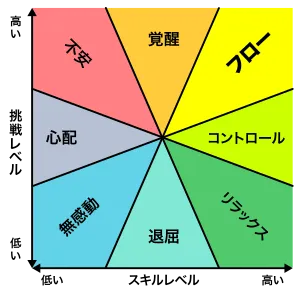
- Flow:
A state in which skill level and task difficulty are in perfect balance. In this state, individuals are most immersed and perform at their best. - Arousal:
A state where the difficulty of the task is slightly higher than the skill level. Individuals feel a sense of challenge and gain opportunities for skill improvement. - Anxiety:
A state in which the difficulty of the task is significantly higher than the skill level. Individuals feel stress and anxiety, and their performance may decline. - Worry:
A state where skill level is low and task difficulty is moderate. Individuals may feel anxious but still have the motivation to take on the challenge. - Apathy:
A state where both skill level and task difficulty are low. Individuals may feel bored or listless. - Boredom:
A state where skill level exceeds task difficulty. Individuals may feel bored and experience a decline in motivation. - Relaxed:
A state where skill level is high and task difficulty is moderate. Individuals may feel comfortable but may not feel sufficiently challenged. - Control:
A state where skill level slightly exceeds task difficulty. Individuals feel confident while experiencing a moderate sense of challenge.
These classifications represent various psychological states arising from the relationship between skill level and task difficulty, with a focus on the flow state. Understanding and utilizing these classifications is crucial in the design of outdoor activities and tours.
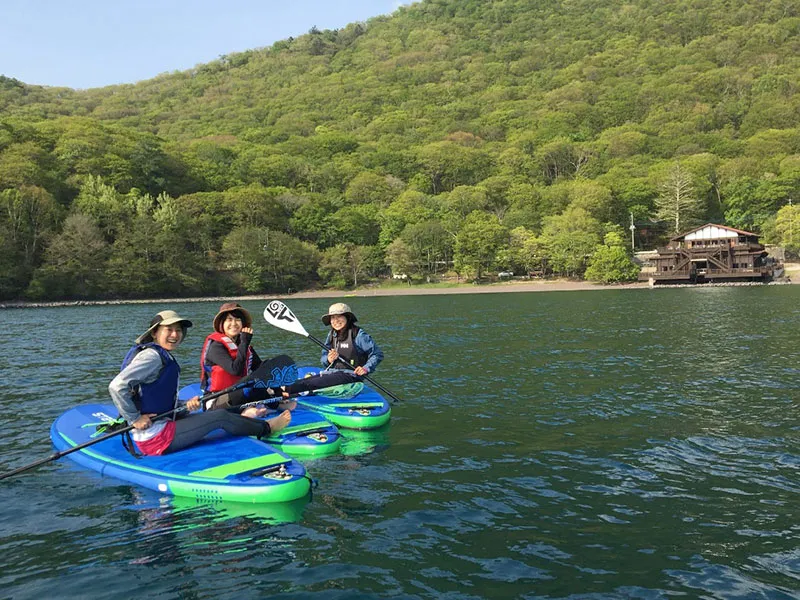
For example, when designing a SUP tour, selecting a course based on participants’ skill levels and providing an appropriate level of challenge can induce states of “flow” or “arousal.” For beginners, an effective approach is to start with “relaxation” and gradually increase the difficulty to bring them closer to “flow.”
On the other hand, rafting guides are required to possess the skills to properly manage each participant’s flow state. For instance, they must provide reassurance to participants in states of “anxiety” or “worry,” and offer appropriate challenges to those in states of “boredom” or “indifference”—requiring a tailored response to each individual’s state.
Furthermore, in today’s high-value-added tours, particularly in adventure tourism, there is a strong emphasis on “delivering high-quality storytelling.” In this context, nature and history commentary can also elicit a state of flow based on intellectual curiosity. By adjusting the complexity of the commentary to match participants’ knowledge levels and maintaining their “flow” or “awakening” states, guides can provide deeper learning and greater satisfaction.
However, it is important to note that these classifications are not fixed and may constantly change depending on an individual’s state and environment. Therefore, guides and instructors are required to constantly observe participants’ states and respond appropriately.
As described above, understanding and utilizing the eight classifications of flow experiences enables the design of more effective activities and tours, significantly improving participant satisfaction and the quality of the experience.
2. The Relationship Between Outdoor Activities and Flow Theory
There is a close relationship between outdoor activities and Flow Theory, and applying this theory increases the likelihood of providing participants with a more fulfilling experience. The core of Flow Theory lies in the balance between an individual’s skill level and the difficulty of the task at hand, which allows the mind to focus intently on a specific object or occupy the brain’s cognitive capacity with specific thoughts. Outdoor activities, particularly water sports such as rafting and SUP, provide an environment where this theory is easy to apply.
I believe the ultimate skill required of a guide providing outdoor activities is the ability to “properly manage the flow state of each customer.” This includes the following elements:
- Understanding each customer’s flow state
- Setting difficulty levels appropriate for the flow state
- In the case of children, understanding both the child’s flow state and the parents’ expectations (such as wanting to see their child having fun)
To achieve this, for example in rafting, it requires more than just going down the river; it requires boat-handling skills that constantly consider how to navigate the course and create the appropriate environment. When entering a state of flow, participants lose their sense of self and experience a distortion of their perception of time. By eliciting this state during outdoor activities, participants can gain a deep sense of satisfaction, thinking, “Ah, that was fun.”
However, applying flow theory alone is not enough. A comprehensive approach—including hygiene (clean restrooms, odor-free wetsuits, etc.) and creating a “space” that fosters interaction among participants before the tour begins—is what leads to the flow experience. Some activity companies tailor course selection to participants’ skill levels and incorporate moderate challenges to deliberately induce a state of flow.
The benefit of applying flow theory to outdoor activities lies not only in improving participant satisfaction but also in adding high value to the activities themselves. Properly designed activities can provide participants with a deep sense of immersion and a sense of accomplishment, which in turn can lead to high ratings and a desire to return.
However, caution is required when applying flow theory. It is essential to accurately assess each participant’s skill level and psychological state and provide experiences tailored to those factors. Furthermore, safety considerations must not be overlooked. It is crucial to strike the right balance to ensure that participants do not underestimate risks due to being too immersed in the flow state.
In this way, the relationship between outdoor activities and Flow Theory holds the potential to enhance the quality of participants’ experiences and increase the value of the activities. However, it is also important to recognize that putting this into practice requires meticulous attention and advanced skills on the part of those providing the activities.
3. The Impact of Flow Blockers
To enable participants to enter a state of flow, it is necessary to eliminate factors that interfere with concentration. Yushi Kimura, representative of Activity Research, has proposed the following as potential flow blockers:
First, there are physical factors. Cold or heat, and bathroom issues can hinder the experience. Additionally, factors that prevent the achievement of goals also act as inhibitors. For example, a partner becoming angry, or being unable to see what one wanted to see (due to weather or other reasons). Furthermore, we must consider factors such as becoming more tired than expected, vigilance against harmful creatures like insects and vipers, and makeup concerns for women (especially during outdoor activities, where smudged makeup can be a source of anxiety).In intellectual flow, language barriers are also significant. The stress caused by a lack of mutual understanding not only lowers the quality of the experience but also prevents participants from processing the information received and integrating it with their own experiences, making it impossible to enter a state of flow. The fact that language becomes a major issue in tours targeting English-speaking markets, such as adventure tourism, can be explained based on flow theory. Finally, pop-up notifications from smartphones and smartwatches can disrupt concentration.
By anticipating these factors in advance and implementing appropriate countermeasures, participants can more easily enter a state of flow, allowing us to provide a highly satisfying experience. For example, the following measures can be taken:
- Addressing distractions from electronic devices:
Ask participants to put away their smartphones during the activity and inform them that guides or staff will take photos and provide them after the tour, encouraging them to focus on the activity. - Addressing physical concerns:
Carefully maintain life jackets and other gear to ensure hygiene, and address concerns in advance—such as by informing participants about restroom breaks—to help them focus on the activity with peace of mind. - Addressing concerns regarding physical fitness and skill level:
By adjusting the intensity of the activity to match participants’ skill levels, they can participate with confidence, making it easier for them to enter a state of flow.
There is a negative correlation between these inhibiting factors and the flow state; the stronger the inhibiting factors, the more difficult it becomes to enter the flow state. Therefore, by appropriately managing these inhibiting factors, we can promote the flow state. In activities and tours as well, implementing the following strategies can lead to a flow experience.
- Appropriate difficulty level:
Adjusting the difficulty of challenges—such as increasing the intensity of activities to match individual skill levels—makes it easier to enter a state of flow. - Creating an environment conducive to concentration:
By eliminating noise and distractions (such as prohibiting the use of smartphones) and creating an environment where participants can easily focus on the activity, you can promote the flow state. - Setting clear goals:
By clarifying the purpose of the activity—such as “how far down the river to go” or “how far to walk”—you can promote immersion in the activity.
Understanding the correlation between the flow state and inhibiting factors, and managing them appropriately, is particularly important in tour design for outdoor activities. For example, rafting guides are required to have the skills to properly manage each participant’s flow state. This includes the ability to assess participants’ internal states (such as anxiety and confidence) and appropriately adjust the external environment (such as difficulty level and safety).
4. Practical Examples of Tour Design Utilizing Flow Theory
In tour design utilizing flow theory, it is important to properly balance the participants’ skill levels with the difficulty of the activity. A specific example is the design of SUP tours. Daisuke Fukuda, representative of Sup! Sup!, devises ways to induce a flow state by selecting courses tailored to participants’ abilities and incorporating challenging elements in moderation. For example, in tours for beginners, he gradually increases the difficulty—such as having participants master basic paddling techniques in calm waters before challenging them in areas with slight waves. This allows participants to enjoy a moderate level of challenge while feeling a tangible sense of improvement in their skills. On the other hand, tours for experienced participants are designed to maximize their potential by setting routes in areas requiring more advanced techniques or covering longer distances. By adjusting the difficulty in this way, participants can immerse themselves in the activity with a balanced mix of their own abilities and the challenge at hand, making it easier for them to experience a state of flow.
In tour design aimed at inducing a flow state, customization to meet participants’ individual needs is also crucial. For example, when working with families, careful consideration is required—such as combining activities tailored to the skill levels of both children and adults. Additionally, since time tends to feel like it passes quickly when in a flow state, it is important for guides to be mindful of this and control the pace of the tour accordingly.
Based on these examples, it can be said that key elements of tour design utilizing flow theory include assessing participants’ abilities, setting appropriate difficulty levels, providing gradual challenges, managing time, and addressing individual needs. By appropriately combining these elements, it becomes possible to provide participants with high-value experiences characterized by deeper immersion and higher satisfaction.
5. Flow Experiences and Recommendation Intent
There is a close relationship between flow experiences and the intention to recommend a tour; participants who experience a state of flow tend to show higher satisfaction with the tour and a greater willingness to recommend it to others.
Characteristics of flow experiences—such as “deep concentration,” “loss of self-consciousness,” and “distorted sense of time”—provide tour participants with a deep sense of immersion and satisfaction. This satisfaction tends to persist even after the tour ends and leaves a strong impression on participants’ memories. As a result, tours that elicit flow experiences receive high ratings from participants and are more likely to lead to recommendations to friends and family.
Yushi Kimura, CEO of Activity Research, offers the following insight: “By inducing a state of flow in outdoor activities, participants gain a deep sense of satisfaction—that feeling of ‘Wow, that was fun.’ This satisfaction reflects a more essential quality of the experience that goes beyond mere temporary enjoyment. Consequently, tours that provide a flow experience leave a strong impression on participants and are more likely to lead to recommendations to others through word of mouth and social media sharing. ”According to Mr. Kimura’s research, people who experience flow tend to have a higher Net Promoter Score (NPS). By entering a state of flow, participants are able to maximize their abilities and achieve a sense of accomplishment that cannot be experienced under normal circumstances. This sense of accomplishment enhances the value of the tour and serves as a key factor in strengthening the desire to return and the willingness to recommend the tour to others.
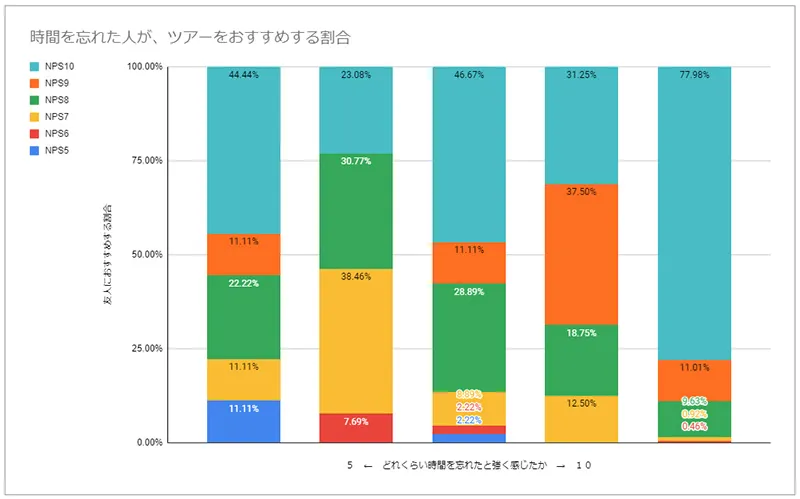
: Activity Research, Materials by Yuji Kimura
In the example of Daisuke Fukuda’s SUP tours, courses are selected based on participants’ skill levels and incorporate appropriate challenges to induce a state of flow. Such meticulous attention to detail enhances participant satisfaction and, as a result, leads to a high Net Promoter Score.
Because flow experiences are “self-directed” in nature, participants derive intrinsic joy from the activity itself. This intrinsic motivation provides a sense of satisfaction that is more powerful than external rewards and has the effect of fundamentally enhancing the value of the tour. As a result, participants feel a strong desire to actively share their experiences with others, leading to a high intention to recommend.
As described above, by appropriately facilitating flow experiences, we can enhance the value of the tour and improve participant satisfaction and recommendation intent. This is an important insight that can be applied not only to outdoor activities but also to various types of tours and events.
6. Summary
It has become clear that flow theory plays a crucial role in the design of outdoor activities and tours, with the potential to significantly improve participant satisfaction and the quality of the experience. Furthermore, it has been shown that flow theory can potentially explain the satisfaction and quality of not only outdoor activities but also story-based tours that satisfy intellectual curiosity, city walks, and historical and cultural guided tours. What emerges from this is a clue to how to create the “high-value-added experiences” that are often discussed today. Participants who experience flow not only perceive time differently—making the tour feel as though it ended in the blink of an eye—but also develop a strong inclination to recommend the experience to others, thereby contributing to the acquisition of new customers. This, in turn, is expected to lead to stable business operations. Furthermore, since flow experiences significantly enhance participants’ sense of well-being and satisfaction, an increase in repeat customers is also anticipated. Providing such high-value-added experiences will enhance the competitiveness of the tourism industry as a whole and serve as a major step toward the development of tourism in Japan. We intend to continue deepening our understanding of flow theory and working to create new value within the tourism industry.
著者