A Journey to Savor Culture and Connect with the Community Through Japanese Sweets

Wagashi are deeply rooted in Japan’s traditional way of life and have always been a staple at celebrations, ceremonies, and significant milestones in daily life, as exemplified by items such as isshō-mochi, akahan, and kashiwa-mochi. However, domestic consumption is currently showing a slight downward trend. In this article, we reexamine wagashi—which convey regional stories and the changing seasons—from a tourism perspective and explore their potential as a tourism resource through “experiences.”
When asked, “In what kind of situation do you eat wagashi?” what comes to mind? Is it the moment you open a box handed to you by someone? Or perhaps the display window of a shop you happened to stop by while traveling?
With the increasing number of international visitors to Japan, sweets made with traditional Japanese ingredients such as matcha and sweet red bean paste have gained immense popularity both as a highlight of travel to Japan and as souvenirs. On the other hand, looking domestically, Japanese sweets—once an indispensable part of festivals and ceremonies—are now facing the serious challenge of declining consumption.
In this article, we explore the potential for wagashi to become a new regional tourism resource from a tourism perspective, addressing the challenge of preserving traditional culture.
1. The History and Current State of Wagashi
(1) The History of Wagashi, Long Associated with Travel
According to the National Wagashi Association and other sources, during the Nara and Heian periods, Japanese envoys to Tang China brought back “Karakudamono” (Tang fruits) and “Togashi” (Tang sweets)—foods made from grains such as rice, wheat, and soybeans and deep-fried in oil. These were used as offerings to deities and in rituals, exerting a significant influence on Japanese confectionery culture.Even today, some wagashi shops in Kyoto and other areas have recreated and sell “Karakudamono.”
From the early Kamakura period onward, the rise of tea culture spurred the development of Japanese confectionery. By the Edo period, against a backdrop of the end of warfare and social stability, Japanese confectionery flourished. Each castle town and temple town developed its own unique sweets, and teahouses sprang up along the highways. As the flow of people increased, Japanese confectionery became established as a source of enjoyment to soothe travelers’ fatigue and as a local specialty. Many of the Japanese sweets we enjoy today were first developed during this era.
(2) Current Consumption Trends and Preservation as a Cultural Heritage
According to statistics from the Ministry of Internal Affairs and Communications, total spending on confectionery has been on an upward trend, driven in part by the growth of convenience store sweets. However, if the rise in spending since 2022 is primarily due to soaring raw material prices, it appears that spending on Japanese sweets has been on a slight downward trend in the long term. While Japanese sweets are still frequently chosen as gifts for the elderly or for special occasions, in today’s world where Western-style sweets are a standard option, Japanese sweets may be becoming “items with limited uses.”
Against this backdrop, the government has also taken steps to protect food culture. In 2021, the Cultural Properties Protection Law was amended to safeguard living traditions—including food culture—that were in a critical state due to depopulation, a shortage of successors, and the COVID-19 pandemic. Based on this, in 2022, “Fresh Confectionery with Brand Names (Nerikiri and Konashi) Living Culture (Food Culture)” was registered as an Intangible Cultural Property. However, the reality that the government must protect a way of life that was once taken for granted through legislation suggests that its transmission is in a critical state, and this is not something we can celebrate unreservedly.
In response to this challenge, we believe that “tourism” offers one potential solution. This is because wagashi can serve as a fresh and attractive tourism resource, particularly for foreign visitors to Japan and for the younger generation in Japan, who have fewer opportunities to experience traditional sweets.
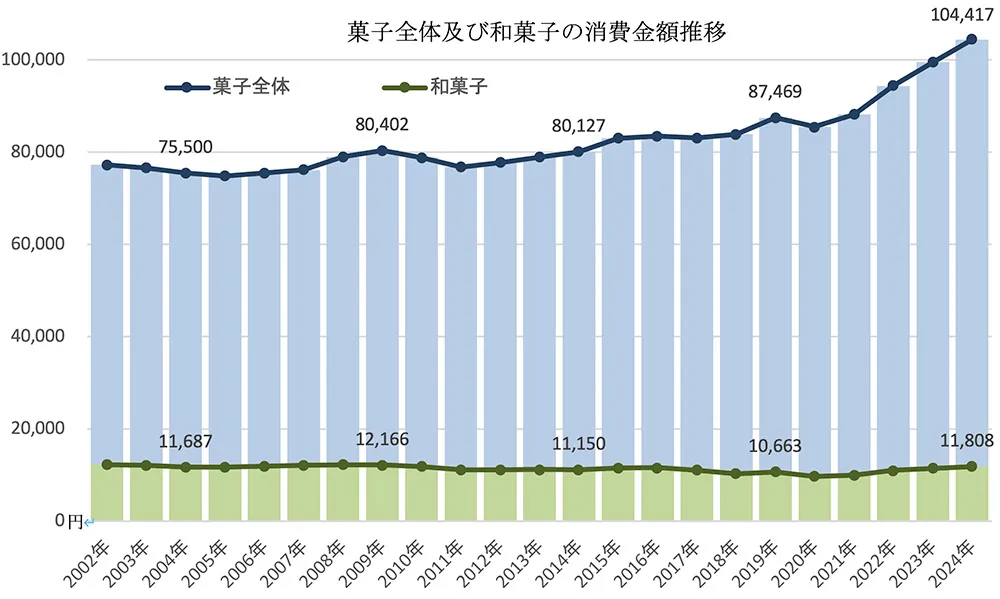
confectionery overall and on Japanese sweets (the total of manju, yokan, and other fresh Japanese sweets).
2. Wagashi as “Storytelling Sweets” That Deepen the Appeal of Travel
So, why can Japanese sweets serve as a tourism resource? It is because they possess a unique charm that conveys the stories and seasonal atmosphere of a region, thereby enriching the travel experience.
(1) The Power to Express Milestones and Seasons
While Western-style sweets are tied to specific events such as “birthdays, Christmas, Valentine’s Day, and Halloween,” Japanese sweets are intrinsically linked to Japan’s traditional lifestyle and culture. As exemplified by Ishomochi, Sekihan, and Kashiwa-mochi, they have always been present at celebrations, rituals, and significant milestones in daily life, serving as a medium for conveying festive sentiments.
Shintaro Fukushima, the sixth-generation owner of “Fukushimaya”—a long-established wagashi shop founded in 1861 (the first year of the Bunku era) during the late Edo period, located on the Nakasendo Road in Sugamo, and which has continued to create confections rich in Edo-style flavor for six generations—says that wagashi, which are still used today as commemorative gifts from elementary school through university, are “a presence that accompanies the milestones of life.”
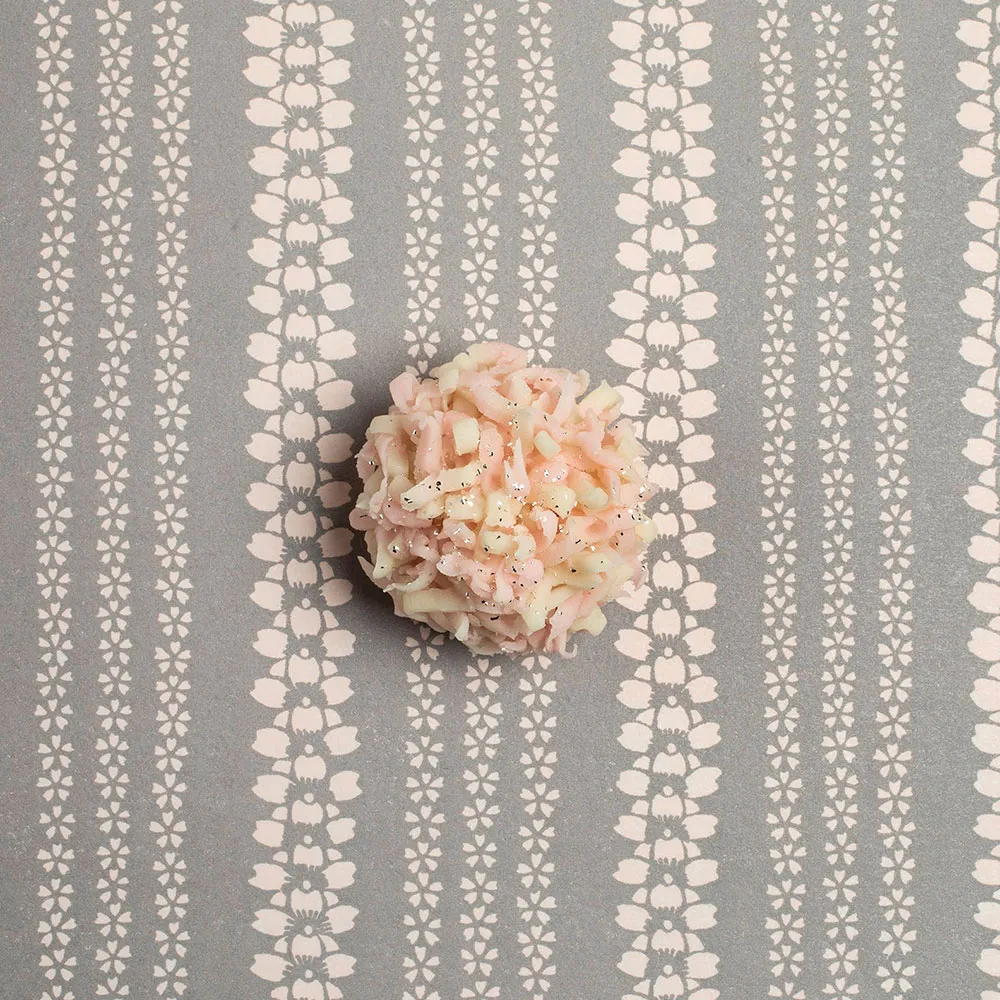
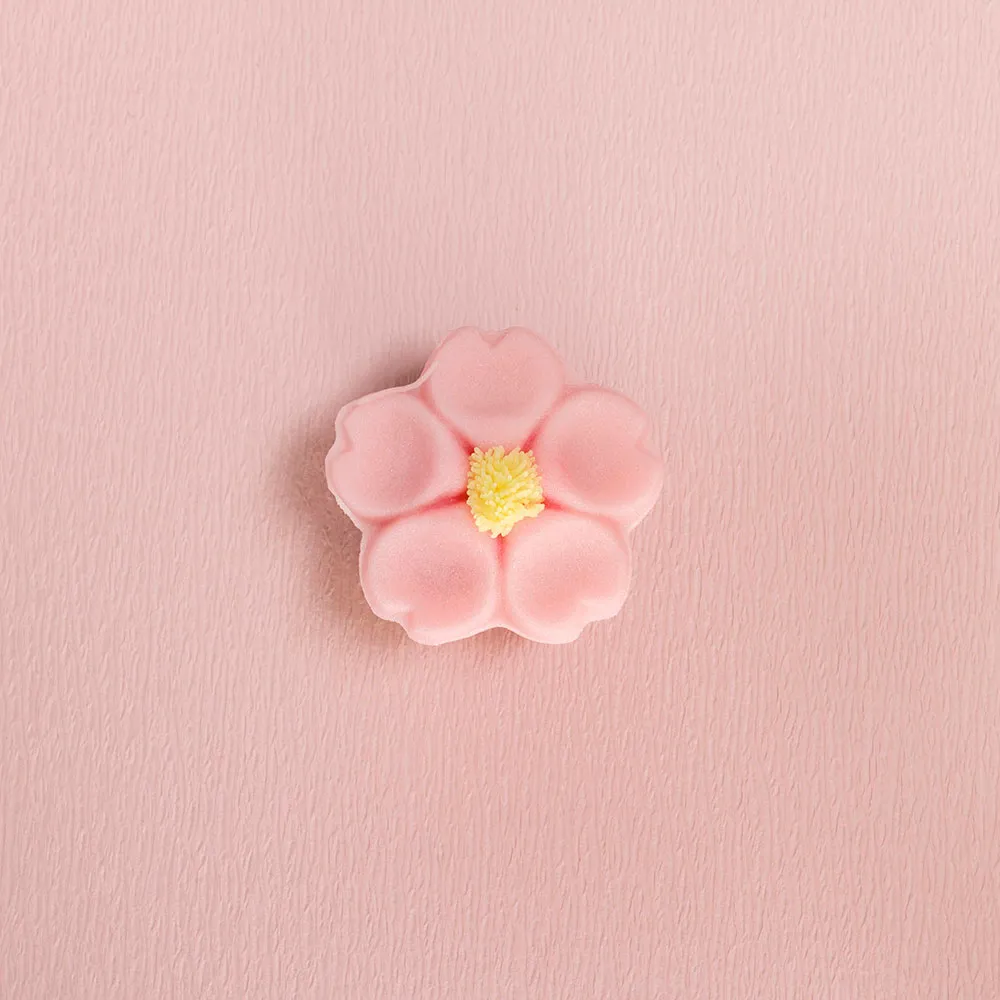
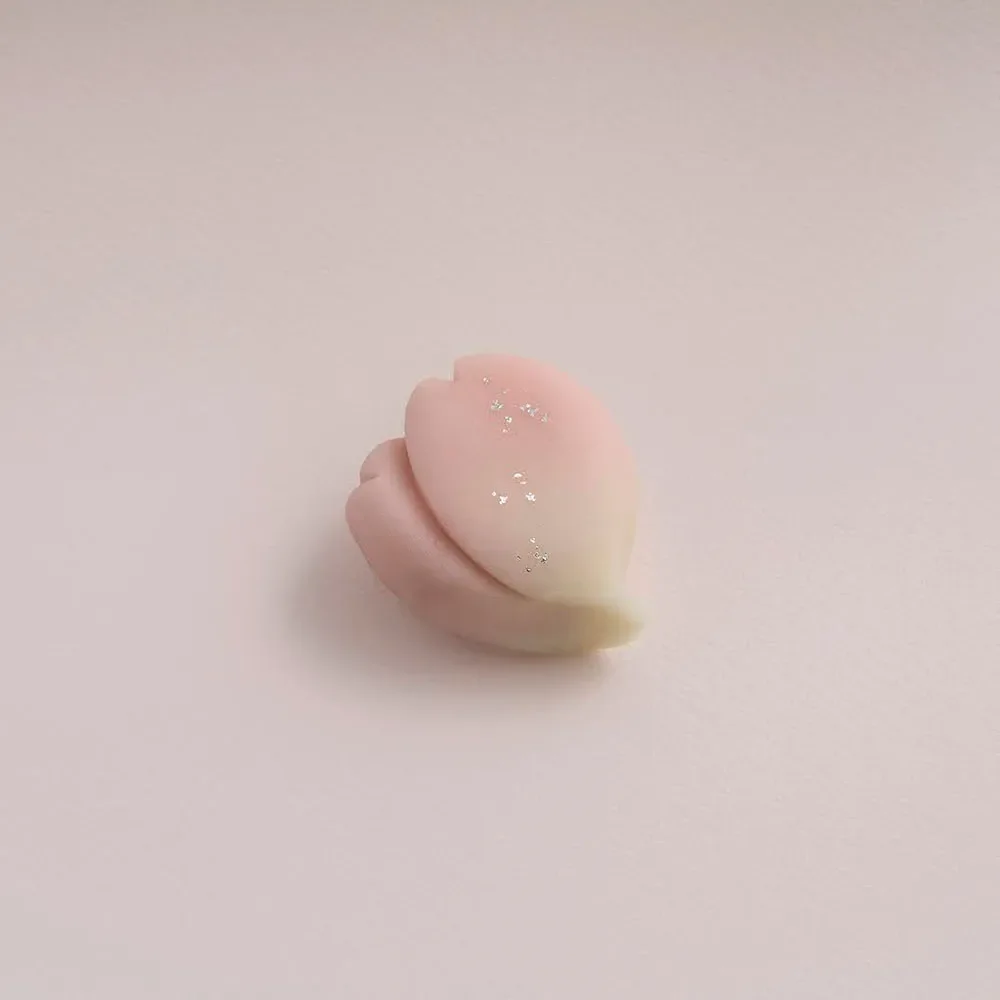
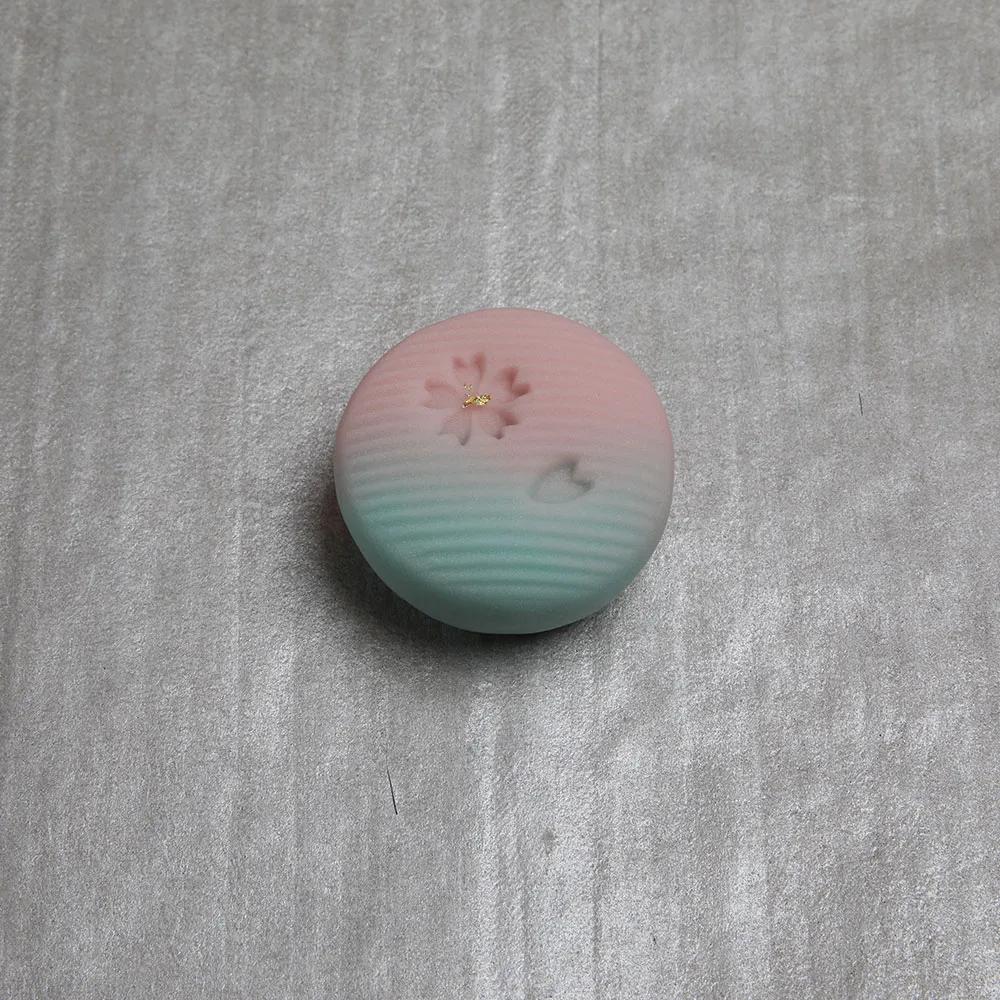
Furthermore, Japanese sweets reflect the sensibilities of the Japanese people, who live in harmony with nature. As Mr. Fukushima notes, “Japan’s sense of color is unique.” Japanese sweets have long sought to express even the subtle seasonal changes of the 24 solar terms (which further divide spring, summer, autumn, and winter into six periods) and the flora and fauna. Whether it is the moment cherry blossoms begin to fall in spring or the transparency of a goldfish bowl in summer, it is possible to capture fleeting moments of nature through the seasons. Even the shifting colors of autumn maple leaves are distinguished into “early autumn, mid-autumn, autumn splendor, and late autumn”—a delicate sense of color that embodies the very essence of Japanese beauty.
First, one contemplates the season through the eyes. This is a unique pleasure found in Japanese confectionery that is absent in Western sweets. By seeing and savoring the traditional sweets unique to a region, travelers can experience the changing seasons and the local aesthetic sensibility—a sensation more eloquent than words.
(2) Changing Tastes, Unchanging Essence
People’s tastes have evolved over time. Japanese sweets, which originated in an era when sugar was a luxury item, went through a period where sweetness and the volume of bean paste were highly valued. In recent years, however, there has been a growing trend toward emphasizing the balance of flavors between the bean paste and the outer layer, as well as texture. Additionally, some Japanese confectionery shops are committed to ensuring customers enjoy their sweets while they are fresh, promoting the very “fleeting nature” of these treats—their short shelf life—as a unique appeal.
Amid these changes, Fukushima-ya continues to take on the challenge of creating “neo-wagashi” that adds a playful touch while preserving its “core flavor.” For example, they have released products such as red nerikiri containing apple preserves for Valentine’s Day and wagashi with fillings made from wine and pumpkin for Halloween.
Mr. Fukushima views these initiatives not as mere pandering to trends, but as a challenge to ensure the sweets are embraced by the next generation.
3. Wagashi and Tourism: Pioneered by “Experience”
The fact that wagashi has been registered as a cultural asset demonstrates that it is not merely a “product,” but a “cultural resource” that embodies Japanese lifestyle and culture. Precisely because of the challenge of a shortage of successors, wagashi shops are required to redefine their value in new contexts—such as tourism, education, and international exchange—in addition to their traditional roles. One of the most effective methods for this is “experiences.”
For example, “Rojicoya,” which offers authentic Japanese cultural experiences for international visitors in Kita-Senju, Tokyo, provides a special program combining wagashi-making lessons taught by artisans from a local, long-established wagashi shop with a koto performance. Just as experiences making tiramisu in Italian homes are popular overseas, there is certainly a demand for such culinary experiences in Japan as well.
Additionally, the “Wasanbon” making experience—which uses Wasanbon sugar produced exclusively in Kagawa and Tokushima prefectures—is an attractive program for travelers because the sweets have a long shelf life at room temperature, are light, and have a cute shape, making them ideal souvenirs.
While many people may have experience baking Western-style sweets at home, there are likely many who have never made Japanese sweets. The experience of shaping the seasons with one’s own hands is refreshing and will undoubtedly serve as an opportunity to deepen one’s understanding of and affection for Japanese sweets and Japanese culture. Japanese sweets are an attractive form of content that can become a destination in themselves, and they are a tourism resource that contributes to regional revitalization.
4. Summary: A Journey to Savor Culture and Cherish the Region Through Wagashi
Mr. Fukushima, the sixth-generation owner of a long-established shop that has preserved and passed down the culture of wagashi for over 160 years, states: “I want to preserve the tradition of eating wagashi. However, I do not believe this means we must rigidly adhere to the traditional ‘scene’ of who eats wagashi, when, and where.”
Travelers invest time and money to visit other regions because they seek to experience with all five senses what can only be found there. Wagashi are visually stunning delicacies that encapsulate Japan’s history and regional charm, and they hold great potential for being rediscovered in the context of tourism and learning.
In regions where traditional sweets have developed uniquely and are associated with specific events, it will be important to curate experiences that convey to visitors not only the sweets themselves but also the climate, natural environment, and lifestyle from which they originated and have been passed down, while integrating them with other local resources such as festivals, scenery, and crafts. To truly engage visitors, it is essential to provide not just the opportunity to “buy” traditional sweets, but also a way to “learn by doing.”Wagashi-making workshops have the effect of imprinting the value of craftsmanship and a sense of the seasons—aspects that are difficult to convey through taste alone—as a physical sensation.
Wagashi may not be flashy. However, they are a form of content that strongly reflects the values cherished by the Japanese people, such as coexistence with nature and respect for craftsmanship. This is precisely why they can meet the needs of highly intellectually curious foreign tourists visiting Japan who wish to experience the deeper aspects of Japanese culture. Furthermore, travelers interested in these themes are likely to be a group with a sustainable mindset that respects local culture and way of life.At a time when many tourist destinations are seeking to shift from quantity to quality, the ability to attract travelers who resonate with the values of a region and build mutually respectful relationships with its residents is one of the great potentials of wagashi.
Once a connection is formed, Japanese sweets are chosen not merely as “food,” but as “something that enriches one’s daily life.” Furthermore, Japanese sweets have a powerful ally: the seasons. As the seasons change, both the designs and ingredients naturally evolve, allowing visitors to experience different facets of the same shop. Feelings such as “I want to see what it’s like in another season” or “I want to savor that particular confection again when this season comes around” tend to arise naturally, making it easier to design strategies for attracting repeat customers.
Adapting to the times and preserving tradition are not mutually exclusive. As various stakeholders take on new challenges using “wagashi” as a starting point, wagashi will function not only as a medium for conveying prayers and celebrations at key moments in daily life, but also as a medium for conveying the universal values of Japanese culture within the context of tourism.
References:
- National Wagashi Association, Chapter 1: “Understanding Wagashi,” Part 1: The History of Wagashi (accessed March 5, 2026)
- Keiko Nakayama, *Encyclopedia of the World of Wagashi: Expanded and Revised Edition*, Iwanami Shoten, 2018, pp. 285–290, p. 306
- Ministry of Internal Affairs and Communications, “Household Expenditure Survey (Household Income and Expenditure, Households with Two or More Persons, Annual Report)” (Accessed February 27, 2026)
著者