Implementing "Win-Win-Win-Win" Tourism Management Through Philosophy, Data, and Dialogue: A Model of Sustainability in Action, as Seen in the Initiatives of the Kanagawa DMO
This article examines the intersection between policy design and implementation, using concrete examples from the initiatives of the Kanagawa DMO—an organization with which the author is involved in a professional capacity—to explore how tourist destinations are addressing the concept of “sustainability,” which is often discussed as a guiding principle.
*This article was compiled by the author, Naoya Goto (Advisory Consultant at JTB Tourism Research & Consulting / Director of the Visitor Attraction Promotion Office at the Kanagawa Prefecture Tourism Association [contracted position]), based on his practical experience in the field.
It has been quite some time since “sustainability” in tourism began to be loudly championed. However, there are many obstacles to its realization. It is no easy task to simultaneously satisfy tourist satisfaction, revitalize the local economy, gain the understanding and support of residents, and show consideration for the environment. Especially now, in the post-COVID era, tourism destination management requires a shift in “quality” and “structure” that differs from the traditional approach of focusing solely on attracting visitors.
One organization squarely confronting this challenge is the Kanagawa Prefecture Tourism Association (hereinafter “Kanagawa DMO”), a public interest incorporated association. Registered as a “Regional Collaboration DMO” in March 2023, Kanagawa DMO plays a leading role in developing tourism regions within Kanagawa Prefecture. As the Director of the Visitor Attraction Promotion Office (contracted) at this DMO, I am directly involved in its day-to-day operations. Guided by the clear philosophy of “achieving a ‘win-win-win-win’ situation through tourism,” we are tackling the challenge of ensuring the sustainability of tourist destinations across all levels—strategy, data, and dialogue.
In this article, I will examine the “mechanisms” and “philosophy” behind Kanagawa DMO’s initiatives from the perspective of someone actively involved in the field, exploring how we are practically addressing the abstract concept of a tourist destination’s “sustainability.”
“Shihoyoshi”—Tourism Management Rooted in Philosophy
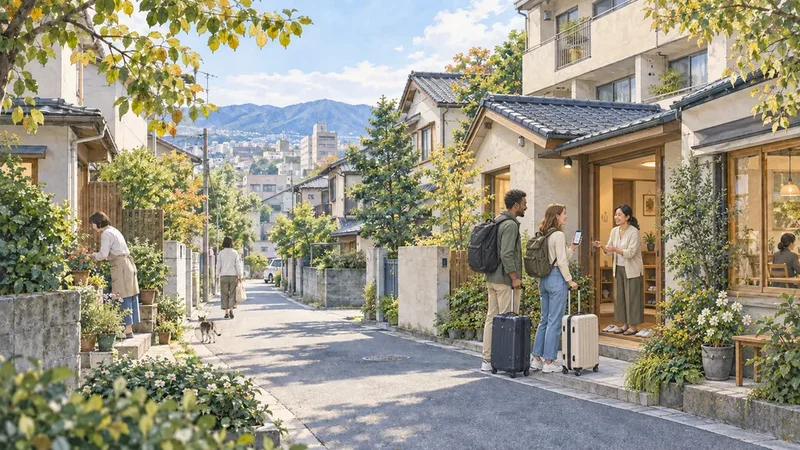
Kanagawa DMO refers to a state where “travelers,” “local residents,” “tourism-related businesses,” and “the natural environment”—all four parties—benefit and can coexist harmoniously without conflict as “Yonho-yoshi.” This concept symbolizes the fundamental approach to sustainability in tourism.
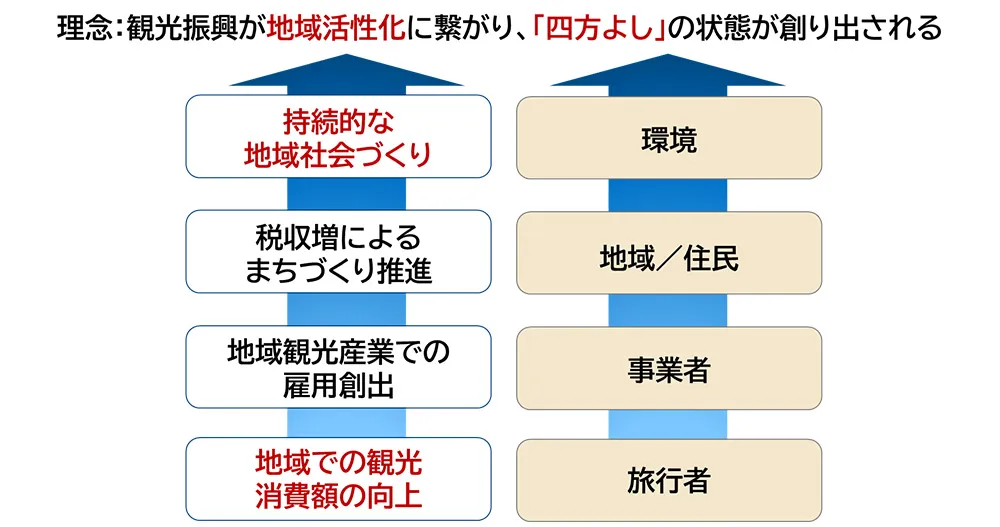
For example, even if the local economy prospers due to an increase in the number of international visitors, the future of that tourist destination will not be sustainable if residents’ dissatisfaction builds up. Conversely, placing too much emphasis on environmental conservation may hinder local industries and employment. This is precisely why “all-encompassing” destination management grounded in this philosophy is necessary.
This “Shihō Yoshi” is not merely a slogan. Mochizuki, Chairman of the DMO, states, “It is only meaningful when we put it into practice on the ground, rather than just talking about the philosophy. ‘Shihō Yoshi’ is our banner, embodying that commitment. ”Actual initiatives are structured around this philosophy and systematically incorporated into the DMO’s presentation materials. For example, the DMO provides travelers with optimal information via CRM, offers businesses feedback on visitor flow data and DI surveys, conducts tourism acceptance surveys for local residents, and implements mechanisms to address overtourism for the environment—ensuring that visible actions are organized for all four stakeholders.
Turning Tourism DX into a “Tool”: Utilizing R-STP and Open Data
Kanagawa DMO positions tourism DX not merely as a technological trend, but strictly as a “means of strategic execution.”
At the core of this approach lies “R-STP analysis. ”Starting with R (Research), the organization applies the classic marketing methods of segmentation, targeting, and positioning to regional tourism. From six segments identified through proprietary research, it identifies four priority segments and develops promotions tailored to each persona. This visualizes “who” to target, “what value” to convey, and “which channels” to use, ensuring consistency in the region’s visitor attraction strategy.
Additionally, the DMP (Data Management Platform), developed with support from the Japan Tourism Agency, integrates diverse statistics—such as the number of visiting tourists, visitor demographics, average spending per person, and foot traffic data—and visualizes them on the website. This enables tourism associations, DMOs, and municipalities throughout Kanagawa Prefecture to make data-driven decisions.
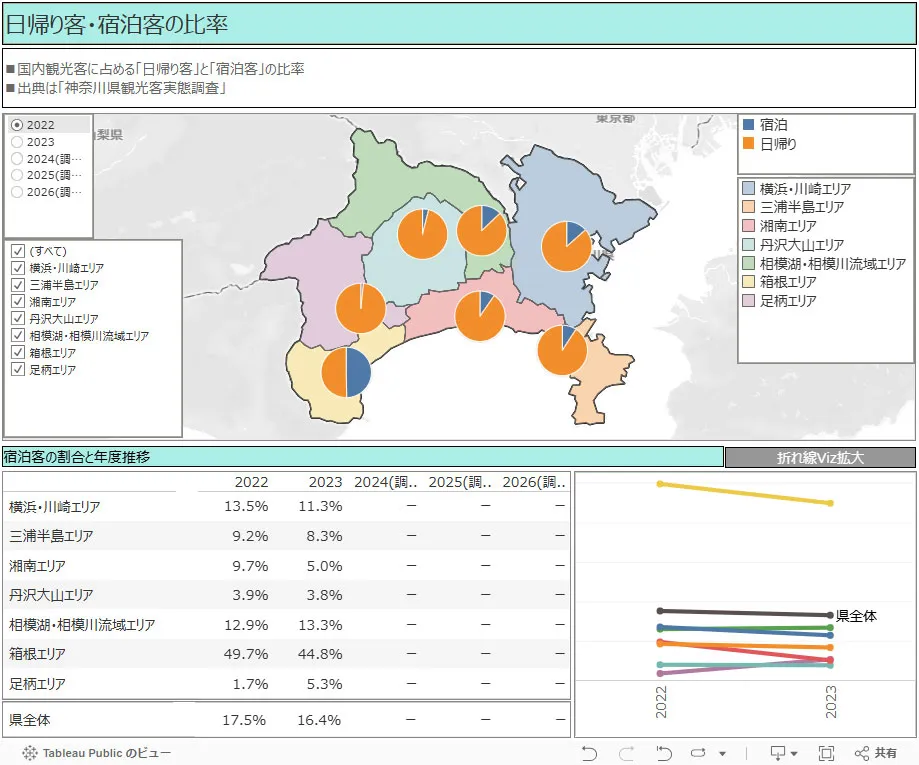
This series of initiatives demonstrates that tourism DX is not merely limited to “advanced analysis” or “creating visually appealing graphs,” but is increasingly being utilized for strategic planning on the ground, and its wider adoption is anticipated.
Measuring the Region’s “Body Temperature”: The Social Role of the Tourism DI Survey
Simply understanding tourist behavior is not enough to sustain the management of a tourist destination. It is equally important to continuously monitor the “vital signs” of the local businesses that support tourism. The “Tourism DI Survey,” which Kanagawa DMO conducts on an ongoing basis, is precisely such an initiative. It provides insights into business sentiment, employment trends, labor cost inflation rates, and the adoption of dual pricing by industry, company size, and region.
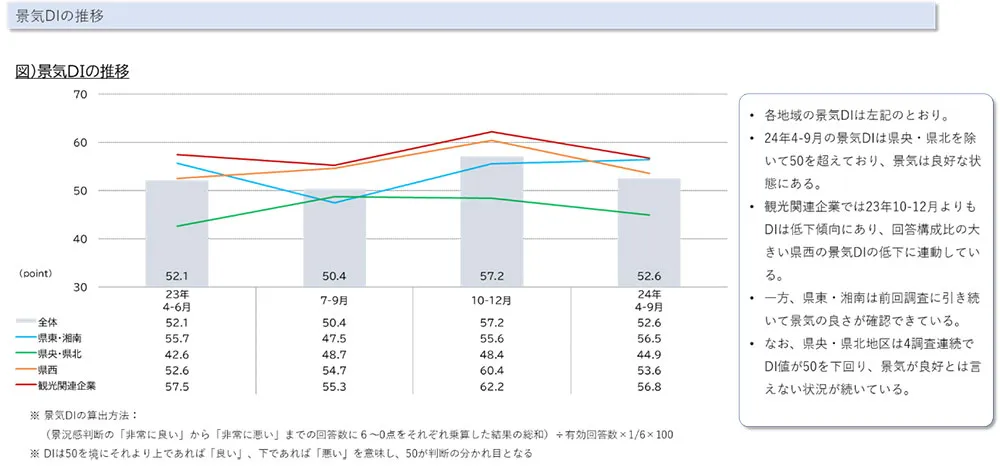
In the latest 4th survey (October 2024), there was a notable consensus that “profits are not growing, but costs are rising,” and it became clear that smaller businesses tend to suffer more from profit squeezes. Furthermore, the survey found a 5–10% gap between starting hourly wages and the actual hourly wages required, highlighting the reality of recruitment difficulties and wage increase pressures. These survey results are not only utilized for policy recommendations to the prefecture and the coordination of regional measures but are also shared with local newspapers and tourism associations, fostering a two-way relationship with the field.
Horizontal Connections as a Source of Strength: The “Secretaries-General Meeting” as a Hub of Knowledge
Another unique initiative of Kanagawa DMO is the “Secretaries-General Meeting,” where the secretaries-general of the prefecture’s 33 tourism associations and DMOs gather in one place. Held three times a year, this meeting features group discussions on themes central to regional management, such as data utilization, project promotion, securing funding, human resources, and residents’ acceptance of tourism.
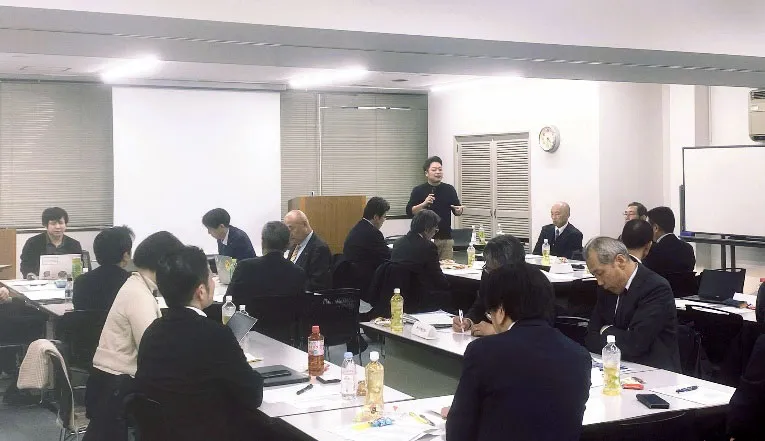
At the 6th Directors’ Meeting (held in February 2025), the main theme was “Member Acquisition and Securing Funding,” and case studies from various regions were shared. For example, practical, community-rooted know-how was compiled, covering topics such as designing member benefits, providing PR support via websites, strengthening relationships through study tours, and offering merchandise purchase benefits at train stations. The discussions were filled with a shared understanding that “the challenges faced are common across all regions” and a positive attitude toward “adopting successful examples.” Mr. Akiyama, COO of the DMO, stated, “I believe this meeting, where data and on-the-ground wisdom intersect, is the engine that will take regional tourism to the next level.”
With each iteration, this conference has evolved into a “hub of knowledge” where “psychological barriers” between tourism associations are broken down, and participants bring together data and experience to co-create.
Toward Making Tourism a “Grounded Industry”
Kanagawa DMO’s initiatives prove that “sustainable tourism” is not merely a concept but can be realized through concrete actions and systems.
- Philosophy (Four-Way Benefit)
- Data (R-STP / DI / DMP)
- Action (Business Support / Community Dialogue / Executive Directors’ Meetings)
We believe this three-pronged structure offers “one solution” for transforming the vague goal of sustainability into sound regional management.
How can we co-create social value and cultural richness that go beyond the economic benefits of tourism? We believe that Kanagawa DMO’s practices not only serve as a model for DMOs nationwide but also have the potential to become a compass for future tourism administration and policy-making.
Sustainable tourism is not some distant ideal. If we ground ourselves in principles, utilize data, connect with people, and take action, it may well be the landscape of the future right before our eyes.
著者