MICE as a Space for Connections and How to Create It: Differences Among the Showa, X, and Z Generations
While the MICE industry has long leveraged cutting-edge technology in its operations and boasts a wealth of expertise spanning everything from destination marketing to facility management and construction consulting, at its core lies the concept of “creating spaces for connection.” As we look back on our journey so far, we explore what “creating spaces for connection” will look like in the post-COVID era as we pass the torch to the next generation.
The COVID-19 pandemic continues to have a significant impact on the global MICE industry. Scheduled MICE events have been canceled or postponed, or have been forced to shift to online formats or hybrid models combining online and in-person components. However, with the progress of vaccination campaigns in the UK and the US this year, there are signs of a return to in-person events. MICE events bring together experts and businesspeople from various fields around the world. While the industry can be described as one that quickly adopts cutting-edge technology and integrates a wide range of expertise—from attracting events to managing facilities and providing construction advice—its foundation lies in the concept of “creating spaces for encounters.” In this article, we will look back on the history of MICE and consider what the “spaces for encounters” of the post-COVID era, to be passed on to the next generation, should look like.
1. “Creating Spaces for Encounters”: The Foundation of MICE
A new era has begun in the wake of the COVID-19 pandemic. We have encountered a situation that seems to directly contradict the very essence of what MICE has always aimed for: “people gathering to discuss, see, hear, try, and experience.”To address this, the MICE industry developed guidelines and implemented various measures, such as postponing or canceling events, scaling them down, and shifting to remote formats. Surprisingly, however, we realized that many of the cutting-edge technologies previously tested for MICE operations—such as satellite broadcasting and multi-location live streaming utilizing ICT—could be directly applied to the current situation. We also recognized that these technologies are closely linked to broader initiatives like “digitalization,” “GIGA School,” and “DX (Digital Transformation).”
Meanwhile, the PCO and planner sectors—which have long driven the MICE industry—have evolved beyond simply providing methods to increase the number of MICE events attracted and hosted. As the industry grew, they came to be expected to comprehensively “create spaces for encounters,” ranging from marketing to boost facility occupancy rates and operational efficiency, to managing dedicated facilities like international conference centers and even getting involved from the planning stages of new construction.
In this article, I would like to re-examine the idea that “our time has come—the time for us to create spaces for encounters”—a concept the MICE industry has always excelled at—as we move through the Showa, Heisei, and Reiwa eras, triggered by the tectonic shift that was the COVID-19 pandemic.I also wish to consider how the young people who will lead the next generation—Generation X and Generation Z—who have been buffeted by the COVID-19 pandemic while engaging with and utilizing digital technology, perceive and put into practice “encounters with people” and “MICE as a space for encounters,” and how they will pass these on to the next generation.
2. Creating Spaces for Encounters and the COVID-19 Pandemic
It all began in the spring of 2020 with the COVID-19 pandemic. Gathering in person—from large-scale events to casual conversations and meals—became taboo, and eventually even small talk became difficult. This gave rise to a new term: the “Three Cs” (crowded places, close contact, and confined spaces).The “Three Cs” are, in fact, the very essence of MICE. With past infectious diseases like SARS and MERS, everyone assumed that things would recover within a few months as usual and return to normal.
For over a year since then, holding MICE events has become difficult. Around the world, various measures are being implemented to prevent infection, including capacity limits to address the “Three Cs,” restrictions on floor space and attendance, and the use of ICT for remote participation.Ironically, in Japan, this has coincided with the country’s lag in “digitalization” and “DX” (Digital Transformation) and efforts to promote understanding of these concepts. Coupled with the sudden, unavoidable surge of remote work as part of work-style reforms and the “GIGA School” initiative launched by the Ministry of Education, Culture, Sports, Science and Technology in late 2019, this has caused various disruptions in some sectors.From the method of notifying all citizens about last year’s uniform 100,000-yen cash payments to recent glitches in COVID-19 vaccine registration, many people are now vocally calling for further digitalization.
MICE facilities, including Tokyo Big Sight, have been instructed (or requested) to suspend operations (requests for closure), restrict facility use (requests for shortened operating hours), and limit the hosting of events (such as conferences and exhibitions) in response to emergency measures. While I believe these measures are unavoidable for such public facilities, I find myself thinking a great deal these days not only about how MICE facilities are used, but also about their very nature and how they are designed.There are many MICE facilities across Japan—in Gunma, Kumamoto, Fukuoka, Nagasaki, and elsewhere—that were completed after lengthy planning and construction phases, brimming with dreams and hopes. In some cases, however, construction has been delayed due to various circumstances (such as in Tochigi Prefecture), or plans have had to be completely overhauled (as in Sapporo).
Amidst these developments, I would like to offer some rough reflections—from the perspectives of MICE facilities, managers and operators, MICE organizers, and MICE participants—on “MICE” as a space for encounters and how it is created, a field I have been involved in for many years. I will also explore what changes might be in store for “MICE as a space for encounters and how it is created” from the perspective of Generation Z, who are experiencing and feeling these current realities in real time.
3. The Creation of Spaces for Encounters from the Past to the Present and Public-Private Partnerships (PPP)
It has been over 50 years since Japan’s first national international conference center was established. In 1966, the “Kyoto International Conference Center” (designed by Yukio Otani) was built in Takaragaike, Kyoto.Following a Cabinet decision in 1962, it was decided that Japan’s first international conference center would be built through an open competition, and the site was selected at Takaragaike in Kyoto. The Minister of State in charge at the time was Ichiro Kono, who served as Minister of Construction and Minister in charge of the Olympics. (Coincidentally, the current Minister in charge of Vaccines, Taro Kono, is his grandson.)
This facility was the first of its kind as a national institution; the land and buildings are owned by the national government. Management was entrusted to the City of Kyoto under the “Act on Special Measures Concerning the Entrustment of Management of State-Owned Conference Facilities” (Act No. 133 of 1965), and subsequently re-entrusted to the “National Kyoto International Conference Center Foundation.” Another national conference facility built later is the “Pacifico Yokohama National Grand Hall.”
Public facilities such as international conference centers and exhibition halls require extensive, long-term care—from securing vast tracts of land and prime locations to constructing massive structures at great cost, maintaining them after completion, and attracting and managing international conferences. Although such public facilities were often derided as “white elephants” during the Showa era, there was a tendency to boast about their size and seating capacity. There were very few national facilities, and their establishment fell within the scope of public services provided by local governments.
Since the 1990s, while local governments and other public entities had traditionally provided these public services and public works, maintaining them became difficult, leading to increased participation from the private sector and residents through organizations such as NPOs. This is known as “PPP (Public-Private Partnership),” a broad concept referring to methods where the private sector participates in the provision of public services, also called “public-private collaboration.”
- Outsourcing (outsourcing certain operations, such as security, cleaning, and reception duties, to the private sector)
- PFI Act (1999): A new approach to the construction, maintenance, and operation of public facilities by utilizing private-sector funding, management capabilities, and technical expertise
- Designated Manager System (2003)
- Concession Model (Construction and operation rights established by the 2011 amendment to the PFI Act)
Over the past 20 years, the introduction of the PFI model and the Designated Manager System—moving away from specific outsourcing methods—has led to the completion, construction, or planning of numerous international conference centers and exhibition halls nationwide. In particular, the “Aichi International Exhibition Hall (Aichi Sky Expo),” which opened in 2019, is Japan’s first exhibition hall established under the concession model.Additionally, the “Minato Mirai 21 Central District Block 20 MICE Facility Operation Project” adopted the concession model and opened in 2020 as “Pacifico NORTH.”
The fact that these MICE facility construction methods—which incorporate private-sector expertise in everything from maintenance and management to operations, marketing, and financing—are leading to an increase in large-scale gathering spaces offers great hope not only for the MICE industry but for everyone who uses these spaces.
4. How to Use These Spaces for Encounters and the Stories They Hold
I apologize for sharing a personal anecdote, but I first encountered the “Kyoto International Conference Center (commonly known as the Kyoto International Conference Hall),” a pioneer among Japan’s international conference venues, in 1981, shortly after I had begun my career as a PCO (Professional Congress Organizer).That spring, I was transferred from Tokyo to Kyoto for work and took up my post. Until then, I had visited Kyoto mostly for inbound incentive tours, always making a point to stop by while guiding overseas dealers who had been selling Japanese products—such as automobiles—to the world with relentless enthusiasm. Although I had visited over 100 times since my junior high school field trip, this was my first time living there. I ended up living in Kyoto for three years.
The facility was designed by Yukio Otani (1924–2013), a disciple and right-hand man of the legendary architect Kenzo Tange. The multi-level lobby area, which can be a bit confusing to navigate, was apparently completed according to his specific vision. However, during the “2nd International Conference on Universal Design” held here in 2006, I felt that the facility itself lacked consideration for “UD.”That said, the concept of “UD” didn’t exist back in 1985 when this conference hall was built, so it’s understandable. In a recent TV program, “Giants of Shinbi: Kyoto International Conference Center,” the designer, Yukio Otani, emphasized the phrase “it is a lobby.”Indeed, just as there are terms like “lobbying” and “lobbyist,” providing spaces beyond the conference hall—places for in-depth casual conversations and candid discussions where people can speak their minds regardless of their country, organization, or position—is crucial for international conferences.
During the 3rd World Water Forum (March 16–23, 2003), the Iraq War broke out, and military intervention began with the invasion of Iraq on March 20 of that year.Just before the conference began, an ultimatum from U.S. President Bush regarding a full-scale attack on Iraq by a coalition of the willing spread across the globe. The Iraqi delegation was present at the conference venue. As stakeholders watched with bated breath, wondering what would happen, the delegation left the venue because they realized they would be unable to return home once the full-scale attack began. I remember seeing them off in the lobby. My heart trembled as I thought, “The world is in motion even at this very moment—it’s truly dramatic!”
5. Unexpected Risks in Gathering Spaces
At international conferences where dignitaries from around the world gather, there have been instances in the past where unexpected events became operational risks, forcing organizers to respond.
Among the risks I recall from international conferences, there was the issue of country names in the participant roster following the normalization of Japan-China relations and the severing of diplomatic ties between Japan and Taiwan (1972); the frequent defections of participating scientists prior to 1989, before the end of the Cold War;and a series of issues regarding participant movement—including keynote speeches—and close contact among participants (such as guiding them onto shuttle buses) during the period spanning the Iran-Iraq War (1980) to the Gulf War (1990).
Additionally, regarding racial issues, there was the question of how to handle the Republic of South Africa until the abolition of apartheid (1992). Due to restrictions on international exchange—such as the International Convention against Apartheid in Sports (1985) and economic sanctions imposed by UN resolutions—there were instances where the name “Republic of South Africa” had to be omitted from participant lists. Until the end of the 20th century, PCOs handling international conferences had to remain acutely aware of the chaos caused by wars and civil unrest. The long-standing “Middle East issue” was no exception; when Middle Eastern countries participated, special care was taken regarding the operation of shuttle buses and similar services.
AIDS (Acquired Immunodeficiency Syndrome; in Japan, the first domestic cases emerged in 1985 as the “AIDS caused by contaminated blood products” incident), the International Society on Thrombosis and Haemostasis (1989, Keio Plaza Hotel),and the 10th International AIDS Conference in Yokohama (1994)—at the time, we did not even understand the difference between droplet transmission and direct mucosal contact with the then-prevalent “new virus,” and both the organizing staff and shuttle bus drivers worried that the risk of infection was high. It was around this time that infectious diseases were added to the list of risks associated with hosting international conferences, alongside war, civil unrest, and terrorism.Up until the 6th International Congress of Virology (1984, Sendai), it was something that seemed to have nothing to do with us.
In the 21st century, the September 11 attacks (2001),BSE (Bovine Spongiform Encephalopathy) in 2001, SARS (Severe Acute Respiratory Syndrome) in 2003, human infections from avian influenza in 2004, and MERS (Middle East Respiratory Syndrome) in 2012. We treated these as a mix of bacterial and viral infections, and our response was limited to little more than providing masks.During the BSE (bovine spongiform encephalopathy) outbreak, the only real discussion was about avoiding beef dishes at parties. Naturally, there was no such talk regarding “swine fever (Classical Swine Fever, CSF).”
6. Social Spaces and the Shift to “2.5D”
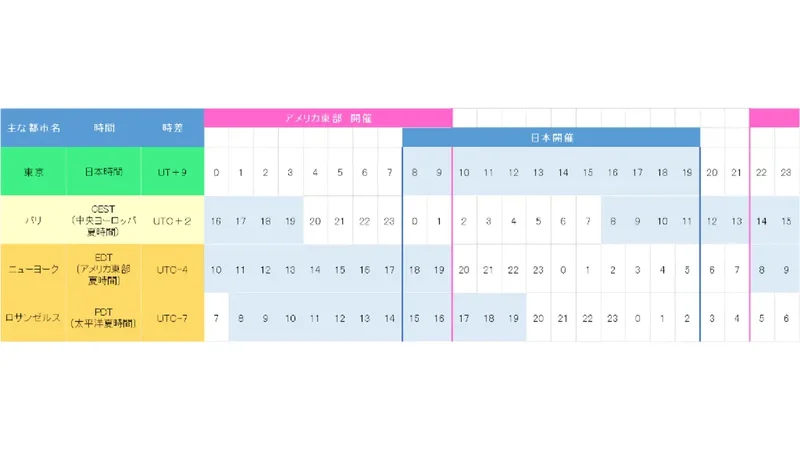
Over the past year, we’ve experienced many things on TV, such as programs featuring guests and performers on large monitors, sports events held without an audience, and remote meetings using Zoom and similar platforms. Television programs aside, I don’t think I ever imagined a day would come when I myself would become a “remote participant.” However, remote technology has existed since the Showa era. We would rent Intelsat equipment from KDD for “satellite relays” and meticulously prepare for unstable “three-way relays” between Tokyo, New York, and London, complete with relay trucks and dedicated telephone lines.
Since the advent of Windows 95—a symbol of the millennial generation—the audiovisual equipment used in international conferences, such as “35mm slides,” “16mm film,” and, depending on the academic society, “OHPs (Overhead Projectors)” for professors’ presentations, has undergone a dramatic transformation. An environment where individuals could routinely utilize computers began to take shape. Presentations using personal computers, including the Apple Classic II and Sony VAIO, became the norm at conference venues. This marked a major shift in audiovisual tools and IT technology.
The dramatic changes brought about by the pandemic since last year have shifted the very nature of the space itself from a real, three-dimensional “face-to-face” setting to a “2.5-dimensional” one, where we are technically face-to-face but separated by a monitor.
7. Meeting Spaces and Generation Z
Starting with the new semester in 2020, many universities were forced to conduct lectures remotely rather than in person. This became a common sight at universities nationwide. With the exception of a few classes involving practical training, nearly all lectures and seminars were conducted remotely. Furthermore, graduation and entrance ceremonies in the spring of 2020 were either canceled or held remotely. A year has passed since then, and many challenges have been addressed and resolved.
(1) Improvement of Communication Infrastructure (e.g., Wi-Fi)
Initially, students living in apartments would join classes via Zoom and similar platforms as soon as classes began, but because so many students were using the network simultaneously, frequent disconnections occurred. For students at home, issues such as competing for space due to parents working from home and poor internet connectivity were common. After a few
months, these problems were largely resolved, and students’ skills improved. Faculty members faced similar challenges, but these were also resolved.
(2) Improvements in Lecture and Seminar Conduct
At first, faculty and students were barely able to manage the basic exchange of messages. Video and audio frequently cut out due to internet speeds and hardware limitations. Furthermore, background noise and ambient sounds were often uncontrolled and left unchecked. By the
latter half of the semester, however, Q&A sessions, breakout groups, and report submissions proceeded surprisingly smoothly. It also became possible to share presentation materials between both parties without any glitches.
(3) Combining Communication Methods
Remote classes (two-way remote communication),
on-demand classes (instructors produce and upload videos, allowing students to watch at their convenience), and
in-person classes (physical classes held in a classroom). We structured the syllabus and
organized class participation by combining these formats.
In fact, all of these align with what is currently referred to as the “hybrid MICE model. ”Many of the students who entered their first year of university this year were born in 2001 or later. Even among fourth-year students, many were born in 1999 or later. This generation has been forced to participate in hybrid lectures and seminars as a matter of course since entering university. Since last year’s job hunting season, remote company information sessions and interviews have become a common sight. Even if someone from the Showa generation, like myself, were to loudly proclaim, “Face-to-face is still the best!” the reality is that an environment where that is not possible has become the norm.
Starting this spring, as part of the “GIGA School” initiative in compulsory education, tablets and other devices are being provided to first-grade elementary school students. While teachers and families are likely struggling with the transition, the children will soon get used to them and be able to use them with ease. There doesn’t seem to be a perfect term yet for the generation following Gen Z, but children raised in this environment will be entering society every year from now on. As the number of people with different communication styles and tools increases, we will likely see a shift from 3D MICE to 2.5D MICE, and eventually to 4D MICE. It has become difficult to imagine how “encounter-based MICE”—where people meet face-to-face or engage in passionate discussions—will evolve in this new world.
However, through remote and hybrid methods, we have gained the ability to control certain aspects of time and space. Furthermore, since it is now possible to participate from anywhere on Earth, and the number of people born into this environment is steadily increasing, Generation Z and the generations that follow will become the mainstream of society in the not-too-distant future. In a positive sense, they will be like “cats with odd eyes” capable of seeing things from a different perspective.
<References>
Emergency Measures in Tokyo to Prevent the Spread of COVID-19 (Tokyo Metropolitan Government)
About PFI and PPP (Japan PFI and PPP Association) PFI
Procedures for the Nagoya City International Exhibition Hall New Hall 1 Development Project (Nagoya City)
Concession Utilization Projects for MICE Facilities (Yokohama City Bureau of Culture and Tourism, Tourism and MICE Promotion Division)