Prescribing travel as a form of natural therapy
Drawing on examples from overseas where treatments utilizing natural therapies and time spent in nature are prescribed as part of medical care, we will explore the potential for “travel prescriptions” in Japan.
Have you ever taken a trip to seek out nature—such as hot springs, forests, or the ocean—when you were feeling physically or mentally unwell? What if, at such times, you had the opportunity to receive guidance on travel destinations and activities tailored to your physical condition from a medical perspective?
Drawing on initiatives from other countries, I’d like to explore the concept of “travel prescriptions” in Japan—where therapies that utilize nature or time spent in natural settings are prescribed as part of treatment.
1. The German Example: Health Resorts (Kurort)
Germany has over 350 regions certified as health resorts (Kurort). Under a system there, if you receive a prescription for Kurort therapy from your primary care physician, you can use your health insurance to recuperate at a health resort for an average of about five days.These health resorts are categorized into several types: “climatotherapy resorts,” which utilize climatic and topographical elements such as forests and mountains for treatment; “thalassotherapy resorts,” which utilize the marine climate along the coast; “Kneipp therapy resorts,” which practice the traditional German Kneipp method of hydrotherapy; and “mineral spring and mud therapy (hydrotherapy) resorts,” which primarily offer thermal spring and mud treatments.
Last October, I visited Bad Wörishofen (hereinafter Bad Wörishofen), a city famous as a Kneipp therapy resort. Bad Wörishofen is located about an hour by train southwest of Munich. The city covers an area of approximately 55 square kilometers, with about 20% of its land covered by forests. It has a highland climate and a population of about 18,000 (as of December 31, 2022).
Kneipp therapy is a natural therapy established by Father Sebastian Kneipp (1821–1897) as a means to overcome his own tuberculosis. It is based on five pillars: water, plants, exercise, diet, and balance. In Bad Wörishofen, there is a church that served as the base for his activities.Currently, there are approximately 60 Kneipp health resorts in Germany. To be certified, a location must meet specific criteria, including: (1) a rich natural environment with climatic conditions suitable for recuperation; (2) forests and recreational parks featuring walking trails; (3) a track record of health and medical data; and (4) access to qualified doctors, medical staff, and medical facilities.
In the city of Bad Wörishofen, you can experience Kneipp therapy throughout the town, with accommodations that practice Kneipp therapy, a Kneipp Park (where water therapy and exercise therapy can be practiced), a Kneipp Museum, pharmacies carrying a wide selection of Kneipp products and herbs, and aerosol therapy spots.
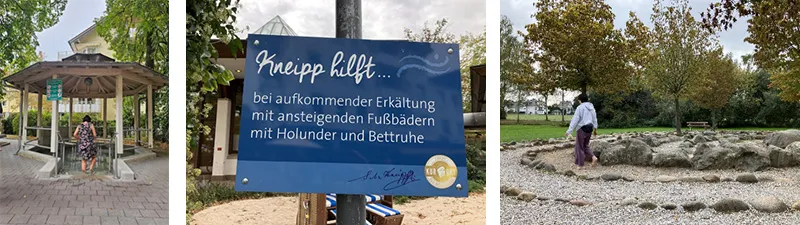
Bad Wörishofen attracts visitors from all over Germany, including the local state of Bavaria. Since rehabilitation trips were permitted even during the COVID-19 pandemic, the town recorded over 70,000 visitors and a total of 370,000 overnight stays between 2020 and 2021.
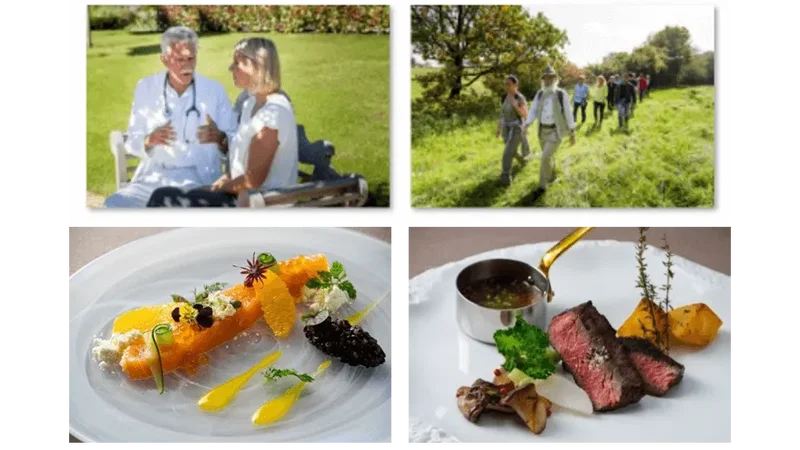
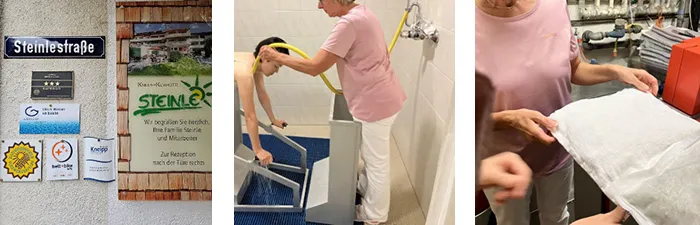
Whether prescribed by a doctor or visiting as a general guest, visitors stay at accommodations offering Kneipp therapy. There, they receive treatments such as hydrotherapy and hay therapy tailored to their symptoms from Heilpraktiker (state-certified naturopaths), while also enjoying walks through the surrounding Kneipp Park and sightseeing.
The Kneipp-Kurhotel Steinle, where I stayed, was an accommodation facility where guests could not only receive Kneipp therapy treatments in the hotel’s therapy rooms but also enjoy healthy meals, as the hotel is certified for whole-food cuisine (using the entire ingredient, including skin and roots).
2. Complementary and Alternative Therapies Practiced in Other Countries
There are other examples, similar to Germany, where the prescription of complementary and alternative therapies—not limited to medication by doctors—has ultimately led to increased tourism.
For example, under Italy’s National Health System (NHS), doctors prescribe the following therapies primarily for the treatment and prevention of respiratory, ENT, and musculoskeletal conditions: (1) balneotherapy, (2) hydrokinetic therapy (using buoyancy for rehabilitation), (3) inhalation therapy, and (4) fango therapy (mud therapy).Patients can receive a one-year treatment cycle (approximately 12 days) at certified spas as part of their treatment for €55 (approximately 8,600 yen); furthermore, partial or full exemptions may apply depending on eligibility criteria.
In Hungary, a country with approximately 1,300 hot springs, about 800 are used for medical purposes, and spa therapy is officially incorporated into the health insurance system.
In Poland, as in Germany, the Ministry of Health certifies regions with excellent climatic conditions and an abundance of natural medicinal substances as health resorts, and with a doctor’s referral, patients can receive treatment and rehabilitation services for 21 to 28 days.
In Canada, there is a system where doctors can prescribe stays within national parks. Since December 2020, doctors have been able to prescribe “time spent in nature” to patients across the entire province, and national parks are being widely utilized for this purpose.
3. Current Status of the System in Japan
In Japan, while doctors do not “prescribe nature therapy involving a stay” as part of insurance-covered treatment, there is a system known as the “medical expense deduction for hot spring therapy.”
Under this system, if you undergo hot spring therapy at a health promotion facility certified by the Ministry of Health, Labour and Welfare and meet the requirements, you can claim a medical expense deduction on your income tax for the facility usage fees and round-trip transportation costs to the facility. The procedure involves obtaining a hot spring therapy prescription from your primary care physician, a hot spring therapy specialist referred by your primary care physician, or a physician affiliated with the certified facility, and then visiting the certified facility.Certified facilities have specialists called “hot spring therapy instructors” who provide guidance on hot spring therapy based on the hot spring therapy prescription.
Users must stay at the facility for at least 7 days within approximately one month. After their stay, they receive a receipt and a Hot Spring Therapy Certificate (or Report) from the facility. (If a Report is issued, the user must later have the physician who issued the Hot Spring Therapy Prescription convert it into a Hot Spring Therapy Certificate.) The process then involves filing a claim with the tax office during the FY tax filing at the end of the FY to receive a refund.
At hot spring facilities in Toyotomi Town, Hokkaido, the water quality is considered effective for improving skin conditions such as atopic dermatitis. Some visitors come with prescriptions from hot spring therapy physicians, and the number of such visitors has been increasing since the facility was certified as a hot spring-based health promotion facility in 2017.
However, the current reality is that the system is not yet widely known among the public. Additionally, the limited number of doctors who actually issue Hot Spring Treatment Prescriptions, the cumbersome procedures required to utilize the system, and the small amount of the tax refund have resulted in low adoption rates.
4. Challenges and Prospects for “Travel Prescriptions” in Japan
I imagine many people think, “I’m tired, so maybe I’ll go to a hot spring,” but while we use the term “hot spring” broadly, the water quality, temperature, and environment vary greatly, and the more severe the symptoms, the more important the choice of destination and the nature of the stay become.
In the countries cited as examples—Germany, Italy, and Hungary—prescriptions tailored to specific conditions and symptoms, such as neuralgia, skin diseases, cardiovascular diseases, and rheumatism, have been established, and as a result, insurance coverage for these treatments is becoming more widespread.
In Japan, “prescription” generally refers to a doctor instructing a patient on the composition and administration of medication based on their condition. However, Germany differs in that the term “doctor” includes “Heilpraktiker”—a medical license limited to complementary and alternative medicine—and that natural therapies are considered “medicines.”
Consequently, while it is not currently possible within Japan’s current healthcare system to directly “prescribe travel,” I believe we can expand the function of “linking” symptoms with travel destinations. In other words, rather than simply stating vaguely that “travel is good for your health,” it is necessary to provide specific recommendations—such as which destinations to visit and how to structure a stay based on specific symptoms—and to accumulate evidence by gathering feedback from users.
By doing so, we expect to see an increase in healthcare professionals interested in natural therapies. As the number of natural therapy specialists grows across various destinations, we also anticipate a broader audience of people choosing travel as part of their treatment or prevention strategies. I believe that when the function of “linking” symptoms with travel destinations is reliably established, the path toward prescribing travel will be paved.
著者