As hopes rise for the revival of in-person MICE events following the resumption of inbound travel, industry groups highlight urgent challenges

Japan resumed welcoming international tourists in June of this year. At the annual general meetings of industry associations representing Japan’s leading convention and exhibition sectors, forums were held to share information. Taking the resumption of inbound tourism as an opportunity, these associations highlighted the pressing challenges facing the MICE industry and urged member companies to take swift action. This report outlines the key points communicated by industry associations as they work toward a full-scale revival of in-person MICE events.
1. Impact on Japan’s Industrial Competitiveness! MICE Industry Associations Share Urgent Challenges
Following their annual general meetings, the Japan Exhibition Association (JEA) and the Japan Convention Association (JCA) organized a session for information sharing. The JEA presented the latest status of exhibition resumption worldwide, while the JCA held a panel discussion on diversity in the convention industry. Although the reception of foreign tourists visiting Japan is gradually resuming, this information-sharing session—held amid economic uncertainty caused by the COVID-19 pandemic and the international situation—provided a valuable opportunity to learn about the latest trends in the industry across various countries. It also served as a crucial occasion for exhibition organizers and convention-related businesses, who are leading the revival of in-person MICE events, to recognize the urgent challenges they face and the importance of taking immediate action.
2. Global Exhibition Resumption Status: Ahead of Japan
At the General Assembly of the Japan Exhibition Association, Christopher Eve, a board member and Chair of the International Promotion Committee, as well as Representative Director of Informa Markets Japan, presented a report on the status of trade show resumption worldwide. Informa Markets is a global trade show organizer that hosts over 500 B2B events and trade shows in 40 countries worldwide, and it can be said to be one of the companies with the most comprehensive understanding of the current status of trade shows globally. Mr. Eve presented the status of trade show resumption in various countries as of May 19, based on data released by UFI (The Global Association of the Exhibition Industry).
(1) Latest Status by Market
Here, we report on the latest reopening status as announced by UFI on June 29. Please note that the charts showing the reopening status released by UFI should be interpreted as follows:
・Green: Generally held without conditions, or with some restrictions (to ensure hygiene measures, social distancing, etc.)
・Yellow: Partially held (with restrictions on event scale) or scheduled to be held ・Red
: Closed (under lockdown)
While events continue in the Asia-Pacific region, “partially held” events remain
Since the Asia-Pacific region had relatively few cases from the outset, trade shows were able to resume early on in most countries, with the exception of Hong Kong and a few others. However, few countries are holding events without restrictions, and many are still affected by national entry restrictions, leaving some countries in the “Yellow” category (partially open or scheduled to open).Singapore, which hosts numerous global trade shows that drive various industrial sectors, turned green in April, and it is believed that participation by overseas exhibitors and visitors is now in full swing. It can be inferred that other countries are following suit, gradually enabling events to be held without restrictions.
Since the fall of 2020, Japan has limited the number of daily visitors and implemented all necessary COVID-19 countermeasures to ensure safe and secure trade shows. However, due to strict entry restrictions, exhibitors have been limited to Japanese companies and the Japanese subsidiaries of foreign firms, and visitors have come exclusively from within Japan. Going forward, it is expected that overseas exhibitors and visitors will return to Japanese trade shows as entry restrictions are eased (Figure 1).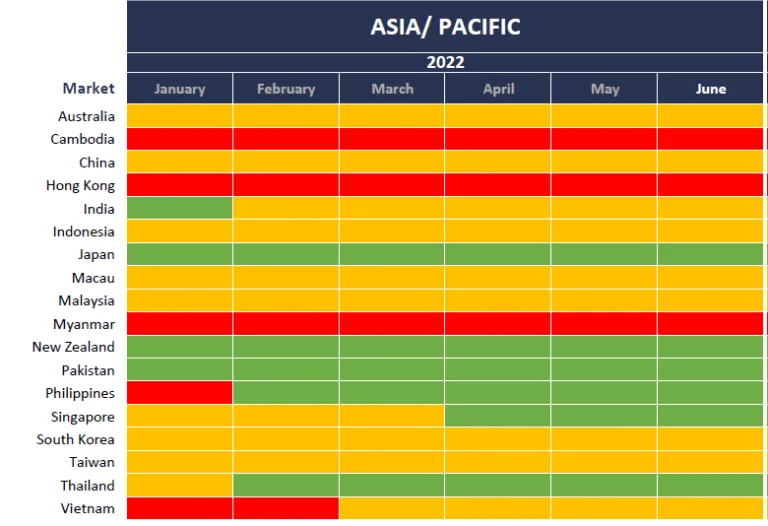
(Figure 1) Status of Events in Asia/Pacific Unrestricted Events in Nearly All European Countries
In Europe, nearly all countries have been able to hold trade shows from February to April in the same manner as before the COVID-19 pandemic. Given that many European countries share land borders, the resumption of trade shows implies accepting participants from both domestic and international sources. Since it is practically difficult for a single country to impose entry restrictions on its own, and given that daily business transactions with foreign companies are routine in distribution and supply chains, it is believed that trade shows are permitting participation from all sources, both domestic and international (Figure 2).
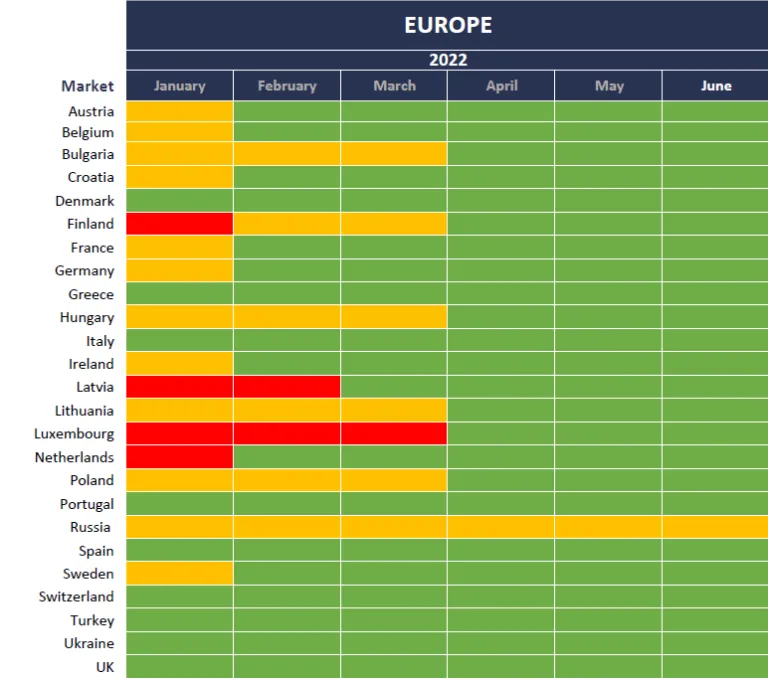
(Figure 2) Status of Trade Shows in Europe The Americas: Unrestricted Events in Nearly All Countries Since April
With the exception of a few countries, the Americas have also fully resumed trade shows since April. As in Europe, it is believed that they are accepting exhibitors and visitors from abroad (Figure 3).
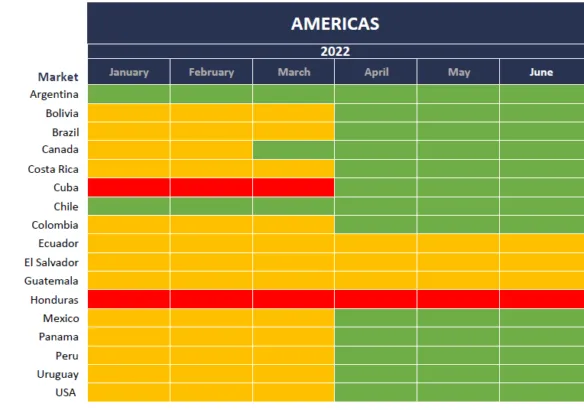
(Figure 3) Status of Trade Shows in Countries Across the Americas
(2) How can we keep pace with global trade shows?
As shown above, major countries overseas have already resumed international trade shows under conditions similar to those before the pandemic, welcoming exhibitors and visitors from abroad and conducting active business negotiations. Yves, President of Informa Markets Japan, has sounded the alarm, stating, “Unless Japan quickly restores entry for overseas exhibitors and the ability for Japanese citizens to travel abroad, and resumes international business as it was before the pandemic, we will fall behind other countries in business recovery.”
For Japanese private companies to maintain competitiveness in their respective industries, isn’t it necessary to fully resume travel with overseas partners to understand the situation in other countries, quickly grasp what has changed during the pandemic when face-to-face communication was impossible, and take appropriate measures? The Japan Exhibition Association is expected to continue providing global information to its member companies, and member companies and exhibitors are expected to make effective use of that information.
3. Is Women’s Participation Progressing? What Does Gender Equality Mean in the Convention Industry?
On June 14, an event organized by the Women’s Committee was held at the general meeting of the Japan Convention Management Association (JCMA) under the theme “Diversity in the MICE Industry: JCMA’s Current Status and Efforts to Promote Diversity. ”At the beginning of the event, the results of a survey conducted in FY 2022 by the Women’s Committee were presented. The survey aimed to assess the current status, future policies, and level of participation in JCMA among member companies and organizations, with a focus on “SDG No. 5: Achieve gender equality” and “promoting diversity.” Below is a summary of the findings.
<Survey Overview>
Representatives: 34
Employees: 157
*Industries include planning and operations, convention bureaus, venues, audiovisual equipment, displays, printing, etc.
*Surveys were conducted separately for representatives
(management) and employees/staff
*59% of employees/staff are women
(1) Gender Ratio of Managers and Executives (as reported by "Representatives [Management]")
Only 18% of companies had female managers accounting for 50% or more of the total, while 62% had no female executives at all, indicating that the number of women in key management and executive positions remains low (Figures 4 and 5).
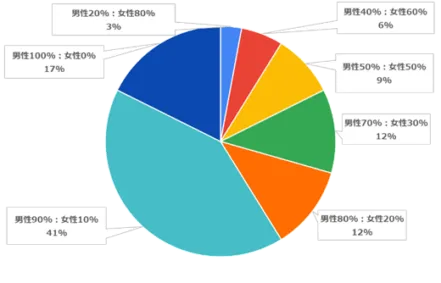
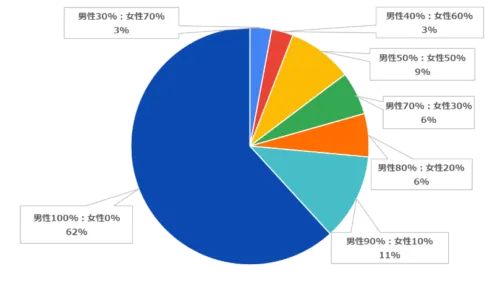
(2) Differences in Perceptions Regarding Women’s Participation Between “Representatives (Executive Management)” and “Employees”
While 90% of “representatives (executive management)” feel that “women are active,” only 78% of “employees” answered that “women are active,” a 13-point difference compared to representatives (Figure 6).
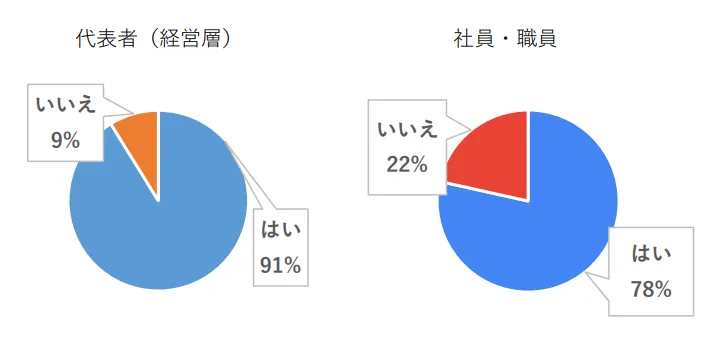
(3) Employees’ and staff members’ views on gender equality in performance evaluations
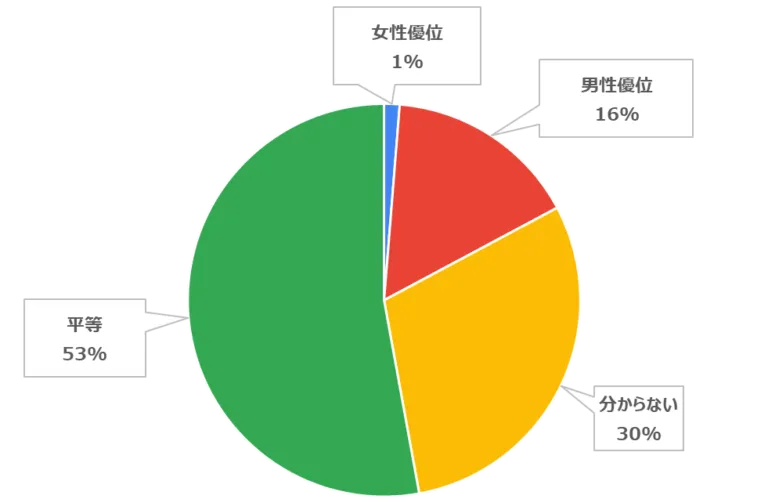
While approximately half of employees and staff feel that performance evaluations are gender-equal, 30% responded that they did not know (Figure 7).
(4) Challenges in the convention industry revealed by the survey results
Convention operations are generally considered to require meticulous attention to detail and are often described as work well-suited for women. Indeed, many women are active in operational roles at numerous convention-related companies and organizations, including PCOs (Professional Congress Organizers).Although the vast majority of both representatives and employees feel that “women are active” within their companies, the survey revealed that the proportion of women in managerial positions is not high, and the number of female board members is extremely low. Furthermore
, regarding whether men and women are evaluated equally in terms of performance, it is worth noting that nearly half of the “employees” do not feel there is equality or have doubts about whether it exists.
Regarding participation in industry associations—one of the survey’s objectives—73% of “representatives (executive management)” reported participating in JCMA events, whereas 66% of “employees and staff” stated they had never participated in JCMA events, revealing that participation in industry association activities is limited to representatives.
(5) Information Sharing During the Panel Discussion
The panel discussion featured representatives from member companies and organizations: Miki Nishida, President of PCO Co., Ltd.; Motomu Ozaki, President of Eizo Center Co., Ltd.; Justin August, Director of Sakura International Co., Ltd.; and Tetsuya Katsutoshi, Assistant Section Chief at the Kobe Convention Bureau (Kobe Tourism Bureau). They shared their respective companies’ and organizations’ initiatives and offered opinions on differences based on gender and nationality. Particularly memorable was the presentation on Eizo Center’s initiatives.
Eizo Center is a video and audio equipment company that was once a male-dominated workplace. However, driven by challenges in securing talent, the company has actively promoted the hiring of women, and women now account for 21.9% of its total workforce. The company has established a project team aimed at creating a workplace where women can thrive long-term, conducting interviews with employees in various roles, as well as roundtable discussions and opinion-sharing sessions. We believe these initiatives are deepening mutual understanding among employees and contributing to a workplace where it is easier to continue working.
As a summary, Yoko Nishikawa, Chair of the Women’s Committee (and Director of Convex Co., Ltd.), commented: “Survey results revealed that women’s participation in JCMA activities is currently limited. We suspect that information is not reaching women who are active in the industry, so we intend to address this in our future activities. ”The Women’s Committee has announced that it will expand its focus to “promoting diversity” and will continue its activities with the goal of creating a convention industry that respects all forms of diversity, not just women.
According to the 2022 edition of the “Global Gender Gap Report” released by the World Economic Forum (WEF) on July 13, Japan ranked 116th out of 146 countries in the Gender Gap Index, placing last among the Group of Seven (G7) nations. Furthermore, Japan ranked 130th in terms of the proportion of women in managerial positions in the economic sector—a disappointing result.
I feel that behind Japan’s current situation and the results of the JCMA survey lies a set of entrenched values common to Japanese society. I hope that as many people as possible will take this to heart and use it as an opportunity to reexamine their own values.
Source: Full text of JCMA survey results
I believe the most commendable aspect of these two events was that members of both organizations took the stage themselves to share their insights and experiences with other members. The Japan Exhibition Association used global channels to share the latest status of exhibition events worldwide, while the Japan Convention Association shared the current reality as a demonstration of its commitment to promoting gender equality. At the same time, during the panel discussion, they shared organizational success stories that transcended differences in gender, nationality, and job titles.
Through these two events, I truly realized that, especially in uncertain times like these, it is crucial for companies and organizations to share their respective insights so that the entire industry can develop together.
著者