The Role of the Travel and Tourism Sector in Achieving the SDGs: A Significant Gap Between Japan and Other Countries in Perceptions of "Travel That Contributes to Achieving the SDGs"
It has been four years since the launch of the United Nations Sustainable Development Goals (SDGs). The SDGs are a set of global goals aimed at creating a society where everyone can enjoy peace and prosperity, both now and in the future, and consist of 17 specific targets to be achieved by 2030. In this column, we will examine the role that Japan’s travel and tourism sector can play in achieving the SDGs.
It has been four years since the launch of the United Nations Sustainable Development Goals (SDGs). The SDGs are a set of global goals aimed at creating a society where everyone can enjoy peace and prosperity, both now and in the future. Seventeen goals (Table 1) have been established to be achieved by 2030.
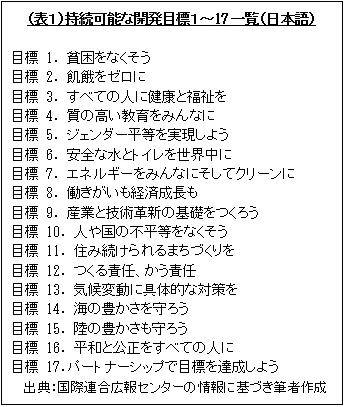
Current achievement rates for each country are published in the “UN Sustainable Development Goals Progress Report.” Denmark ranks first, with other top positions also held by European countries, while Japan ranks 15th. In this column, we will examine the role the Japanese travel and tourism sector can play in contributing to the achievement of the SDGs.
1. Assessment of Top-Ranked Countries’ Progress and the Role Expected of the Tourism Sector in Achieving the SDGs
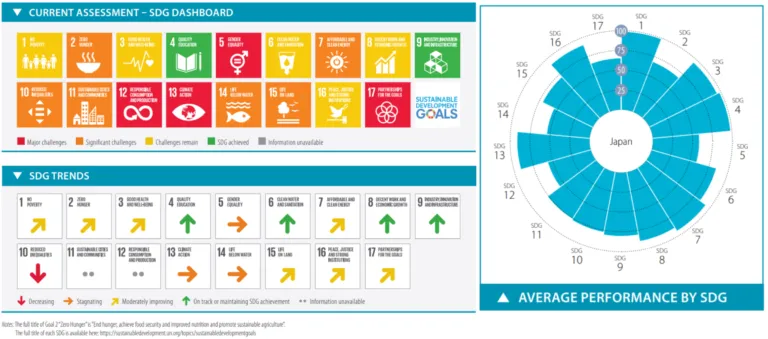
According to the 2019 report, Denmark ranked first in the SDG achievement rankings, followed by Sweden in second and Finland in third; the top 20 were all European countries.Japan ranked 15th, with low scores for Goal 5 (Achieve gender equality), Goal 12 (Ensure sustainable consumption and production), Goal 13 (Take urgent action to combat climate change), Goal 14 (Conserve and sustainably use the oceans, seas, and marine resources), and Goal 17 (Strengthen the means of implementation and revitalize the global partnership for sustainable development).
Denmark maintained its progress on Goal 1 (No Poverty), Goal 10 (Reduced Inequalities), and Goal 16 (Peace, Justice, and Strong Institutions), while it experienced setbacks on Goal 12 (Responsible Consumption and Production) and Goal 14 (Life Below Water).Sweden, which came in a close second, “maintained progress” on Goal 1 (No Poverty), Goal 3 (Good Health and Well-being), and Goal 7 (Affordable and Clean Energy), while “regressing or declining” on Goal 12 (Responsible Consumption and Production) and Goal 13 (Climate Action). This suggests that even for top-ranking countries, achieving the goals is difficult.
Among the 17 SDGs, the ones that explicitly state expectations for the tourism sector in achieving the goals are Goal 8 (Decent Work and Economic Growth), Goal 12 (Responsible Consumption and Production), and Goal 14 (Life Below Water) (Table 2). This reflects the expectation that tourism will generate local employment and income while respecting tangible and intangible cultural heritage and the natural environment, thereby serving as a driving force for sustainable development.
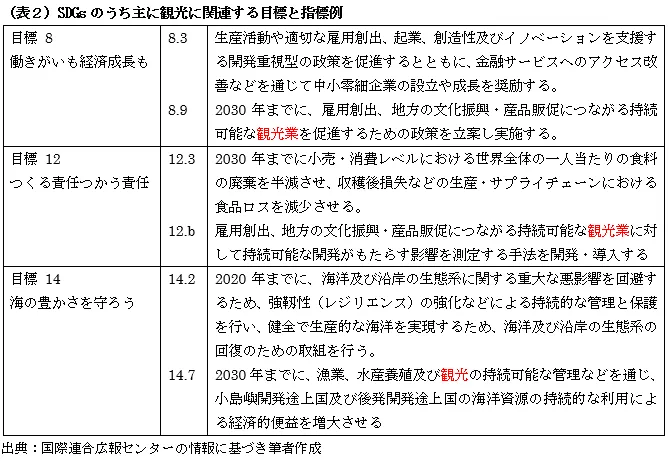
Furthermore, the UNWTO (United Nations World Tourism Organization) has confirmed that tourism can make significant contributions to the SDGs not only in economic terms but also in areas such as society, poverty, nature and the environment, culture and heritage, and the promotion of mutual understanding and peace, noting that it has the potential to be relevant to all 17 SDGs.
2. Assessment of SDG Achievement in the Tourism Sector and Country-Specific Trends
So, what is the current status of SDG initiatives in the domestic and international travel and tourism sectors? Let’s examine country-specific assessments by focusing on three goals: 8, 12, and 14.
According to the report, Japan was assessed as showing “modest progress” on Goal 8, “decline or regression” on Goal 12, and “stagnation” on Goal 14.Among the 36 member countries of the OECD (Organization for Economic Cooperation and Development), no country has been assessed as “achieving” Goals 8, 12, or 14. In particular, for Goal 14, 10 countries were assessed as “stagnant,” while the remaining 27 were assessed as “declining or regressing.”
While no country outside the OECD has achieved all three goals, Estonia and Peru have received relatively high ratings. Furthermore, Cuba is the only country to have achieved Goal 8, while Bangladesh, Laos, Myanmar, Nepal, and Timor-Leste have achieved Goal 12 (Table 3).
3. Awareness and Initiatives for Achieving the SDGs through Tourism
Japanese people’s awareness of the SDGs is lower than that of foreigners, and some view travel that considers the SDGs and sustainability as something that detracts from the enjoyment of travel
Our company conducted a “Survey on Travelers’ Awareness of the SDGs.” The results revealed significant differences in awareness of the SDGs and in attitudes toward travel that takes the SDGs and sustainability into account.
[Survey Overview]
Method: Online survey
Survey Overview: Domestic
・Survey Participants: Men and women aged 20–69 nationwide; 100 respondents per age group; 500 respondents total
・Eligibility Criteria: Individuals who have traveled within the past year (domestic or international)
・Sample Size: 500 respondents
Survey Overview: Overseas
・Survey Region: Men and women aged 20–69 living in English-speaking countries (UK, US, and Australia), for a total of 122 respondents
・Eligibility criteria: Individuals who have traveled within the past year (domestic or international)
・Sample size: 100
1) Awareness of the SDGs
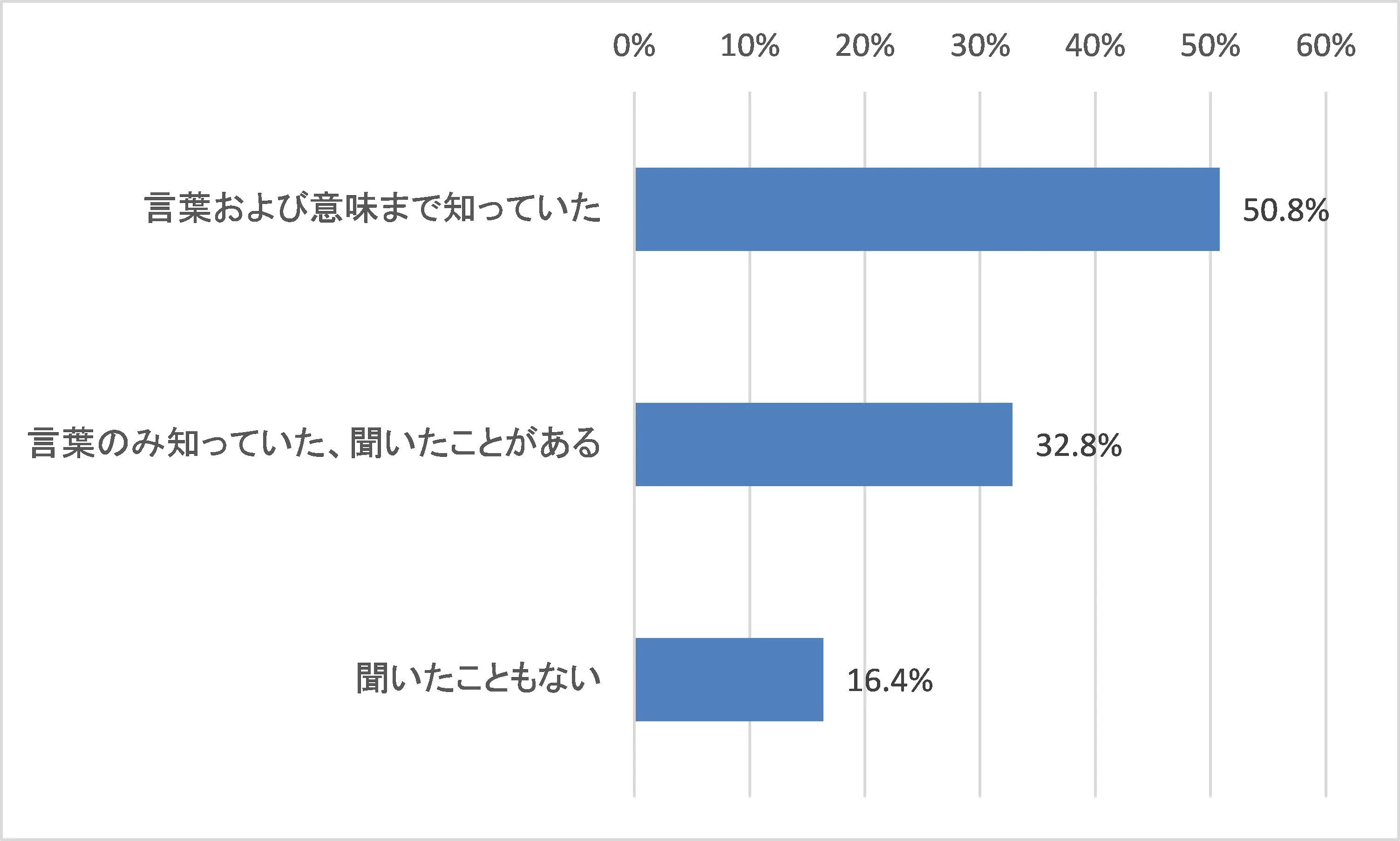
Awareness of the SDGs was high among foreign respondents at 84.2%, while it stood at 29.8% among Japanese respondents. Additionally, 100% of foreign respondents stated that they “sympathize with the SDGs,” whereas only 85% of Japanese respondents did so (Figures 1 and 2).
(Figure 1) Awareness of the SDGs (Japanese)
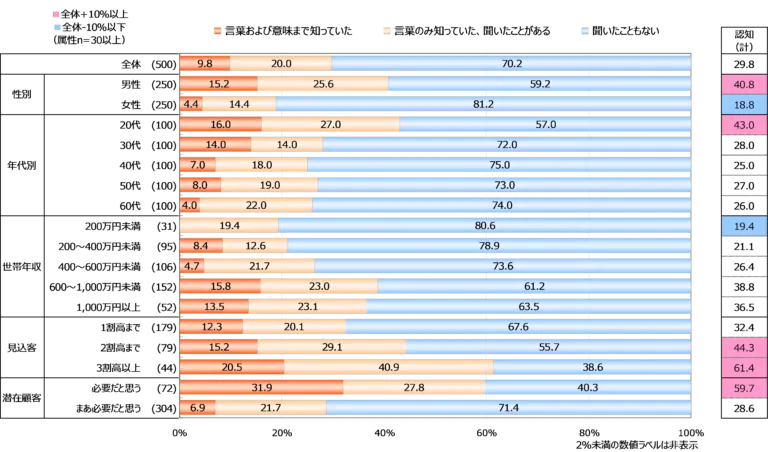
(Figure 2) Awareness of the SDGs (Foreigners)
2) Necessity and Reasons for Travel Contributing to SDG Achievement
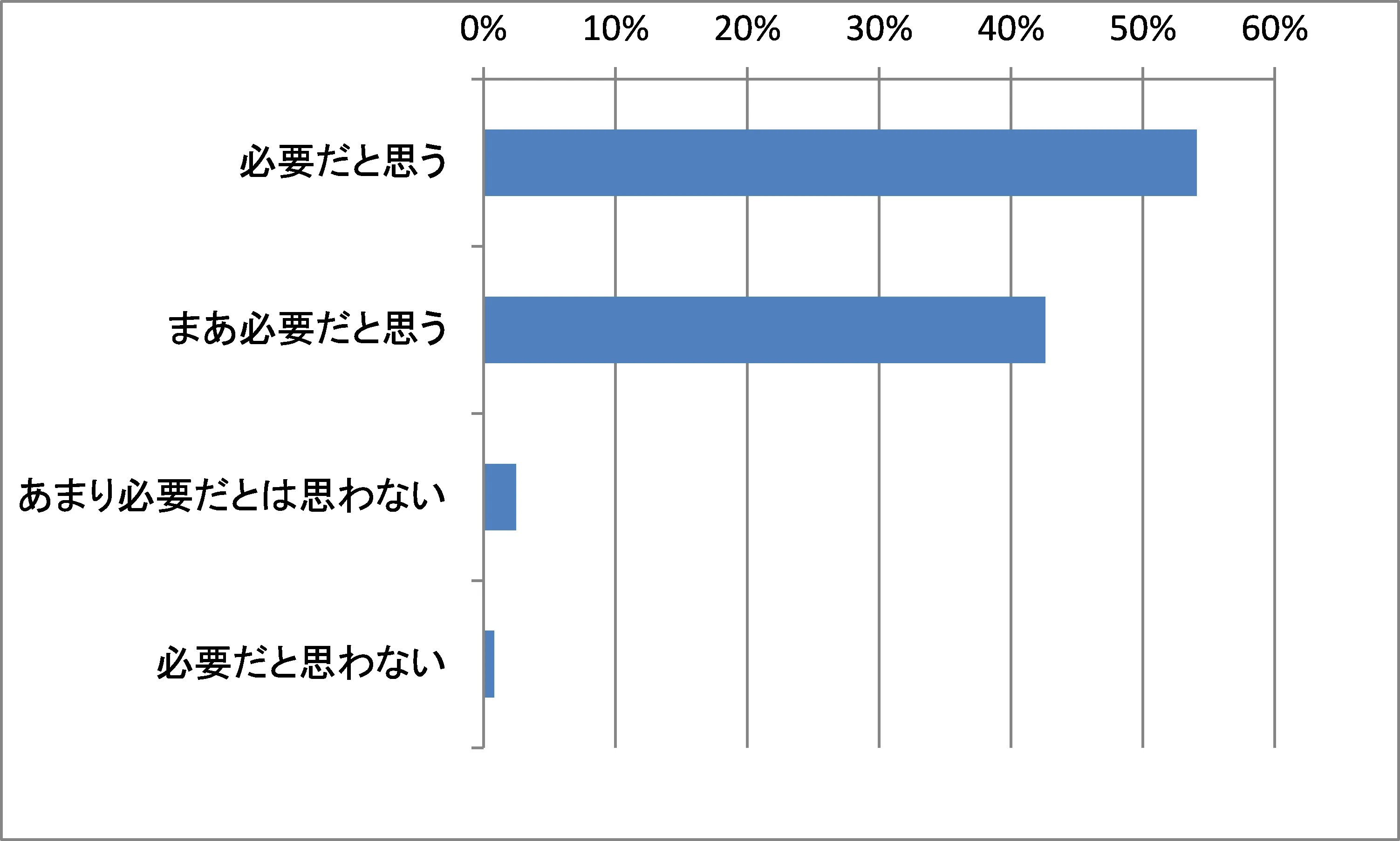
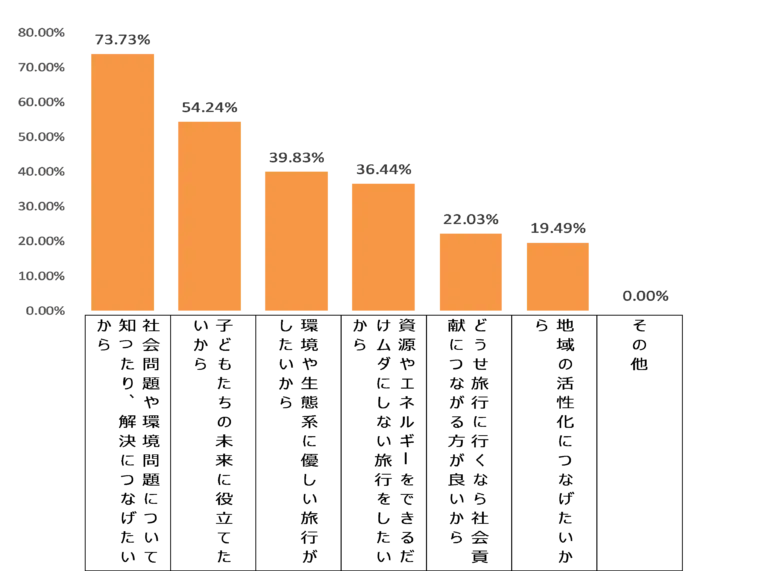
While 96.7% of foreign respondents—nearly all of them—recognized the necessity of such travel, only 75.2% of Japanese respondents did so. Furthermore, regarding the reasons for believing it is necessary, 73.7% of foreign respondents cited “to learn about social and environmental issues and help solve them,” compared to 39.4% of Japanese respondents. Regarding the reason “to contribute to the future of children,” 50.4% of Japanese respondents and 54.2% of foreign respondents agreed. Furthermore, 25% of Japanese respondents did not recognize the necessity of travel that contributes to achieving the SDGs, and half of them cited “because tourism is simply for enjoyment” as the reason (Figures 3–7).
(Figure 3) Necessity of SDG-conscious travel (Japanese)

(Figure 4) Necessity of SDG-conscious travel (Foreigners)
(Figure 5) Reasons why SDG-conscious travel is necessary (Japanese)

(Figure 6) Reasons Why SDG-Conscious Travel Is Necessary (Foreign Visitors)
(Figure 7) Reasons why SDG-conscious travel is not necessary (Japanese)

(3) Interest in Travel Experiences That Contribute to Achieving the SDGs
The results showed that Japanese people have a high level of interest in “travel that utilizes accommodations and restaurants promoting local production for local consumption,” “travel that incorporates meal menus featuring carefully selected ingredients served in appropriate portions,” “travel that utilizes accommodations powered by natural energy sources,” and “travel that utilizes public transportation. ”On the other hand, foreign visitors showed a high level of interest in travel that contributes to solving social issues through their own travel experiences, such as “trips where the supplies used during the tour support people with disabilities or promote fair trade.” Regarding the fact that the price of SDG-conscious travel is higher than that of regular travel, while about 90% of foreign visitors found this acceptable, only about 70% of Japanese respondents did; in fact, quite a few Japanese respondents stated they would not use such services if the price were higher (Fig. 8, Fig. 9).
(Figure 8) Areas of interest regarding SDG-conscious travel (Japanese)

(Figure 9) Areas of interest regarding SDG-conscious travel (foreigners)

4. Initiatives in Japan and Overseas to Achieve the SDGs through Tourism
To achieve the SDGs, travel agencies, DMOs, and tourism associations overseas are actively implementing initiatives that incorporate the SDGs, and by working toward these goals, they are enhancing their corporate value.
(1) Initiatives by Overseas Travel Agencies
TUI Group (Germany)
According to the group’s annual report, the entire group is pursuing sustainability in the following areas:
- Various energy efficiency measures related to transportation
- Hotel operations prioritizing sustainability
- Development and implementation of local tours that meet sustainability standards
- Funding and implementation of projects for sustainable tourism
- Creating a rewarding work environment as a sustainable company and promoting diversity among employees in terms of gender, nationality, age, and work styles
Furthermore, we aim to enhance our brand value as a company committed to sustainable tourism by communicating the importance of sustainable travel products to our customers and expanding our range of sustainability-focused travel products that meet their needs.
Wonderful Copenhagen (Denmark)
Wonderful Copenhagen, a DMO responsible for the promotion and development of business and leisure tourism in the Greater Copenhagen area, including the city of Copenhagen, launched a tourism strategy titled “THE END OF TOURISM” in 2017 and a new strategy titled “Tourism for Good” in 2018 to promote sustainable tourism. Initiatives aimed at contributing to the SDGs through tourism are currently underway.
- 100% of large-scale complexes and 90% of large hotels will obtain third-party sustainability certification.
- Maintain a score of 90% or higher and a ranking within the top three on the Global Destination Sustainability Index.
- Targets have been set, such as increasing the organic conversion rate for food and beverages to 30% by 2019, 60% by 2020, and 90% by 2021.
Thompson Okanagan Tourism Association (Canada)
The Thompson Okanagan Tourism Association, located in British Columbia, Canada, promotes tourism with a particular focus on Goals 8, 11, 12, and 17.The region, which welcomes 3.5 million visitors annually, consists of 90 villages and 33 local communities. It supports the development of local communities by spreading tourist visits throughout the year to boost the economy and create jobs, expanding electric vehicle charging stations, and adhering to principles of environmental, social, and cultural sustainability. Promoting tourism that engages businesses and communities contributes to all 17 SDGs.
(2) Japan’s Travel and Tourism Industry
Efforts toward the SDGs tend to remain confined to internal organizational initiatives
On the other hand, in Japan’s travel and tourism industry, SDG initiatives tend to be limited to CSR activities or efforts to improve the working environment for employees, and it cannot be said that they are developing as a business.
Our company conducted a survey on SDG initiatives related to tourism, focusing primarily on travel agencies, accommodation providers, transportation operators, and local governments. The results revealed that while many businesses are addressing environmental and employment issues as part of their CSR activities, they are hardly implementing initiatives that directly address the SDGs, indicating that the concept has not yet fully taken root. While some travel agencies are attempting to develop new products, many major travel agencies focus primarily on internal initiatives, such as improving the working environment for employees, and have not yet succeeded in establishing the SDGs as a core business component.
In the accommodation sector, initiatives are centered on “responsible consumption,” such as conserving amenities and promoting understanding of cleaning practices for sheets and other items. In the transportation sector, while measures related to energy consumption and environmental considerations are progressing, there are no initiatives that directly impact tourism activities. Furthermore, while local governments in tourist destinations are taking steps to promote migration through job creation—such as fostering industries that form the foundation of sustainable regions and building local networks—efforts to address the SDGs specifically through tourism have been limited to isolated initiatives.
5. What role is expected of the tourism industry in contributing to the achievement of the SDGs?
The survey results revealed that, compared to foreigners, Japanese people generally have lower levels of understanding, interest, and awareness regarding the necessity of travel that contributes to achieving the SDGs. In particular, there is a strong tendency in Japan to view tourism as “simply having fun,” and a latent perception that “enjoyment” is at odds with social issues—specifically, the promotion of “sustainability and the SDGs. ”However, among Japanese people—particularly younger generations centered on those in their 20s, those in their 50s, and those with relatively high household incomes—awareness of social and environmental issues is high, and there is a strong tendency to believe that “travel that contributes to achieving the SDGs is necessary” as a means to help solve such problems. This indicates that these groups have a need for tourism that goes beyond mere enjoyment.
Globally, the range of products and services available is expanding in tandem with growing interest in travel that contributes to achieving the SDGs. In Japan, while neither the tourism industry’s initiatives regarding the SDGs nor travelers’ awareness of them have fully taken root, demand for products and services that take the SDGs into account is expected to rise in the future. This is driven by the ethical consumption trends among foreign visitors to Japan—who form the backbone of the travel market—as well as Japanese travelers in their 20s and 50s.By focusing on travelers’ needs and providing appropriate products and services, business opportunities will expand. Enjoyment and sustainability are not mutually exclusive. It can be said that the role of the travel and tourism industry in achieving the SDGs by 2030 is to guide travelers so that, while enjoying their trips, they make diverse discoveries and take positive actions toward a sustainable society.
References
・Bertelsmann Stiftung and Sustainable Development Solutions Network (2019)
・United Nations Sustainable Development Goals (SDGs) Progress Report (SUSTAINABLE DEVELOPMENT REPORT 2019)
・Germany: TUI Group
・Canada: Thompson Okanagan Tourism Association Website
・Denmark: IDEAS FOR GOOD
・UNWTO: Tourism for SDGs