"Tourism SX"—Beyond Sustainable Tourism
While tourism is a major driving force behind regional economies, challenges such as overcrowding and local friction caused by the rapid increase in international visitors are becoming increasingly serious. Amid these circumstances, the principles of sustainable tourism have gained prominence; however, relying on them alone is becoming insufficient to secure the future of these regions. In this column, we will explore “Tourism Sustainability Transformation (Tourism SX),” a new perspective through which regions, travelers, and society can collectively foster new value and create a sustainable future through tourism.
1. Introduction: Why “Tourism SX” Now?
Tourism has grown to become a vital pillar supporting regional economies. At the same time, however, challenges such as congestion caused by large concentrations of tourists and the impact on residents’ daily lives have become apparent. In recent years, in particular, the rapid increase in international visitors to Japan has led to discussions in some regions about the limits of their capacity to accommodate tourists.
As a response to these challenges, the concept of “sustainable tourism”—which promotes tourism while protecting the natural environment and cultural resources—has gained traction, and efforts to promote sustainable tourism are underway in Japan, led by the Japan Tourism Agency.
However, there are many who argue that sustainable tourism has remained largely a matter of promoting ideals and has not yielded sufficient results in terms of implementation. While efforts to reduce environmental impact are progressing, moves to transform the structure of tourism itself remain limited, and there is a tendency for “sustainability” to be treated merely as an added value.
Now, as global social changes accelerate, tourism is required to adopt a perspective that goes beyond mere “maintenance” and proactively nurtures the future of local communities. Furthermore, initiatives are needed to leverage local resources and continuously create new value through tourism.
Against this backdrop, this column introduces “Tourism Sustainability Transformation (Tourism SX)” as a new perspective for redefining the role of tourism. It is a framework for new challenges that brings together tourist destinations, travelers, and local communities to co-create value for the future.
2. From Sustainable Tourism to Tourism SX: A New Form of Tourism
"Sustainable Tourism" has gained international traction as an approach that aims for a balanced form of tourism—one that minimizes the impact of tourism on the natural environment and cultural assets while also taking into account the local economy and residents’ livelihoods. In Japan as well, efforts to promote sustainable tourism are being led by the Japan Tourism Agency. However, it cannot be said that these principles are always fully implemented on the ground. While initiatives such as the development of eco-friendly facilities and the acquisition of sustainability certifications are progressing, movements to transform the very structure of tourism remain limited, and there are many cases where “sustainability” remains merely an additional element.
Furthermore, the severity and pace of the challenges currently facing the entire world are greater than ever before. Climate change, population decline, shifts in social structures, and the diversification of lifestyles—these changes are beginning to have a direct impact on the survival and value creation of tourist destinations.
In such times, simply “protecting existing resources” is no longer sufficient. The ability to continuously rebuild regional value while adapting to change is essential. While the principles of sustainable tourism are important, we must not limit them to merely “defensive” measures; rather, we need the power for tourism destinations themselves to proactively anticipate societal shifts and design their own futures. What is now required of the tourism industry is a perspective that does not wait for change but actively forges a future with its own hands.
As a new approach to meet the demands of this era, we introduce the concept of “Tourism Sustainability Transformation (Tourism SX).”
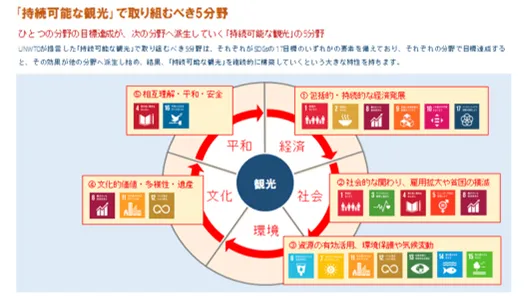
SX (Sustainability Transformation) is a concept that takes environmental and social challenges as its starting point to fundamentally transform the very process of value creation toward a sustainable future. In recent years, it has garnered attention in the fields of corporate management and public administration, and holds the potential to be applied to the tourism sector as well.
Tourism SX is structured around the following three key elements.
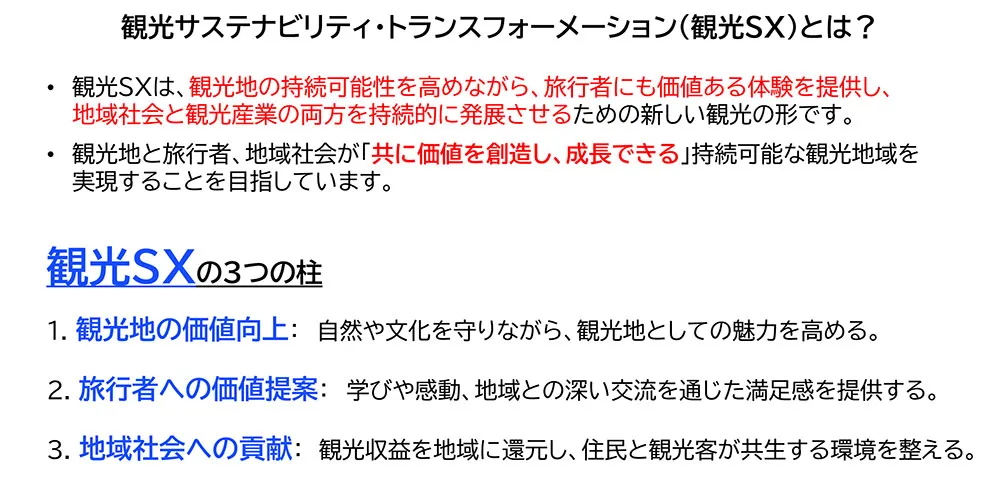
As shown in this figure, Tourism SX positions the three elements—“enhancing the value of tourist destinations,” “offering value to travelers,” and “contributing to local communities”—as mutually supportive. The goal is for these three parties—tourist destinations, travelers, and local communities—to develop together through a cycle of value creation.
First is the enhancement of destination value. Rather than merely “preserving” local resources such as nature, culture, and landscapes, we seek to “utilize, refine, and communicate” them to enhance the region’s unique appeal.
Second is value propositions for travelers. We are moving away from consumption-based tourism and placing greater emphasis on “meaningful experiences” for travelers, such as learning, inspiration, and connections with the local community. This fosters positive changes in travelers’ attitudes and behaviors, helping to build new relationships with the region.
The positive cycle originating from value propositions for travelers is illustrated in the following figure.
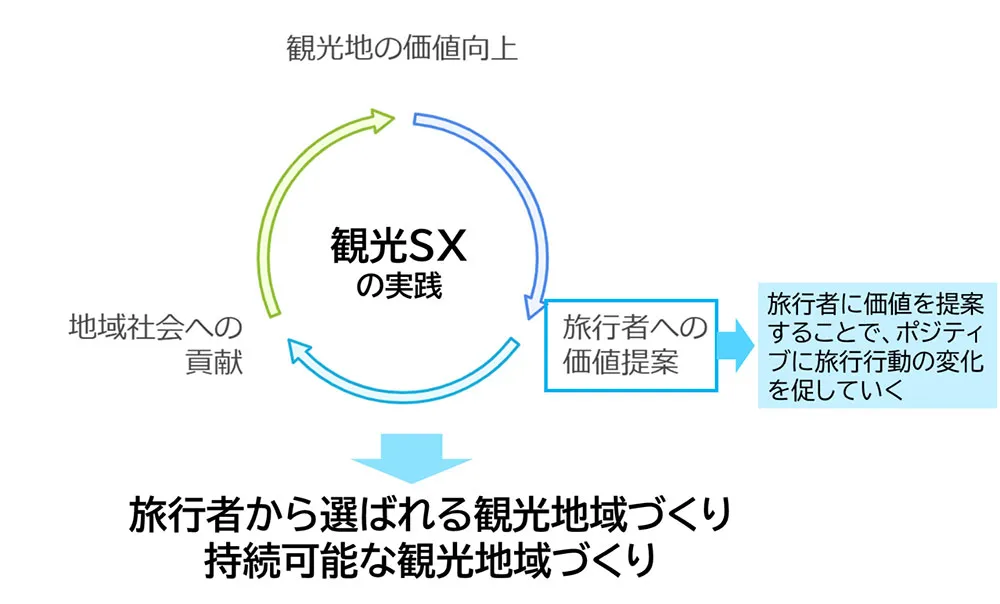
By proposing new value to travelers, their behavior changes, which in turn contributes to the local community. The positive impact on the local community enhances the value of the entire destination, leading to the provision of even more attractive experiences. This virtuous cycle is the core concept of Tourism SX.
Third is co-creation with the local community. We will return the economic benefits generated by tourism to the region, contributing to an improved quality of life for residents, while also building a relationship in which tourists and local residents become partners supporting the region’s future together.
Through these three pillars, Tourism SX is an approach that reexamines the very purpose and structure of tourism, nurtures local resources, and creates new value for the future.
Transforming tourism from something “to be consumed” into something “to be nurtured and passed on to the future”—this is the new path that Tourism SX seeks to pioneer.
3. Insights from Kyoto City’s Tourism SX Initiatives
Kyoto City’s initiatives offer many insights when considering the new perspective of Tourism SX in concrete terms. While Kyoto City does not explicitly define its own policies as “Tourism SX,” it has consistently implemented practices that align with the direction of SX while earnestly addressing the challenges surrounding tourism.
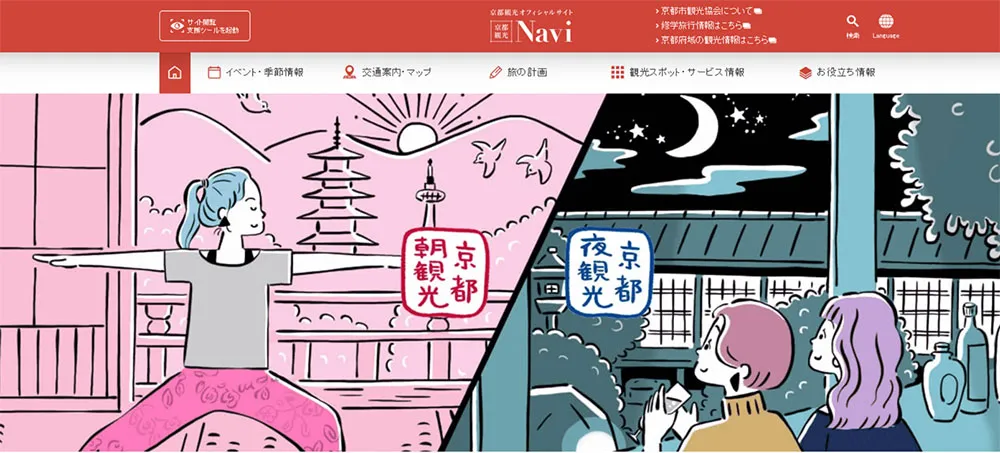
One such initiative is the effort to spread out tourist visits over time. In response to the tendency for tourist activity to concentrate during the day, Kyoto City has developed new tourism programs for the early morning and evening hours. Examples include early morning visits to temples and shrines when they are quiet, and special nighttime viewings. A key feature of these initiatives is that they not only help avoid crowds but also create unique experiential value for travelers. Shifting the timing of visits is fostering new relationships between the local community and travelers.
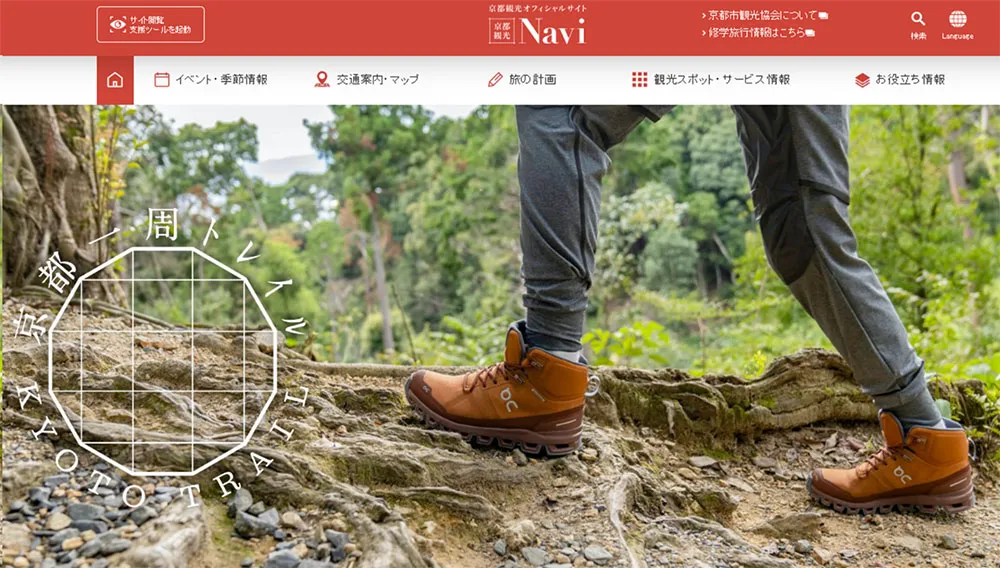
Efforts to disperse visitors geographically are also drawing attention. In response to the concentration of tourists in the city center, Kyoto City has been promoting measures to guide visitors to suburban and mountainous areas, such as the “Kyoto Loop Trail.” This network of hiking trails provides opportunities to experience nature and local culture while remaining close to the city, ensuring tourist routes that do not rely solely on the city center. This initiative resonates with SX-style thinking, as it goes beyond mere dispersion measures to refine region-specific resources into new tourism assets.
A commitment to coexistence with local communities is another key feature of Kyoto City’s initiatives. The “Kyoto Tourism Ethics,” formulated in 2020, serves as a code of conduct for tourism operators, travelers, and local residents to foster tourism while respecting one another. It promotes a shift in values, emphasizing consideration for local culture and living environments, as well as shared etiquette. This initiative is underpinned by a proactive perspective that views tourism as an integral part of the community.
Furthermore, the utilization of the lodging tax is also noteworthy. Kyoto City invests the revenue from the lodging tax collected from tourists into public projects such as the removal of overhead power lines and landscape preservation. This system, which circulates the economic benefits of tourism back into the community and contributes to improving the quality of life for residents, can be seen as a concrete model of the “co-creation and reinvestment” that Tourism SX aims to achieve.
In this way, Kyoto City’s initiatives do more than simply redirect tourist flows. A clear commitment to enhancing the quality of tourism itself and redefining it as a force that contributes to the region’s future is evident throughout.
The case of Kyoto City provides valuable insights for translating the concept of Tourism SX from mere theory into practical action.
4. The Essence of Tourism SX Revealed Through Kyoto’s Initiatives
Kyoto City’s series of initiatives is not merely a response to tourism challenges. A consistent, proactive stance is evident—one that questions the very nature of tourism and seeks to link it to the future of the region.
In particular, measures to disperse tourism across time and space—such as morning and evening tourism, and the Kyoto Loop Trail—go beyond merely avoiding congestion; they work to enhance the experiential value for travelers. Experiencing the region’s true charm during quieter hours, and encountering nature and local life away from the hustle and bustle of the city center. This improvement in the quality of such experiences demonstrates the potential for tourism to transform from mere consumer behavior into an activity that leaves a deep impression on travelers’ lives.
Furthermore, initiatives such as the formulation of tourism ethics and efforts to prioritize coexistence with residents are fostering a shift in mindset—from viewing tourism as something “imposed from the outside” to recognizing it as something the community should proactively nurture. “Both travelers and residents respect one another as members of the community and become partners in supporting the region’s future.” This paradigm shift aligns deeply with the concept of “co-creation,” which lies at the core of Tourism SX.
Furthermore, Kyoto City is working to create mechanisms that channel the economic benefits of tourism back into public value. Projects such as the removal of overhead power lines and landscape preservation initiatives, funded by the accommodation tax, are excellent examples of efforts aimed at ensuring that tourism contributes to improving the quality of life for the entire region. Symbolizing this trend is the “sustainable circular model” proposed by Kyoto City, which aims to improve the quality of life (and satisfaction) for tourists, local residents, and tourism businesses alike.
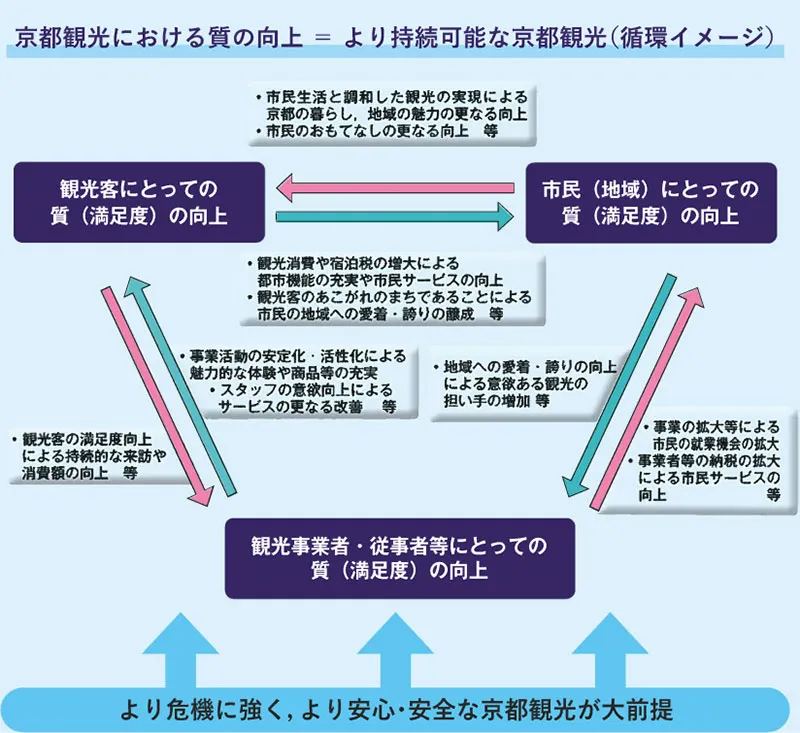
Kyoto City seeks to achieve sustainable tourism by enhancing satisfaction levels for tourists, citizens, and tourism businesses and workers, and fostering a virtuous cycle among these three parties. This approach is fundamentally aligned with the “community-led tourism value creation process” that Tourism SX aims to achieve.
Tourism SX is a process whereby regions carve out their own future through their own endogenous efforts, rather than relying on external solutions to the challenges they face. Kyoto City’s initiatives provide us with important insights in this regard.
5. Steps Toward a Transition to SX Tourism
Tourism SX cannot be realized through mere ideals or goal-setting alone. To generate concrete change within local communities, it is essential to establish a system in which all stakeholders involved in tourism—travelers, private-sector businesses, and local communities—support one another and circulate value.
The following cycle diagram symbolically illustrates the relationship between these three parties.
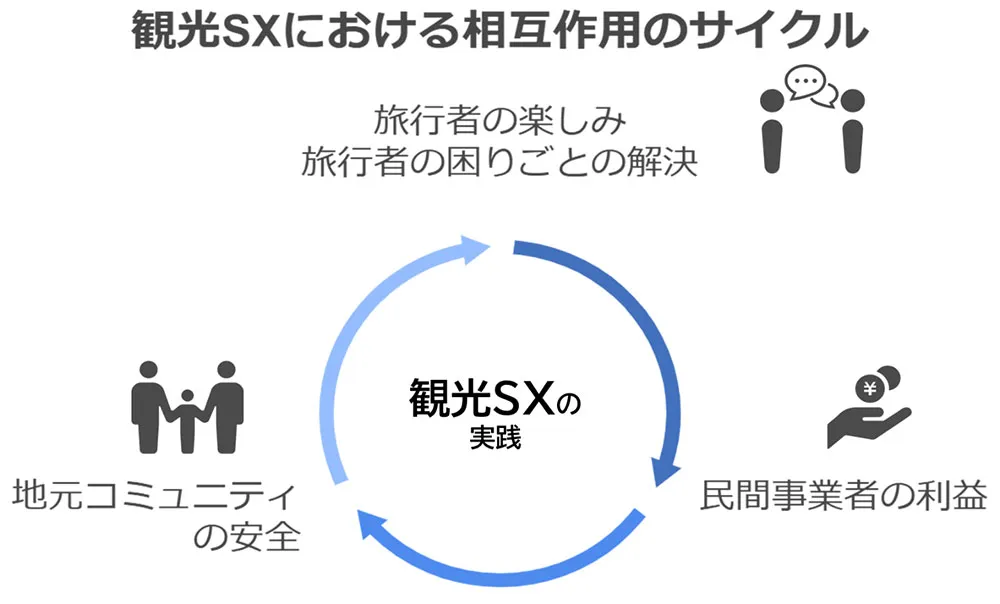
Travelers enhance their travel satisfaction by enjoying the local area and resolving any issues they encounter, while private businesses earn appropriate profits by providing high-quality services.
Meanwhile, local communities benefit from tourism while safeguarding their own safety and quality of life. As the satisfaction of these three parties circulates in a balanced manner, the entire tourist destination achieves sustainable growth. This is precisely the “mechanism of co-creation and circulation” that Tourism SX aims to achieve.
From this perspective, the challenges regions must address to transition to SX Tourism are wide-ranging.
The starting point is the reevaluation of local resources. We must reexamine region-specific resources—such as nature, culture, history, and daily life—not merely as tourism content, but as symbols of local pride and the region’s future. Building on this, we must reconstruct a tourism vision rooted in local values and principles, rather than focusing solely on economic benefits.
Furthermore, careful dialogue with the local community is essential. By understanding how tourism is perceived by local residents and listening to both their expectations and concerns, we can appropriately manage the balance between the impacts of tourism and social carrying capacity. In particular, when promoting sustainable tourism, it is crucial to introduce the concept of “social carrying capacity” and implement initiatives to visualize the degree of coexistence with the local community.
To enhance the effectiveness of SX tourism, it is also necessary to develop evaluation metrics to objectively assess results. We must establish a set of indicators that incorporate diverse perspectives—such as reducing environmental impact, contributing to the local economy, measuring resident satisfaction, and supporting cultural preservation—and create a cycle for continuously verifying and improving the effectiveness of our initiatives.
Developing human resources capable of managing these processes is also essential. We must cultivate talent that goes beyond merely managing operations to envision the region’s future and create value through tourism. It will be necessary for government officials, tourism operators, DMO staff, and local residents themselves to share the philosophy of SX tourism and embody it in their daily work.
Finally, establishing a sustainable operational foundation is also crucial. We need to design systems that reinvest tourism revenues back into the region and build a flexible governance structure where diverse stakeholders—not just the government—share roles and participate in operations. While utilizing stable revenue sources such as lodging taxes, we must establish mechanisms that reposition tourism as an integral part of community development.
The transition to Tourism SX cannot be achieved overnight. That is precisely why it is important for each region to steadily move forward with transformation at its own pace and in a manner suited to its own context.
6. Summary
In this column, we have explored “Tourism Sustainability Transformation (Tourism SX),” a new concept that takes traditional sustainable tourism a step further by fostering the value and future of local communities through tourism.
Tourism SX is an initiative in which local communities and travelers jointly shape the future by not only preserving local resources but also continuously creating new value. To realize this, the region’s own initiative and collaboration with diverse stakeholders are indispensable. Looking back at Kyoto City’s efforts, we can see steady progress: facing challenges head-on while refining local values, carefully building relationships with travelers, and circulating the profits from tourism back into public value.
Tourism SX is not a model imposed from the outside, but rather a process rooted in each region’s unique context that is nurtured collectively. Above all, Tourism SX is a challenge in which the region takes the lead in shaping its own future. In the tourism of the future, I believe the question, “What kind of future for our region do we want to envision through tourism?” will become more important than ever. There is no single correct answer; the answer will take different forms in each region. We, too, hope to work together with local communities to chart and nurture a path toward the future through the concept of Tourism SX.
We hope that the concepts and examples of Tourism SX introduced in this column will resonate with as many people as possible as they consider the future of tourism, and that they will serve as a catalyst for us to envision that future together.
著者