Differences in Perspective Revealed by Social Media Post Analysis: How Foreign and Japanese Tourists Perceive Kamakura
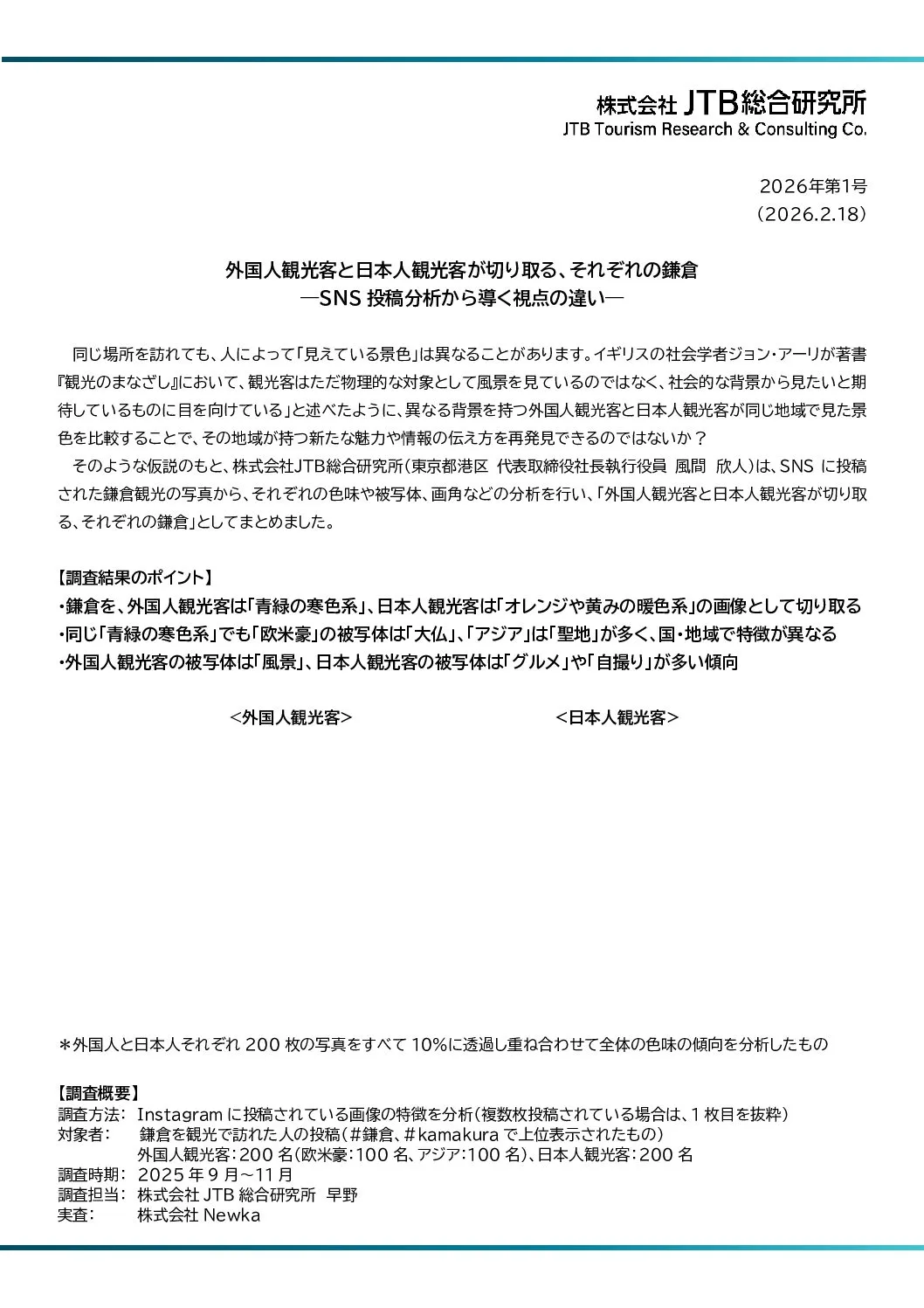
Based on this hypothesis, JTB Tourism Research & Consulting Co., Ltd. (Minato-ku, Tokyo; President and CEO: Yoshito Kazama) analyzed photos of Kamakura tourism posted on social media—examining factors such as color tones, subjects, and angles—and compiled the results into a report titled “The Kamakura Captured by Foreign and Japanese Tourists.”
Key Findings
- Foreign tourists perceive Kamakura through the lens of "cool, blue-green tones," while Japanese tourists see it through the lens of "warm, orange and yellow tones."
- Even within the same "cool blue-green color scheme," subjects in "Europe, the U.S., and Australia" tend to be "Great Buddhas," while those in "Asia" are often "sacred sites," with distinct characteristics depending on the country or region.
- Foreign tourists tend to take photos of "landscapes," while Japanese tourists tend to take photos of "food" or "selfies."
1Kamakura Through the Eyes of Foreign and Japanese Tourists
Foreigners tend to perceive Kamakura as having cool tones, such as blue and deep green, while Japanese people tend to perceive it as having warm tones, such as orange and yellow.
When we analyzed the overall color trends by overlaying 200 photos each from foreign and Japanese visitors, all set to 10% opacity, the results shown in the figures below revealed that the color impressions are completely different (Figures 1 and 2).
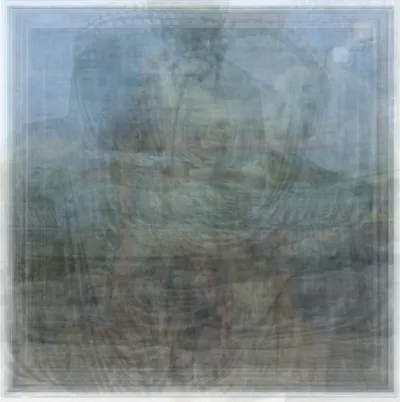
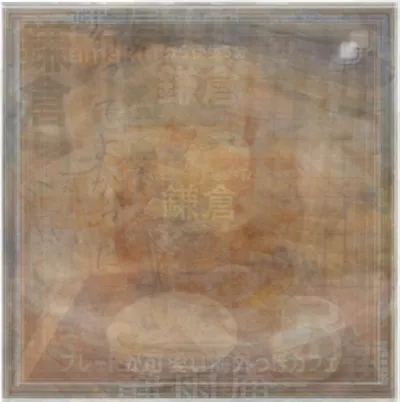
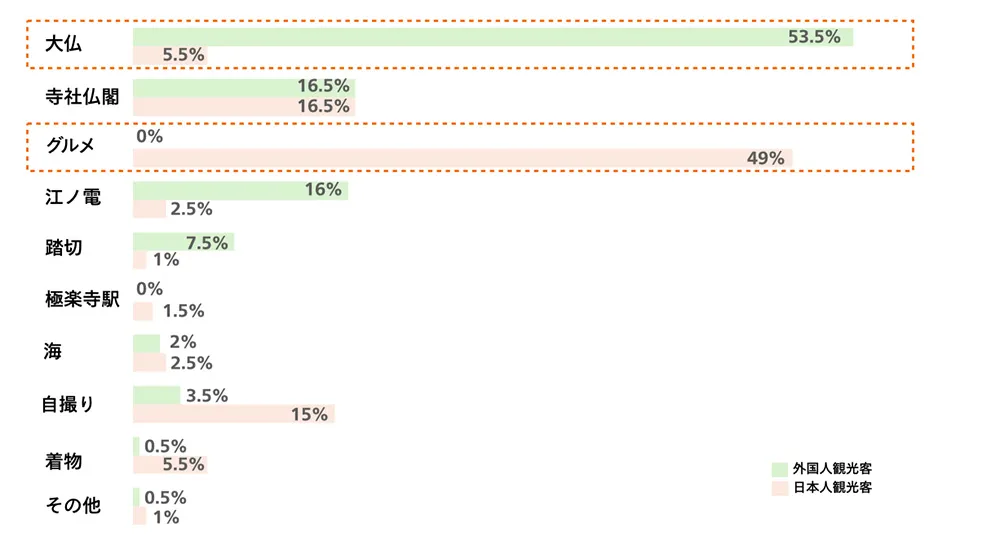
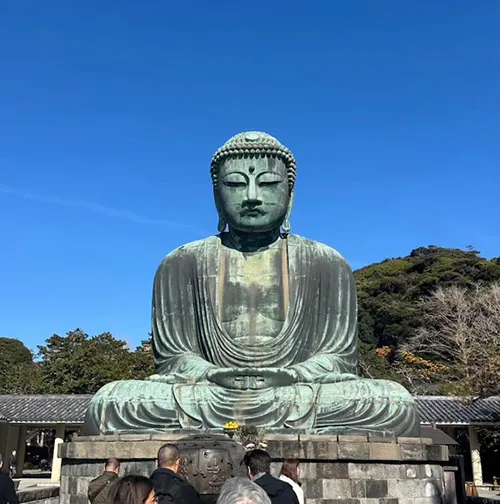
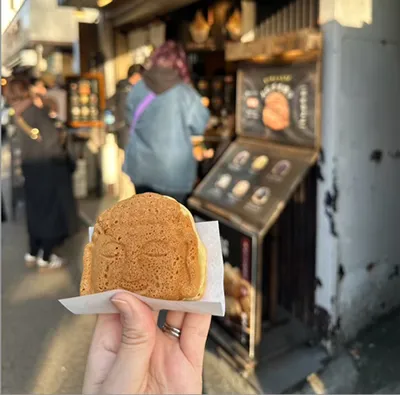
The main difference in color tones stems from the subjects of the photos. Photos of the “Great Buddha” account for about half of the photos taken by foreign tourists, while photos of “gourmet food” account for about half of those taken by Japanese tourists.
While “Great Buddha” photos accounted for 53.5% of foreign tourists’ photos, they made up only 5.5% of Japanese tourists’ photos. Furthermore, while “gourmet” photos—the most common subject among Japanese tourists—accounted for 49% of the total, not a single such photo was found among foreign tourists (Figure 3).
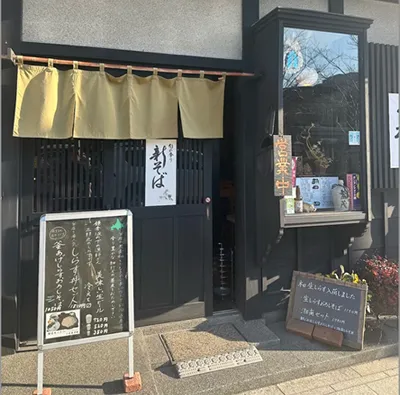
Representative photos for each category are as follows. *Images taken by survey staff as representative examples based on the characteristics of the posted images
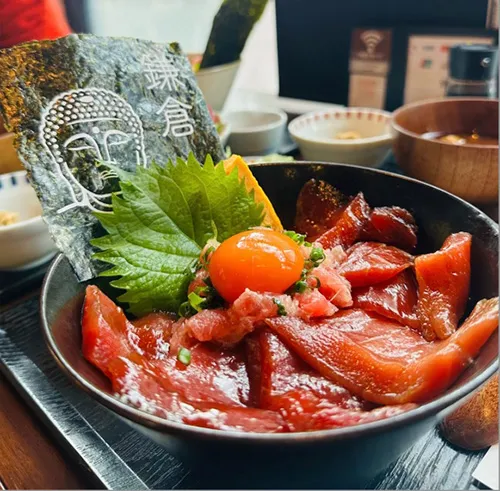
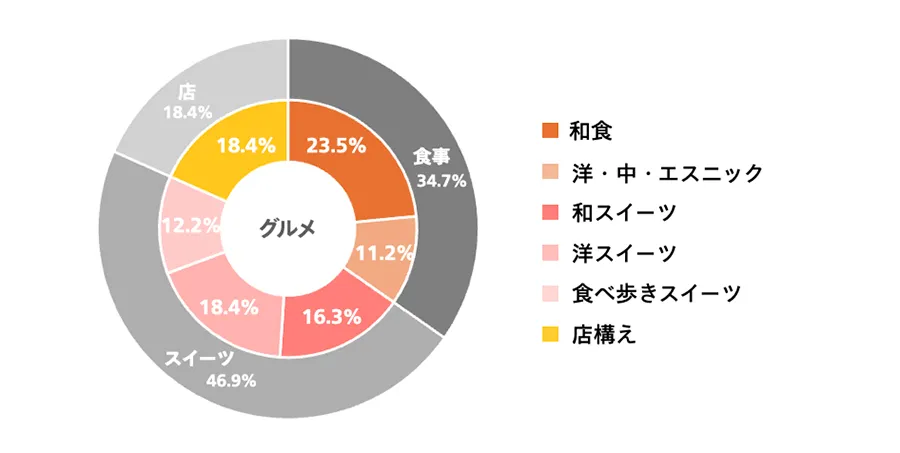
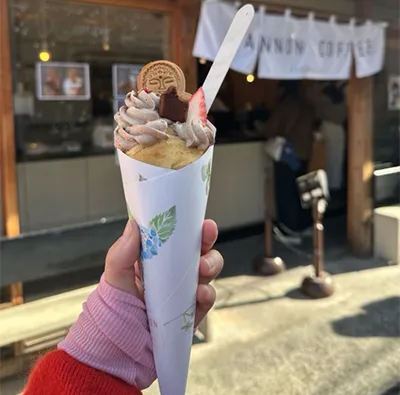
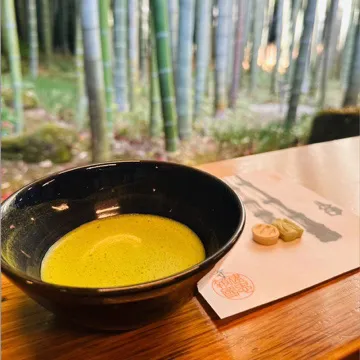
Looking at the breakdown of Japanese “gourmet” photos, meals accounted for 34.7%, sweets for 46.9%, and photos of restaurant exteriors for 18.4%.Looking further at the content, Japanese cuisine was the most common at 23.5%, followed by Western sweets and store exteriors at 18.4%, Japanese sweets at 16.3%, and Western, Chinese, and ethnic cuisine at 11.2%. Many posts also featured the same menu items from the same restaurant (Figure 4).
Representative photos are as follows. *Images taken by the survey staff as representative examples based on the characteristics of the posted images
"Pilgrimage sites" are popular with both foreign and Japanese tourists
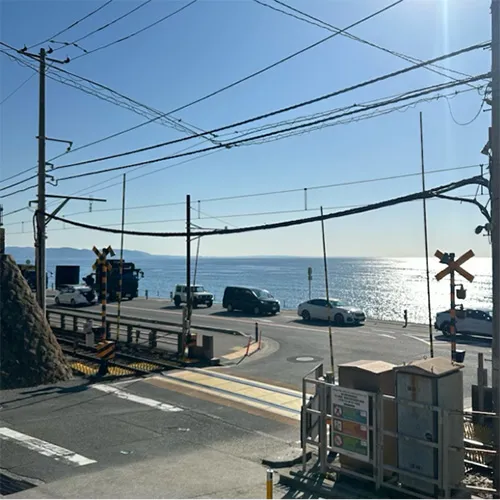
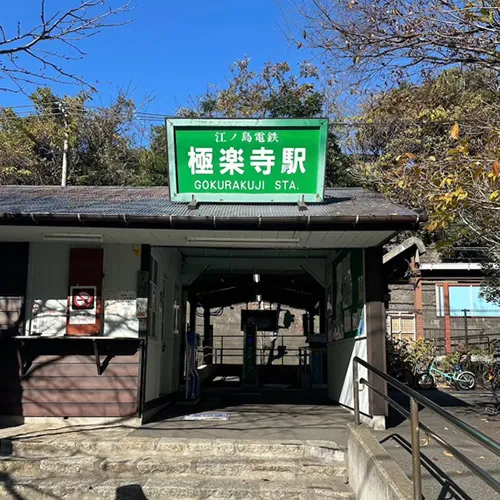
At stations along the “Enoden,” a local line popular with tourists, foreign tourists frequently posted images of “Kamakura-Kokomae,” while Japanese tourists posted many images of “Gokurakuji.” Both locations are known as pilgrimage sites for fans of manga and TV dramas.
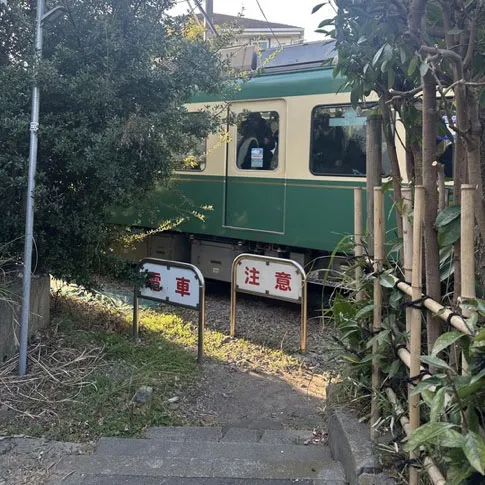
At “Kamakura-Kōkō-mae,” photos of the railroad crossing next to the station were frequently seen, accounting for 7.5% of foreign tourists’ posts but only 1% of Japanese tourists’ posts. At “Gokurakuji,” photos featuring the station building made up 1.5% of Japanese tourists’ posts, but there were none among foreign tourists.Although both locations served as settings for manga and TV dramas, the popularity of these works varies by country, suggesting that these results reflect differences in the motivations and purposes of travel. “Kamakura Kōkō-mae Station” is the setting for a basketball-themed manga; the series, published in the 1990s, and the 2025 film adaptation have been translated and released overseas—particularly in Asia—and remain popular.Additionally, “Gokurakuji Temple” is the setting for a TV drama series that began in 2012, and the fact that the latest installment in 2025 also generated significant buzz is likely a contributing factor.
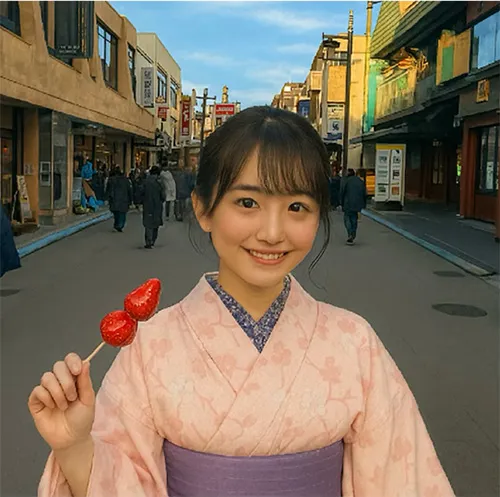
Among Japanese tourists, “selfies” account for 15% of photos, which is higher compared to the 3.5% among foreign tourists
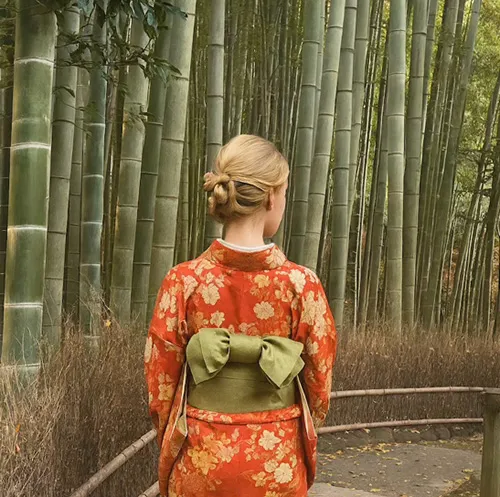
For Japanese tourists, “selfies” accounted for 15%, which is either on par with or higher than the 5.5% for the Great Buddha and the 16.5% for temples and shrines.A key characteristic is that the photos are taken with a framing that focuses on the person enjoying the experience rather than the tourist destination itself. Furthermore, photos of people wearing kimonos accounted for 5.5%, suggesting an effort to immerse themselves in the local atmosphere. While there were also photos of foreign tourists wearing kimonos, there was only one photo showing a person from behind.
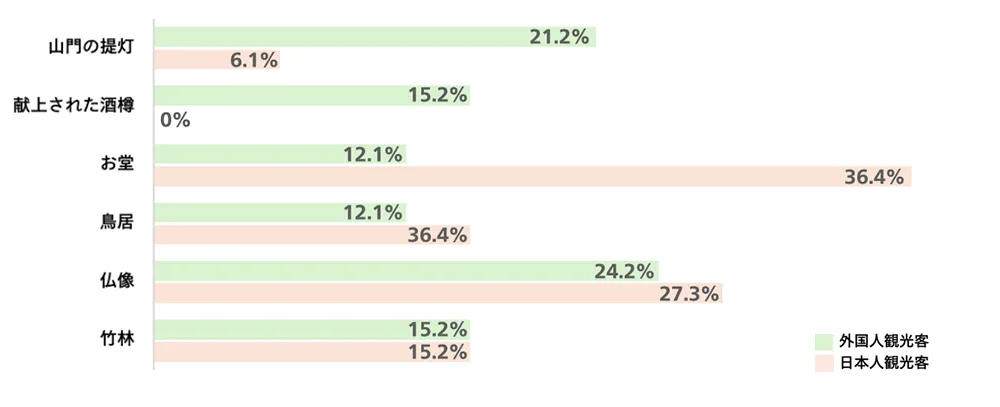
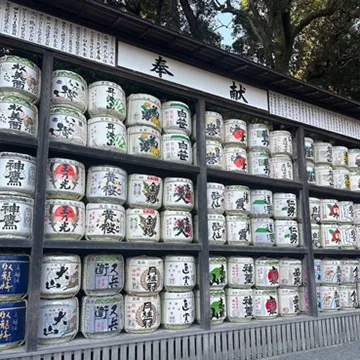
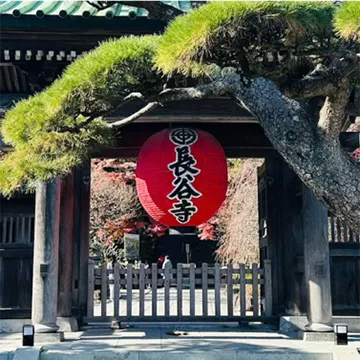
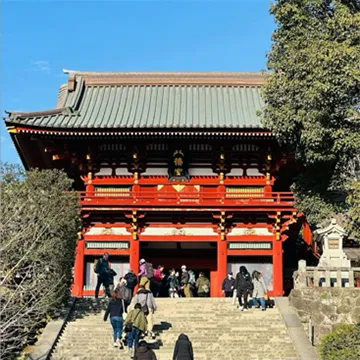
Even when it comes to “temples and shrines,” foreign and Japanese tourists have different focal points. Foreign tourists often feature “lanterns at the temple gate” or “sake barrels offered as tribute,” while Japanese tourists frequently feature “the main hall.”
When examining the content of “temples and shrines” posts, which appeared in equal proportions among both foreign and Japanese tourists, we found that foreign tourists frequently featured “lanterns at the mountain gate” and “sake barrels offered as gifts.” It can be inferred that they perceive a sense of Japanese authenticity in the kanji inscriptions on these items and in motifs such as lanterns and sake barrels.On the other hand, it is interesting to note that “temples” accounted for a large proportion of posts by Japanese tourists, and that photos of “cafés” were also found at these sites (Figure 5).
2A Comparison of Tourists from Europe, the United States, and Australia and Those from Asia
Even within the same "cool blue-green color scheme," subjects from "Europe, the U.S., and Australia" tend to be "Great Buddhas," while those from "Asia" tend to be "sacred sites," demonstrating distinct characteristics by country and region
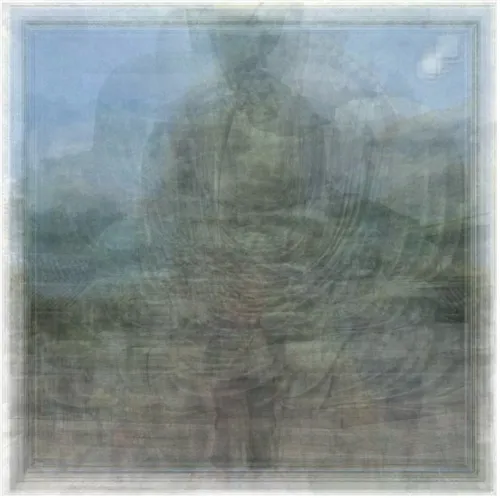
When photos posted by 100 tourists from Europe, the U.S., and Australia were overlaid with photos posted by 100 tourists from Asia, each set set to 10% transparency, the result was as shown in the figure below.While both sets of photos feature cool-toned hues—blue with deep green or black undertones—the dark colors extend all the way to the top in the Europe, America, and Australia group, whereas in the Asia group, the upper portion consists only of light bluish tones (Figures 6 and 7).
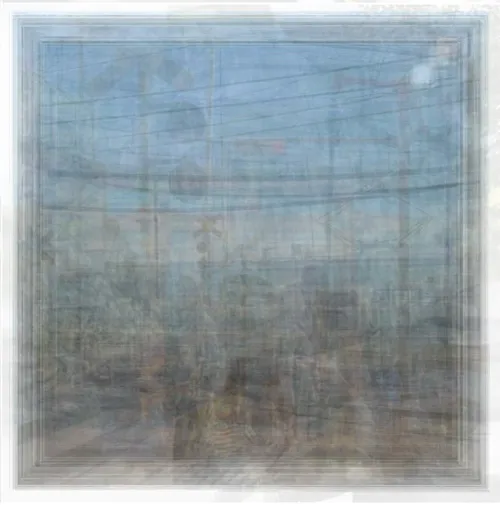
The difference in color tones stems from the difference in subjects. Photos of the Great Buddha are common among Western and Australian tourists, while photos of the Enoden train and Kamakura High School Station are common among Asian tourists.
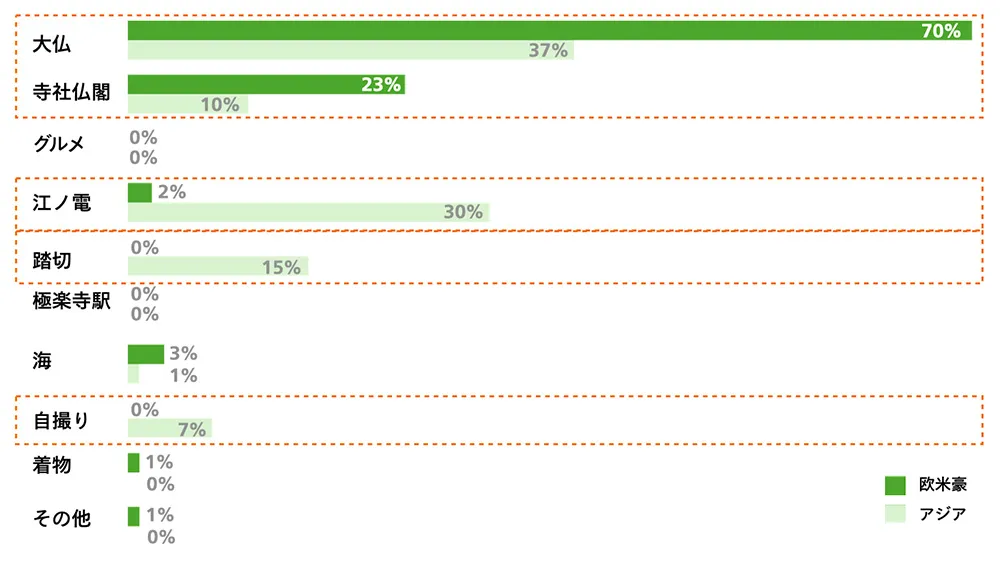
“Great Buddha” was posted by 70% of people from Europe, the U.S., and Australia, but only 37% in Asia. On the other hand, “Enoden” and “Kamakura-Kokomae Station” accounted for 2% and 0% in Europe, the U.S., and Australia, but 30% and 15% in Asia (Figures 8).
It is believed that travelers from Europe, the U.S., and Australia tend to be drawn to photos of Japan’s history and culture, while Asian travelers are more attracted to the sacred sites featured in the manga and dramas they are familiar with.
Representative photos are as follows. *Images taken by survey staff as representative examples based on the characteristics of posted images
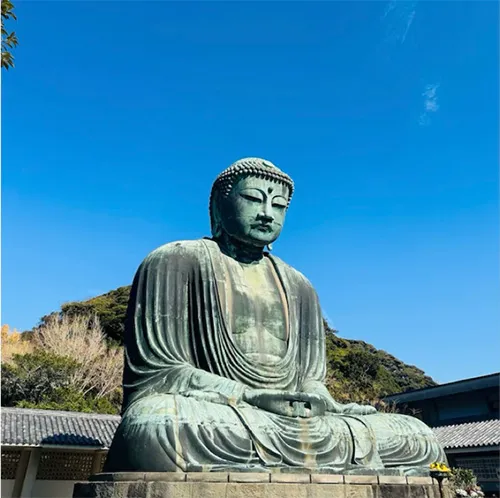
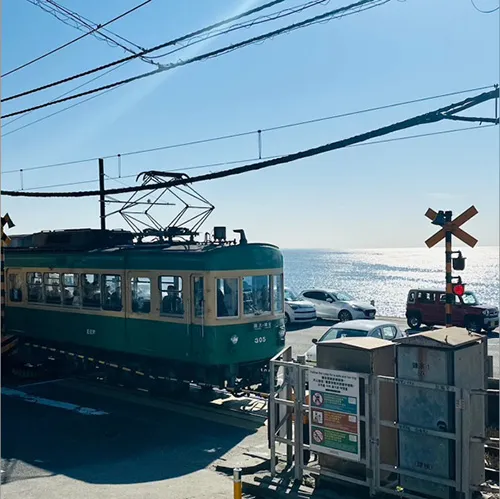
Are there differences in how the same “Great Buddha” is photographed?
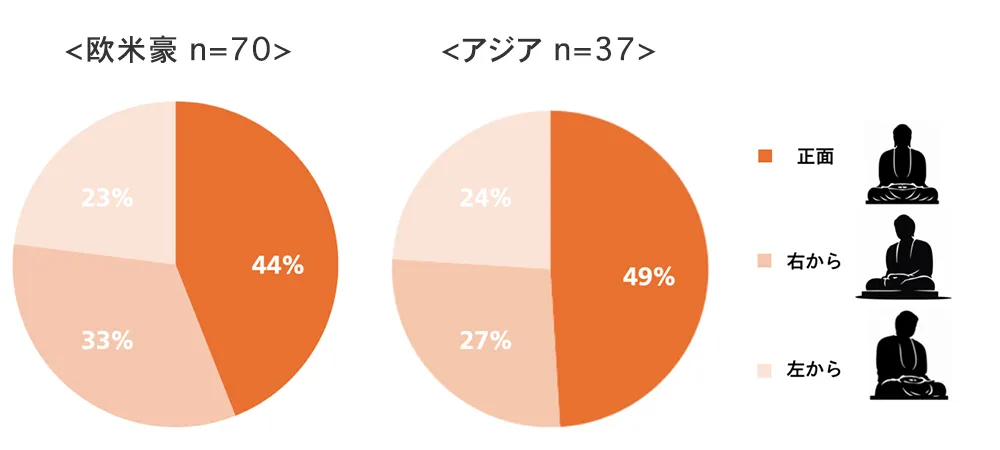
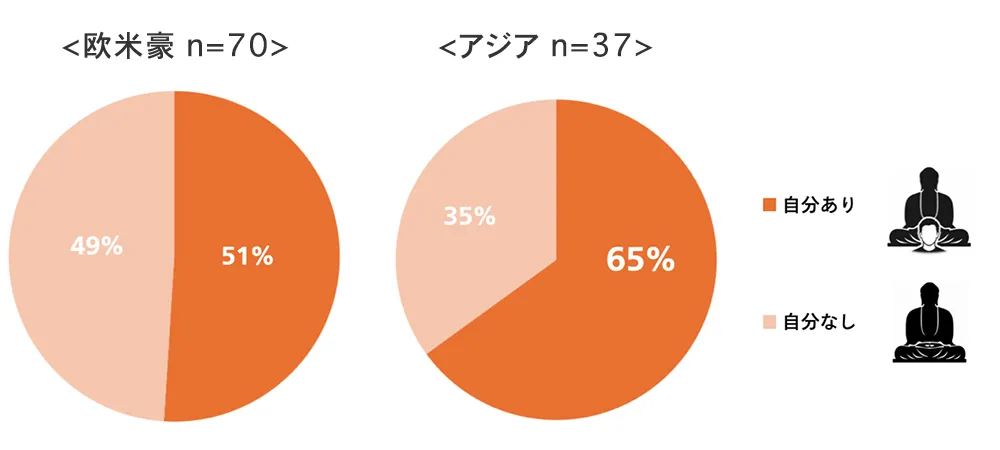
There is no significant difference in shooting angles between Europe, the U.S., and Australia versus Asia; frontal shots account for about half of the images, and while there is a slight difference in the left-to-right ratio, the distribution is nearly evenly split. Regarding subjects, photos with and without the photographer were almost evenly split in Europe, the U.S., and Australia, but in Asia, photos including the photographer accounted for 65%, a higher proportion than in Europe, the U.S., and Australia (Figure 9).It appears that Asian travelers have a shooting style relatively similar to that of Japanese people, who take many selfies.
3Summary
Perceptions of Kamakura as a tourist destination vary by country and region
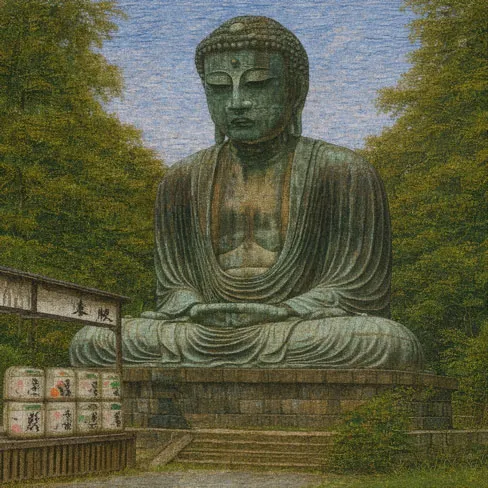
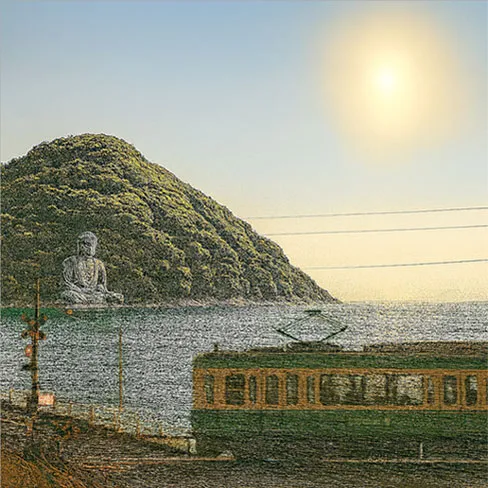
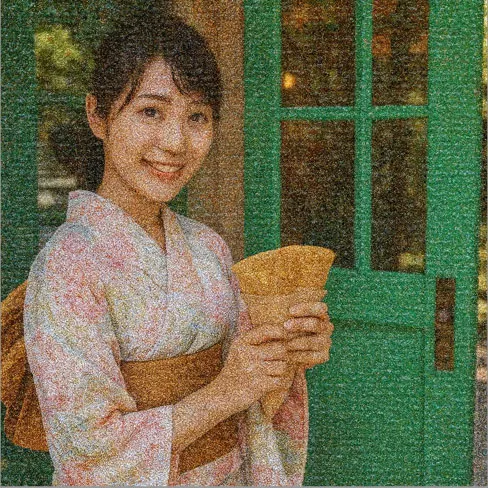
Foreign and Japanese tourists perceive Kamakura as a tourist destination (in terms of scenery) differently, and among foreign tourists, there were also differences depending on their region of origin. For example, if we were to depict the image of Kamakura as seen by people from Europe, the Americas, and Australia; Asia; and Japan in a single illustration, it would look something like the images below (images generated by AI).Although we often use the term “inbound foreign tourists” collectively, their travel objectives vary significantly depending on the cultural background of their respective countries and regions. For example, since the popular works for pilgrimages to sacred sites differ by country and region, it is likely necessary to create and promote model itineraries and signage tailored to specific works.Wouldn’t it be effective to optimize information dissemination through visual strategies and personalized experience design tailored to the specific experiences each regional target audience wishes to have?
Creating new demand by mutually introducing “popular experiences in other countries and regions” that are unknown domestically and internationally
It is not merely that foreigners and Japanese people have different characteristics; conversely, within each demographic, posts were remarkably similar—so much so that one could easily identify their respective traits. It is evident that a prominent feature of our algorithm-driven modern society, exemplified by social media, is that one post often prompts similar posts, leading to a continuous increase in content of a similar nature. This may also be a contributing factor to overtourism, where people become concentrated in specific locations.
On the other hand, we also found that there are ways to enjoy a destination that are frequently posted about in one country or region but rarely mentioned in others. When disseminating information about tourist destinations, we should spark interest by sharing content—including images—that catches the eye of travelers from each country or region. At the same time, by actively providing examples from other countries and regions(ways to enjoy the destination), as well as information about alternative locations that offer a similar atmosphere or experience to the one they wish to visit, or different times of year or times of day at the same location. This approach could lead to a more diverse and enriching experience for tourists while also helping to disperse tourist crowds.
For example, sharing information with foreign tourists about activities that are common among Japanese tourists, such as gourmet dining or kimono experiences.
Furthermore, given the strong desire—particularly among Gen Z—to experience local life, it is considered effective to convey information through posts showing people from various countries and regions enjoying themselves—in other words, through “authentic, unfiltered glimpses.”
4Special Feature: Unexpected Scenery That Captivates Foreign Tourists
So far, we’ve analyzed the first image in each main post, but when we looked at the second and subsequent images, we found some interesting perspectives that differed from typical tourist spots.
For example, I noticed several people taking photos of “vending machines.”According to the website of the Japan Vending Machine Manufacturers Association, “In absolute numbers, the United States leads the world with 6.58 million units in operation (as of the end of 2012). However, when considering the penetration rate relative to population and land area, Japan is believed to be number one in the world.” As this suggests, Japan is a vending machine powerhouse.The surprise of finding them installed even in such places, the hospitality shown in offering both hot and cold drinks and ensuring they blend seamlessly with the scenery, and the excellent public safety that keeps them free from vandalism or mischief—these aspects may seem unusual to foreign visitors.
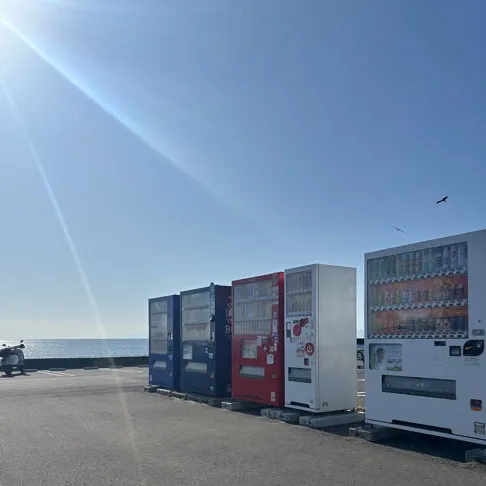
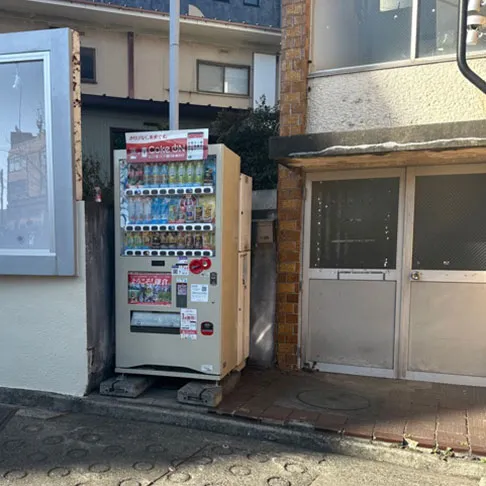
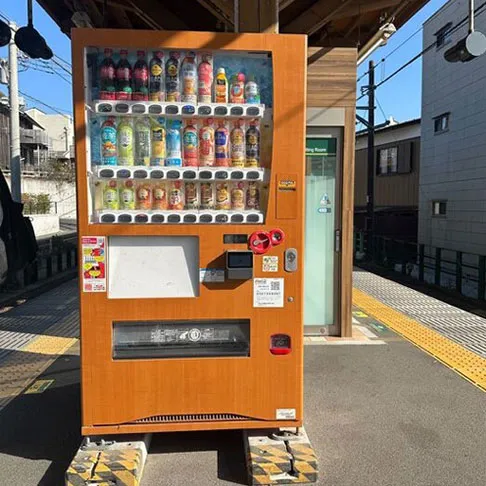
It seems they also find a different kind of charm in objects that serve a functional purpose; for example, people were seen enjoying themselves by checking their reflections in the “curve mirrors” installed along the roads. Since curve mirrors themselves are rare overseas, and the reflections are clear and crisp, this is likely a factor in their appeal. Additionally, designed manhole covers and signs featuring pictograms and illustrations also seem to catch their attention.
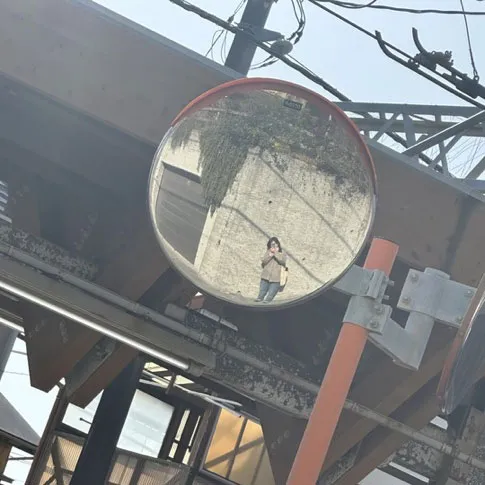
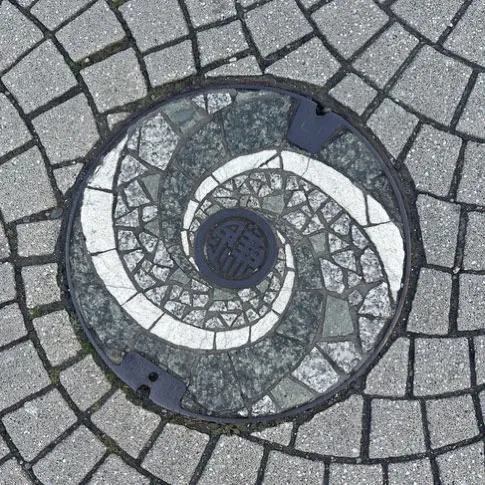
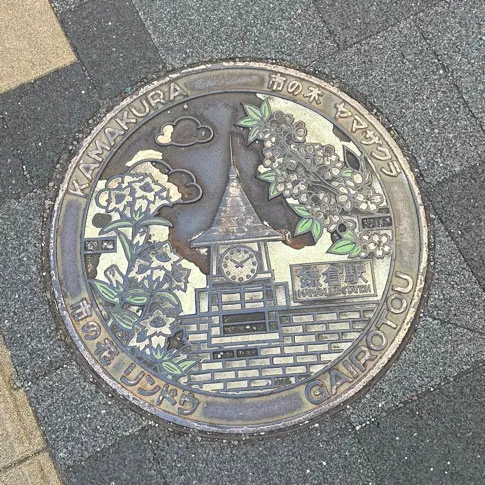
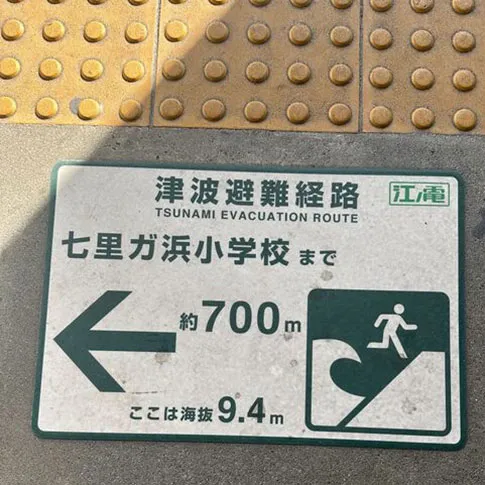
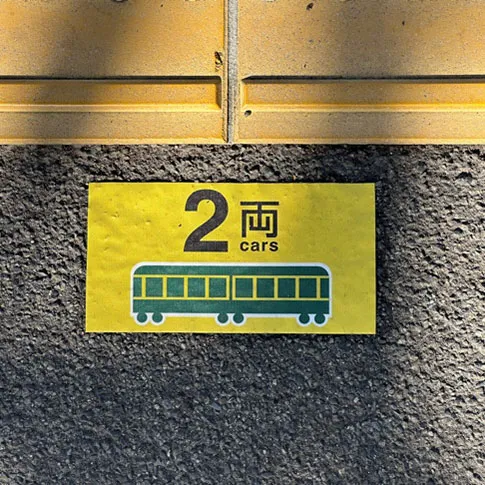
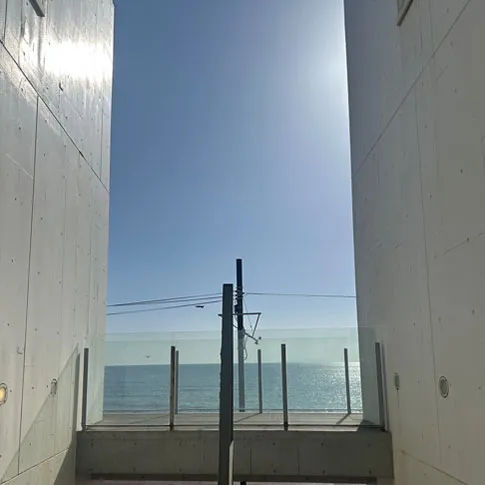
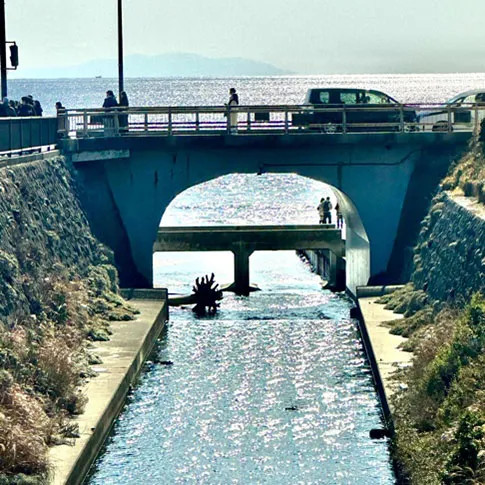
Furthermore, photos were taken of the ocean and trains visible through gaps in the cityscape. Amid Kamakura’s environment, where residential areas, public transportation, and nature intertwine, people may be capturing these lovely scenes that suddenly appear before their eyes with the same sense of discovery as finding a treasure.