[Special Contribution] “Tourism × Museums” — The Potential of Museums to Foster Tourism Rooted in Local Natural and Cultural Heritage

1. The Potential of Museums for Tourism: Japan’s Initiatives in the Middle East and Jordan
What exactly is the potential of museums for tourism? When people think of museums and tourism, many likely first picture museums that serve as tourist attractions or venues that draw large crowds—such as the British Museum or the Louvre—which display renowned works of art and other cultural treasures.However, this article focuses on the tourism potential of so-called regional museums (*1) (museums that focus on a specific region, collecting, researching, preserving, and exhibiting that region’s natural and cultural heritage, while also conveying its value through educational and outreach activities) (*2).
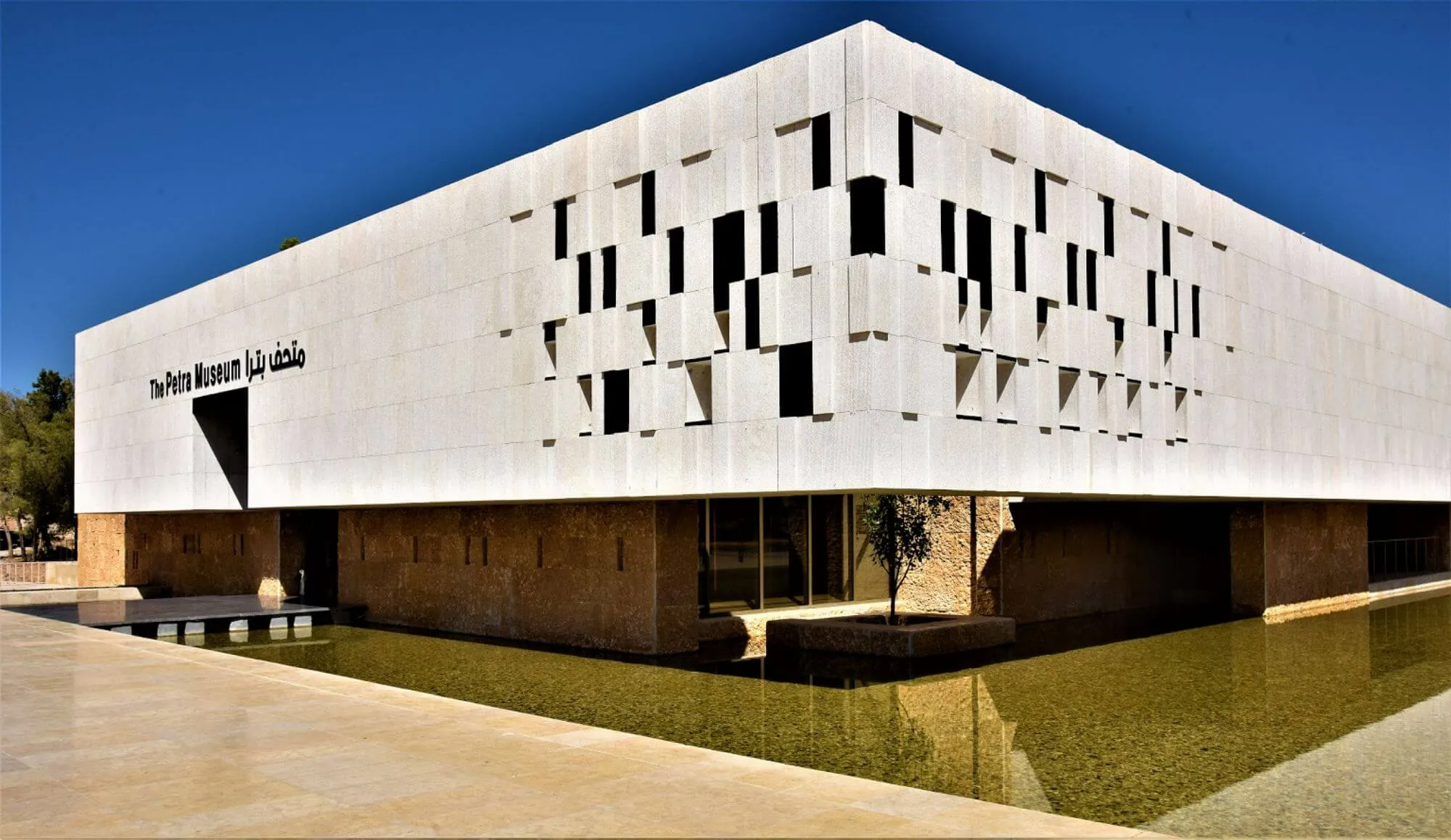
As a case study, I would like to examine the Petra Museum in Jordan, in the Middle East—a project where support is currently being provided through JICA’s “Project for the Formulation of a Master Plan for Tourism Development in Petra” (*3), which Japan has long supported and which is currently being carried out by JTB Tourism Research & Consulting, and in which I have also been involved.
In Jordan, a country in the Middle East where archaeological sites reflecting a diverse history and culture remain as a “crossroads of civilizations,” the tourism industry—which leverages natural and cultural heritage—has become a major industry supporting the national economy and local communities.In supporting Jordan’s tourism sector—which is vital to the country’s socioeconomic development—as part of Japan’s development assistance, one approach that has been pursued is to support tourism through museums. This involves surveying, researching, and preserving the natural and cultural heritage of regions that serve as tourism resources, while introducing them to tourists through exhibitions, thereby making museums the gateway to regional tourism.Since the early 2000s, efforts have focused on the “Jordan Museum,” newly established in the capital city of Amman to showcase the country’s history and culture as a whole, as well as on the Old City of Sarat (*4)—located near Amman, where many traditional stone buildings remain and which was inscribed on the World Heritage List in 2021—the “Sart Museum of History and Folklore”—housed in a renovated historic mansion that showcases the modern and contemporary history and folklore of the old town—and the “Sart Ecomuseum,” which treats the entire town as a museum with this facility at its core, networking cultural heritage sites throughout the area;as well as the “Karak Archaeological Museum,” a regional museum in the historic fortified city of Karak in southern Jordan—a site of fierce battles between the Crusaders and Islamic forces—and the “Dead Sea Museum,” which showcases the natural and cultural heritage of the Dead Sea region—among others. The construction and renovation of these museums have been carried out with Japanese support through JICA, with the aim of promoting tourism rooted in natural and cultural heritage (*5).Building on these museum and tourism initiatives, the Petra Museum Construction Project was also launched in 2013 through grant aid for culture (*6).
2. The Regional Story Told by the Petra Museum: Centered on the History and Culture of the Nabataean Kingdom (*7)
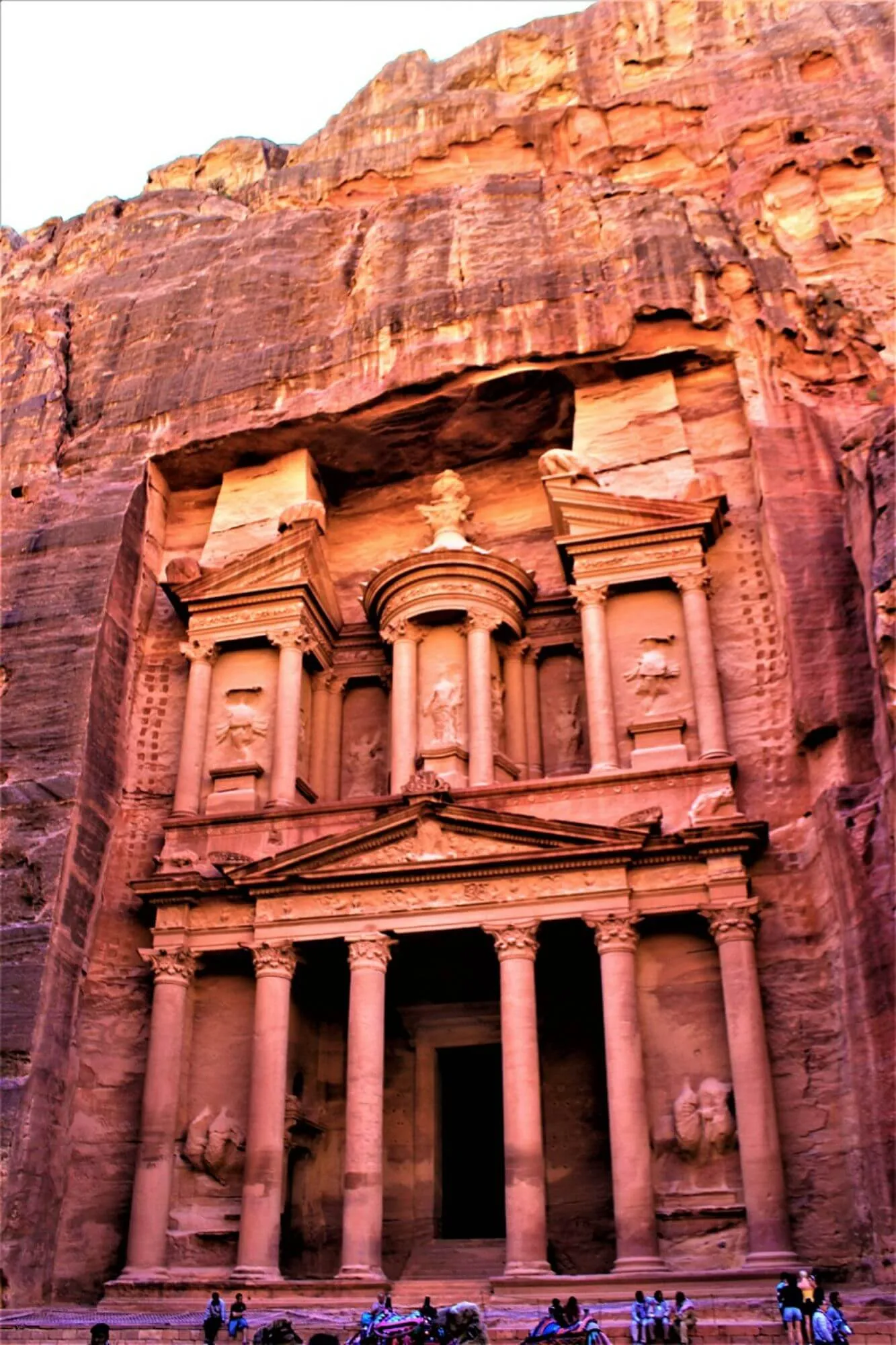
The ruins of the ancient city of Petra are located in southern Jordan, approximately 240 kilometers from Amman. As one of Jordan’s most iconic cultural heritage sites and a major tourist destination, Petra attracts more than 1 million visitors annually (*8).Inscribed on the UNESCO World Heritage List in 1985, the site is also famous for the “Treasury (Al-Khazneh),” a part of the ruins, which appeared in the movie *Indiana Jones and the Last Crusade*.The Petra Museum is a newly constructed museum located at the entrance to the Petra Archaeological Park, which opened in 2019. Focusing primarily on archaeological artifacts excavated from the Petra site and the surrounding area, the museum serves not only as the archaeological museum associated with the Petra Archaeological Park but also as a regional museum covering the history and culture of the entire Petra region.The permanent exhibition covers tens of thousands of years of history, from the dawn of the Petra region to the present day; however, its core focus is the history and culture of the Nabataean Kingdom, which built the ancient city of Petra approximately 2,000 years ago.
The Nabataeans, originally a nomadic people, prospered by engaging in trade—including fragrances such as frankincense and myrrh, as well as bitumen from the Dead Sea—via the caravan routes stretching from the southern Arabian Peninsula to the Mediterranean Sea, and thus established the Nabataean Kingdom.The ancient city of Petra—which the Nabateans called “Rakhm”—served as the kingdom’s capital during its heyday from the 1st century BCE to the 1st century CE, situated at a key junction along these trade routes.
The narrative of regional history presented in the Petra Museum’s permanent exhibition begins by exploring the relationship between water and the people of Petra—a city that owes its existence to the Nabataeans’ exceptional water management techniques.The Nabataeans supported the prosperity of Petra through a network of waterways stretching several kilometers, consisting of countless earthenware pipes that channeled water from springs scattered around Petra into the city; flood control measures such as dams and diversion tunnels; and the use of reservoirs to store rainwater.The story of the Nabataeans in Petra, which begins with water, explores the Nabataean religious culture—a fusion of the ancient Greek, Roman, and Egyptian worlds with the belief systems of the Arabian Peninsula—as well as their views on life and death as seen in rock-cut tombs, the royal authority of the Nabataean Kingdom,trade routes and goods that stretched from India to the Mediterranean world; the Nabataean script, which became the origin of the Arabic language; the Nabataeans’ living spaces and lifestyles; and Nabataean pottery crafted with sophisticated techniques—unfolding into a variety of narratives that paint a comprehensive picture of ancient Petra and the Nabataean Kingdom.The exhibition is structured by combining archaeological materials excavated from sites in the Petra region—corresponding to each story—with explanations via touchscreens and graphic panels, videos featuring 3D-CG reconstructions of the sites’ past appearances, and life-size models depicting ancient funeral rites and residences.
While the permanent exhibition centers on Petra during the Nabataean Kingdom, it also traces back several thousand years before the Nabataean Kingdom and Petra were established, to a time when humans, through the domestication of wheat and goats,transitioned from a hunter-gatherer lifestyle to agriculture. It also tells various stories about the history preceding the Nabataean Kingdom, such as the Neolithic settlements near Petra—which bear traces of this transition—and the Kingdom of Edom, mentioned in the Old Testament, which flourished in the region around Petra approximately 3,000 years ago.It also depicts the history following the Nabataean Kingdom—from its annexation by the Roman Empire in the first half of the 2nd century through the eras of the Byzantine Empire, Islam, and the Crusades—as Petra gradually transformed from a global trade hub into a rural village.Furthermore, the exhibition explores the folk culture of the Petra region, which has inherited part of the Nabataean cultural heritage and has been designated as a UNESCO Intangible Cultural Heritage site under the name “The Cultural Space of the Bedouin of Petra and Wadi Rum” (*9).The exhibition as a whole tells the complete history of the formation and development of the regional ecosystem—shaped by the interaction between the people who lived in the Petra region and the local natural environment—with various stories unfolding within that framework.
While many people are visually familiar with the magnificent appearance of the Treasury in Petra, the reality is that its history and culture are not widely known.It is also difficult to say that the ancient Nabataean Kingdom, which built the city of Petra, is widely known to the general public; even in museum exhibitions in the West and elsewhere, it is rarely featured compared to ancient Egypt or ancient Mesopotamia. The Petra Museum sheds light on these lesser-known aspects of Petra.
3. Museum Exhibits That Convey the Diverse Stories of Regional Tourism
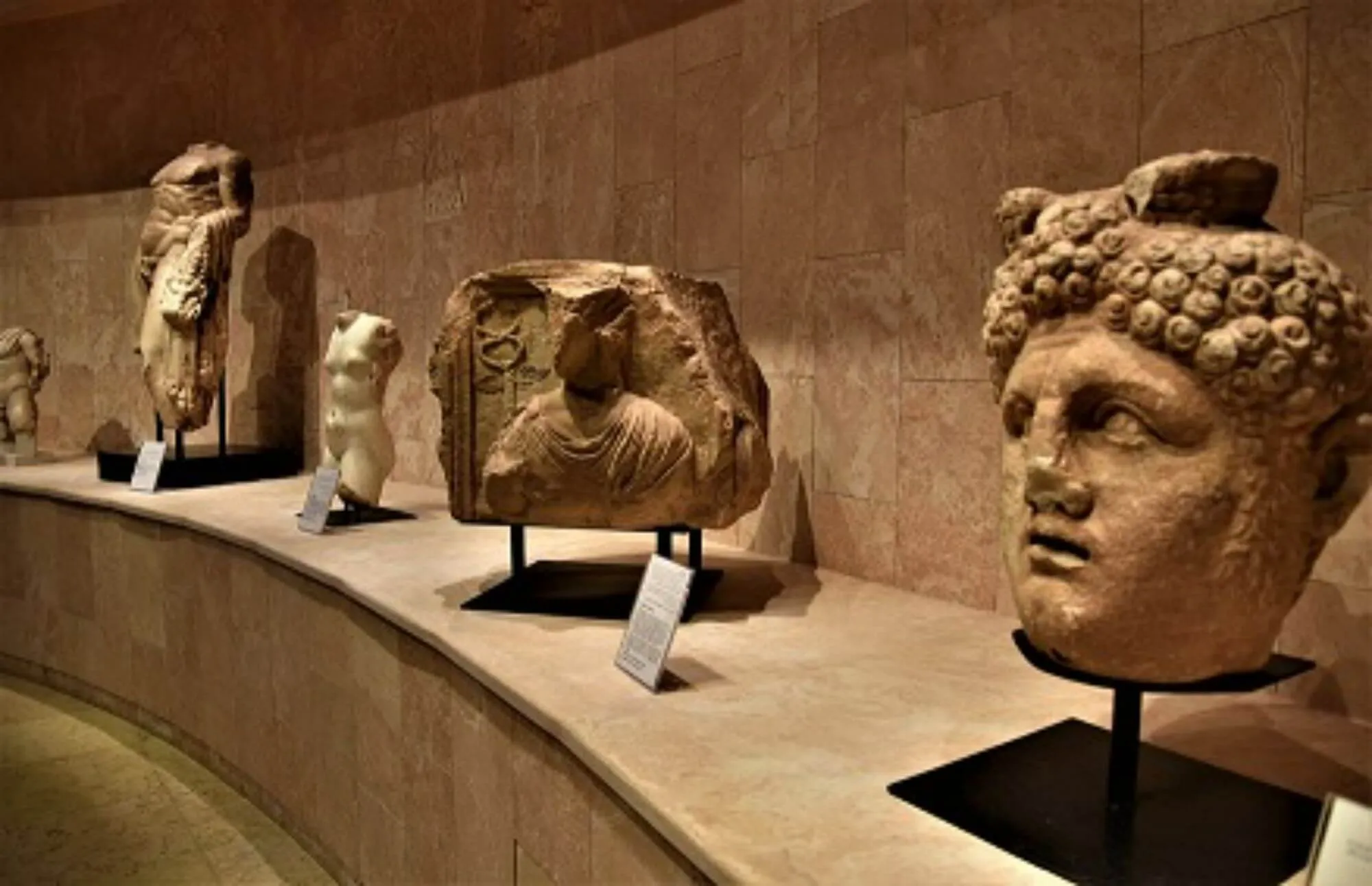
It is often said that exhibitions are the “face” of a museum; however, what regional museums represent through their exhibitions is the unique “face” of the region’s history and culture—a face shaped by the long-standing interaction between the local people and the region’s natural environment. This is not a face with a single expression, but rather a multifaceted face with a variety of expressions.Conveying the diverse facets of this region’s unique history and culture through exhibitions is believed to lead to the diversification of the region’s tourism narratives.
At the Petra Museum, exhibits convey a variety of stories, including the Nabataeans’ exceptional water management systems, the trade that sustained their kingdom, the Nabataean written culture that gave rise to the Arabic language, the Neolithic period preceding the Nabataeans, the kingdoms mentioned in the Bible, and the Roman Empire and the Crusades that followed the Nabataeans.Furthermore, there are cultural heritage sites—such as the ruins scattered throughout the Petra region corresponding to each story and the artifacts displayed in the museum—that support these narratives. It is believed that the museum’s efforts to convey these diverse stories of the Petra region’s history and culture through its exhibits will contribute to the diversification of tourism in the area.
Currently, one of the major challenges facing Petra Archaeological Park is the excessive concentration of tourists in certain parts of the site—such as the walking path from the “Wadi” (a gorge that serves as the site’s main access route) to the Treasury, made famous by the movie—raising concerns about the strain this places on the site.Rather than a situation where only certain parts of the site—such as the Treasury—are visually familiar to many people, leading to a concentration of tourists at these famous attractions, the goal is for visitors to learn about the diverse stories of the Petra region’s history and culture, visit the Petra archaeological site and the tourist destinations scattered throughout the surrounding area,which would not only reduce the burden on the site but also help distribute the benefits of tourism throughout the region. This is currently being considered as one of the goals for tourism in Petra. It is expected that the Petra Museum’s exhibits, by presenting the region’s diverse stories, will contribute to steering tourism in this direction.
4. Museums as the Core of Regional Tourism: Networking with Local Natural and Cultural Heritage
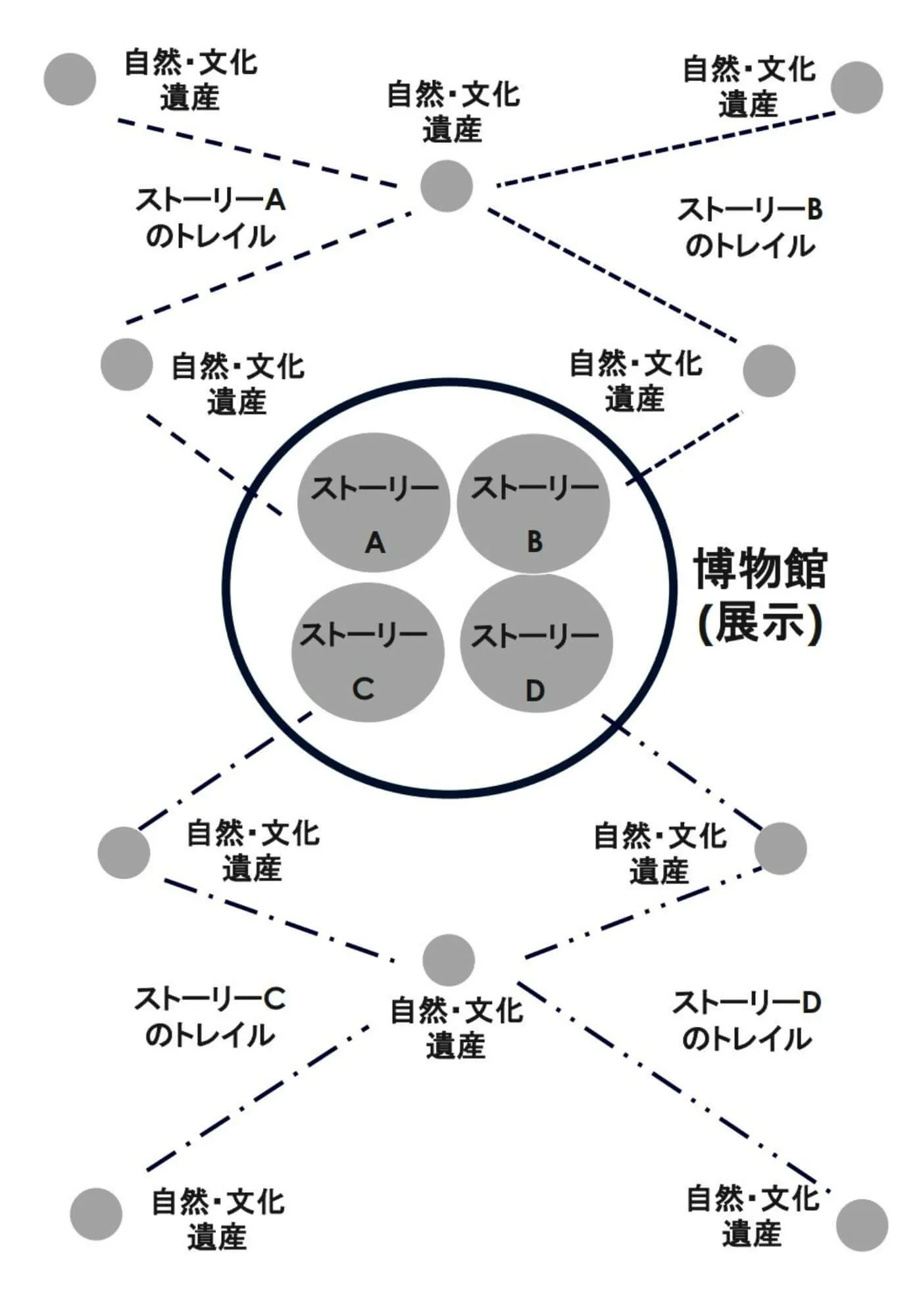
In promoting tourism based on the diverse stories of the region’s history and culture, it is important to network the region’s natural and cultural heritage sites with the museum based on these stories. This shift will move tourism away from a model where museums and individual heritage sites function as isolated “points” and toward developing tourism that encompasses the entire region as a cohesive “area.”A representative example of the “Ecomuseum” approach—which has been implemented in Japan and around the world—is a method for creating such a networked “area.” In an Ecomuseum, where the entire region—organically linked through its history and culture—is regarded as a “museum,” the museum serves as the “core” for researching, preserving, and exhibiting local resources,natural and cultural heritage sites scattered throughout the region that serve as “satellites,” and “discovery trails”—which connect the core and satellites according to specific themes and function as actual tourist routes—all constitute the elements of an ecomuseum (*10).Similarly, the “Japan Heritage” initiative, which has been rolled out across Japan in recent years under the leadership of the Agency for Cultural Affairs, employs the same approach (*11).In the Japan Heritage initiative, stories related to history and culture are established, and various heritage sites associated with these shared narratives—both within and outside the region—are networked as constituent elements. There are examples (*12) where museum collections are incorporated as part of these constituent elements, as well as cases (*13) where museums function as core centers within the Japan Heritage network.
At museums in Jordan that Japan has supported, efforts have been made to use the ecomuseum approach to network surrounding cultural heritage sites via trails, with the museum serving as the core, aiming to create tourism that encompasses an entire “area.” For example, in the Old City of Sarat, as part of tourism development,the “Whole Town Museum” (Sart Eco-Museum) initiative was launched. With the Sart History and Folklore Museum—housed in renovated historic buildings in the heart of the old town—as the core, trails were established to connect scattered cultural heritage sites, such as clusters of traditional architecture, and guided tours led by local guides were introduced.
At the Petra Museum, drawing inspiration from ecomuseums and Japan Heritage initiatives, plans are being considered to use the museum as a hub and connect the cultural heritage sites—including the archaeological ruins scattered throughout the surrounding area—into trails based on various narratives, as illustrated in Figure 1.For example, under the theme “The Nabataeans and Water,” a trail would link the museum’s exhibits on Petra and water with archaeological remains from the Nabataean period—such as reservoirs and aqueducts within and around the Petra ruins—as well as the cultural landscapes featuring the springs that served as water sources and the traditional farmland irrigated by spring water. Another example is a trail based on the themeUnder the “Nabataean Trade” narrative, we are considering a trail that connects the museum’s exhibits and artifacts related to trade with archaeological sites that served as caravan trading hubs, as well as sections of ancient trade routes passing through Petra.Through these trails, we envision linking the Petra Museum and the region’s heritage sites via the various stories presented at the museum, thereby fostering a “holistic” approach to tourism.
5. Conclusion
This paper has provided an overview of the author’s thoughts on the role of museums and tourism, developed through trial and error in the context of the Petra Museum. For a museum to serve as the core of tourism goes beyond simply introducing the region’s natural and cultural heritage.The museum’s central role is, first and foremost, the research, study, and preservation of natural and cultural heritage—which serve as the foundation for constructing narratives related to the region’s history and culture. To achieve this, curators and an operational framework that supports curatorial work are essential.Furthermore, it will be important to strengthen collaboration with the local community through educational and outreach activities; to raise awareness of the region’s history and culture among local residents—particularly young people, who will shape the future of society; and to build partnerships between tourism stakeholders and museums. As I continue to reflect on the relationship between museums and tourism, I am coming to recognize these points anew.
<Reference>
*1 The potential of regional museums has been discussed previously in columns by JTB Tourism Research & Consulting.
Mayuko Kono, 2014, “Reconsidering the Value of Regional Museums: From ‘Resident Participation’ to the Next Step,” JTB Tourism Research & Consulting Column (accessed March 10, 2023)
*2 In considering the potential of museums and tourism, I referred to the following sources:
Hiroshi Nakamura and Yutaka Aoki, eds., 2016, *Museums as Tourism Resources*, Fuyo Shobo Publishing
Yutaka Aoki, Hiroshi Nakamura, Kimihide Maekawa, and Tomoko Ochiai, eds., 2018, *Museums and Tourism: A Theory of Museums as Social Resources*, Yuzankaku
*3 “Project to Formulate a Master Plan for Tourism Development in Petra” (JICA ODA Visualization Site, accessed March 10, 2023)
*4 UNESCO World Heritage Site “Sart: A Place of Tolerance and Urban Hospitality” (accessed March 10, 2023)
*5 Koji Oyama, 2008, “Support Activities for the Establishment of Museums in Jordan,” in Shingo Hidaka and Naoko Sonoda (eds.), *The Challenge of Museums: What Was Achieved and to What Extent*, Miyoshi Kikaku
*6 Petra Museum Construction Project (JICA ODA Visualization Site, accessed March 10, 2023)
*7 For information on the Petra Museum, see the *Petra Museum Guidebook: Japanese Edition* (supervised by the author; JICA, Petra Development and Tourism Authority, and Petra Museum, 2021), as well as the official Petra Museum website below (accessed March 10, 2023).
*8 According to statistical data released by the Petra Tourism Development Authority (link below: “Visit Petra” website, accessed March 10, 2023), 1,135,300 people visited Petra Archaeological Park annually in 2019, before tourist numbers declined due to the COVID-19 pandemic.
*9 Inscribed on the UNESCO Representative List of the Intangible Cultural Heritage of Humanity in 2008 (accessed March 10, 2023)
*10 “About Ecomuseums” on the Ministry of Education, Culture, Sports, Science and Technology website (accessed March 10, 2023)
*11 “About Japan Heritage” on the Agency for Cultural Affairs website (accessed March 10, 2023)
*12 For example, in the Japan Heritage site “‘What on Earth Is This?’ Flame-Patterned Pottery of the Shinano River Basin and the Culture of the Snow Country,” Jomon pottery artifacts held by the Tokamachi City Museum are included among the constituent cultural properties.
Website for the Japan Heritage site “‘What on Earth Is This?’: Flame-Patterned Pottery of the Shinano River Basin and the Culture of the Snow Country” (accessed March 10, 2023)
*13 Examples include the “Kuwato Japan Heritage Center: Hachioji Museum” in the Japan Heritage site “Mount Takao: A Mountain Filled with Spiritual Energy—The Tale of Kuwato Woven by People’s Prayers.” Kuwato Japan Heritage Center: Hachioji Museum (on the Japan Heritage Portal Site; accessed March 10, 2023)
著者