Updating Tourism Marketing Now — A New Philosophy That Connects the World and Local Communities: "TPM (Travel Professional Marketing)"

In 2025, the number of international visitors to Japan exceeded 40 million, setting a new record. However, a recovery in numbers does not mean prosperity for local communities. In the Western market—where destinations from around the world are competing fiercely—the question is not how much more we can reach out, but whether we can update tourism marketing itself. This column proposes a new approach to tourism marketing for regional tourism authorities and DMOs.
1. Why Reexamine Tourism Marketing Now?
We run ads, but the impact is hard to see. We exhibit at overseas trade shows, but they don't lead to business the following year. We organize familiarization trips (fam trips), but we can't build lasting relationships with the invited participants. Many people in the tourism industry have likely faced these challenges more than once.
Since the pandemic, inbound tourism to Japan has rebounded strongly. At the same time, on the ground at tourist destinations, labor shortages, overcrowding, strain on residents' daily lives, and the limits of reception infrastructure have become apparent. The question is no longer about visitor numbers, but rather, "How much value does each visit leave behind for the region?"
The main battleground going forward will be high-value-added travel in the long-haul markets, centered on Europe, the U.S., and Australia. As indicated by the Japan Tourism Agency's "Survey on Consumption Trends of Inbound Foreign Visitors," travelers from Europe, the U.S., and Australia generally stay longer and tend to spend significantly more per person than travelers from neighboring Asian markets (per-person travel spending in major European, U.S., and Australian markets is estimated to be roughly 1.5 to 2 times that of major neighboring Asian markets). This is the key market for the shift from "quantity to quality"—one that allows regions to increase their economic returns without blindly chasing higher visitor numbers. At the same time, it is a highly competitive arena where destinations around the world are vying for the same market.
2. Who Should Be Targeted? — The Overlooked “Travel Design Professionals”
When considering inbound strategies for Western markets, many regions first think of raising consumer awareness. Advertising, social media, influencers, and websites targeting overseas audiences—these are, of course, important.
However, in long-distance, high-value-added travel, travelers do not necessarily decide everything on their own. As itineraries become more complex—involving multiple cities, accommodations, dining, cultural experiences, guides, and special access—travelers increasingly rely on "travel design professionals" such as those described below.
Figure 1: Three Types of Professionals Who Design Travel
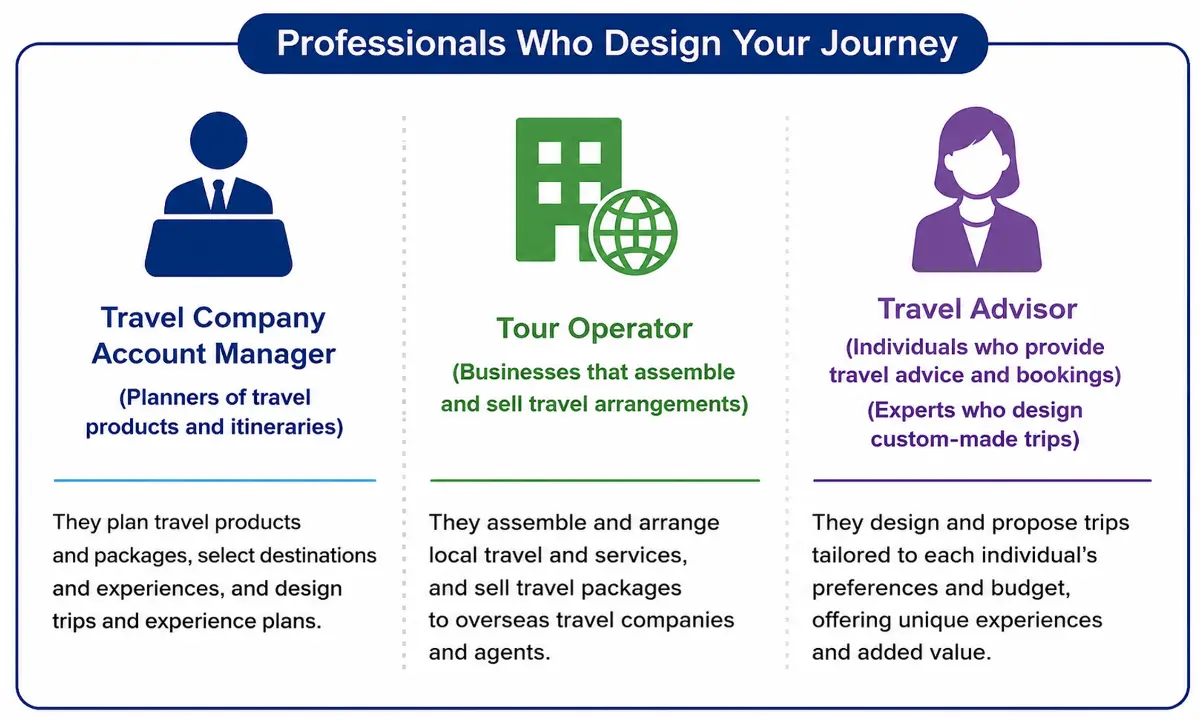
Whether a region is chosen depends not only on end-consumer awareness but also, to a large extent, on whether these professionals know the region well enough to recommend it with confidence. What many regions have overlooked is this: the ones not receiving the information are not only travelers. In fact, information about Japan's regions isn't reaching the professionals who influence travelers' decisions sufficiently. If professionals don't know about it, it won't make it into itineraries. And if it doesn't make it into itineraries, travelers simply cannot choose it.
Tourism marketing must incorporate these "intermediaries"—who curate travel experiences before they reach the end traveler—into its design framework.
3. Why Have Traditional Approaches Failed to Reach the Right Audience?
Traditional overseas promotions have focused primarily on raising awareness among individual consumers (B2C), using metrics such as reach and number of impressions. However, what is being asked of regional tourism authorities and DMO officials is not the volume of exposure, but "what did that expenditure bring to the region?"
It's not about how many times an ad was displayed, but rather which market segments it reached, which inquiries and business negotiations it generated, and how it led to visits, spending, and revenue for local businesses. Without being able to explain all of that, tourism promotion tends to remain nothing more than a report of activities carried out. Given that these budgets are funded by taxpayer money, this "invisibility" is a serious and weighty challenge from the perspective of accountability for results.
So, does switching to business-to-business (B2B) initiatives that directly engage professionals solve the problem? In reality, there are barriers here as well. Overseas trade fairs, sales calls, fam trips, and local events—while all important tools—face the following challenges.
Figure 2: Three Challenges of Conventional BtoB Initiatives
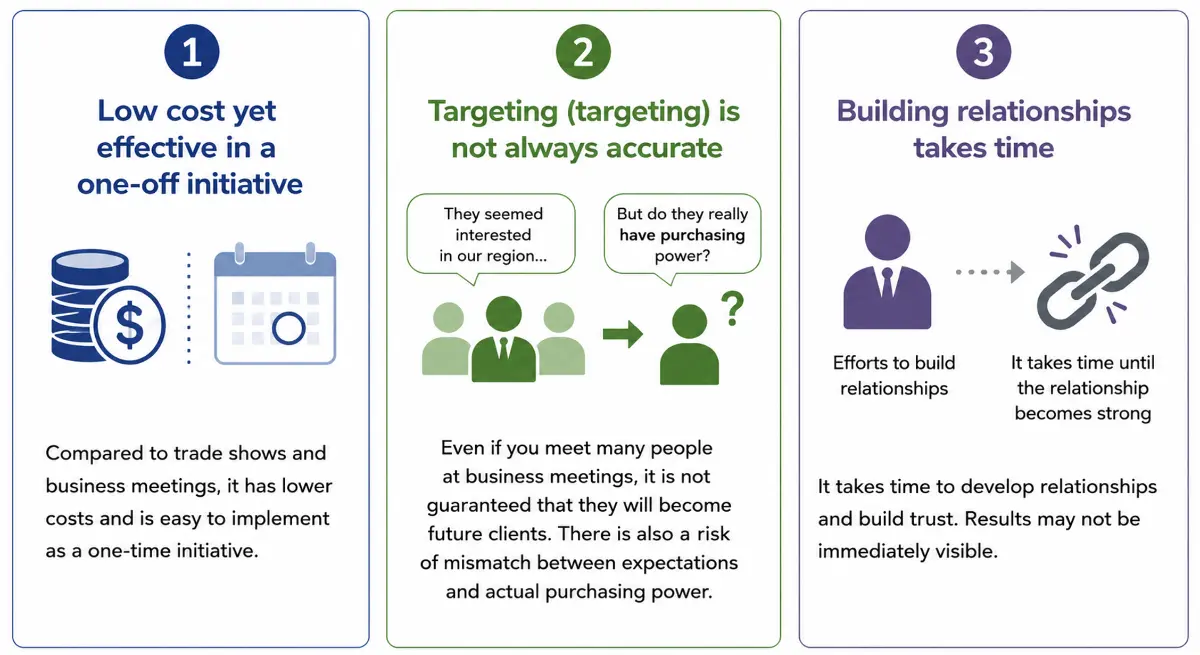
We know B2B matters—but we lack the mechanisms to turn it into sustained results. Isn't that the honest reality on the ground?
4. Turning Professionals into Local Supporters — The “TPM” Concept
This is where I would like to propose "TPM (Travel Professional Marketing)." This is a B2B marketing approach for the tourism sector that manages trade shows and fam trips not as one-off initiatives, but as a continuous cycle encompassing target selection, relationship building, product development, and results measurement.
Targeting travel industry professionals (hereinafter referred to as "TPs"), this approach identifies key contacts based on data, builds trusting relationships through ongoing engagement, and tracks results all the way to sales. Simply put, it is a marketing approach that "turns travel professionals into champions for the region." The differences from traditional trade shows and fam trips can be summarized in three points.
Figure 3: Three Shifts Brought About by “TPM”
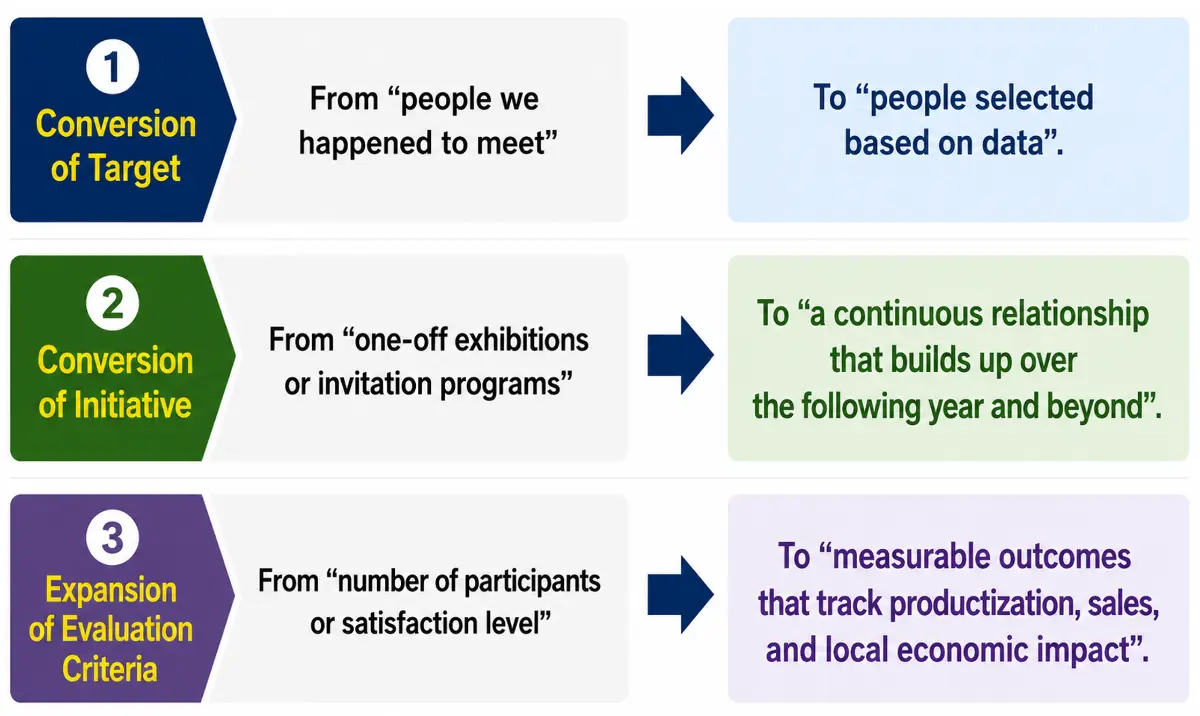
These three transformations reframe tourism marketing from a "one-time consumable budget that disappears after use" to an "investment that remains as a regional asset into the following fiscal year and beyond." The foundation of "TPM" is the perspective of not viewing TPs merely as sales targets. TPs serve as trusted intermediaries for travelers, editors who translate regional experiences into products, and partners who feed local market demand back to the region. "TPM" can be described as a form of marketing that delivers the region's value to travelers through trusted professionals.
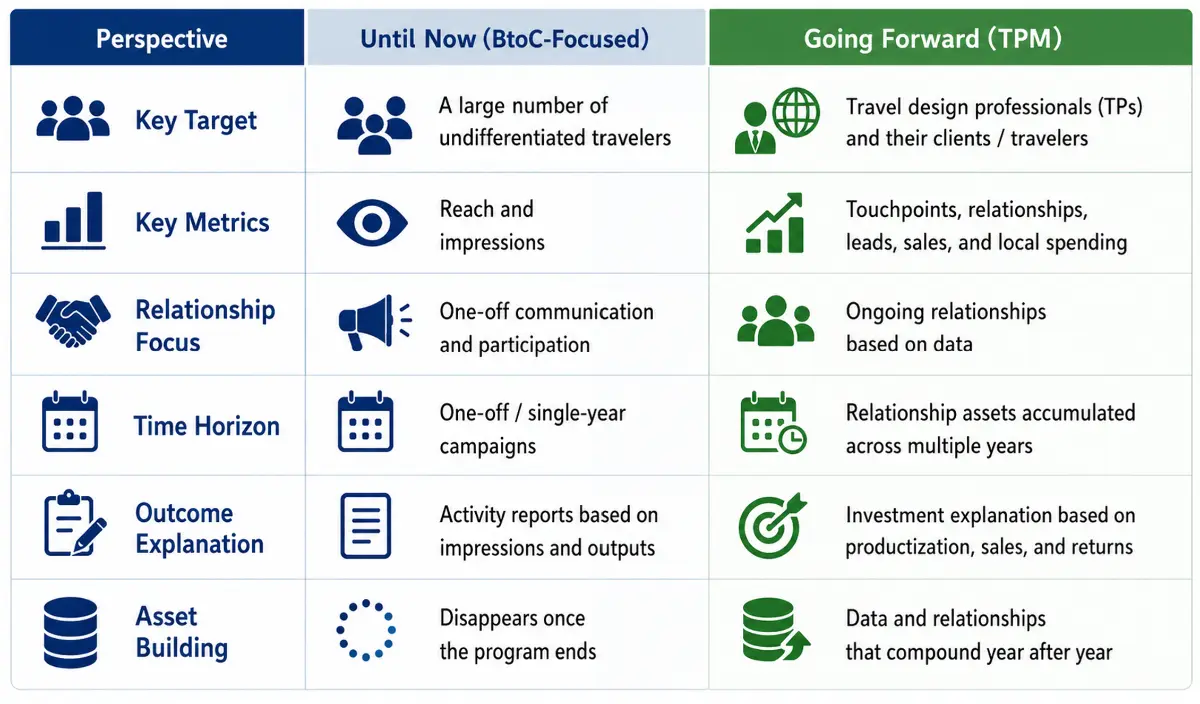
The figure below compares traditional tourism promotion with the tourism marketing approach pursued by "TPM" from six perspectives.
Figure 4: From the Past to the Future: The Transformation of Tourism Marketing
5. Where to Start — The 7 Steps of “CONNECT”
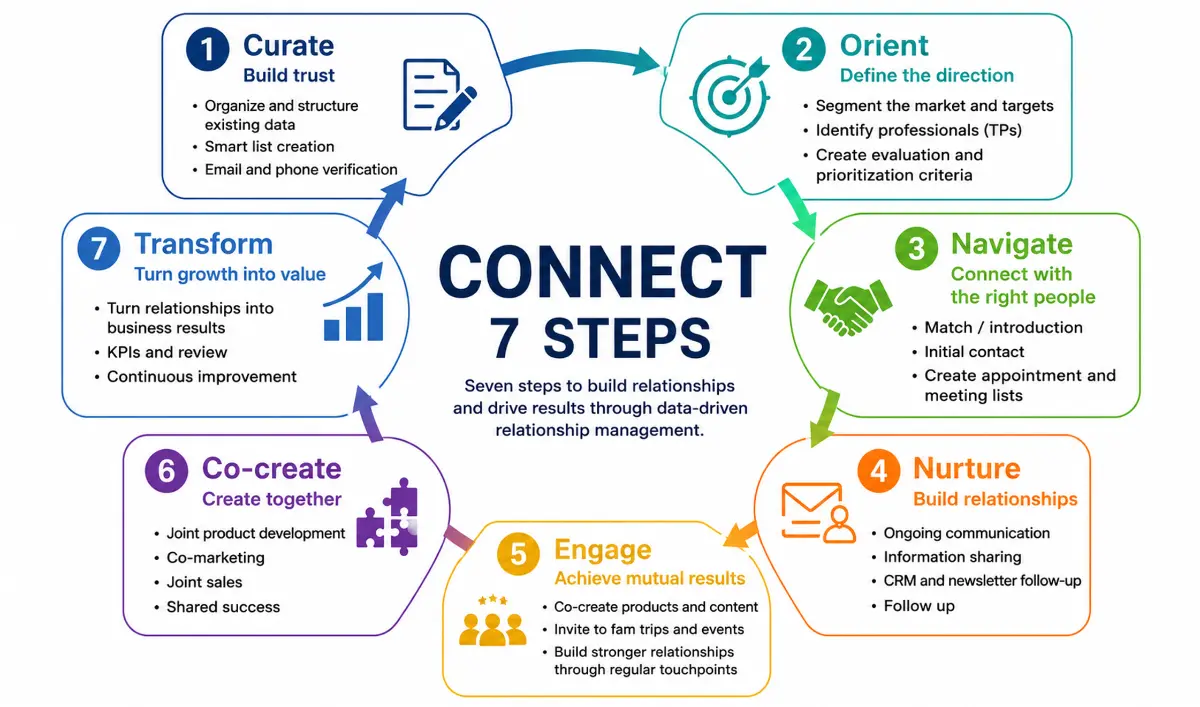
As an operational framework for implementing "TPM" on the ground, this column proposes the "CONNECT" model (the name of the conceptual framework proposed in this article). "CONNECT" is a cyclical marketing design that connects seven stages, ranging from the identification of regional value to the verification of results.
Figure 5: The Concept of the Seven “CONNECT” Steps
To make this easier to visualize, let’s consider a hypothetical scenario.
A DMO in a certain prefecture first reimagines (Curate) the region's mountain resources and food culture as a narrative tailored for Western audiences, decides to target (Orient) the adventure travel market, compiles a list of the top 30 travel agencies in the West that specialize in that sector (Navigate), nurtures relationships through a quarterly newsletter and two online workshops per year (Nurture), invites several of the most interested companies on a study tour, and motivates them to "want to recommend the destination in their own words" through dialogue with local guides and residents (Engage). From there, they collaborate with three of those companies to develop a 3-night, 4-day mountain adventure package (Co-create), and use the first year's sales results and customer feedback to refine the program for the following year (Transform).
This series of steps is "CONNECT." "CONNECT" functions not only as a framework for execution, but also as an assessment tool for identifying current challenges. Is what your region lacks the raw materials, target audience selection, relationship maintenance, product development, or performance measurement? It illuminates where weaknesses lie across the seven stages and provides a guide for prioritizing where to strengthen.
However, for "CONNECT" to be more than just a concept, three elements must be in place: data and a network of travel industry professionals (Asset); operational functions that connect regions, markets, policies, the field, data, and execution (Hub); and "CONNECT" itself as a common language (Framework).
The infrastructure for B2B media and data touchpoints capable of reaching travel professionals worldwide has been rapidly developing over the past few years, and one prime example is Northstar Travel Group, which joined the JTB Group in 2025. According to official announcements, the company possesses a network that reaches over 1.3 million professional travel buyers. The development of such infrastructure is bringing within realistic reach something that was once beyond the capacity of a single municipality: the ability to identify the right partners among global professionals and continuously nurture those relationships.
6. Implementation on the Ground — Phased KPIs and Business Accountability
Suppose a city struggling with overtourism wants to shift its focus from simply increasing visitor numbers to attracting high-value-added travelers. Traditionally, the main strategies would tend to be advertising targeting high-net-worth individuals, overseas trade shows, and fam trips.
Using "CONNECT" changes this approach. It involves reframing the region's high-value-added resources into a context that resonates with European and American markets; identifying which professionals in which markets can sell them; establishing contact with those professionals and nurturing relationships; jointly developing products; measuring inquiries and sales; and feeding the results back into the selection of future target markets and product design. This allows tourism initiatives to be presented not as "projects carried out the same way year after year," but as "investments that leave tangible results and knowledge for the region."
The key to accountability lies in designing stage-specific KPIs. Whereas traditional business-to-consumer (B2C) KPIs tend to focus on awareness and impressions, "TPM" establishes separate metrics for each stage, from awareness to learning.
Figure 6: Stage-Based KPIs in “TPM”
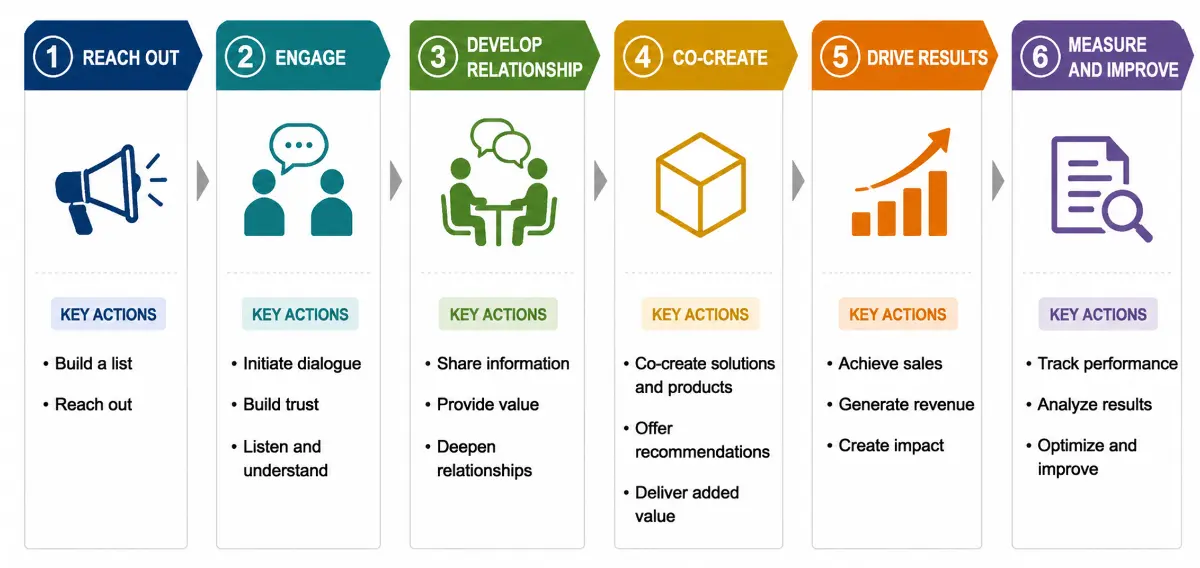
Among these, KPIs for the sales stage are the final metrics directly linked to accountability for business results. At the same time, in long-haul markets—primarily in Europe and the U.S.—the reality is that there is typically a time lag (lead time) of around one to two years between first approaching professionals and seeing actual commercialization and sales results.
For this reason, rather than judging success or failure based solely on sales figures for a single fiscal year, it is crucial to track KPIs for the "relationship-building stage" and "commercialization stage" as leading indicators, demonstrating a commitment to steadily moving toward results. By including the previous year's results alongside next year's targets for these stage-specific KPIs in your budget presentation materials, you can logically demonstrate—as a continuous flow from the awareness stage through to the sales stage—who the budget will reach, and what results it is designed to produce. This provides the basis for objectively explaining the tourism marketing budget to the region and stakeholders—not as a vague public relations effort, but as a business activity that makes results visible.
7. Conclusion — From the Competition of "Outreach" to the Competition of "Connection"
"CONNECT" does not negate traditional tourism marketing. Initiatives targeting individual consumers (B2C), such as advertising and social media, remain important. Particularly when approaching Western markets, it is crucial to strategically combine B2B marketing—based on the "TPM" concept—with traditional B2C marketing.
Simply implementing these as one-off measures is no longer enough to reach the next stage of growth. What is needed now is to position each initiative within a single cycle and transform them into a system where results and lessons learned accumulate over time.
Tourism marketing has reached a stage where it should be redefined not as a competition over the volume of messaging, but as a competition over the quality of connections. Who do we connect with? How do we build trust? How do we co-create products? How do we measure results and feed them back into the next strategy? What is being asked of regional tourism authorities and DMOs is not to promote the region with a louder voice, but to develop the design capability to connect the region's value with the right audience and translate it into results.
From "outreach" to "results," from "one-off" to "cyclical," from "consumed budget" to "accumulated assets"—we must now update the foundations of tourism marketing, one by one. The time has come to update destination marketing—positioning "TPM" as a new guiding philosophy and "CONNECT" as its operational framework.
著者