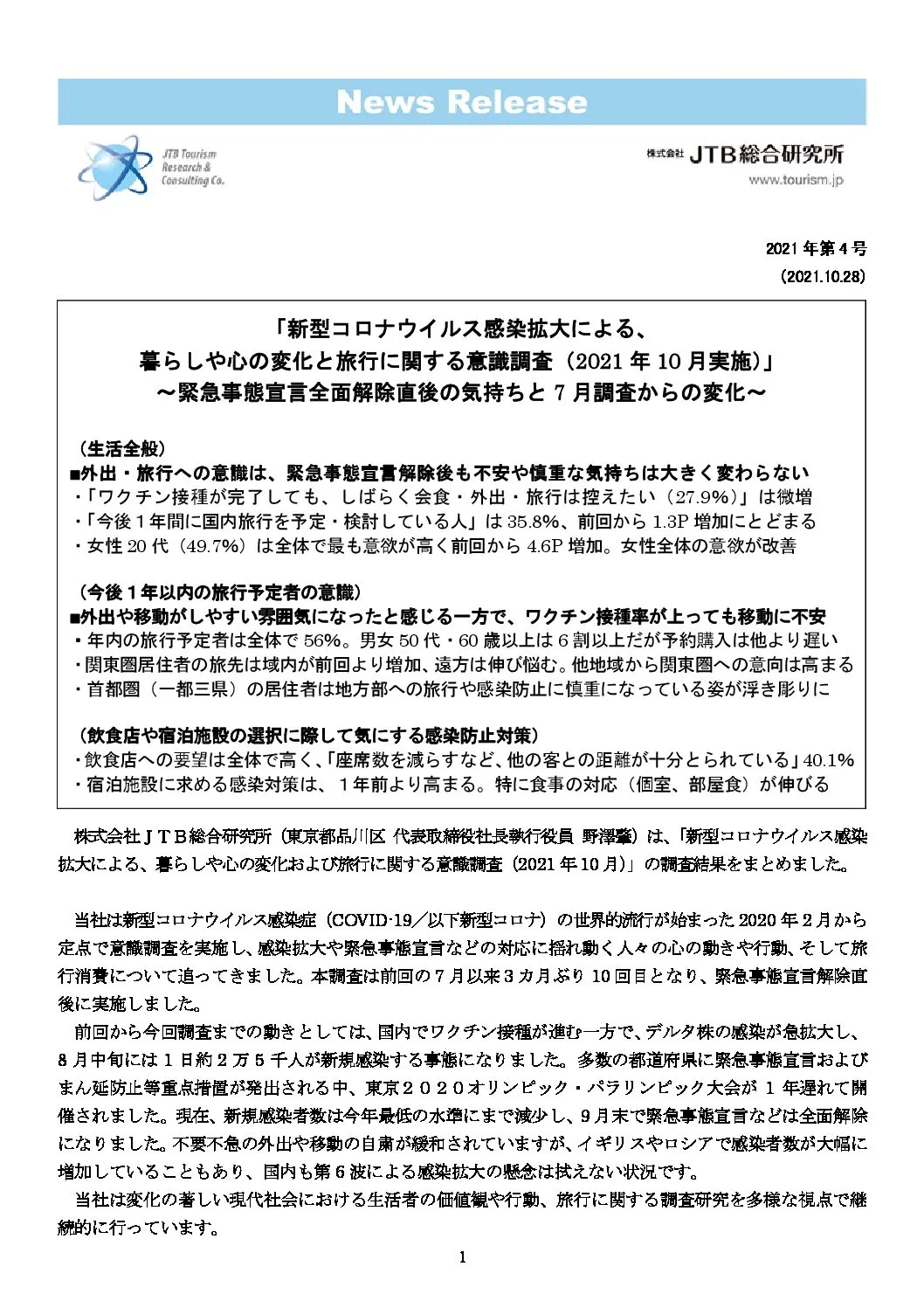
"Survey on Changes in Daily Life and Mental Well-being, and Attitudes Toward Travel Amid the Spread of COVID-19 (Conducted in October 2021)" — Public Sentiment Immediately Following the Full Lifting of the State of Emergency and Changes Since the July Survey
Since February 2020, when the global pandemic of COVID-19 began, the company has conducted regular surveys to track shifts in public sentiment and behavior—including reactions to the spread of the virus and the issuance of states of emergency—as well as trends in travel spending. This survey marks the 10th in the series and the first in three months since the previous one in July; it was conducted immediately after the lifting of the state of emergency.
Regarding developments between the previous survey and this one, while domestic vaccination efforts progressed, infections of the Delta variant spread rapidly, leading to a situation in mid-August where approximately 25,000 new cases were reported daily. Amid the issuance of states of emergency and targeted measures to prevent the spread of infection in numerous prefectures, the Tokyo 2020 Olympic and Paralympic Games were held one year later than originally scheduled. Currently, the number of new infections has fallen to its lowest level this year, and all states of emergency and similar measures were fully lifted at the end of September. Although restrictions on non-essential outings and travel have been eased, concerns about a sixth wave of infections in Japan remain, particularly given the significant increase in cases in the UK and Russia.
Our company continuously conducts research on consumers’ values, behaviors, and travel habits in today’s rapidly changing society, approaching these topics from diverse perspectives.
Key Findings
- General Lifestyle: Even after the state of emergency was lifted, people’s attitudes toward going out and traveling have not changed significantly, as they remain anxious and cautious.・The percentage of respondents who said, “Even after completing my vaccination, I want to refrain from dining out, going out, and traveling for a while (27.9%)” saw a slight increase.
The percentage of people who “plan or are considering domestic travel in the next year” stood at 35.8%, an increase of only 1.3 percentage points from the previous survey.
Women in their 20s (49.7%) showed the highest level of interest among all groups, up 4.6 percentage points from the previous survey. Interest among women overall has improved - Attitudes of those planning to travel within the next year: While they feel the atmosphere has become more conducive to going out and traveling, they remain anxious about traveling even as vaccination rates riseA total of 56% of respondents plan to travel within the year. While more than 60% of men and women in their 50s and those aged 60 and older plan to travel, they are slower to make reservations and purchases than other groups.
Among residents of the Kanto region, travel within the region has increased compared to the previous survey, while travel to distant destinations has stagnated. Interest in traveling to the Kanto region from other regions is on the rise.
The survey highlights that residents of the Greater Tokyo Area (Tokyo and the three surrounding prefectures) are being cautious about traveling to regional areas and about preventing infections. - Infection prevention measures to consider when choosing restaurants and lodging facilitiesOverall, expectations for restaurants remain high, with 40.1% of respondents stating that "sufficient distance is maintained from other customers, such as by reducing the number of seats."
Expectations for infection control measures at lodging facilities have increased compared to a year ago. In particular, there has been a rise in the demand for dining arrangements (private rooms, in-room dining).
JTB Research Institute Co., Ltd. (Shinagawa-ku, Tokyo; President and CEO Hajime Nozawa) has compiled the results of its “Survey on Changes in Daily Life, Mental Well-being, and Travel Attitudes Due to the Spread of COVID-19 (October 2021).”
Since February 2020, when the global pandemic of COVID-19 began, the company has conducted regular surveys to track shifts in public sentiment and behavior—including travel spending—amid responses to the spread of the virus and the issuance of states of emergency. This survey marks the 10th in the series and the first in three months since the previous one in July; it was conducted immediately after the lifting of the state of emergency.
Regarding developments between the previous survey and this one, while domestic vaccination efforts progressed, infections of the Delta variant surged rapidly, leading to approximately 25,000 new cases per day in mid-August. Amid the issuance of states of emergency and priority measures to prevent the spread of infection in numerous prefectures, the Tokyo 2020 Olympic and Paralympic Games were held one year later than originally scheduled. Currently, the number of new infections has fallen to its lowest level this year, and all state of emergency declarations and similar measures were fully lifted at the end of September. While restrictions on non-essential outings and travel have been eased, concerns about a sixth wave of infections in Japan remain, particularly given the significant increase in cases in the UK and Russia.
Our company continuously conducts research on consumers’ values, behaviors, and travel habits in today’s rapidly changing society, approaching these topics from diverse perspectives.