The Growth and Potential of In-destination Businesses Co-created with Local Communities

As the inbound tourism market expands, increasing attention is being paid to in-destination businesses, including tours, cultural experiences, and activities that travelers enjoy at their destinations. This article examines the factors driving the growth of this market, the characteristics of in-destination businesses, the value they create for local communities, and their future potential. It also highlights the growing role of in-destination businesses as key players in shaping a new future for tourism.
Growing Expectations for In-Destination Businesses
Cultural experiences such as tea ceremonies and sushi-making, as well as activities such as rafting and canoeing, are attracting attention in the inbound tourism market as businesses that enhance travelers’ experiences at their destinations. In English, these offerings are generally referred to as “Tours & Activities,” or, when admission-based attractions such as theme parks, art museums, and history museums are included, as “Tours, Activities & Attractions.” Overseas, events specifically dedicated to this sector are also being held.
In June 2025, the “Tabinaka Summit,” Japan’s first tourism industry event dedicated to in-destination experiences, was held in Minato City, Tokyo. The event was held again in June 2026, attracting more than 1,300 participants both in person and online. I attended in both years and was particularly impressed by the energy at the venue, with participants actively networking throughout the event. In September 2026, “Tabinaka Summit OSAKA 2026” was held in Osaka for the first time, attracting approximately 230 participants as the event continued to expand.
Why, then, is the in-destination sector, focused on experiences and activities during a trip, attracting so much attention today?
Three Reasons Why the In-Destination Market Is Gaining Attention
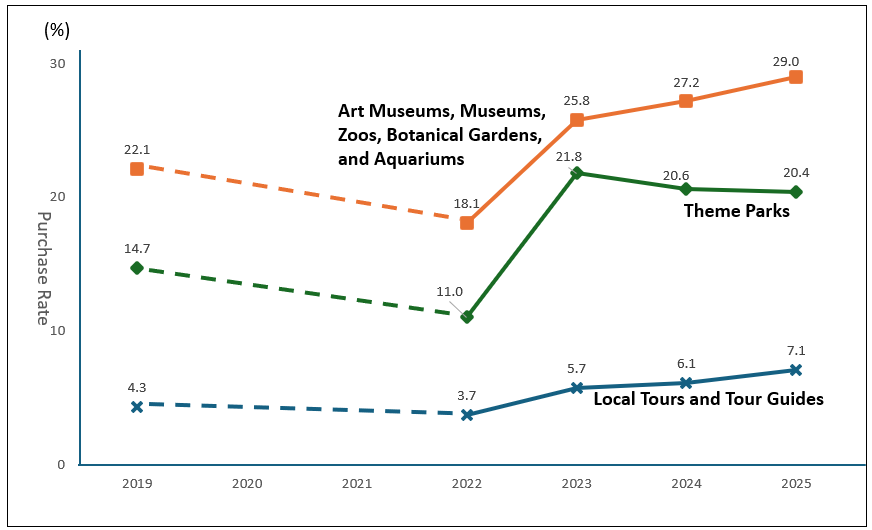
There are three main reasons why the in-destination market is attracting attention in Japan. The first is a shift in trends among visitors to Japan. According to the Japan Tourism Agency’s “Survey on Inbound Consumer Trends,” the category “Expenditures by Category During Stay in Japan” includes “Entertainment Services” alongside “Accommodation” and “Food and Beverage.” Let us look at purchase rates for three subcategories within “Entertainment Services”: “Local Tours and Tour Guides,” “Theme Parks,” and “Art Museums, Museums, Zoos, Botanical Gardens, and Aquariums,” all of which fall under the broader category of tours, activities, and attractions (Figure 1).
The purchase rate for “Local Tours and Tour Guides” rose by 2.8 percentage points, from 4.3% in 2019, before the COVID-19 pandemic, to 7.1% in 2025. Similarly, the purchase rate for “Theme Parks” increased by 5.7 percentage points, while that for “Art Museums, Museums, Zoos, Botanical Gardens, and Aquariums” increased by 6.9 percentage points.
Figure 1: Trends in Purchase Rates (All Nationalities and Regions)
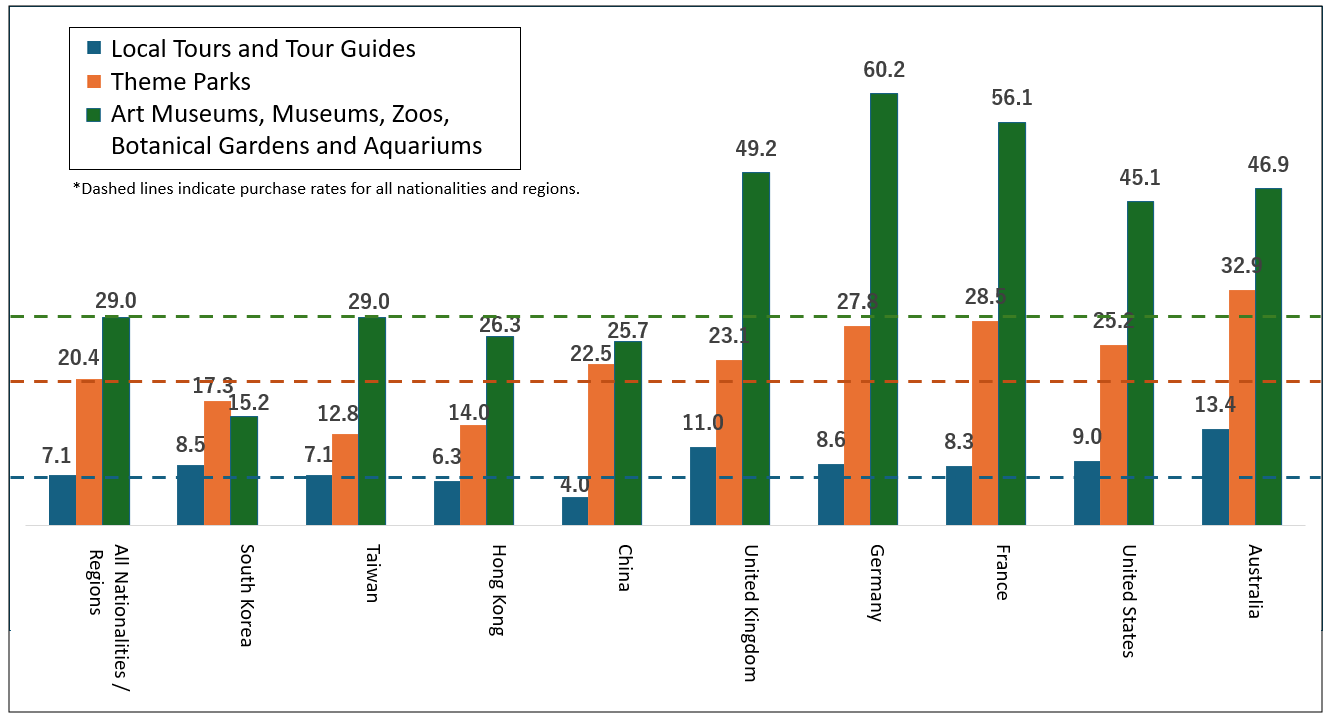
Furthermore, looking at purchase rates by country and region in 2025, rates were notably higher among visitors from Europe and North America (Figure 2). For “Local Tours and Tour Guides,” the purchase rate was 11.0% for the United Kingdom, 8.6% for Germany, 8.3% for France, and 9.0% for the United States, all higher than the rates for Taiwan (7.1%) and Hong Kong (6.3%), both of which have high proportions of repeat visitors to Japan. Theme parks, art museums, and other attractions show a similar trend. The number of visitors to Japan from Europe and the United States increased by 3.22 million, from 4.17 million in 2019 to 7.40 million in 2025, a shift that is likely to contribute directly to further growth in the in-destination market.
Figure 2: Purchase Rates for Tours, Activities, and Attractions by Country/Region, 2025
Second, the in-destination market is expected to continue growing globally. The global market for tours, activities, and attractions was valued at US$271 billion in 2025 and is projected to reach US$342 billion by 2029. According to Arival and Phocuswright, the sector is expected to outpace all other major segments of the travel industry, leaving substantial room for further growth. This global trend is also likely to influence the spending patterns of visitors to Japan. Investment capital is also flowing into the sector. Klook, a platform specializing in travel experiences and services, raised US$100 million in February 2025. Peek, which provides booking and operations systems for experience providers, raised US$70 million in November of the same year, while Expedia Group moved to acquire Tiqets, a platform for attractions and experiences.
Third, further digitalization is expected to create additional room for market growth. According to research by Arival and Phocuswright, online bookings accounted for just 33% of the tours, activities, and attractions market in 2025, compared with 64% for the travel industry overall. This gap suggests significant potential for further growth through online booking and payment. This growth is being supported by technology companies offering a wide range of services across the distribution chain. These include OTAs specializing in experiences, such as GetYourGuide, Viator, and Klook, which provide sales channels directly to travelers, as well as SaaS platform providers such as Bókun (known as JTB BÓKUN in Japan), Peek, FareHarbor, and Rezdy, which support reservation, operations, inventory, and distribution management for experience providers. JTB BÓKUN, for example, supports connections with more than 20 overseas OTAs.
Against this backdrop, the in-destination market is gaining attention as the third-largest sector in the travel industry, after air travel and accommodation, and has become a rapidly growing field attracting both new players and investment.
Types of In-Destination Products
As in-destination businesses encompass a wide variety of products, including cultural experiences and activities, the market can be complex and difficult to understand. For clarity, the author classifies these products into three categories based on their business models: (1) Tour-Based, (2) Experience and Cultural Exchange Program-Based, and (3) Attraction-Based, including theme parks, art museums, museums, and other attractions. Let us look at each category in turn.
(1) Tour-Based
The tour-based model combines multiple elements, such as tourist attractions, experiences, and dining, into a single package. Tour-based products can be further divided according to whether they involve bus transportation. Typical bus tours include half-day sightseeing tours designed for first-time visitors to major urban attractions, as well as hop-on, hop-off buses that allow passengers to get on and off freely.
Long-established examples of the former include Tokyo’s Hato Bus foreign-language tours and the Sunrise Tour operated by JTB Global Marketing & Travel, which has been running since 1964. Examples of the latter include the Sky Hop Bus, which travels between major tourist spots and allows passengers to get on and off freely. Guided tours that do not use buses include walking tours.
(2) Experience and Cultural Exchange Program-Based
This category includes cultural experiences such as tea ceremonies, calligraphy, and sushi-making, as well as activities such as rafting and hot-air balloon rides. A guide or interpreter who provides explanations is usually present during the program. Programs typically last from about one hour to half a day, although multiple experiences may be combined to create a full-day program. Offerings range widely from cultural experiences to nature-based activities.
(3) Attraction-Based
This category includes admission-based attractions such as art museums, museums, and theme parks. Recently, sumo shows that include a meal, combining cultural experiences with entertainment, have also gained popularity. To improve convenience for visitors and streamline admission management for operators, an increasing number of attractions require advance online reservations and payment.
The differences among these business models have significant implications for management and marketing strategies. For tour-based products that include bus transportation and for attraction-based businesses, bus operating expenses and facility operating costs represent fixed costs. To reach the break-even point and generate a profit, operators therefore need to expand sales channels to increase revenue while strengthening promotional efforts to raise awareness.
Experience and cultural exchange programs, on the other hand, can accommodate only a limited number of participants per guide if they are to maintain a high level of satisfaction. While the number varies depending on the program, it generally ranges from just a few participants to around 20 at most. To increase revenue and profitability, operators therefore need strategies such as offering higher-value experiences at higher prices or having a single guide manage multiple programs to expand their range of offerings. Because the quality of guides and interpreters has a significant impact on the value of these experiences, their professional development is also crucial.
The Significance and Value of In-Destination Businesses
In-destination experiences hold the key to transforming the future of the inbound tourism market and enhancing the quality of travel experiences. In September 2025, a senior vice president at Booking.com described the value of in-destination products as follows: “Visiting tourist attractions and participating in activities breathe life into a destination. They transform a trip that would have been nothing more than a mere visit into a memorable experience.” This aptly captures the role that in-destination businesses play in creating value for destinations.
In Japan, however, in-destination businesses are sometimes confused with “destination-based tourism,” an approach that has been promoted nationwide since the 2000s. Destination-based tourism is led by local communities and seeks to uncover local resources and create distinctive travel experiences that cannot be found elsewhere, often with the cooperation of residents who are not tourism professionals. While these experiences have been highly valued by visitors, the burden on local residents providing them was often considerable, particularly when they participated as unpaid volunteers or received inadequate compensation. As a result, destination-based tourism came to be widely perceived as difficult to sustain as a profitable business. Because both destination-based tourism and in-destination businesses often involve locally operated experience and exchange programs that begin and end at the destination, the two are sometimes confused or regarded as essentially the same.
In-destination businesses expanding globally, however, are viewed somewhat differently from the destination-based tourism model that has developed in Japan. One key difference is that in-destination businesses are regarded as commercially viable businesses. In Japan, there still appears to be a perception that locally operated tours and programs cannot be profitable because of their relatively low per-person prices. Yet tours and activities are now operated around the world as a business sector attracting significant investment, making it difficult to argue that the sector has little potential for profitability. If locally operated programs are failing to generate sufficient profits, there may instead be room to improve how those businesses are structured and managed. What Japan needs is a clearer understanding of the in-destination market, the business expertise needed to operate successfully within it, and professionals capable of driving these businesses forward.
Alignment with Regional Tourism Policies
Furthermore, in-destination businesses are characterized not only by their ability to generate profits but also by their strong alignment with regional tourism policies. In today’s tourism landscape, travelers are increasingly shifting from “sightseeing” toward “things to do.” From the perspective of destinations, this trend creates opportunities to realize sustainable tourism by showcasing the value of local tourism resources, using them in ways that preserve and protect them, and generating economic benefits for local communities.
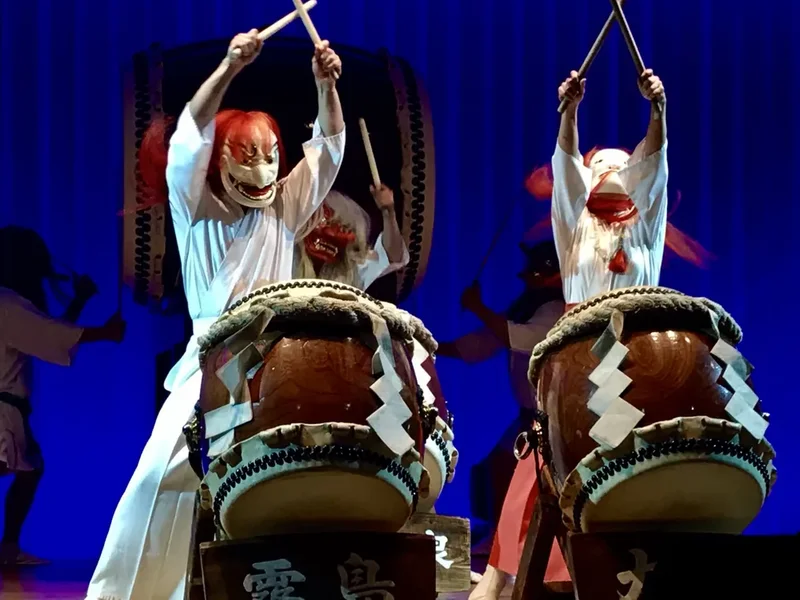
Guides and interpreters play a crucial role in communicating the value of a region to travelers. By establishing a base within the community, in-destination business operators can also build relationships not only with tourism businesses but with local guides, residents, and people working in agriculture, forestry, and fisheries. These connections can enable operators to develop products that offer richer experiential value while also allowing them to serve as stewards of local culture. For example, Otona-sha Co., Ltd., based in Takachiho Town, Miyazaki Prefecture, works with local experts in history and culture to develop and operate programs offering high-value experiences centered on the preservation and transmission of “Yokagura,” a ritual performing art with a history spanning more than 800 years.
Unlike more passive forms of tourism centered primarily on observation, these experiences encourage visitors to stay longer at the destination and actively engage in local activities. This creates more opportunities for spending on accommodation and dining, increasing local consumption. By taking part in activities deeply rooted in the community and spending more time in the destination, visitors may also develop a stronger sense of connection to the area, potentially leading to longer-term relationships with the region as members of its “related population.”
Future Challenges
While in-destination businesses are expected to grow and create value for local communities, several challenges need to be addressed to ensure the healthy development of the market and the businesses operating within it.
The first is digitalization to improve operational efficiency. Many in-destination businesses are small and medium-sized enterprises (SMEs). To efficiently handle labor-intensive tasks, such as arranging and managing tours and securing multiple distribution channels, it is essential to make active use of digital services designed specifically for this sector, including SaaS platforms and OTAs. By partnering with OTAs specializing in tours and activities, such as GetYourGuide and Viator, which have a strong presence in Western markets, businesses can expand their distribution to global markets. However, using multiple OTAs while also accepting bookings through their own websites can make inventory management more complex. Businesses therefore also need systems with channel management functions similar to those commonly used in the accommodation industry. For example, when selling to the inbound market, JTB BÓKUN enables businesses to connect easily with overseas OTAs and centrally manage reservation inventory.
The second challenge is ensuring the sound development of the industry by establishing mechanisms for product quality assurance and consumer protection. This will likely require the creation of an industry organization. Because the sector differs from the traditional travel business, such an organization may take a different form from existing travel industry associations. From the perspective of the tourism industry as a whole, however, it will be important to move forward in cooperation with these existing organizations where appropriate.
A further challenge is expanding the number of providers as demand for tours and activities continues to grow, particularly among inbound travelers. More tour and activity operators will be needed not only in major cities but especially in regional areas if inbound travelers are to be encouraged to explore more of Japan. This will require stronger mechanisms to support entrepreneurs seeking to seize market opportunities, including funding and business matching, as well as systems and services to support newly established businesses and the development of professionals with specialized knowledge of tours and activities.
From the perspective of promoting Japan as a leading tourism destination, we aim to support the development and growth of in-destination businesses while working with national and local tourism authorities. In-destination operators can also expand their businesses directly by collaborating with DMCs, which play an important role in the development and distribution of travel products.
For more information on the DMC business, please see the separate article, “Innovation in the Travel Industry: A Community-Driven perspective”
Summary: Key Players in Shaping a New Future for Tourism
This article has explored the potential of in-destination businesses and the challenges they face as they continue to grow. In-destination business operators play a vital role in communicating the value of local communities and destinations to travelers. By collaborating with government agencies and DMCs involved in destination management and marketing, these operators are expected to play an increasingly central role as key players in shaping a new future for tourism.
We hope that in-destination businesses will continue to grow, helping to make destinations across Japan places where travelers can discover a rich variety of exciting experiences.
References
Theory of Regional Travel Business, by Hirokazu Kobayashi, Koyo Shobo, 2024
Inbound Travel Business Practical Guide — How to Get Started as a DMC Tour Operator, Yamagokoro.jp, Hirokazu Kobayashi
著者