Redefining High-Value Travelers: The Essence of the Travelers Japan Should Attract

While inbound tourism to Japan has reached record highs in both visitor numbers and spending, challenges have also emerged, such as overtourism and an uneven distribution of benefits to local economies. Given that the concept of “high-value-added travelers” promoted by the Japan Tourism Agency and JNTO is currently being conflated with that of “high-spending consumers,” this article reexamines the definition of this concept. Taking into account global tourism trends and shifts in travelers’ values, we explore the direction Japan’s tourism policy should take in the future.
1. Changes in the Tourism Market Surrounding Japan
Japan’s tourism industry is at a turning point, undergoing a qualitative transformation. Rather than resting on our past achievements, the time has come to fundamentally rethink the very nature of regional tourism.
First, let’s examine the current situation through data. In 2024, the number of international visitors to Japan reached approximately 36.9 million, significantly surpassing the 31.9 million recorded in 2019.Tourism spending also swelled to a record high of 8.1 trillion yen, with per-person spending in particular maintaining a high level of approximately 227,000 yen. These trends clearly demonstrate that Japan’s inbound market is recovering not only in “quantity” but also in “quality” (Figure 1).
However, this recovery is marked by significant disparities. Tourism demand is concentrated in major cities such as Tokyo, Osaka, and Kyoto, as well as along the so-called “Golden Route,” while the gap with regional areas is actually widening.In Kyoto and at Mount Fuji, overcrowding by tourists has resurfaced, and the impact on the lives and environment of local residents is becoming more severe. Furthermore, while the base of tourism spending is expanding, it has become clear that it has not yet sufficiently reached areas such as “cultural experiences and interaction with the local community.” While there has been a certain degree of positive impact on sectors like lodging and dining, spending on region-specific experiential tourism remains limited.
While the recovery of the inbound tourism market indicates a “recovery in numbers,” the reality is that “the intrinsic value of local communities” is being left behind. What is crucial is not to be satisfied with macro-level results such as the number of travelers or the amount spent, but to redefine the nature of tourism from the perspective of “who we attract and what value we can leave behind in the region.” This will serve as the starting point for a sustainable and attractive tourism strategy.

2. Japan’s Focus on High-Net-Worth Individual Strategies
In recent years, the Japan Tourism Agency has been placing particular emphasis on attracting high-spending travelers. This is not merely an effort to “attract the wealthy,” but is considered a pillar of policy aimed at shifting tourism from quantity to quality. The Japan Tourism Agency defines high-spending travelers as “those who spend 1 million yen or more per visit to Japan,” using the scale of their spending as a clear criterion.
According to a survey of the high-end travel market by JNTO (Japan National Tourism Organization), high-end travelers account for only 1% (approximately 320,000 people) of all foreign visitors to Japan. However, their spending amounts to 14% (approximately 670 billion yen) of the total, and the fact that they are “a small group with an extremely large impact” is the reason why high-end travelers are prioritized as a strategic target.JNTO further classifies the affluent segment into “Classic Luxury” and “Modern Luxury” (Figure 2). The Classic segment consists of traditional consumers who prioritize high-end hotels and brand-name purchases, while the Modern segment comprises a new group that values experiences and spiritual fulfillment. The latter, in particular, is positioned as the core of future strategies because it places greater emphasis on “what kind of experiences they find valuable” rather than on “spending volume.”
Underlying this classification is a shift from “quantity to quality” that is spreading primarily in Europe and the United States. As the trends of sustainable tourism and responsible tourism gain international traction, travel is evolving from a mere consumption activity into behavior that carries social and environmental responsibility.According to "The Global Luxury Tourism Market" (Source: Global Information Inc.), "The global luxury tourism market, estimated at US$25.7 billion in 2024, is projected to reach US$57.4 billion by 2030, growing at a CAGR of 14.4% during the analysis period of 2024–2030."
Furthermore, “luxury tourism is evolving as affluent travelers seek unique, personalized, and immersive experiences that set them apart from conventional travel.We see that among affluent consumers, the values of "modern luxury"—prioritizing private jet charters, bespoke wellness retreats, culturally immersive travel, and sustainable ecotourism destinations—are expanding, as they place greater value on "authentic experiences" rather than mere "luxury." However, it cannot be denied that current policies still largely assume a "traveler profile measured solely by spending volume."While high spending is certainly attractive, pursuing it alone risks missing the true nature of travelers. What tourism policy needs is not the size of the spending, but a perspective focused on “what kind of travelers with what values we can attract, and what kind of sustainable value they can leave behind in the region.”
[Figure 2] Two Types of Travelers in Luxury Travel

3. A New Profile of High-Net-Worth Travelers: “High-Value-Added Travelers”
JNTO has introduced a new traveler profile known as the “High-Value-Added Traveler” (Figure 3). In addition to the “authenticity” and “exclusivity” traditionally sought in luxury travel, this profile emphasizes perspectives such as “sustainability,” “responsibility toward local communities,” and “contribution to environmental and cultural regeneration.”Furthermore, elements such as “transformative” and “wellness” have been incorporated, redefining travel itself as an experience that leads to personal growth and spiritual fulfillment.
Behind this shift lies a global change in tourism trends, particularly in Western countries. Tourism is shifting from being merely an object of mass consumption to an activity that entails social and environmental responsibility. Concepts such as sustainable tourism and responsible tourism are widely shared internationally, and the “high-value-added traveler” profile outlined by JNTO can be said to embody the very image of the “responsible traveler” advocated globally.
However, on the ground, there remains a tendency to focus solely on the “scale of spending.” As a result, the diverse motivations and values of travelers are not sufficiently reflected, and the definition of a “high-value-added traveler” risks becoming a mere formality. In other words, although this framework incorporates an evolved perspective based on global trends, equating it simply with “high-spending consumers” would be to miss the point entirely.What is truly at stake in tourism policy and regional strategy is the practical ability to link this broad definition to an understanding of travelers and product design, thereby creating sustainable and meaningful value for the region.
[Figure 3] JNTO’s definition of “high-value-added travelers”

4. The Expansion of the SBNR Segment and New Travel Values
In recent years, the SBNR (Spiritual But Not Religious) demographic—that is, “people who do not belong to a specific religion but seek spiritual fulfillment”—has been growing, particularly in Europe and the United States. According to a North American survey, approximately one in five adults identifies as SBNR, and this proportion is expanding especially among those in their 20s and 30s.
The defining characteristic of the SBNR demographic is not simply that they avoid religious rituals, but rather that they “value a way of life and spirituality that is true to themselves.” As shown in the figure, several trends can be observed in their values.
- Anti-institutional and anti-consumerist: Unbound by religious organizations or capitalist values, they prioritize meaningful consumption and sustainable lifestyles.
- Spiritual orientation: They pursue inner peace and spiritual fulfillment through meditation, yoga, and a sense of oneness with nature.
- Authenticity and connection to the local community: They find value in experiences unique to a particular place and in genuine interactions with people.
- Self-growth and self-discovery: They view travel as an opportunity for “learning” and “change,” seeking to gain a deeper understanding of themselves.
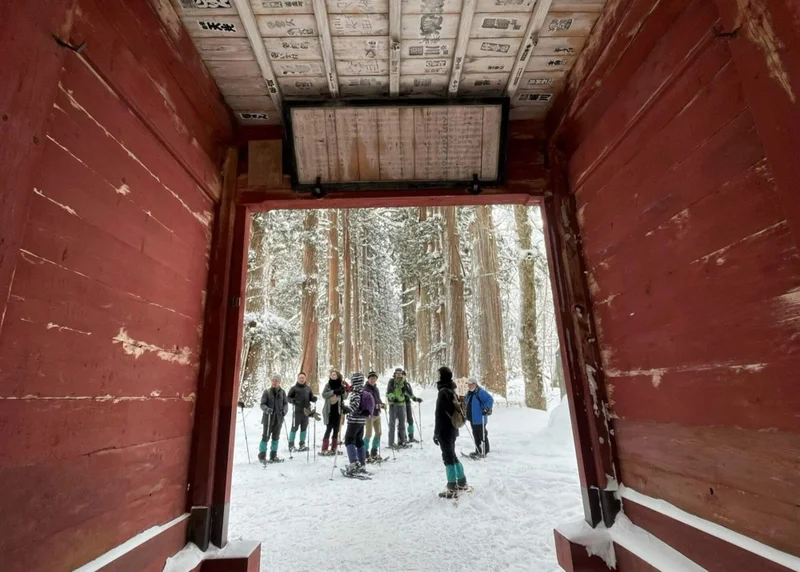
A similar trend can be observed in Japan. An increasing number of travelers are visiting shrines and temples without religious intent, or engaging with nature worship and spirituality; for them, travel is not “sightseeing” but rather a time to reflect on themselves and find inner peace. These values align with the preferences of the “Modern Luxury” segment, a concept that has gained traction in recent years.The Modern Luxury segment places value not on physical opulence or the scale of consumption, but rather on “memorable experiences,” “connections with people and culture,” and “time that enriches the self.” In other words, the SBNR segment and the Modern Luxury segment share a high degree of affinity in their pursuit of “essential richness,” and this naturally aligns with Japan’s tourism resources.For example, the experience of walking the World Heritage-listed Kumano Kodo while engaging with history, nature, and spirituality can be described as a “spiritual pilgrimage” for the SBNR segment. Furthermore, zazen meditation at Zen temples and visits to Shinto shrines rooted in the Japanese view of nature are embraced as “journeys of self-discovery” that transcend religious constraints.
As such, Japan possesses numerous resources that resonate with the values of the SBNR and modern luxury segments. Moving forward, a major challenge for tourism policy will be to move beyond the traditional framework of “high added value = high-spending” and focus on how to attract travelers who prioritize spiritual fulfillment and personal growth.
[Figure 4] SBNR Values and Behavioral Characteristics

5. Rethinking “Luxury”
In the past, “luxury” was synonymous with high-end hotels, designer goods, and private, comfortable spaces—symbols of wealth and status. This represented what might be called “classic luxury,” with keywords such as “status,” “comfort,” and “luxury as consumption.”However, in recent years, this definition has changed significantly. Particularly among those in their 20s and 30s, there is a growing tendency to perceive “meaningful experiences” and “emotional fulfillment” as true luxury, rather than mere “opulence.” This overlaps with the characteristics of the aforementioned SBNR and Modern Luxury segments, and consumer behavior is shifting from “ownership of material goods” toward “self-discovery” and “spiritual fulfillment.”
When we examine this shift in values, it becomes clear that luxury is not necessarily about enjoying high-priced goods or services, but is diversifying in the following ways:
- Luxury lies in encountering authenticity: directly experiencing local culture and way of life
- Memorable moments are luxury: Experiences that evoke emotion and provide learning
- Luxury is being yourself: Time and space where you can relax without reservation
- Luxury lies in connections with people and culture: interacting with and empathizing with local communities
- Luxury lies in caring for the future: Finding value in actions that are kind to society and the environment
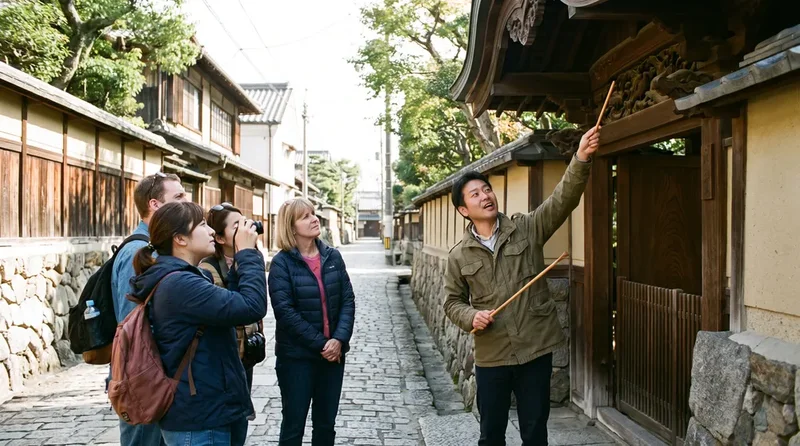
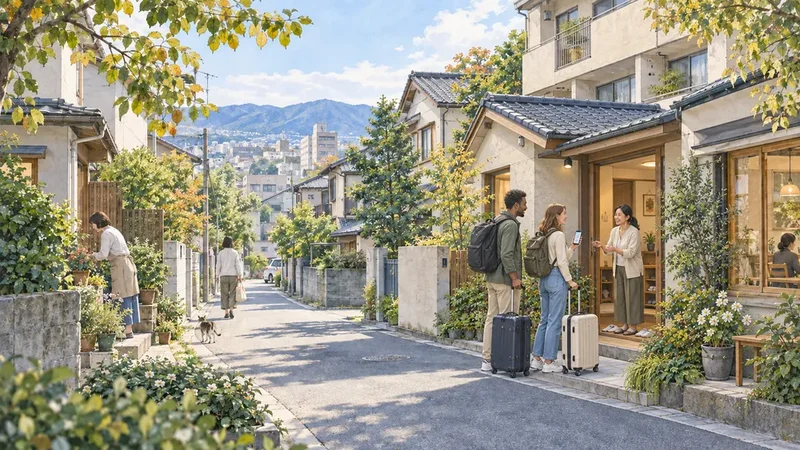
For example, the guesthouse “Pongy” in Kanazawa is a prime example of this. While the room rate is affordable at around 4,000 yen per night, it has earned high praise from foreign travelers. Reviews are filled with comments such as “a sense of security, like coming home to my parents’ house” and “a special experience that lets me touch the lives of Japanese people,” and many travelers combine a stay here with a visit to a five-star hotel. What is even more distinctive is that the owner openly discusses topics such as politics, society, and religious views with guests.Travelers’ interest in Japan extends beyond tourist spots and cultural heritage to encompass Japanese society and spirituality. While the first-class hospitality of luxury hotels is certainly appealing, not all travelers are seeking that. Rather, an increasing number of travelers feel that true “luxury” lies in the time spent connecting with Japanese people and freely discussing society and culture.
“Luxury” is no longer a term that refers solely to “price” or “physical opulence.”If we misjudge these shifts in consumer values, Japan’s tourism policies risk becoming overly focused on “high-spending = high added value,” thereby losing sight of the attractions that are truly sought after. Given that the essence of luxury is transforming into “experiences that enrich the heart and society,” the future of Japanese tourism hinges on whether we can steer our policies and product design in that direction.
[Figure 5] The New Concept of Luxury

6. A New Target Audience: Authentic Seekers
As mentioned earlier, the meaning of “luxury” is undergoing a significant shift. So, what exactly is the new “luxury” of the modern era?I refer to travelers who embody this as “Authentic Seekers.” Through travel, they seek to enrich themselves by engaging with the local culture and spirituality. Typical examples include Westerners who walk the Nakasendo or Kumano Kodo trails while immersing themselves in nature and history, and travelers who visit shrines and temples, showing deep interest in Japanese views of nature and religion.
There are several common elements in the moments that move the hearts of Authentic Seekers.
- Experiencing local daily life: Participating in festivals, observing the changing seasons, and experiencing the culture that breathes life into everyday living.
- Authentic interaction with people: Conversations at the market or chats with innkeepers transform the trip into a special experience.
- Immersion through the five senses: Savoring travel as “part of daily life” through local cuisine, hot springs, and traditional crafts.
- Encountering memorable stories: Learning about the region’s history and its journey toward recovery, leaving a lasting impression long after returning home.
For these travelers, luxury is not about extravagant consumption. Rather, they find value in “moments that resonate with the heart,” “genuine connections with culture and people,” and “opportunities for self-reflection.”They value the lessons and insights gained there more than a single Instagram-worthy moment. That is why Japan should aim to attract not merely “high-spending travelers,” but precisely “travelers seeking authenticity.” Future tourism strategies should be rebuilt based not on “how much they spend,” but on “what meaning the journey leaves in the traveler’s heart.”
[Figure 6] Moments that move Authentic Seekers

7. Toward the Next Stage for Japan as a Tourism Nation
The inbound tourism market has shown a remarkable recovery in terms of statistics such as the number of visitors to Japan and travel spending. However, at the same time, challenges such as overtourism caused by the concentration of tourists and insufficient economic benefits and value returned to local communities are becoming more serious. In this context, the Japan Tourism Agency and JNTO taking the initiative to propose frameworks such as “attracting the affluent” and “high-value-added travelers” was an important step.However, on the ground, the perception often remains stuck in a simplistic understanding that “high spending equals high value.” This approach risks overlooking the diverse values of travelers, leaving these carefully defined concepts unused in practical operations.
The perspective of the “Seeker of Essence” raised in this column offers a new clue for resolving this mismatch. Rather than measuring travelers by “how much they spend,” we should use “what meaning the experience leaves in the traveler’s heart” as the standard. Therein lies the key to sustainable destination management.
Going forward, Japan must not limit itself to pursuing scale-oriented measures, such as increasing the number of foreign travelers or their spending. Rather, it is crucial to identify “what kind of travelers we want to attract” and develop attraction strategies with a focused target audience in mind. By doing so, and by disseminating information and designing products that align with travelers’ values, we can create travel experiences that make visitors feel their trip to Japan is truly meaningful.Japan’s tourism policy is now at a major turning point. We must move beyond simply restoring visitor numbers and evolve toward a strategy centered on “who to attract and what value to co-create.” This is the next stage for Japan to become a tourism nation that continues to be chosen by the world on a sustainable basis.
*Some images on this page were generated using AI.
著者