Estimates of Domestic Travel During the 2020–2021 Year-End and New Year Period – Period: December 23, 2020–January 3, 2021 –
Valid from December 23, 2020, to January 3, 2021
Key Findings
- Impact of the Nationwide Temporary Suspension of the GoTo Travel Campaign
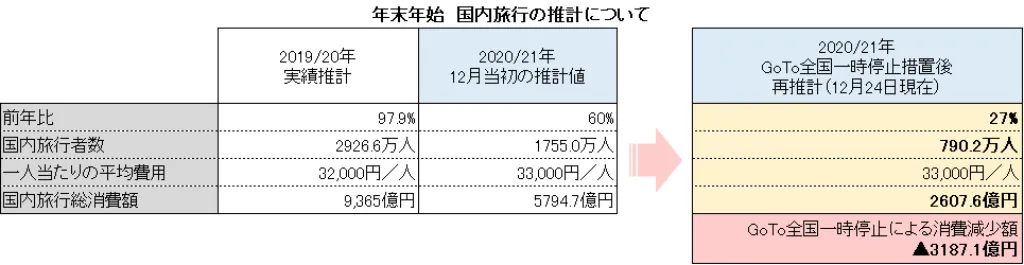
- Number of domestic travelers: 7.902 million, up 27.0% from the previous year
- Total domestic travel spending: 260.76 billion yen, up 27.8% from the previous year
- The decline in consumption resulting from the nationwide temporary suspension measures is estimated at 318.71 billion yen
In response to the nationwide temporary suspension of the government’s “Go To Travel Campaign”—a measure designed to stimulate travel demand—due to the spread of COVID-19, JTB Research Institute, Inc. has compiled estimates regarding the number of travelers and the amount of spending for domestic trips of one night or more during this year’s year-end and New Year’s holidays. This survey is based on various consumer questionnaires, economic indicators, tourism statistics, and reservation data from accommodation facilities and transportation providers.
For comparison with the previous year, the survey covers departures from December 23, 2020, to January 3, 2021.The nationwide temporary suspension of the Go To Travel Campaign, announced on December 14, applies to trips departing between December 28, 2020, and January 11, 2021.New reservations for travel to Sapporo, Osaka, Nagoya, and Tokyo with departures up to 11:59 PM on December 27 had already been suspended, and residents of Sapporo, Osaka, Nagoya, and Tokyo had been urged to refrain from travel. On December 16, a similar announcement was made regarding travel to Hiroshima City and for residents of Hiroshima City. The estimates are shown in the table below.
(Table 1) Estimates for Domestic Travel During the 2020/21 Year-End and New Year Period
Following the announcement of the nationwide temporary suspension of the Go To Travel Campaign, cancellations of accommodations and travel plans have been occurring in rapid succession. It is believed that cancellations by campaign participants and the impact of the suspension measures are discouraging travel, leading to an increase in the number of people postponing trips or visits home.
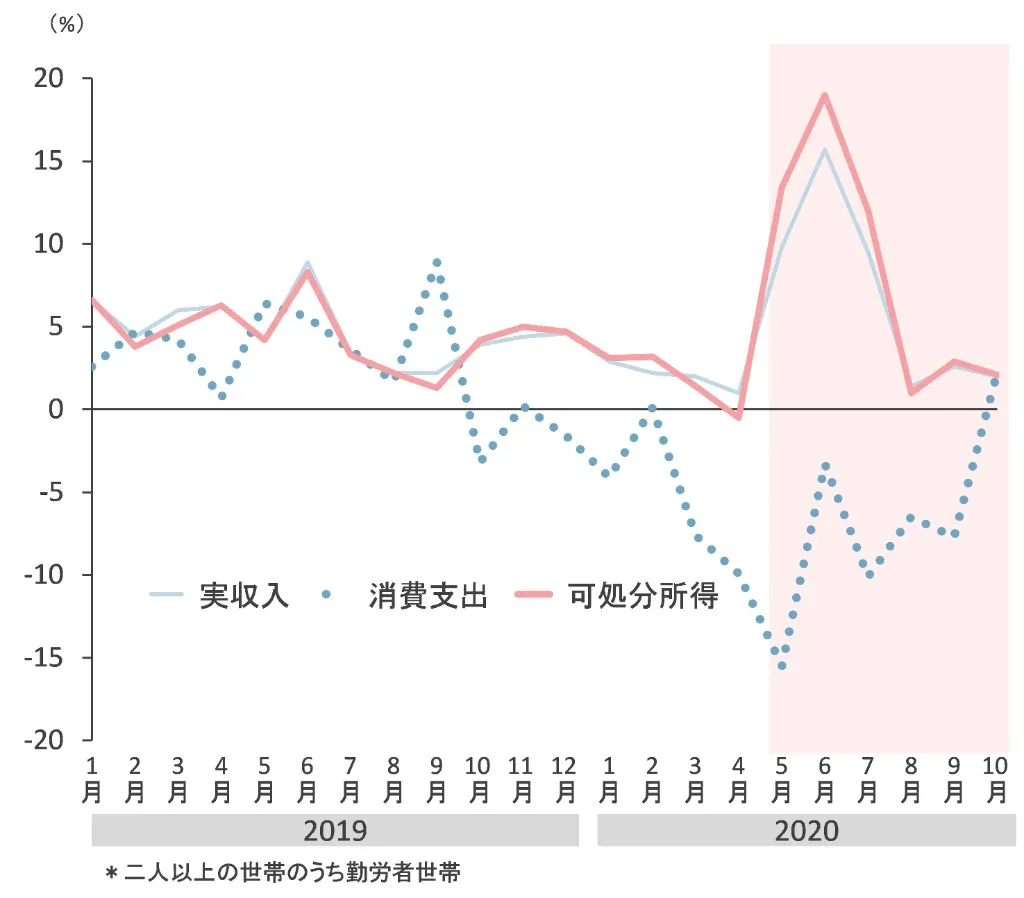
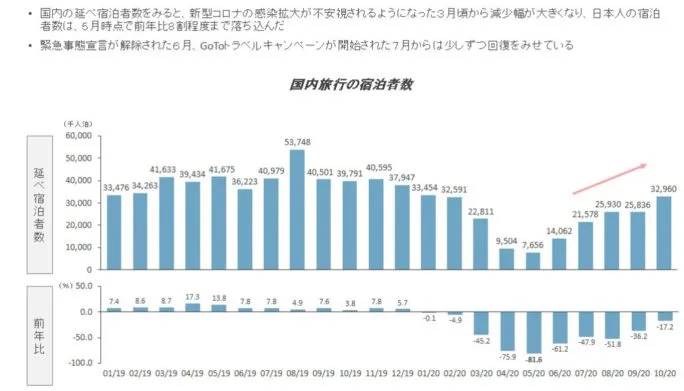
Regarding domestic travel spending by Japanese residents, Tokyo was added to the Go To Travel Campaign in October. According to the Japan Tourism Agency’s Survey of Accommodation Travel Statistics, the number of domestic overnight stays had shown signs of recovery, down 17.2% year-on-year (excluding inbound tourists). However, concerns had been raised since November that the spread of infections would lead to a decline (Figure 1).Our company had initially projected that domestic travelers during the 2020/21 year-end and New Year period would reach about 60% of the previous year’s level in early December; however, due to the spread of infections and the temporary suspension of demand-stimulus measures, we revised this downward to approximately 27%.We estimate that the number of travelers will be 7.902 million and domestic travel spending will total 260.76 billion yen. We estimate that the reduction in consumption resulting from the nationwide temporary suspension of the Go To Travel Campaign during this period will amount to 318.71 billion yen. These estimates are subject to change depending on future infection trends. Furthermore, according to the Ministry of Internal Affairs and Communications’ Household Expenditure Survey, real disposable income has increased for six consecutive months (as of October). Our survey also suggests that, while there is some anxiety about the future, overall consumer sentiment is by no means low; in particular, the desire for “experience-based consumption”—activities that people have been unable to freely enjoy for a long time—is growing (Figure 2).
(Figure 1) Trends in Domestic Travel Overnight Stays
(Figure 2) Trends in Actual Income, Consumption Expenditures, and Disposable Income (Nominal Year-on-Year Change)