Survey on Information Provision for Inbound Travelers (2024) – Turning the Travel Experience into a Showcase for Future Trips
The “Survey on Changes in Behavior and Awareness of Sustainable Tourism Among Inbound Travelers Before and During Their Trips,” conducted in FY 2023, revealed that approximately 80% of inbound travelers had largely finalized their itineraries “before departure,” regardless of the length or type of their trip. This reaffirms the importance of providing information well in advance of the trip.
On the other hand, visitors from neighboring Asian countries and regions, as well as from the United States—where there are frequent business ties with Japan—often return to Japan multiple times. Rather than focusing solely on one-time trips, is there a way to connect experiences during the trip to future visits, with an eye toward their next trip?We will explore key strategies for turning the "during-trip" period into a showcase for their next visit.
Key Findings
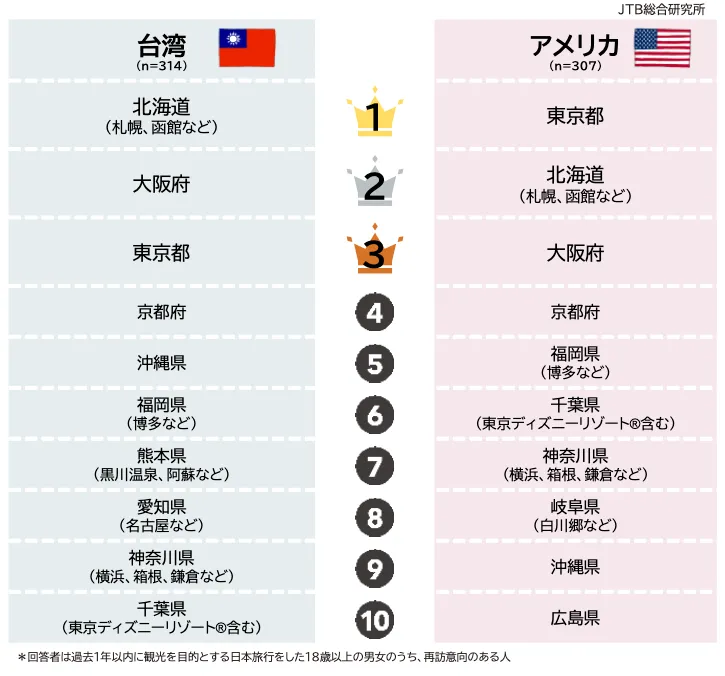
- 77.4% of travelers from Taiwan and 53.6% of travelers from the United States would like to return within a yearPlaces I’d like to visit: In Japan—Hokkaido, Osaka, Tokyo, Kyoto, and Okinawa; in the U.S.—Tokyo, Hokkaido, Osaka, Kyoto, and Fukuoka
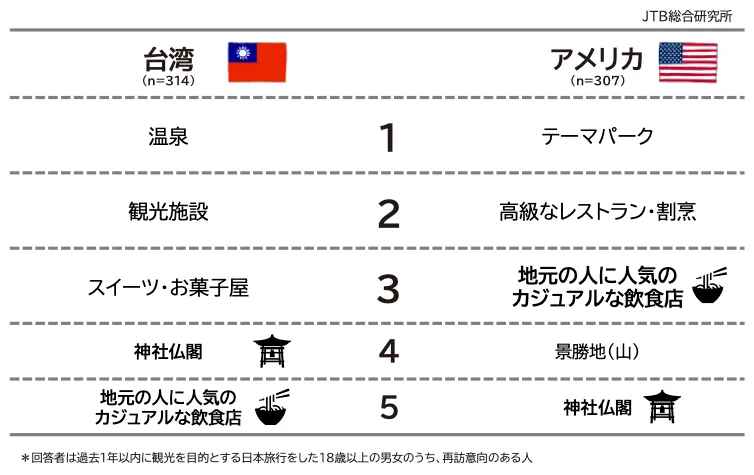
- Among the places I learned about while traveling in Japan, the destinations I’d like to visit on my next trip differ depending on whether they’re in Taiwan or the United StatesTaiwan: Hot springs, tourist attractions, dessert shops and confectioneries, shrines and temples, casual eateries popular with locals
United States: Theme parks, fine dining and traditional Japanese restaurants, casual eateries popular with locals, scenic spots (mountains), shrines and temples
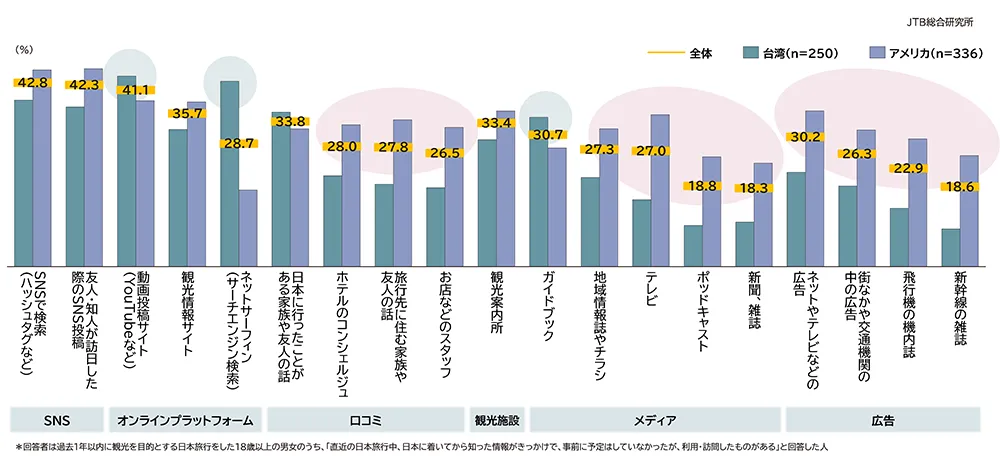
Reasons for wanting to visit on the next trip: "I didn't have enough time this time," "I liked it (I want to visit again)" - Sources of information within Japan include social media, video-sharing sites, tourism websites, and firsthand accounts from family and friends who have visited JapanTravelers from Taiwan tend to use video-sharing sites and browse the internet, while travelers from the U.S. tend to use social media
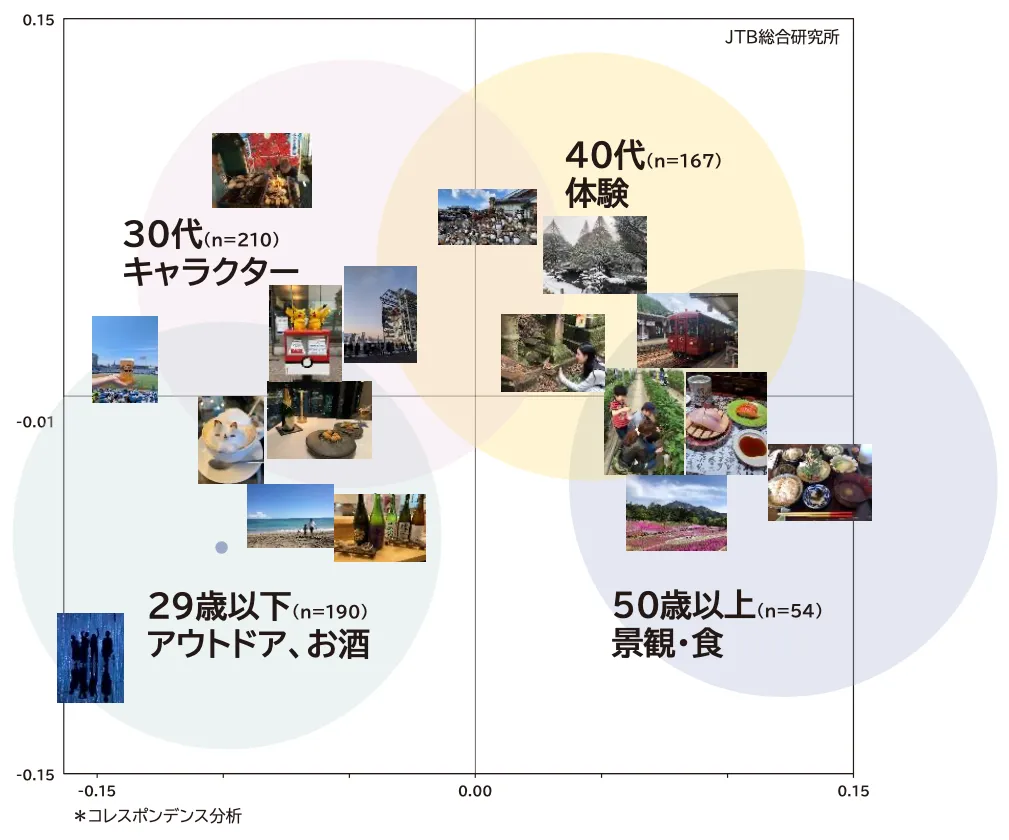
- The images that make people want to visit a place show greater variation based on age than on country or regionPeople aged 29 and under prefer "outdoor activities and drinking," those in their 30s prefer "character-themed attractions," those in their 40s prefer "experiences," and those aged 50 and over prefer "scenery" and "food."
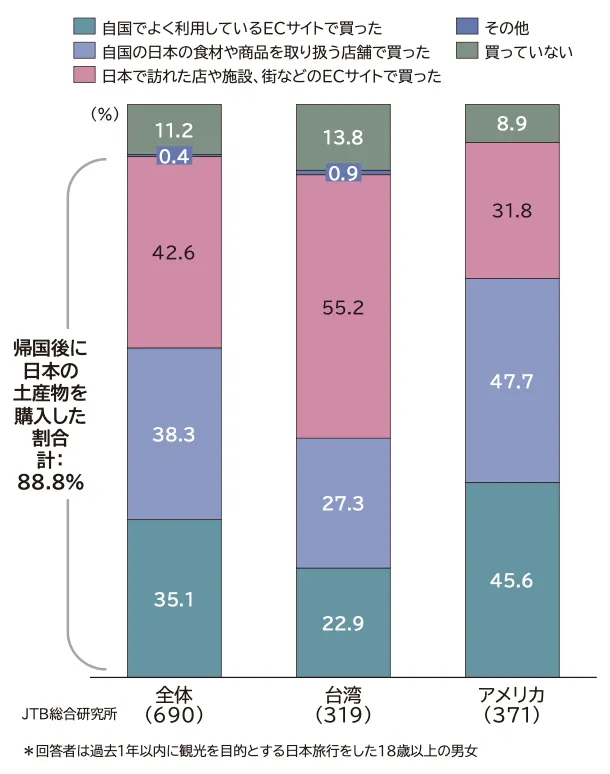
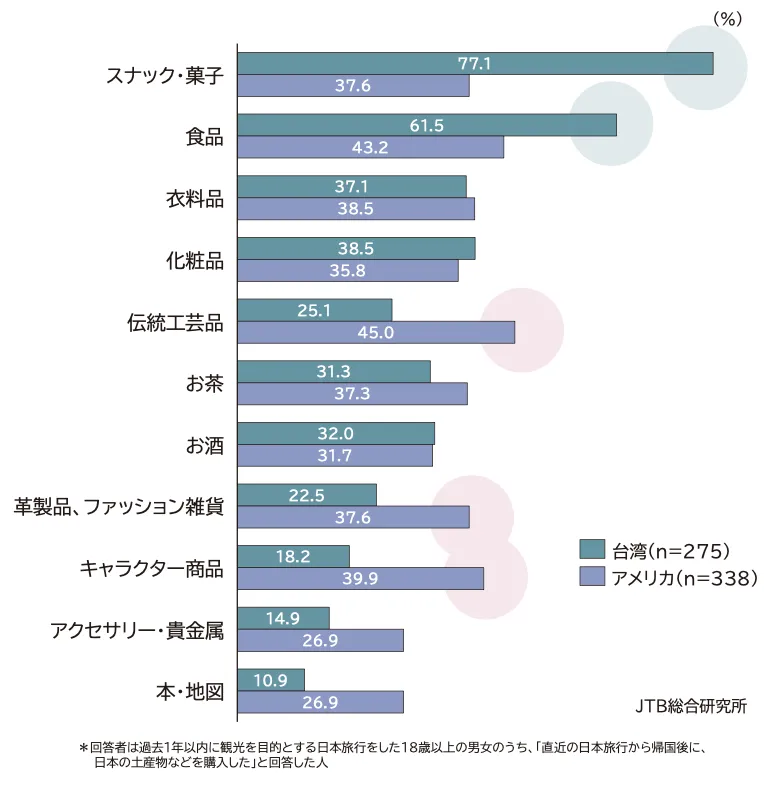
- 88.8% of all travelers purchase Japanese souvenirs even after returning home. Travelers from Taiwan use e-commerce sites for the shops and neighborhoods they visited in Japan, while travelers from the United States use stores and e-commerce sites in their home country.Items purchased: In Taiwan, the top categories are "snacks and confectionery (77.1%)" and "food (61.5%)"; in the U.S., the top categories tend to be non-food items such as "traditional crafts (45.0%)" and "character merchandise (39.9%)"
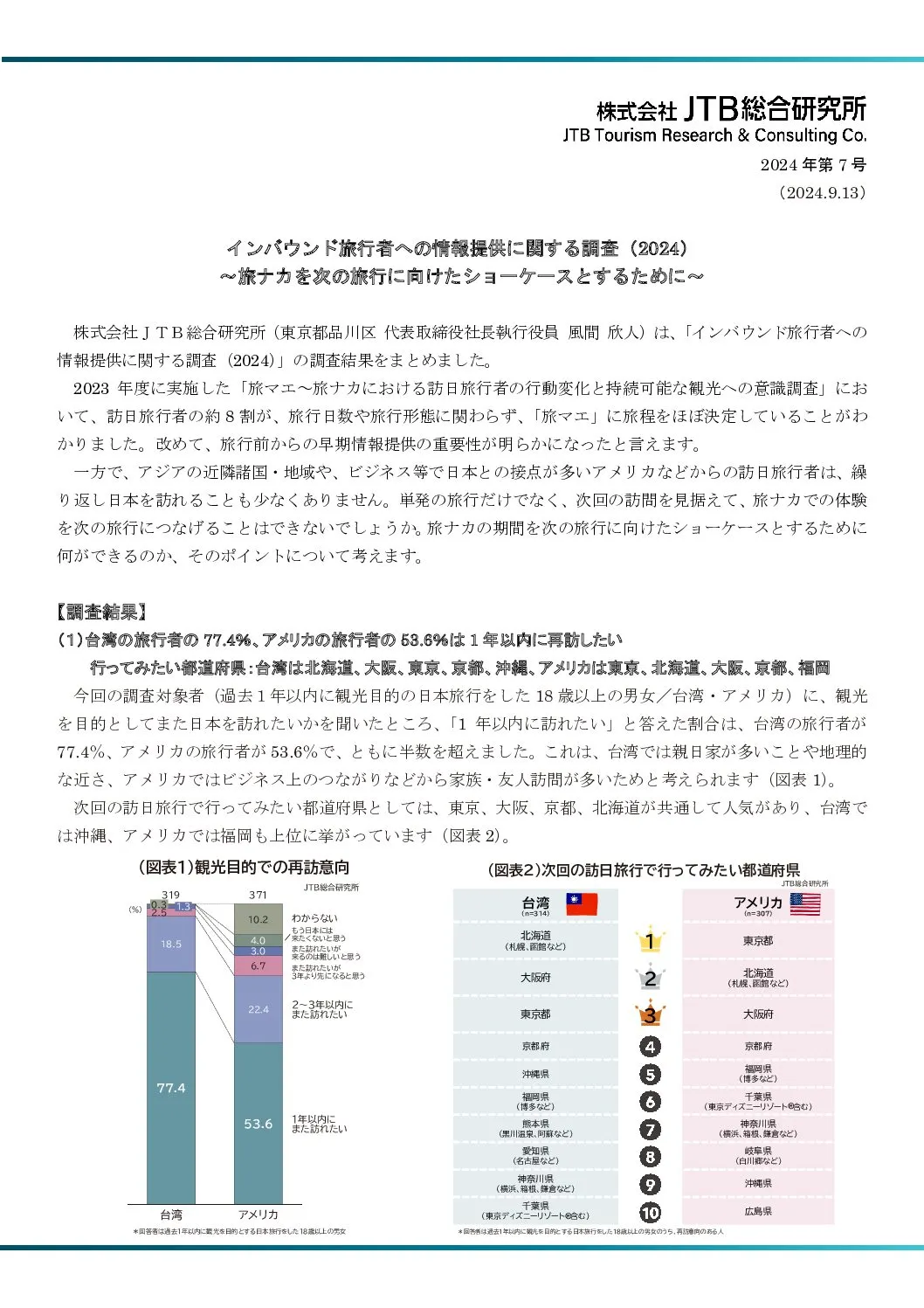
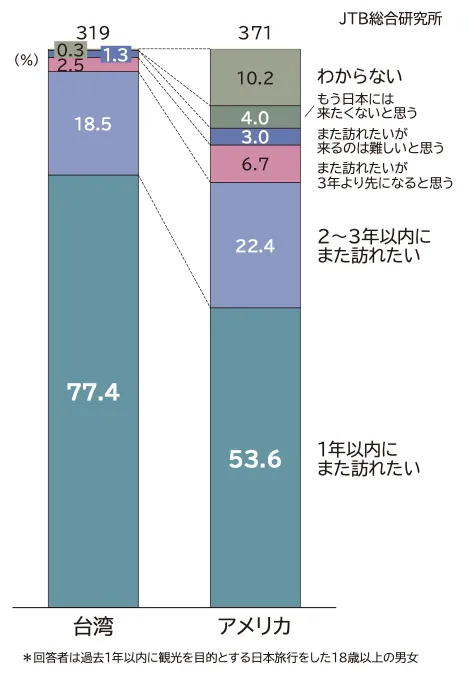
77.4% of travelers from Taiwan and 53.6% of travelers from the United States want to return within a year
Prefectures I’d like to visit: In Taiwan—Hokkaido, Osaka, Tokyo, Kyoto, and Okinawa; in the U.S.—Tokyo, Hokkaido, Osaka, Kyoto, and Fukuoka
Survey Participants(Men and women aged 18 and older who had traveled to Japan for tourism within the past year / Taiwan and the U.S.) were asked if they would like to visit Japan again for tourism. The percentage of respondents who answered “I would like to visit within the next year” was 77.4% for travelers from Taiwan and 53.6% for travelers from the U.S., with both groups exceeding 50%.This is thought to be due to the large number of pro-Japanese people in Taiwan and its geographical proximity, and in the U.S., due to business ties and frequent visits to family and friends (Figure 1).
Regarding the prefectures they would like to visit on their next trip to Japan, Tokyo, Osaka, Kyoto, and Hokkaido were consistently popular, while Okinawa ranked high among Taiwanese travelers and Fukuoka among American travelers (Figure 2).
Among the places I learned about while traveling in Japan, the destinations I’d like to visit on my next trip differ depending on whether they’re in Taiwan or the United States
Taiwan: Hot springs, tourist attractions, dessert and confectionery shops, shrines and temples, casual dining spots popular with locals
United States: Theme parks, upscale restaurants and traditional Japanese cuisine, casual eateries popular with locals, scenic spots (mountains), shrines and temples
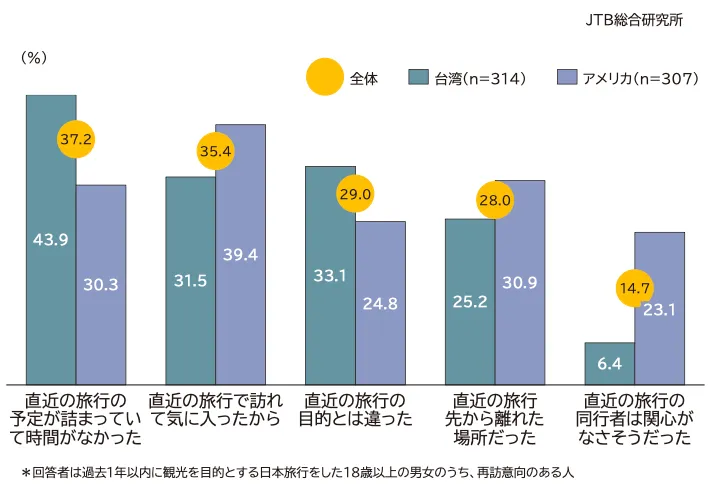
Reasons for wanting to visit on the next trip include “I didn’t have enough time this time” and “I liked it (and want to visit again)”
Based on information encountered during their trip to Japan, the top three places respondents in Taiwan cited as places they’d like to visit on their next trip to Japan were hot springs, tourist attractions, and dessert and confectionery shops.In contrast, in the U.S., theme parks, high-end restaurants and kaiseki restaurants, and casual eateries popular with locals ranked highly, with distinct regional characteristics. “Shrines and temples” and “casual eateries popular with locals” were consistently popular across both regions (Chart 3).
The most common reason cited for wanting to visit these places on the next trip was “My recent trip was packed with plans and I didn’t have time (37.2%),” followed by “I visited and liked it on my recent trip (35.4%).”It appears that many travelers are gathering information on their next destination while on their current trip, anticipating that they will revisit the same places. There may also be a desire to save these places as something to look forward to on their next trip.
Furthermore, about 30% cited the reason that “it was a location far from their most recent travel destination.” Even if the information pertains to an area distant from their current travel location, it is likely that travelers will accept it as interesting information and consider it a candidate for their next trip (Figure 4).
Sources of information within Japan include social media, video-sharing sites, tourism websites, and firsthand accounts from family and friends who have visited Japan
Travelers from Taiwan tend to use video-sharing sites and browse the internet, while travelers from the U.S. tend to use social media
Regarding where they obtain information during their stay in Japan, the top sources overall were social media, internet searches, video-sharing sites such as YouTube, and personal experiences shared by family and friends. When broken down by region, the proportion of travelers from Taiwan who use “video-sharing sites” and “browsing the web” was higher, while those from the U.S. tended to use “social media” more frequently.It also became clear that travelers from the U.S., perhaps due to their longer stays compared to those from Taiwan, obtain information from a variety of sources, including hotel concierges, store staff, transit advertisements, local media, and podcasts (Figure 5).
The images that make people want to visit a place show greater variation based on age than on country or region
People aged 29 and under prefer “outdoor activities and drinking,” those in their 30s prefer “characters,” those in their 40s prefer “experiences,” and those aged 50 and over prefer “scenery” and “food”
What kinds of images do travelers see in promotional materials that capture their interest and make them want to visit? When we presented 17 images related to “experiences,” “food,” “scenery,” and other themes and asked for their evaluations, the results revealed clearer differences based on age group than on regional characteristics.Those in their 20s tended to show a high level of interest in images of outdoor settings like beaches and baseball stadiums, as well as alcohol such as beer, wine, and sake.Perhaps because many travelers in their 30s and 40s have children, they showed a high level of interest in characters and experiential activities (such as strawberry picking, interacting with deer in Nara, and railways), while those aged 50 and older seemed drawn to “food” and landscapes such as moss phlox (Figure 6).
88.8% of all travelers purchase Japanese souvenirs even after returning home. Travelers from Taiwan use e-commerce sites for the shops and neighborhoods they visited in Japan, while travelers from the United States use stores and e-commerce sites in their home country.
Items purchased: In Taiwan, the top categories were “snacks and confectionery (77.1%)” and “food (61.5%)”; in the U.S., non-food items tended to dominate, such as “traditional crafts (45.0%)” and “character merchandise (39.9%)”
To foster ongoing connections not only during the trip but also in the period leading up to their next visit to Japan, we asked whether they purchased Japanese souvenirs after returning home. The results showed that a combined 88.8% of respondents from Taiwan and the U.S. engaged in some form of purchasing activity.Furthermore, when comparing Taiwan and the U.S., Taiwanese travelers tend to purchase souvenirs through the e-commerce sites of the shops or districts they visited in Japan, whereas American travelers were more likely to make purchases at stores in their home country that carry Japanese products or on e-commerce sites they regularly use (Figure 7).
Specific purchasing patterns also differed between Taiwan and the U.S. While “snacks” and “food” ranked highest among Taiwanese travelers, a higher proportion of American travelers purchased non-food items such as “traditional crafts,” “character merchandise,” and “leather goods and fashion accessories” (Figure 8).
Summary
According to the results of a survey conducted in FY 2023 (*1), approximately 80% of visitors to Japan had already finalized their itineraries “before departure,” regardless of the length or type of their trip.Furthermore, the experiences triggered by new information obtained during the trip were mainly “dining” and “experiences lasting a few hours” available in the vicinity of their accommodation.At first glance, this might suggest that the information available during the trip is limited. However, this survey also revealed that approximately 30% of travelers are interested in information about distant locations if it pertains to their next travel destination.
By shifting our perspective slightly and viewing information touchpoints during the trip as part of the “pre-trip” period for their next visit to Japan, we might be able to explore broader possibilities for providing information during the trip.
Furthermore, trends in the types of information and touchpoints that attract interest varied depending on traveler attributes such as country, region, and age group. It is therefore important to carefully tailor the content and delivery channels of the information provided to specific target audiences.
Furthermore, it was found that nearly 90% of travelers continue to purchase Japan-related products even after their trip.For example, initiatives to maintain contact with travelers after their trip—such as promoting Japanese stores and local e-commerce sites during the trip so that travelers from Taiwan can purchase Japanese souvenirs even after returning home, or providing information about Japan to travelers from the U.S. through e-commerce sites and retail stores commonly used in the U.S.—appear to be effective.