2017 Survey on the Attitudes and Behaviors of LCC Users
PDFダウンロード
公開日
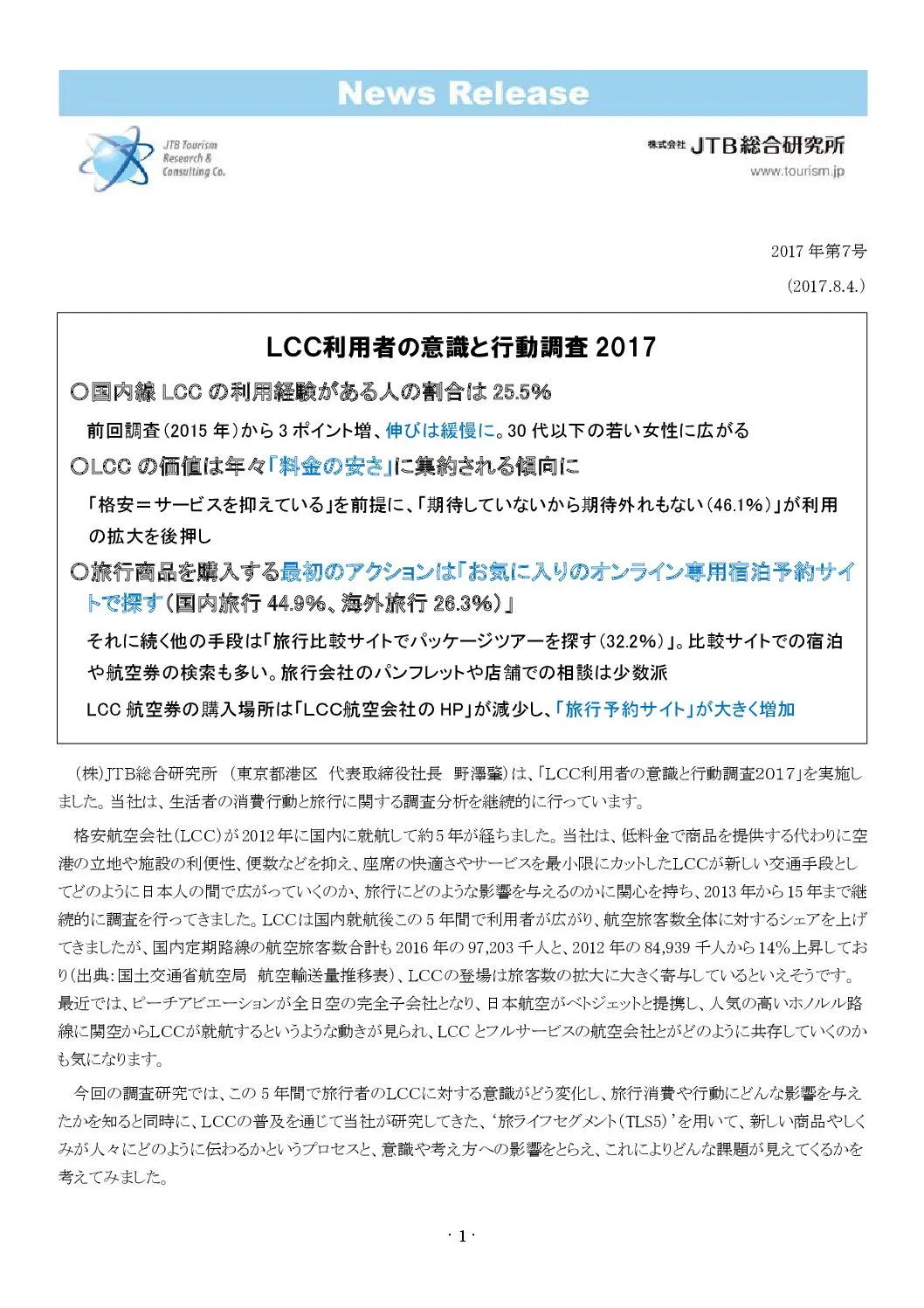
JTB Tourism Research & Consulting Co., Ltd. (Minato-ku, Tokyo; President and CEO: Hajime Nozawa) conducted the “2017 Survey on the Attitudes and Behavior of LCC Users.” The company continuously conducts research and analysis on consumer behavior and travel trends.
It has been approximately five years since low-cost carriers (LCCs) began operating in Japan in 2012.We have been conducting continuous surveys from 2013 to 2015 out of interest in how LCCs—which offer low fares in exchange for compromising on airport location, facility convenience, and flight frequency, while minimizing seat comfort and services—are spreading among the Japanese public as a new mode of transportation and what impact they are having on travel. While LCCs have expanded their user base and increased their share of total air passengers over the five years since their domestic launch, the total number of air passengers on domestic scheduled routes also rose by 14% from 84,939,000 in 2012 to 97,203,000 in 2016(Source: Civil Aviation Bureau, Ministry of Land, Infrastructure, Transport and Tourism, Table of Air Transport Volume Trends). It appears that the emergence of LCCs has contributed significantly to this growth in passenger numbers. Recently, we have seen developments such as Peach Aviation becoming a wholly-owned subsidiary of All Nippon Airways (ANA), Japan Airlines (JAL) partnering with VietJet, and LCCs launching flights from Kansai International Airport to the popular Honolulu route. It will be interesting to see how LCCs and full-service airlines coexist in the future.
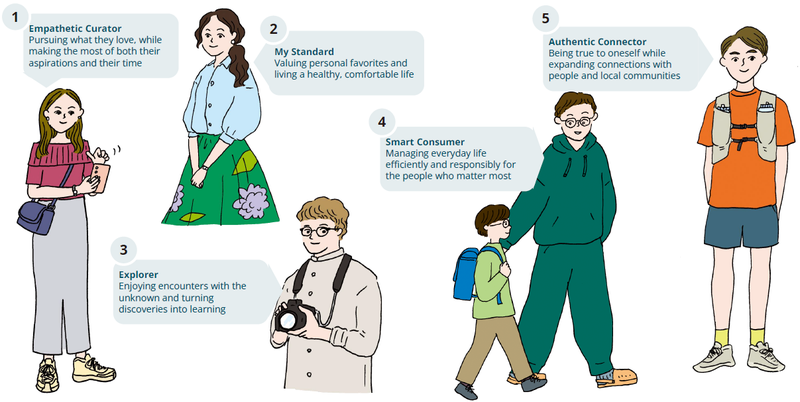
In this research study, we sought to understand how travelers’ perceptions of LCCs have changed over the past five years and what impact this has had on travel spending and behavior. At the same time, using the ‘Travel Life Segment (TLS5)—which we have developed through our research on the spread of LCCs—to capture the process by which new products and systems are communicated to people, as well as their impact on attitudes and mindsets. We also considered what challenges might emerge from this analysis.
Key Findings
- The percentage of people who have flown on a domestic LCC is 25.5%Up 3 percentage points from the previous survey (2015), though the increase has slowed. The trend is spreading among young women in their 30s and younger.
- The value of LCCs tends to be increasingly defined by "low fares" year after yearBased on the assumption that "low prices mean lower service quality," the sentiment that "since I don't have high expectations, I won't be disappointed either (46.1%)" is driving the growth in usage.
- The first step people take when purchasing travel products is “searching on their favorite online-only accommodation booking site” (44.9% for domestic travel, 26.3% for international travel).The next most common method is “searching for package tours on travel comparison sites (32.2%)”. Searches for accommodations and airline tickets on comparison sites are also common. Consulting travel agency brochures or visiting travel agency branches is less common.
Regarding where LCC tickets are purchased, the percentage of people buying them directly from “LCC airline websites” has decreased, while the percentage of those purchasing through “travel booking sites” has increased significantly.