A Survey on the Lifestyles and Travel Habits of French People Interested in Traveling to Japan
PDFダウンロード
公開日
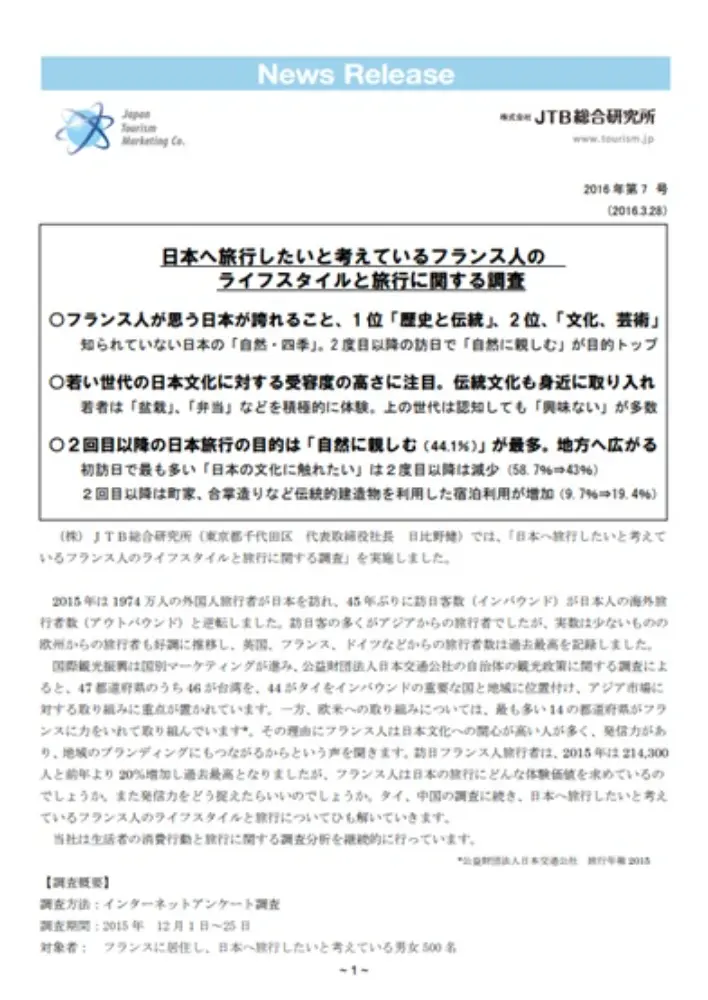
JTB Tourism Research & Consulting Co., Ltd. (Chiyoda-ku, Tokyo; President and CEO: Ken Hibino) conducted a survey titled “Survey on the Lifestyles and Travel Habits of French People Interested in Traveling to Japan.”
In 2015, 19.74 million foreign tourists visited Japan, marking the first time in 45 years that the number of inbound visitors exceeded the number of Japanese travelers going abroad (outbound).While the majority of inbound visitors were from Asia, the number of visitors from Europe also showed strong growth, despite being smaller in absolute terms, with the number of visitors from the UK, France, and Germany reaching record highs.
Efforts to promote international tourism have advanced through country-specific marketing. According to a survey on local government tourism policies conducted by the Japan Tourism Agency, 46 of the 47 prefectures identified Taiwan as a key source market for inbound tourism, while 44 identified Thailand, indicating a strong focus on the Asian market.On the other hand, regarding initiatives targeting Europe and the United States, 14 prefectures—the largest number—are focusing their efforts on France*. The reasons cited include the fact that many French people have a high interest in Japanese culture, possess strong influence, and can contribute to regional branding.The number of French visitors to Japan reached a record high of 214,300 in 2015, a 20% increase from the previous year. But what kind of experiential value do French travelers seek in their trips to Japan? And how should we interpret their influence?Following our surveys of Thailand and China, we will now examine the lifestyles and travel preferences of French people who are considering a trip to Japan.
We continuously conduct research and analysis on consumer behavior and travel trends.
*Japan Travel Agency (JTA) Annual Travel Report 2015
Key Findings
- What French people think Japan can be proud of: 1st place, "History and tradition"; 2nd place, "Culture and the arts"Japan’s “Nature and Seasons”: What Many Don’t Know. “Connecting with Nature” Is the Top Reason for Returning Visitors
- Focusing on the younger generation’s high receptiveness to Japanese culture. Incorporating traditional culture into everyday lifeYoung people are actively trying out things like "bonsai" and "bento." While the older generation is aware of them, the majority say they have "no interest."
- For subsequent trips to Japan, the most common reason is “enjoying nature” (44.1%). This trend is spreading to regional areas."Wanting to experience Japanese culture," the most common reason for first-time visits to Japan, declines on subsequent visits (58.7% → 43%)
On second and subsequent visits, there is an increase in stays at accommodations utilizing traditional buildings such as machiya and gassho-zukuri (9.7% → 19.4%)