Exploring Borderless Forms of Work and Travel
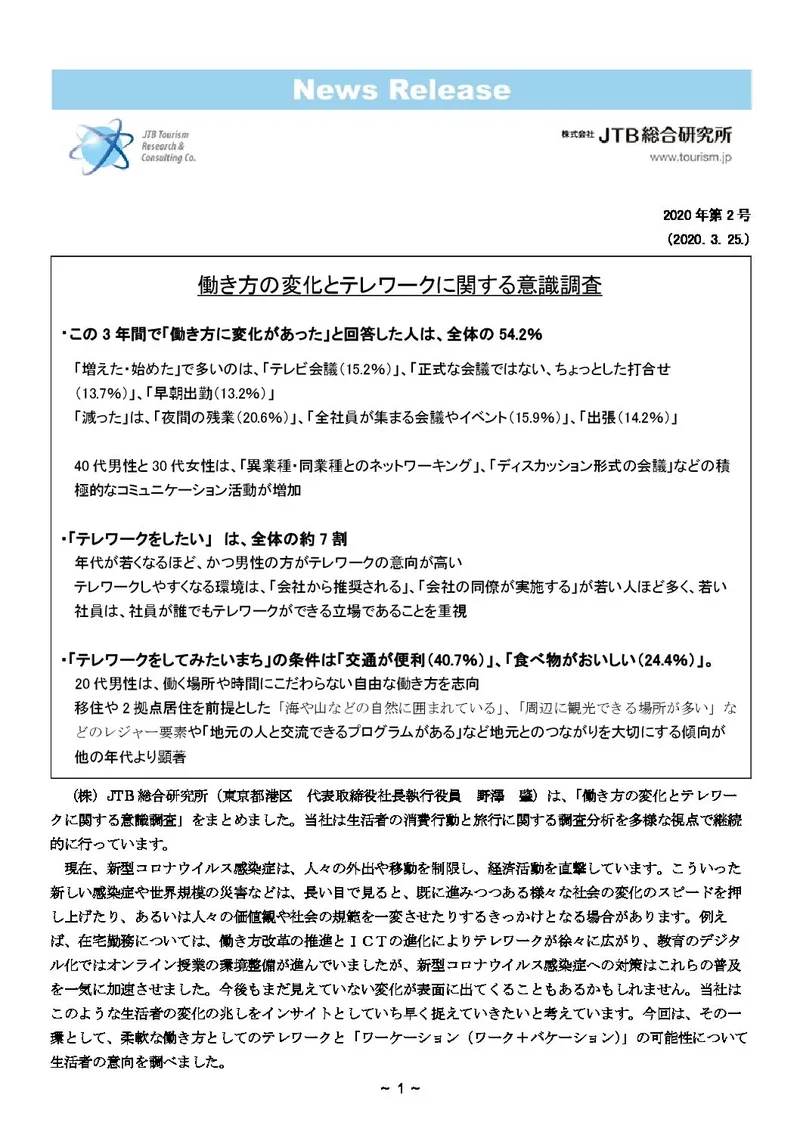
This column was written in late May 2020, at a time when the national state of emergency regarding the novel coronavirus (hereinafter referred to as “COVID-19”) had been lifted nationwide, and attention was turning to economic recovery measures alongside ongoing infection prevention efforts. Naturally, people are still being urged to take steps to protect themselves from COVID-19, with calls to “avoid the three Cs” and “refrain from traveling across prefectural borders. ”For tourist destinations that pride themselves on “hospitality” and “attracting visitors,” having to cry out, “Please don’t come now,” must have been heartbreaking. In this nationwide—and indeed global—struggle against a threat to life, it is unavoidable that the tourism sector, which involves travel across prefectural and national borders, is being treated as an issue to be addressed only after COVID-19 has largely subsided. However, the declaration that COVID-19 has subsided does not mean everything will return to the way it was.It is crucial for the tourism sector to begin anticipating and preparing now for what will return to normal and what will change, in light of new lifestyles and values. On the one hand, travelers must envision “what kind of travel they would like to experience while protecting themselves and their families.” On the other hand, the hospitality sector must navigate the dilemma of “how to continue operations while responding to COVID-19 and welcoming tourists.” This tension will give rise to new models of tourism and travel. Here, I would like to explore not merely a defensive stance, but the potential for a new tourism and travel model rooted in the “new lifestyles and travel styles” spurred by the pandemic.
1. Similarities Between Overtourism and COVID-19
Right up until the onset of the current COVID-19 pandemic, “overtourism” had been a major issue in Japan’s tourism sector. Led by cities such as Kyoto and Kamakura, the problem centered on the negative impact on local residents’ lives and the environment caused by large numbers of tourists concentrating in specific areas during certain periods, as well as issues related to the behavior of some tourists. From the perspective of tourist destinations, while the expectation that tourism would have a significant positive impact on local industries and the economy remained unchanged, they found themselves caught between wanting visitors to come and wanting them to stay away, forcing them into a situation where they had no choice but to advocate for “selective tourism.” Kamakura City, for example, enacted the “Kamakura City Ordinance on Improving Etiquette in Public Places” on April 1, 2019, requesting that people refrain from eating while walking in certain areas and from engaging in behavior that violates public etiquette. Like the current request for self-restraint, this ordinance has no legal binding power and remains merely a request. Although it does not involve a matter of life and death like the COVID-19 pandemic, it is a “request for self-restraint” aimed at protecting local life and the environment and maintaining the quality of the area as a tourist destination; in this sense, it shares common ground with “rejecting tourism.” Defining the types of tourist behavior and styles that the region must inevitably decline amounts to nothing less than shifting tourism from “quantity” to “quality”—a fundamental transformation of its nature.
2. “Resort Life” Under Scrutiny Once Again
So, how will the mindset of tourists and the market change? While people may have thought, “It’s scary, so let’s hold off and exercise restraint” during the state of emergency, what changes will emerge in their attitudes and behaviors regarding tourism and travel after the lifting of restrictions—specifically, regarding “what kind of trip they want to take” and “where they want to go”? One anticipated shift in travel style is the expansion of “staycation-style travel (resort life).”According to the results of a recent survey conducted by Travelzoo Japan Inc., when asked, “What kind of travel style would you like to try after the state of emergency is lifted?” the highest response, at 38.9%, was “staying in independent accommodations such as cottages, villas, or detached guesthouses.”
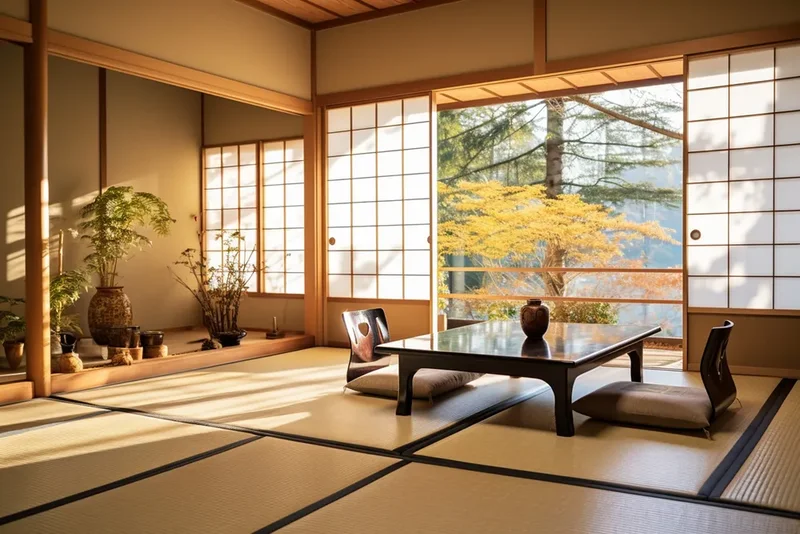
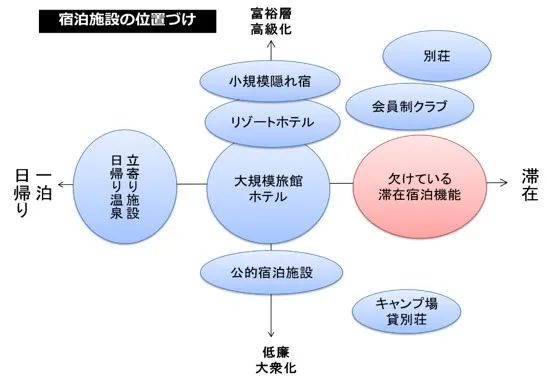
On the other hand, some may recall the “resort boom” that swept the nation over 30 years ago. However, that resort boom eventually lost momentum in both supply and demand, and some point to the “Comprehensive Resort Area Development Act (Resort Act)” enacted by the government in 1987 as the cause of that failure. However, the author believes that the root cause of the failure was that “the supply side (developers and local communities), riding the wave of the bubble economy, got ahead of themselves when demand (needs) was still immature.” Subsequently, the term “resort” was effectively banished from public discourse, particularly within government circles. Yet in Europe and the United States, “resort life” has long been established as a common way to spend one’s vacation. In Japan as well, although a limited segment of the population does enjoy a travel style involving stays at vacation homes, cottages, or members-only clubs for a set period to relax, the reality is that this practice has not spread to the general public or the average salaried worker due to barriers such as cost and vacation policies. The biggest obstacle to making this “resort lifestyle” accessible to the general public is likely accommodation facilities. When considering general accommodation options in terms of whether they are designed for extended stays and their cost, what has been missing until now is accommodation that meets the criteria of “extended stay × accessibility for the general public. ”Even at hotels marketed as “resort hotels,” rates of 20,000 to 30,000 yen per person per night make a “week-long family vacation” out of reach. On the other hand, while campsites and vacation rentals offer affordable stays, it is only natural to want to visit hot springs during the trip or occasionally enjoy meals prepared by professionals rather than cooking for oneself. The key will be whether vacation homes and members-only clubs—currently seen as out of reach—can adopt systems and business models accessible to the general public; whether vacation rentals and camping can become widespread while offering high-quality facilities and services at affordable prices; or whether existing ryokan and hotels can successfully transform to accommodate extended stays.
3. From Telework to Resort Workations
Here, I would like to consider the potential for this shift toward extended stays from the user’s perspective. When thinking about new travel styles, we should not limit our scope to mere tourism or travel scenarios but expand our consideration to include new work styles, new lifestyles, and even family dynamics within the context of users’ personal values. During the recent state of emergency, telework emerged as a work style that garnered significant attention. Additionally, online classes have been implemented through trial and error in response to temporary school closures. In short, the question is whether working and learning online from home—without gathering at offices or schools—will become established even after the COVID-19 pandemic subsides. While telework offers benefits, it also presents challenges for companies regarding management, evaluation, and communication, and its feasibility varies by industry. However, from this experience of “unavoidable telework,” hasn’t the sentiment that “telework is possible” or even “telework is better” spread among both companies and employees?
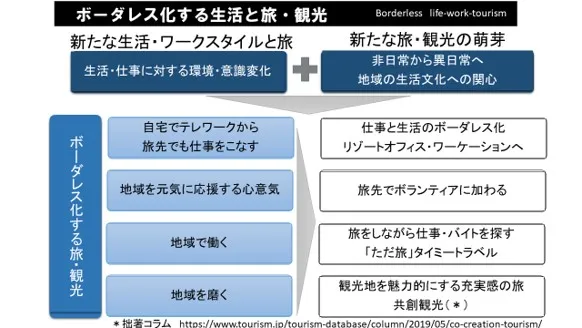
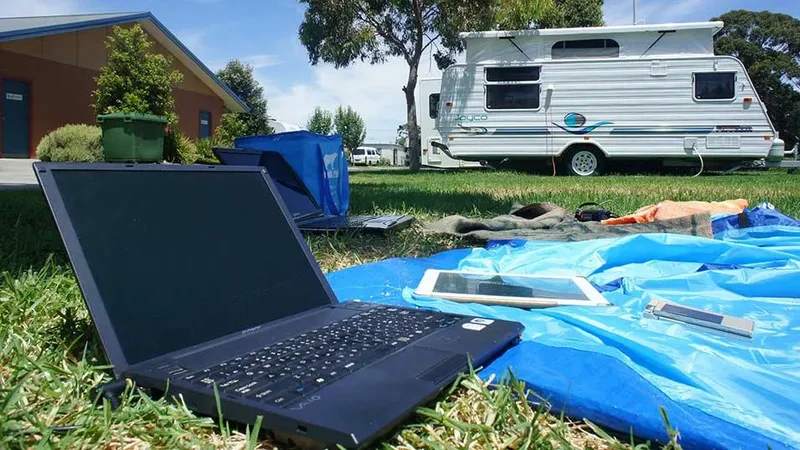
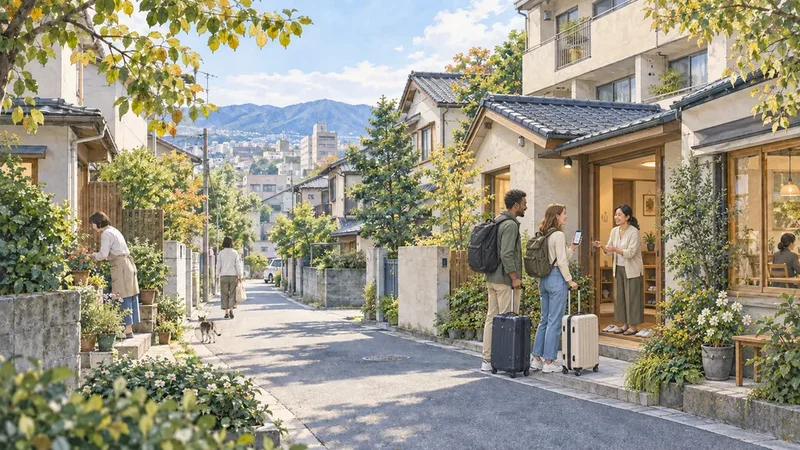
While telework is fundamentally based on “working from home using online tools,” against the backdrop of an era where the entire country is connected online, a new lifestyle called “workation” is being proposed. This involves working in tourist destinations or resort areas, or getting work done even during leisure time or vacations. The boundaries between work and personal life (tourism and travel) are blurring, making it possible—and increasingly accepted—to work even while on vacation. For more on this new “workation” lifestyle, I recommend reading Professor Tanaka’s column from Yamanashi University.
What I want to focus on is not just telework as an individual issue, but how families spend their travels and the potential for each family member to bring their own work-vacation routine to the table. In an era where dual-income households are the norm, online classes are also likely to become more widespread for children’s school and cram school lessons. It’s fine for “Dad to work remotely at a resort while Mom and the kids enjoy themselves outside,” but wouldn’t it be wonderful to realize a family workation lifestyle where “each family member sets their own work and study times, and when it’s time to play, everyone enjoys it together”?
This potential for blurring the lines between work, life, and travel isn’t limited to simply bringing work to a travel destination. We could also see the emergence of a lifestyle where people seek out side businesses, hobbies, or volunteer activities not only in their hometowns but also in tourist destinations.
From the perspective of the host communities, there are significant hurdles to making resort life and workations viable as a business. However, the recent COVID-19 crisis has prompted every citizen to honestly reevaluate their work, daily life, and time with family, leading to positive action. Furthermore, I hope that tourism destinations will not merely continue with traditional facilities and service models, but will use this crisis as an opportunity to propose and provide new ways to spend time at travel destinations that align with these evolving lifestyles, and to take on the challenge of developing new business models.