The Players’ Vision and Students’ Efforts to Revitalize the Tsukiji Outer Market: Reflections on Tourism, Community Engagement, and Community Development in the Post-COVID Era
A student-led project to revitalize the Tsukiji Outer Market during the COVID-19 pandemic is currently underway. Drawing inspiration from the passion of the food professionals at the Outer Market, these students are working to create a space where people can connect in new and innovative ways. This article explores their efforts and considers their implications for tourism, community engagement, and local development in the post-pandemic era.
Even after the Central Wholesale Market relocated to Toyosu in October 2019, the Tsukiji Outer Market continued to bustle with foreign tourists. However, with the spread of COVID-19, foreign tourists disappeared. Although the number of Japanese visitors has since gradually increased, 2020 turned out to be an unusually quiet year. Amidst this situation, Masahiro Terade, who runs a beef shop on Tsukiji Higashi-dori in the Tsukiji Outer Market, and others approached an acquaintance involved in community-based projects to discuss revitalizing the shopping district. This led to the creation of a new project to revitalize the Tsukiji Outer Market, spearheaded by university students.
In this article, we will provide an overview of this project, which was carried out amid the COVID-19 pandemic, and explore new possibilities for tourism, community engagement, and local development in the post-pandemic era.
1. The Current State of the Tsukiji Outer Market: A “Mecca of Food”
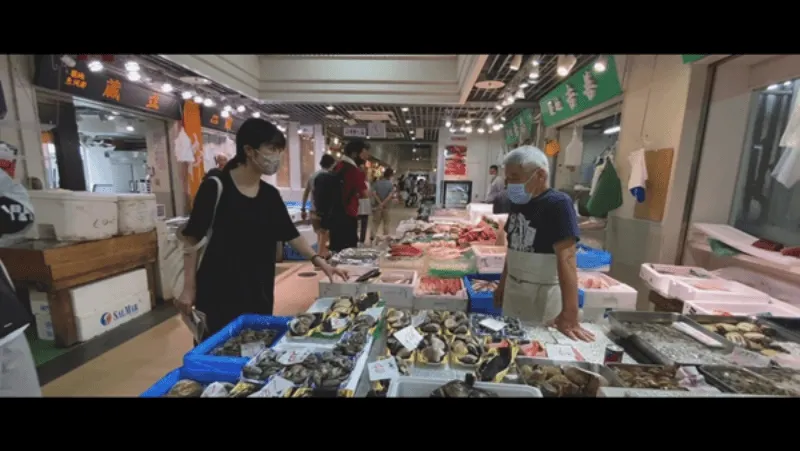
The Tsukiji Outer Market developed as a district of specialty shops catering to the needs of food professionals visiting the Central Wholesale Market. Even now, following the Central Wholesale Market’s relocation to Toyosu in 2019, approximately 500 shops continue to operate there. Many shops have been in operation since the Central Wholesale Market opened in 1935, and some long-established businesses have been around since the Nihonbashi Fish Market era, before the move to Tsukiji. Additionally, 50 of the approximately 600 fresh fish shops that were located within the Tsukiji Market continue to operate at “Tsukiji Fish Market,” a facility established by Chuo Ward with the aim of preserving Tsukiji’s vibrant atmosphere.
Shops that rely on business customers—who make up 60% of their clientele—appear to be continuing their business as usual thanks to a well-established delivery system with the Toyosu Market. However, the bustling atmosphere seen before the move to Toyosu, when the market attracted 50,000 visitors a day, has been lost, and the COVID-19 pandemic has further diminished the shopping district’s vibrancy.
Shopping districts across Japan have served not only as commercial hubs but also as places that preserve local culture and identity through human interaction. Tsukiji takes pride in its identity as a “sacred place of food” where culinary professionals gather, and the district’s liveliness is a major component of this identity.
Given the area’s brand power, it is expected that many tourists will visit and the bustle will return once the pandemic subsides. However, a project was launched during the pandemic to explore new forms of interaction that go beyond simply increasing visitor numbers and instead contribute to preserving the neighborhood’s pride and identity.
2. Students’ Year in Tsukiji: From Examining Tsukiji’s History and Present to Envisioning the Future
Mr. Terade, the driving force behind the project, is the owner of Tsukiji Omiya Beef Shop, a business that carries on the legacy of the Omi merchants. As an expert meat connoisseur, he is highly regarded by chefs in Ginza and Nihonbashi, and he is also active as a young leader in the Tsukiji Outer Market. Through a network of acquaintances whom Mr. Terade consulted regarding the revitalization of the shopping district, Associate Professor Takayuki Arima, who teaches tourism management at Yokohama City University, and Associate Professor Akira Yokoyama, who teaches marketing data analysis at the School of Business Administration at Aoyama Gakuin University, joined the discussion. From there, an initiative involving their seminar students was launched.
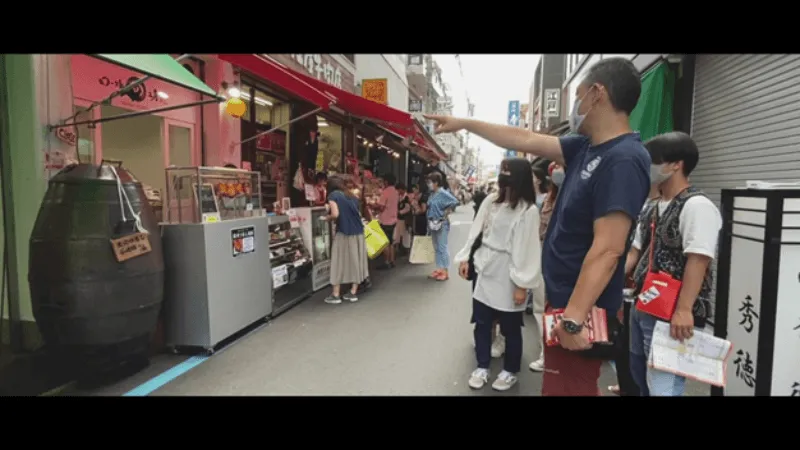
First, students in Arima’s seminar conducted desk research on trends in inbound tourism, domestic tourism, and initiatives at markets and shopping districts nationwide to define the target audience and project direction. They then organized the history of Tsukiji dating back to the Edo period, verified recent changes in the number of stores by category and business hours within Tsukiji, and conducted fieldwork at the Outer Market. Meanwhile, the Yokoyama seminar conducted a survey of students’ perceptions of the Tsukiji Outer Market, and based on this data, they explored ways to revitalize Tsukiji.
Against the backdrop of the recent increase in tourists, the image of Tsukiji has shifted from “Tsukiji as a place to buy seafood” to “Tsukiji as a place to dine.” Store operating hours have gradually shifted to later times, and the number of restaurants serving meals from lunch through dinner has increased. Furthermore, there are many foreign tourists who wish to enjoy Tokyo’s nightlife. Taking into comprehensive consideration the findings from interviews—which revealed a commitment to tradition and authenticity, as well as the preservation of professional pride—a plan to “revitalize Tsukiji at night” was proposed.
3. Exploring the Tsukiji Outer Market Using an Online Meeting System (Quest)
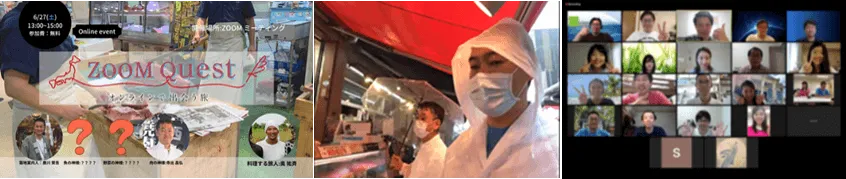
Shortly after the student project began, makes Co., Ltd.—led by Mr. Goto, an Advisory Consultant at our institute who was participating in the project—organized an online event using Zoom. Titled “ZOOM Quest: An Online Journey Through Tsukiji—The Gods of Food Edition,” the event featured Mr. Terade and Mr. Kengo Shikagawa, Secretary General of the NPO Tsukiji Food Town Development Council, as guides, with a Malaysian exchange student serving as a reporter to convey the charm of the shopping district. The 15 participants included students from the Arima and Yokoyama seminars, a sushi YouTuber, an illustrator, and the author of this article, making for a diverse group.
True to its name, we visited “Omiya Beef Shop,” run by Mr. Terade, a descendant of the Omi merchants; “Tsukiji Mikodo,” which handles processed fish products that can be transformed into menu items with a little extra effort at restaurants;“Edoichi,” which manufactures over 100 varieties of tsukudani in its own factory; “Yonemoto Coffee Shop,” which was once frequented incognito by celebrities such as John Lennon; and “Kyotomi,” a fresh fish shop located within the Tsukiji Fish Market Building. We reported on these shops while listening to the owners’ stories. Following the shopping district report, a Q&A session was held with the participants, Mr. Terade, and Mr. Shikagawa. The facilitator smoothly connected the Tsukiji members with the participants, and a discussion took place regarding the present and future of Tsukiji.
Unlike the many online tours organized during the COVID-19 pandemic, approaches like ZOOM Quest—which connect people who share a common purpose and facilitate discussions about a specific area—are likely to become effective tools for future community development.
4. Launch of “TSUKIYOI,” an Event to Revitalize Tsukiji at Night
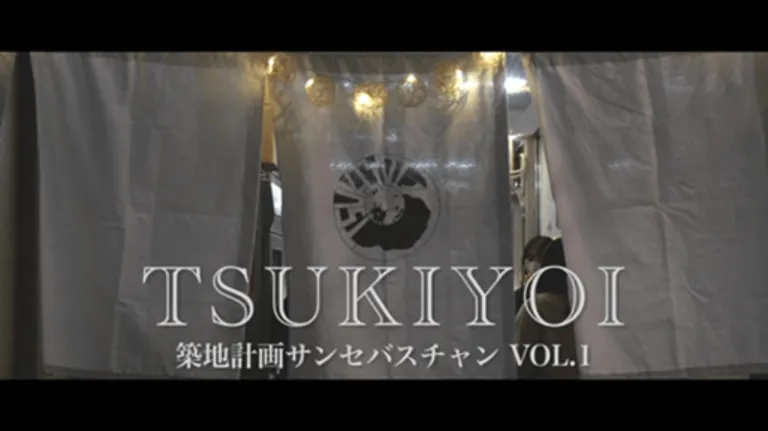
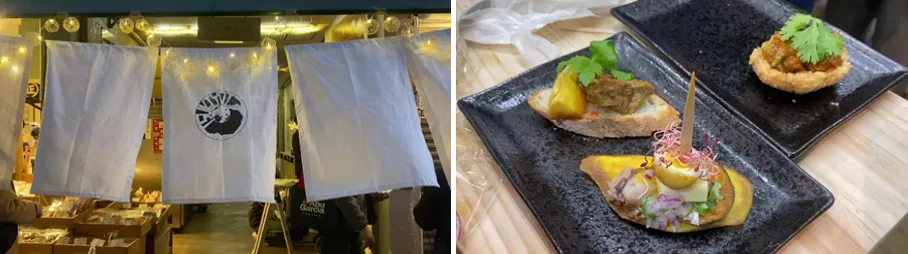
The students who proposed “revitalizing Tsukiji at night” planned a project to set up “standing-bar night stalls” in the alleys of Tsukiji Higashi-dori as a concrete initiative, and a specific event was planned under the name “Tsukiji San Sebastián Project.” San Sebastián is a leading tourist destination in Spain, as well as a city known for Basque cuisine and gastronomy, and is famous as the birthplace of pintxos. While similar projects have been launched nationwide, the “Tsukiji San Sebastián Project” adopted the theme “Pinchos Connecting the World: Encountering Countries and Connecting with People.” The concept is to host a “bar connecting the world” once a month, featuring ingredients sourced from Tsukiji—a treasure trove of food—and serving pinchos from around the globe paired with international beverages. After much deliberation, students from the Arima Seminar transformed a drab alleyway into a space evoking the atmosphere of a Spanish bar. The project was named “TSUKIYOI,” derived from keywords such as Tsukiji, moon, evening, and tipsy, and the first event was held on November 14.
Due to the COVID-19 pandemic, they did not widely publicize the event, but passersby were drawn in by the unusual liveliness and stopped to join in. The space, where people naturally struck up conversations with strangers while nibbling on pinchos, was well-received.
Mr. Arima praised the students, saying, “I think they expressed a new vision for Tsukiji that we couldn’t have achieved—a design unique to students, a sensibility that ordinary adults don’t possess.” He highly values the design and aesthetic sense that emerged from practical experience, rather than simply creating formulaic content by students studying tourism. The logo design, which aims to convey “the feeling of the moon getting tipsy and floating gently,” was also created by the seminar students.
Once the COVID-19 pandemic subsides, I believe this will certainly become an ongoing initiative and serve as a place for Tsukiji to forge a new identity through community interaction.
5. Tourism, Community Exchange, and Regional Development in the Post-COVID Era: A Network of Players Who Continue Endogenous Initiatives Based on Local Aspirations, and Players from Within and Outside the Region Who Create Local Appeal
The COVID-19 pandemic has provided an opportunity to reexamine the various challenges that regional tourism promotion had been facing even before the crisis. While tourism policies have been implemented nationwide against the backdrop of the national government’s promotion of tourism as a key industry, many regional initiatives—which rely on simple quantitative metrics such as visitor numbers and spending—appear to remain rooted in the mindset of the mass tourism era, which assumed a certain scale of operations. With the environment surrounding tourism undergoing fundamental changes—such as the diversification of traveler attitudes and behaviors—even before the pandemic, we must reexamine the meaning of promoting tourism in each region. By viewing tourism and exchange as means to realize the vision sought by each region, rather than ends in themselves, we may begin to see the various possibilities inherent in tourism and exchange that cannot be reduced to mere economic benefits.
Particularly in the post-pandemic era, building relationships between visitors and the local community will be crucial. This involves creating spaces where people from both within and outside the region can connect, and where local stakeholders can play an active role. (The roles of tourism promotion organizations, such as Customer Relationship Management (CRM) and internal promotion, are expected to grow in importance.)
In that sense, while the Tsukiji case study began as a small initiative during the COVID-19 pandemic, this event—which shared with students the vision of preserving the identity of the Tsukiji Outer Market as a “holy land of food” where culinary professionals gather, and sought to create new spaces for human connection within the shopping district—seems to hold many insights regarding community development through tourism and exchange in the post-COVID era.
Mr. Arima of Yokohama City University, who played a central role in this initiative, guides students to thoroughly research the local area—including conducting interviews with shopping district residents—during their fieldwork, and to create content based on that research. He also instructs them to present their results as designs built on a digital foundation. For this event, they are not only focusing on spatial design but are also editing videos for platforms like YouTube.
Scenes from the Day of TSUKIYOI
It is likely that in future efforts to promote tourism and community exchange—which prioritize sustainability and are rooted in human connections—and to revitalize local areas, the leading roles will be played by a network of local and external players. This network will consist of local stakeholders who continue to act from within, grounded in the unique aspirations of their region, and external players who create the region’s appeal without being bound by outdated tourism values.
Furthermore, tourism promotion organizations such as DMOs will likely be required to clearly articulate the region’s vision and focus on creating an environment where these players can thrive.
Creating spaces for interaction that support the identity of the Tsukiji Outer Market. I look forward to seeing future developments led by my junior seminar students and new players.
References & URLs:
・Tsukiji Outer Market Website / NPO Tsukiji Food Town Development Council ・Nikkan Sports
, November 14, 2020, “‘Tsukiji Comes Alive at Night’ European-Style Standing Bar Planned by Students”
著者