Recommendations for "Tourism Hygiene Management" in Preparation for a Resurgence of COVID-19 Infections
Although guidelines for preventing the spread of COVID-19 have been established, isn’t their implementation being left entirely up to those on the front lines? Amid fears of a resurgence in infections, we will explore a systematic and sustainable approach to “tourism hygiene management” with the aim of fostering a sense of community where tourism operators—who are concerned about renewed restrictions on free movement—and local residents—who want to ensure thorough, safe, and secure infection prevention measures—can work together.
1. Implementing a systematic and sustainable tourism health management approach with a positive mindset
With no definitive solution to the COVID-19 pandemic, new cases have surged again since October, primarily in Europe and North America, and some countries and regions are imposing strict movement restrictions for the second time this year, following those in the spring. In Japan as well, the number of new cases has surged since the start of November. This resurgence of infections, coming just as domestic travel began to recover gradually in September and October, is causing anxiety among travelers and tourism businesses—who fear that travel restrictions may be reimposed—as well as local residents who do not want to see new cases emerge in their communities.
As professionals in the travel and tourism industry, we have been involved in measures against infectious diseases such as Severe Acute Respiratory Syndrome (SARS, 2002–2003), the novel influenza (A/H1N1, 2009), and Middle East Respiratory Syndrome (MERS, 2013)—all within this century alone. Through the current COVID-19 pandemic, we have experienced firsthand how even within Japan, the movement and interaction of people can be disrupted, and we have been reminded that the emergence of another infectious disease in the future cannot be ruled out.
Maintaining an environment where people can move freely and with peace of mind is a major challenge. To achieve this, infectious disease control must not be treated merely as a short-term crisis management response. Furthermore, it is essential that businesses do not simply formulate guidelines and then unilaterally leave their implementation to frontline service providers; rather, this must be treated as an issue for the entire community, requiring constant refinement and ongoing implementation. Therefore, we have decided to launch and implement a project for systematic and sustainable “Tourism Hygiene Management,” focusing on hygiene management from a tourism perspective.
Health Tourism Research Institute (JTB Research Institute)
We define “Tourism Hygiene Management” as follows:
Tourism Hygiene Management refers to comprehensive activities aimed at maintaining safety and peace of mind for travelers and the local community through hygiene measures—particularly the prevention of infectious diseases and preparedness for smooth responses in the event of an outbreak—in the management of tourist destinations.
Crisis management and internal controls are often perceived negatively as time-consuming and costly tasks that do not directly lead to attracting travelers or increasing revenue. However, based on the following four points, our aim is to encourage regions and businesses seeking to expand visitor numbers—regardless of the scale of their tourism operations—to proactively engage in these efforts.
- Establish operations that ensure safety through hygiene measures
- Maintain a balanced budget while maintaining and improving the quality of hygiene measures
- Operating new tourism businesses without losing the entertainment value inherent in the tourism industry
- Enhance brand value by establishing a community-wide image of safety and security
2. Tourism promotion based on safety and security for all, as required during the COVID-19 pandemic
(1) Infection control measures as a growing priority for travelers
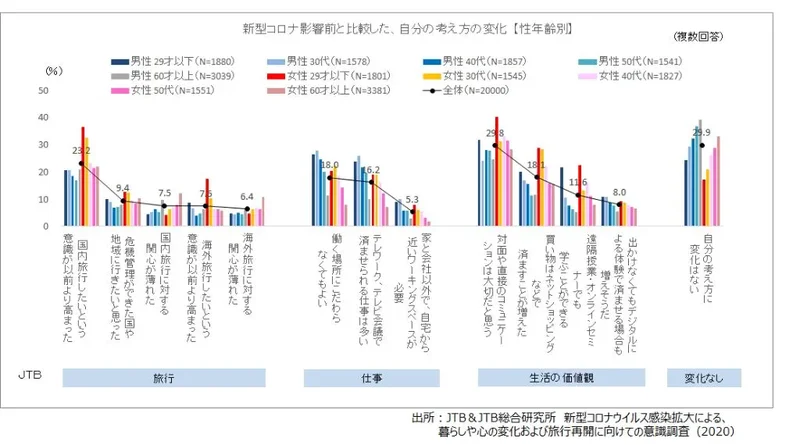
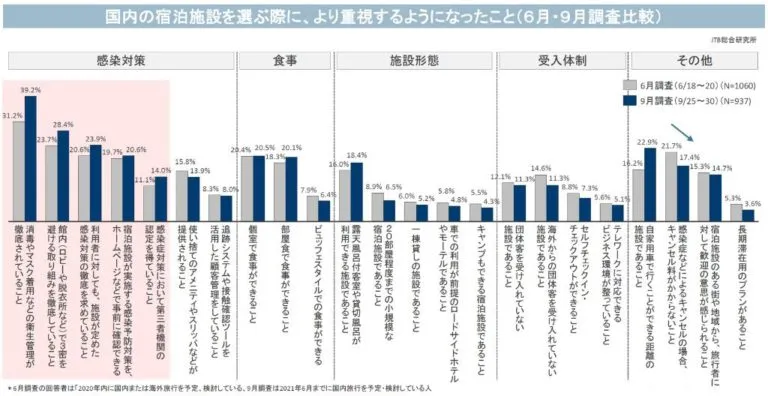
According to our “Survey on Changes in Daily Life, Mental Well-being, and Travel Attitudes Due to the Spread of COVID-19 (2020),” conducted in June and at the end of September, the factors travelers now prioritize most when selecting accommodations are: “Thorough hygiene management, such as disinfection and mask-wearing (September survey: 39.2%)” and “Thorough efforts to avoid the ‘Three Cs’ (crowded places, close-contact settings, and confined spaces) within the facility (28.4%)” ranked high. Although this survey was conducted before the current resurgence of infections, it revealed that travelers’ tendency to prioritize infection control measures has grown even stronger. Additionally, there was a growing tendency to place greater importance on factors such as “being able to dine in the room,” “access to guest rooms with open-air baths or private baths,” and “being within driving distance by private car.”With the recovery of domestic travel in September, many people began traveling again, allowing them to gain a tangible sense of specific needs regarding infection control measures. The response “Being able to check the infection prevention measures implemented by the accommodation facility in advance on their website or other platforms (20.6%)” also saw a slight increase. When reviewing the official websites of accommodation facilities, it is sometimes observed that announcements regarding their infection prevention measures are limited to the “News” section or social media posts, resulting in outdated information. This approach likely fails to adequately meet the needs of travelers.
Currently, there are numerous guidelines for infection control, including industry-specific guidelines, regional guidelines, and participation criteria for the GO TO Travel Campaign. However, this may imply that simply complying with these guidelines is not enough to make an accommodation facility a top choice for travelers. Shouldn’t infection control measures be viewed as a traveler need with higher demand than local communities and businesses might realize?
(2) Local Residents’ Attitudes Toward Hosting Travelers
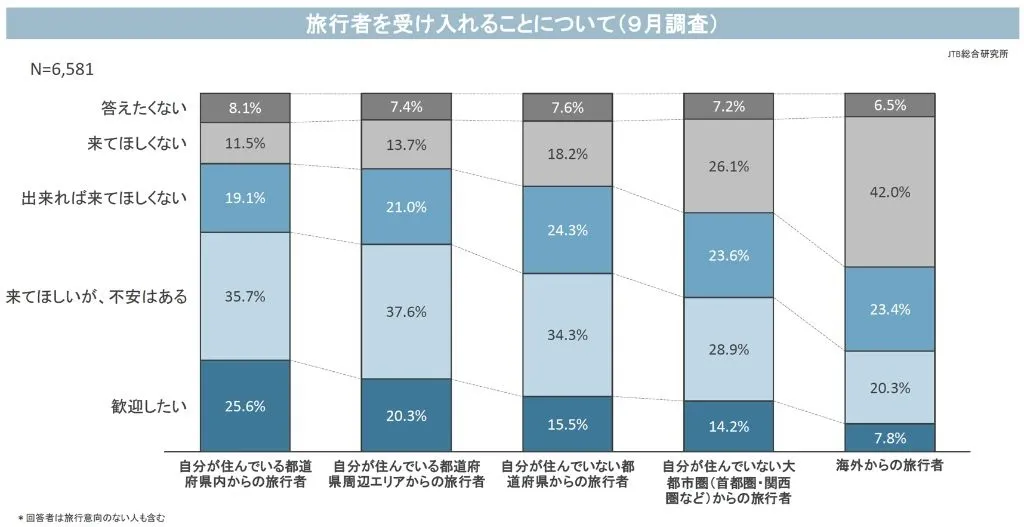
It is undeniable that in nearly every region, local residents harbor concerns about promoting the tourism business during the COVID-19 pandemic. In the aforementioned survey, when asked about residents’ attitudes toward welcoming travelers to their local area, 25.6% said they “would like to welcome” travelers from within their own prefecture. Even among travelers from the same prefecture as the residents, the combined total of those who said “I don’t want them to come (11.5%)” and “I’d prefer they didn’t come (19.1%)” was 30.6%.On the other hand, regarding travelers from “major metropolitan areas where they do not live (such as the Tokyo or Kansai regions),” the combined total of “I don’t want them to come (26.1%)” and “I’d prefer they didn’t come (23.6%)” was 49.7%, accounting for nearly half of the respondents. Furthermore, regarding foreign tourists, the combined total of “I don’t want them to come (42.0%)” and “I’d prefer they didn’t come (23.4%)” was 65.4%.
In Figure 1 above, 14.7% of respondents cited “feeling a sense of welcome from the town or region where the accommodation is located” as a factor they prioritize when choosing lodging, a relatively high result compared to other items. It can be said that residents’ attitudes are a point of concern even from the travelers’ perspective, and given the COVID-19 pandemic, it is considered necessary to reevaluate the role of tourism within the region.
(3) The Need for Mutual Understanding with Residents in Tourism Promotion
Recognizing that tourism could serve as a foundation for regional revitalization, the government launched a nationwide initiative to actively promote tourism in 2013, following the decision to host the 2020 Tokyo Olympics. In 2012, the number of foreign tourists stood at 8.36 million, with spending totaling 1.1 trillion yen; by 2019, these figures had risen to 31.88 million tourists and 4.8 trillion yen in spending, of which 1.8 trillion yen was spent in regional areas. It is particularly noteworthy that, despite Japan’s declining population, spending on domestic overnight travel by Japanese residents has also shown an upward trend as infrastructure for accommodating tourists has improved (Table 1). However, on the other hand, issues of “tourism pollution” have also emerged in some tourist destinations.
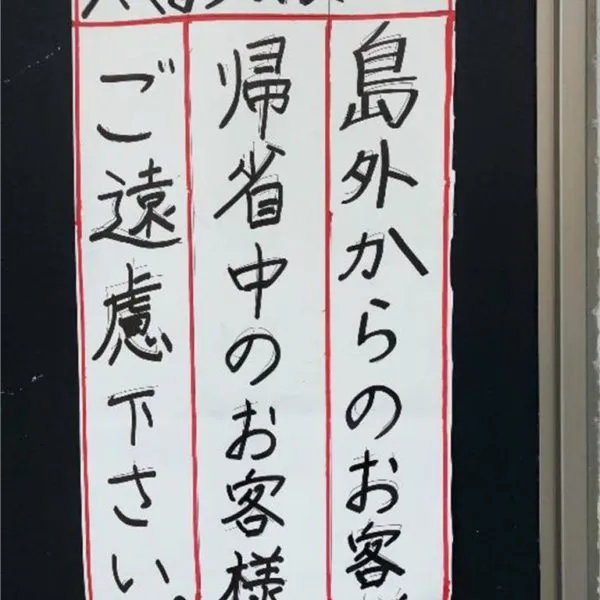
With the “Sustainable Development Goals (SDGs),” sustainability has become a strong priority in the tourism sector as well. While “Sustainable Cities and Communities” is one of the goals, creating an environment where residents can live safely and securely is a social responsibility. In reality, however, there have been a series of incidents, such as the sign shown in the photo, expressing concerns about visitors from outside the area. Since this issue is related to local culture, tourism promotion, the local age structure, and healthcare systems, I believe it is necessary to investigate the actual conditions in each region and foster careful dialogue between the tourism industry and local residents.
| Year | 2012 | 2013 | 2014 | 2015 | 2016 | 2017 | 2018 | 2019 |
| Domestic Overnight Travel by Japanese Residents | 15.0 | 15.4 | 13.9 | 15.8 | 16.0 | 16.1 | 15.8 | 17.2 |
| Domestic Day Trips by Japanese Residents | 4.4 | 4.8 | 4.5 | 4.6 | 4.9 | 5.0 | 4.7 | 4.8 |
| Japanese Overseas Travel (Domestic Portion) | 1.3 | 1.2 | 1.1 | 1.0 | 1.1 | 1.2 | 1.1 | 1.2 |
| Inbound Tourism | 1.1 | 1.4 | 2.0 | 3.5 | 3.7 | 4.4 | 4.5 | 4.8 |
| Total | 21.8 | 22.8 | 21.6 | 24.8 | 25.8 | 26.1 | 26.1 | 27.9 |
3. Our Approach to Tourism Hygiene Management
(1) The Reality of Infection Control Measures in Local Communities and Existing Gaps
Recently, we have received an increasing number of inquiries and requests regarding tourism hygiene management from local communities, and our Health Tourism Research Institute visits sites across the country on a daily basis. In addition to giving lectures on tourism hygiene management, our standard services currently include developing proprietary guidelines and checklists. As we visit these sites, we often find ourselves wondering why tourism hygiene measures frequently stop at the stage of creating infection control guidelines and checklists. Even at tourism and accommodation facilities, as well as transportation providers, where infection control guidelines exist and hygiene measures should already be in place, we frequently observe that these guidelines are not being followed. In short, the current state of tourism hygiene measures is that implementation (D) has stalled at the planning (P) stage of the PDCA cycle. Of course, this is likely due to the burden on frontline staff, as well as the fact that they simply cannot keep up with the surge in travelers resulting from the recovery of domestic travel. There is also the possibility that people have become accustomed to infection control measures or have let their guard down. If business owners and management simply leave implementation entirely up to frontline staff, these measures will amount to nothing more than negative crisis management.
Also, the other day, at a breakfast buffet at my lodging, I encountered a service where each traveler used a new pair of disposable chopsticks to serve themselves one item at a time. Since this avoids the reuse of tongs or serving chopsticks, it is effective from the perspective of preventing indirect contact transmission; however, seeing the mountain of disposable chopsticks pained me. I imagine they carefully considered and implemented this measure internally, but it is also important to create a system that fosters awareness—by actually putting it into practice—regarding whether this is truly the right approach, and how it relates to other social issues such as environmental concerns and waste.
Infectious disease control guidelines, as part of service standardization, only become effective when implemented through the process of D (Do) → C (Check) → A (Act). Simply thinking, “We’re safe because we have guidelines” or “We know the infection control measures” does not constitute effective infection control. Furthermore, addressing the needs for measures identified in the traveler survey in Chapter 2 at the component level alone does not complete the infection control process.
(2) Stakeholders in Tourism Health Management
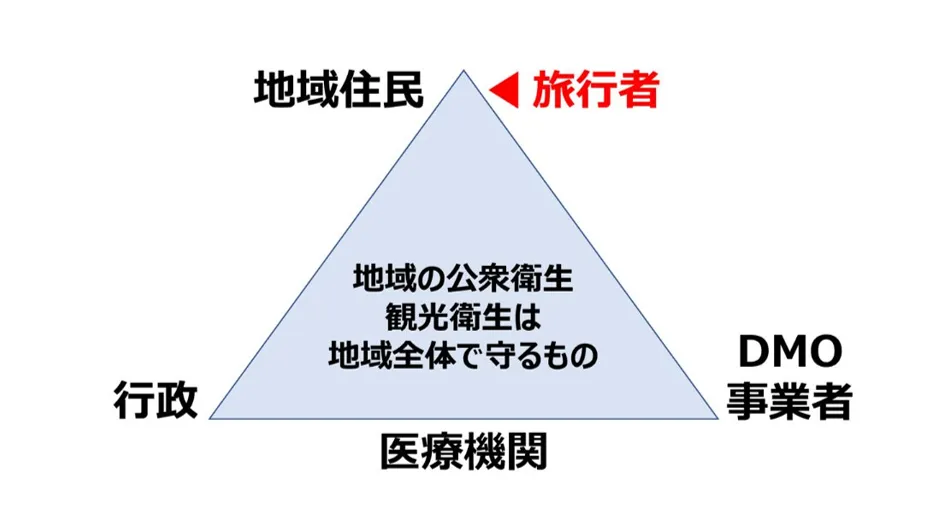
As the survey results in the previous chapter show, tourism is a major issue for local residents. Furthermore, as long as people are on the move, border control measures alone have their limits. Precisely because we must consider the local healthcare system, the ideal approach to protection against infection is one where general public health and tourism health are integrated. Additionally, even if accommodation facilities implement perfect countermeasures, the risk for the entire region will not be reduced unless local restaurants and other establishments frequented by both residents and tourists also have proper measures in place. Recently, I have received an increasing number of consultations regarding infection control measures for major sporting events and MICE-related activities. This goes beyond simple tourism and is also linked to regional industrial development. Therefore, I believe it is crucial to include travelers from the outset in the formation of a safety and security ecosystem within tourist destinations (Figure 3).
(3) The PDCA Cycle of Tourism Health Management
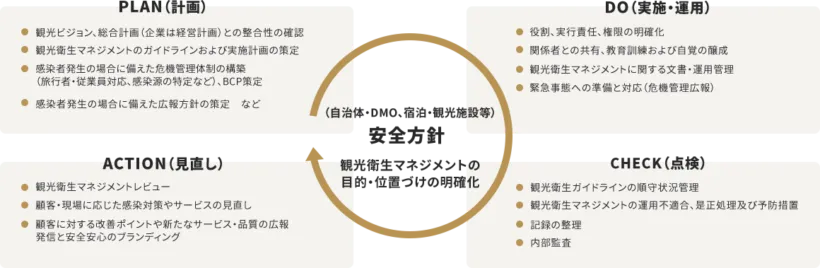
Next, it is necessary to formulate implementation plans at the operational level that reflect actual business conditions and refine them as circumstances change. Industry-specific guidelines often contain general principles and may not align with on-site services or functions. To address these issues, we will establish a PDCA cycle that identifies best practices through hypothesis testing and continuously evolves them (Figure 4).Within this cycle, we will examine a crisis management system that involves confirming medical response and infrastructure in the event of an emergency, implementing and evaluating on-site management and precautions, and collaborating with stakeholders to create and continuously refine services. Furthermore, it is crucial to review communication with travelers. This goes beyond simply announcing that infection control measures are in place. What I would like to emphasize in particular is the importance of crisis communication in preparation for emergencies—specifically, planning and implementing communications both before and after an outbreak occurs—and the importance of conducting drills. This truly embodies the saying, “Better safe than sorry.” By implementing tourism hygiene management based on the PDCA cycle at the individual business level, and then sharing and refining these practices across the entire region, I believe it will be possible to build a brand of safety and security for the entire region.
4. Summary
When I visit regions, I often receive inquiries from local governments and businesses asking, “Even if we implement infection control measures, are there still ways to offer enjoyable services?” In such cases, I always respond, “I don’t know what ‘enjoyable services’ are!” While positive initiatives are important, we must thoroughly verify whether they align with societal trends and what customers truly desire. It is also crucial to recognize that there may be a significant gap in awareness and values between service providers and travelers. The essence of the ideal state we aim for through tourism hygiene management is, I believe, “having visitors who are willing to come even during the COVID-19 pandemic.” With this perspective in mind, I would like to encourage service providers to explore new values that are not bound by preconceived notions.
Regarding tourism promotion activities, I believe it would be beneficial to incorporate messages directed at local residents. In a video on infection control measures released this spring by the Sado Tourism Exchange Organization, despite being a tourism video, it included a message of consideration for local residents: “A safe and secure Sado for both travelers and residents.” It could be said that in the future of tourism, gaining the empathy of local residents—not just travelers—will take on an even more important role.
Our Health Tourism Research Institute will conduct activities based on the PDCA cycle to enable regions to practice self-reliant tourism hygiene management.